
About Dorfromantik
Dorfromantik is a tile-placement strategy and puzzle game about building a growing countryside landscape. Draw hexagonal tiles, rotate them, and fit forests, villages, fields and waterways together to score points. Special objects set quests that reward additional tiles, while long-term tasks unlock more tiles, biomes and quests. Quick, hard, custom, monthly and creative modes offer different rules and goals.
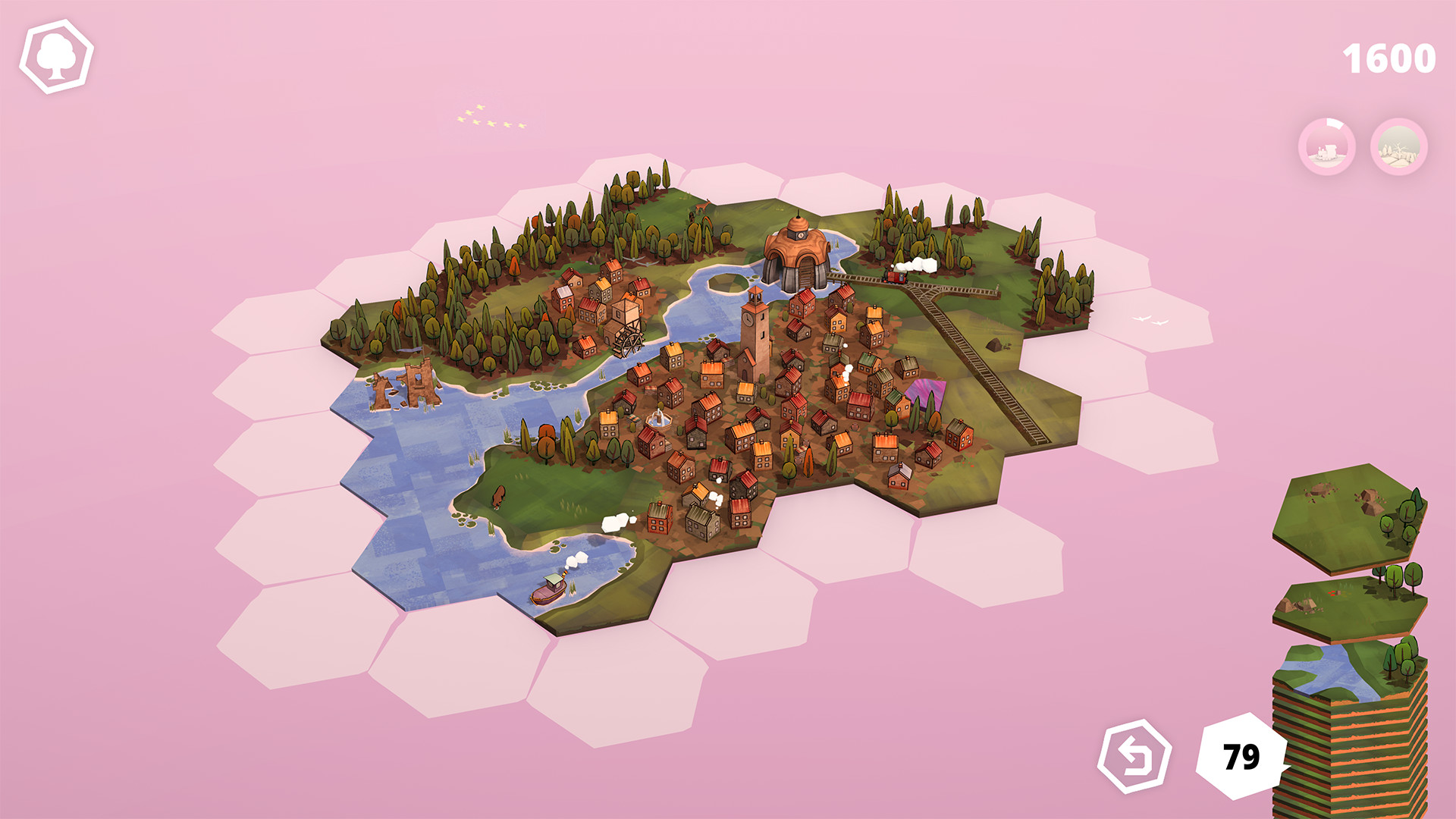
Dorfromantik begins with a stack of procedurally generated hexagonal landscape tiles and an open space in which to place them. Each turn, the top tile is drawn, rotated and fitted into an available position beside the existing landscape. The pieces depict terrain such as forests, villages, grain fields and water, so the board grows as a connected countryside rather than a collection of isolated squares. A placement can bring matching edges together, continue a feature across several tiles or put different terrain types beside one another. The central puzzle is to read the edges and decide where a tile contributes most to the shape and score of the settlement. The quiet presentation accompanies a turn-based process in which each placement affects the choices available for later pieces.
Scoring depends on how well a tile fits the landscape around it. The game rewards placements according to the match, so a player weighs immediate points against the way a region may expand. A forest can be extended into a larger wooded area; village tiles can connect into a growing settlement; water and track sections can continue through the map. These features occupy the same evolving board, making the layout a series of overlapping spatial problems. A useful position for one terrain may also determine what can be placed next to it, and a tile with several edges to consider can have more than one plausible destination. The stack is finite in the main score-focused game, so placement is tied to sustaining the session as well as shaping an attractive landscape. A run ends when that stack is exhausted.
Some tiles carry special objects that introduce quests with specific landscape goals. The Steam listing gives examples: a windmill asks for six adjoining grain fields, a locomotive asks for ten connected track sections, and a deer asks to inhabit a forest with at least fifty trees. These targets make a placement about more than matching nearby edges. A player may need to leave room around an object, continue a feature over multiple turns or build toward a threshold before the goal can be completed. Completing quests awards additional tiles, extending the run and giving a practical reason to pursue the requested arrangement. The examples also show how the game turns recognisable countryside features into distinct spatial tasks: fields gather around a mill, tracks form a connected route, and a deer’s habitat depends on the size of a forest.
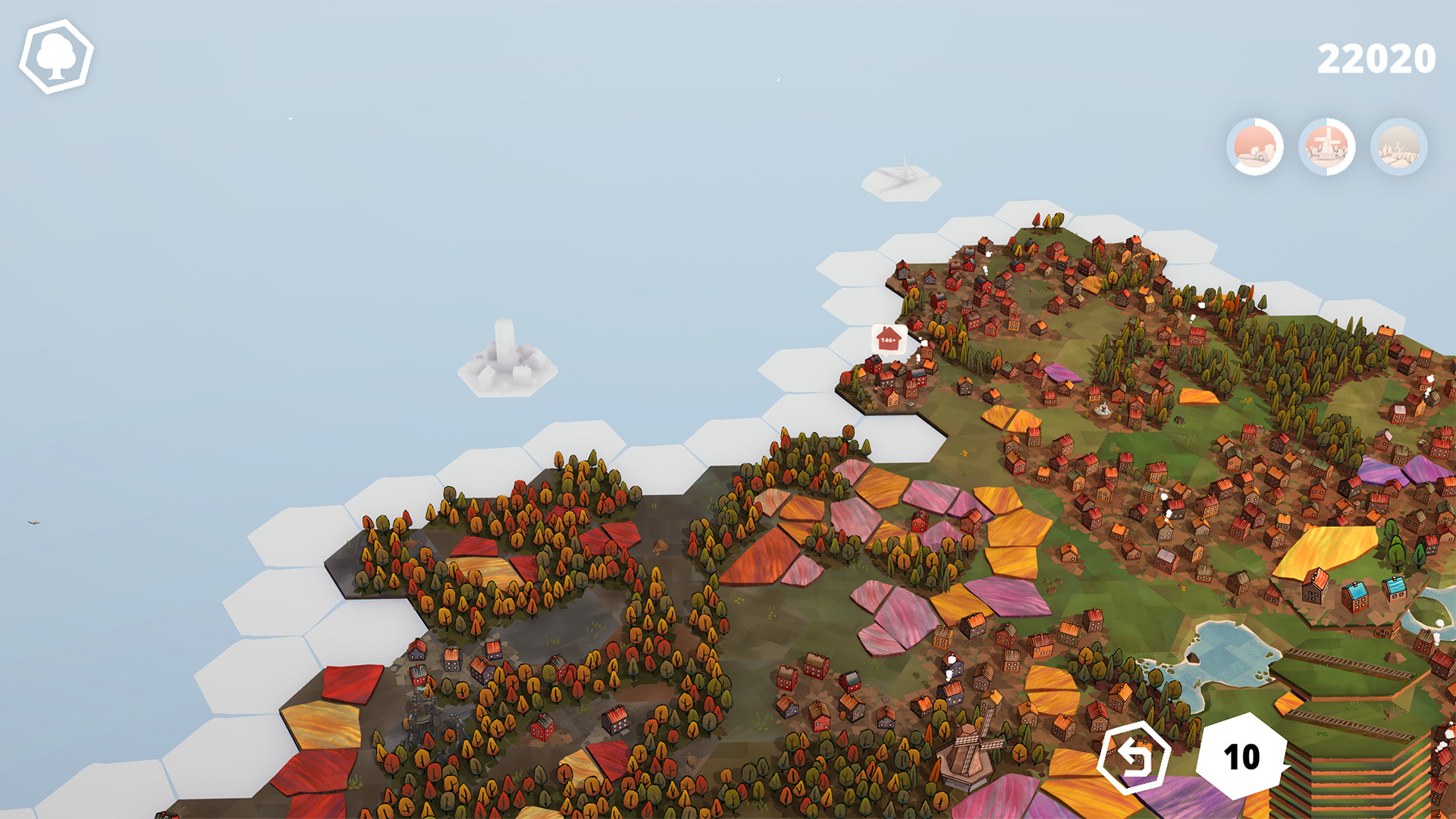
Longer-term tasks appear as the landscape expands into new, colourful biomes. These tasks are represented by pre-placed objects discovered in the growing map, and they give progress goals that extend beyond the immediate tile in hand. Completing them can unlock new tiles, new biomes and new quests, gradually adding possibilities to later landscapes. This progression sits alongside the run’s ordinary scoring and quest rewards: some goals help keep the current stack going, while others open additional content for future play. The promise of new tiles and quests gives these longer tasks a different purpose from the special-object requests that replenish the current stack. Biomes change the visual character of the landscape, while the expanding set of tile and quest types gives subsequent sessions more combinations to work with.
Dorfromantik offers several ways to approach the same landscape-building idea. Quick Mode is presented as a short break, while Hard Mode is for players aiming to master a more demanding version of the game. Custom Mode lets players set up and share their own rule sets, and Monthly Mode supplies a new challenge each month. Creative Mode removes limits so players can relax and build a landscape without the usual finite-stack pressure. These modes change the context for placing tiles: a score-focused session asks the player to make the stack last and pursue points, while Creative Mode centres on shaping a map freely. Custom settings and recurring monthly challenges provide further variations. None of these modes adds combat, trading or multiplayer; the change is in how much pressure and freedom surrounds the same tile-placement decisions.
The visual presentation is built around a hand-painted, board-game-like style and an idyllic village landscape. Its map is the main space for both expression and planning: each added piece changes the outline of the countryside, connects or separates terrain, and may bring a quest object closer to its target. The landscape is assembled from procedural tile draws, so a session’s developing arrangement depends on both the tiles received and the decisions made about where to place them. New biomes add different scenery as players progress, and the modes let the same basic act of fitting terrain serve different aims, from chasing a high score to constructing without limits. Toukana Interactive first released Dorfromantik in Early Access in 2021 and completed the full game in 2022. The finished landscape is also a record of the choices that sustained the tile stack: each connected field, forest and waterway reflects a decision made when its tile was drawn.
- Developer
- Toukana Interactive
- Genre
- Tile-placement building strategy and puzzle game