
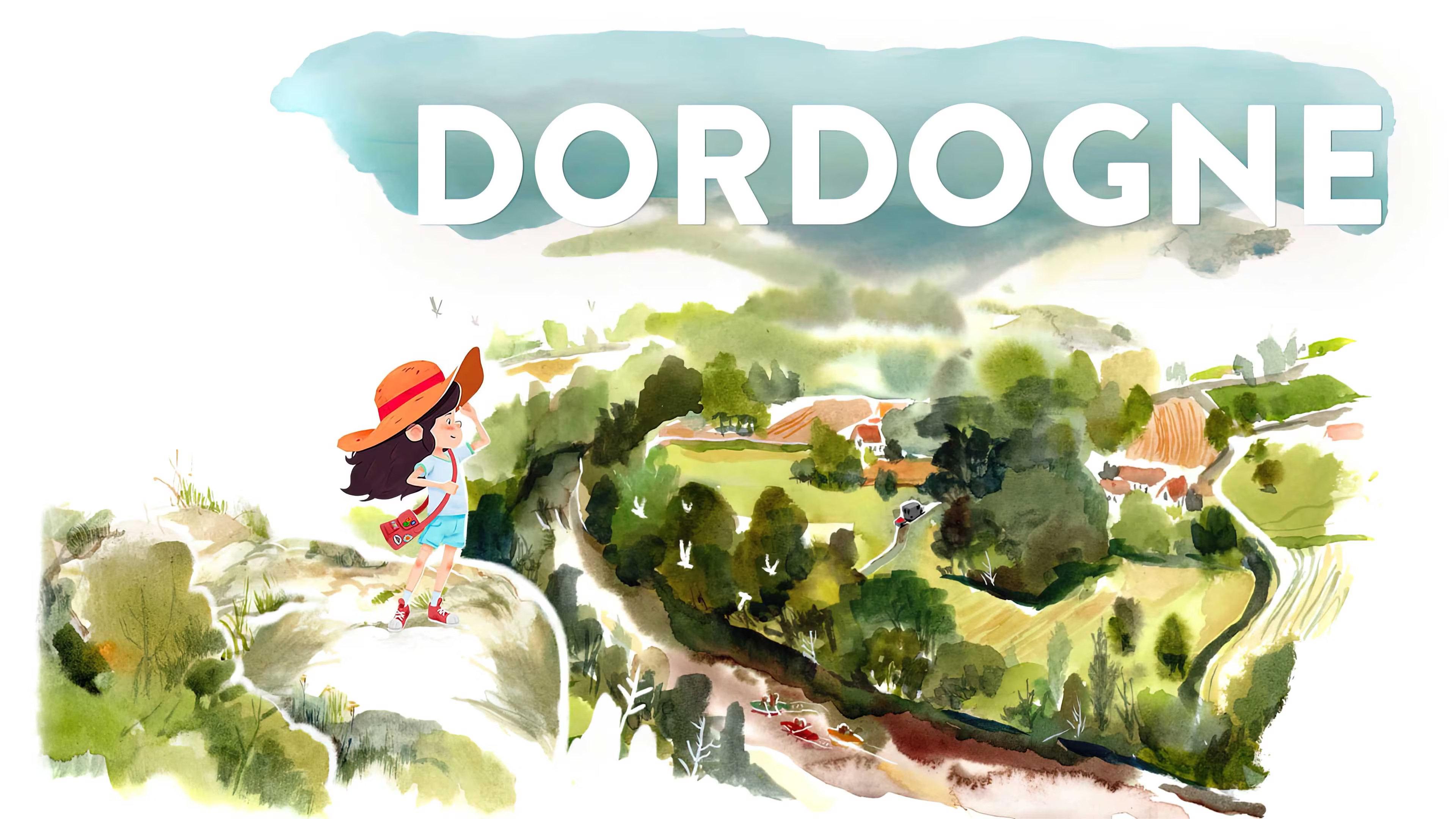
About Dordogne
Dordogne follows adult Mimi back to her late grandmother Nora’s home, where objects and letters bring a childhood summer into focus. Move between Mimi’s present and younger self, explore the French countryside, solve tactile everyday puzzles, and collect photos, sounds, words, and stickers for a scrapbook shaped by the journey.
Dordogne begins with Mimi returning to the country home of her late grandmother, Nora. The house is about to be cleared, giving adult Mimi only a short time to look through its rooms and understand what her family has left behind. As she handles familiar objects, the story moves into her childhood summer at the same place. The game shifts between adult Mimi in 2002 and young Mimi in 1982, letting a room in the present open onto an earlier version of it. Nora is central to both periods: the child learns how to spend her days with a grandmother she initially finds difficult to approach, while the adult follows clues that were beyond her understanding at the time. Mimi’s father remains an important presence in the family history, and old letters gradually reveal the conflict that shaped his distance from Nora. The story keeps that history at the level of family relationships and remembered moments, rather than turning the house into a mystery-solving hub. Looking through it is personal work: each object can connect the adult who has returned with the child who once lived through the summer.
The Dordogne around Nora’s home is presented through small, linked stretches of countryside, paths, rooms, and nearby places. Mimi moves from the house and its grounds into the local area, with the river and outdoor paths becoming part of her time with Nora. This is a guided narrative adventure rather than a large map to roam at will. Each chapter gives Mimi a set of spaces to inspect, people to meet, and activities tied to the day’s events. The environment’s watercolor look is part of how the two timelines feel different: the childhood scenes use warm summer color and open landscapes, while the adult return carries the weight of an emptied home and an approaching move. Studio co-founder and creative director Cédric Babouche painted the game’s locations, drawing on time spent in the region and on-site painting trips. The result joins scenery to memory without needing a separate travelogue. A riverbank, kitchen, or familiar path matters because it is where a relationship or small discovery takes place. The hand-painted backgrounds also shape navigation: the places invite attention to details and objects, while the story keeps the route through them focused.
Most of the moment-to-moment play comes from looking closely and manipulating ordinary things. Mimi can inspect objects, open containers, move items, and use what she finds to continue a task. The actions often have a physical sequence: a key has to be turned in a lock, a drawer pulled open, or an object handled before it can be used. Childhood scenes include small practical activities that give the controls a playful, hands-on feel, such as preparing breakfast or dealing with household objects. These interactions are presented as short tasks within the story, not as a separate skill tree or a set of demanding logic trials. The puzzles follow from what is visible in the immediate space; they ask the player to pay attention to the objects and the way Mimi can use them. This keeps the focus on the character’s actions and the situation around her. There is no combat system. Progress comes from exploring the current area, completing an interaction, speaking with someone, or finding the clue that leads into the next memory. The gentle task scale lets ordinary activities carry narrative weight: a key, a meal, or a broken item can mark a shift in how young Mimi experiences Nora’s home.
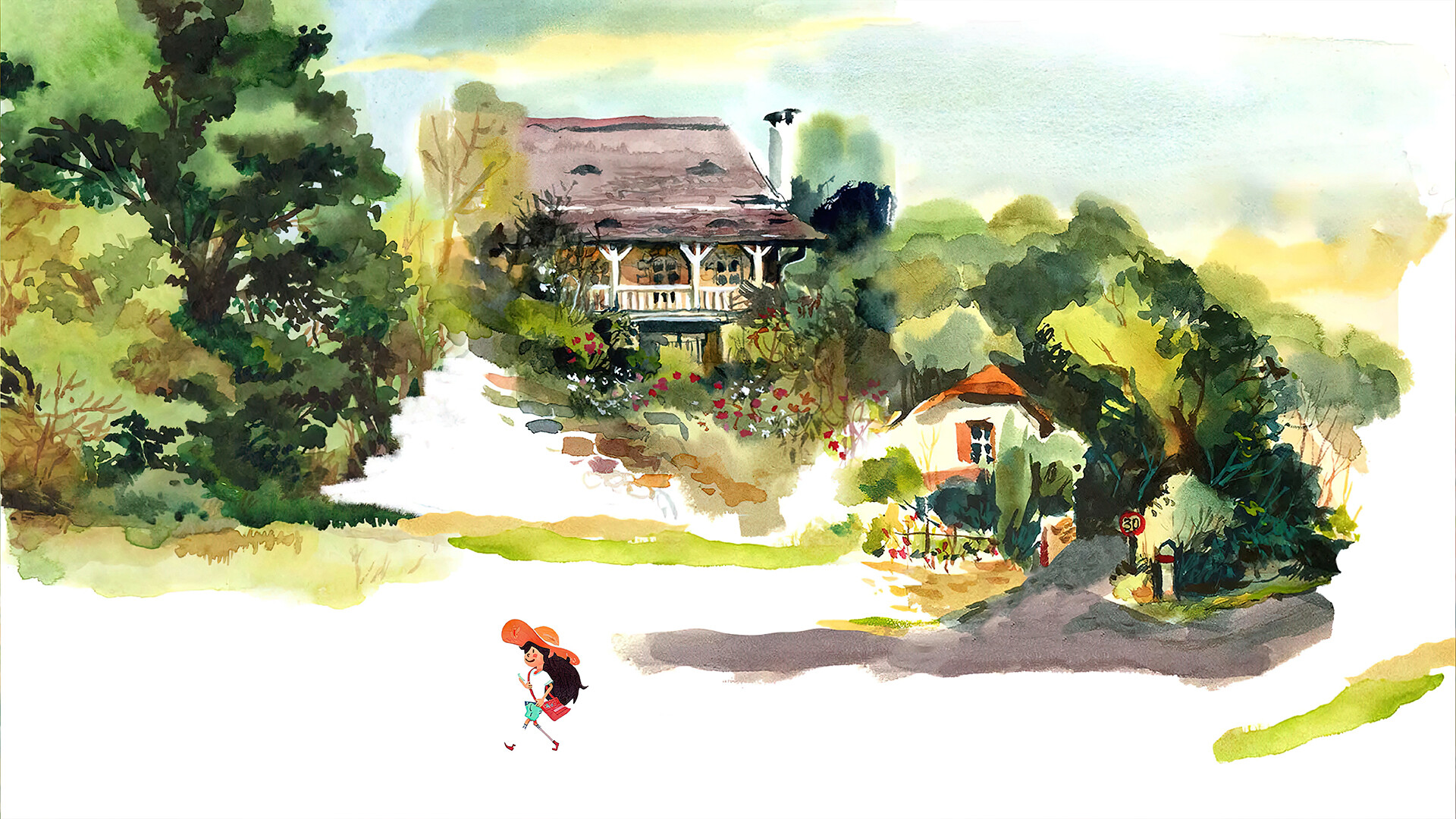
The game changes perspective to make some interactions feel closer to Mimi’s hands. Much of the adventure follows her from a third-person view as she walks through a scene, approaches people, and examines objects. Specific actions switch into a first-person view, including moments when she frames a photograph or reaches into a small task. In those sequences, the input becomes more direct: the player turns, drags, or moves objects rather than selecting a single answer from a menu. A breakfast task, for instance, is built around handling what is on the table; other interactions involve opening or turning an object to see what it contains. Those shifts keep Mimi’s scale and attention in view, especially during the childhood timeline. They also make the play more tactile than a standard point-and-click sequence, while movement between areas remains straightforward. The scenery sometimes asks the player to read the painted space carefully to find where Mimi can go, but the route is structured by chapter. There is no free-roaming travel system or combat movement to master. Walking, examining, and handling the objects in front of Mimi make up the core of exploration.
Mimi’s scrapbook gives the things she notices a place in the story. During the childhood sections, she can gather stickers and words, take photographs at marked moments, and record sounds with a cassette recorder. The Steam description also frames scent as part of the memories she recalls. These pieces are not interchangeable with the letters and tapes that reveal family history: photos, sounds, words, and stickers build the personal journal, while written clues help Mimi understand what happened between the adults. At chapter breaks, the player arranges the collected material on a page. Photos and stickers can be placed as keepsakes, and found words can be combined into short poems. The page becomes a compact record of what young Mimi noticed in that stretch of the summer, rather than a score screen or an upgrade menu. This loop connects exploration to reflection. Looking around can turn up a word or sticker; a camera or recorder moment adds another kind of memory; then the scrapbook lets the player choose how those pieces sit together. The game uses these pages to show a child making sense of her experience with the materials she has gathered.
Not every collectible serves the same purpose. Stickers and words feed the scrapbook, while letters and cassette tapes can add context to the family story. Reading them matters because young Mimi does not have the perspective to understand every adult disagreement as it happens. Years later, adult Mimi can revisit the places associated with those memories and put more of the family history together. Dialogue also links language and play: in some childhood conversations, words appear as part of the scene and the player chooses how Mimi responds. The chosen words give shape to what she expresses, and the unused possibilities can remain visible as gaps in the scrapbook’s collection. That system keeps the child’s voice present without treating every exchange as a branching plot with a large decision tree. Finding things is optional in the sense that the path does not require every sticker or word, but exploration can add texture to the record Mimi makes of the summer. Letters and tapes, by contrast, are narrative clues. Together, the collectible types separate two kinds of discovery: a memory young Mimi chooses to keep, and information that helps adult Mimi understand the past.
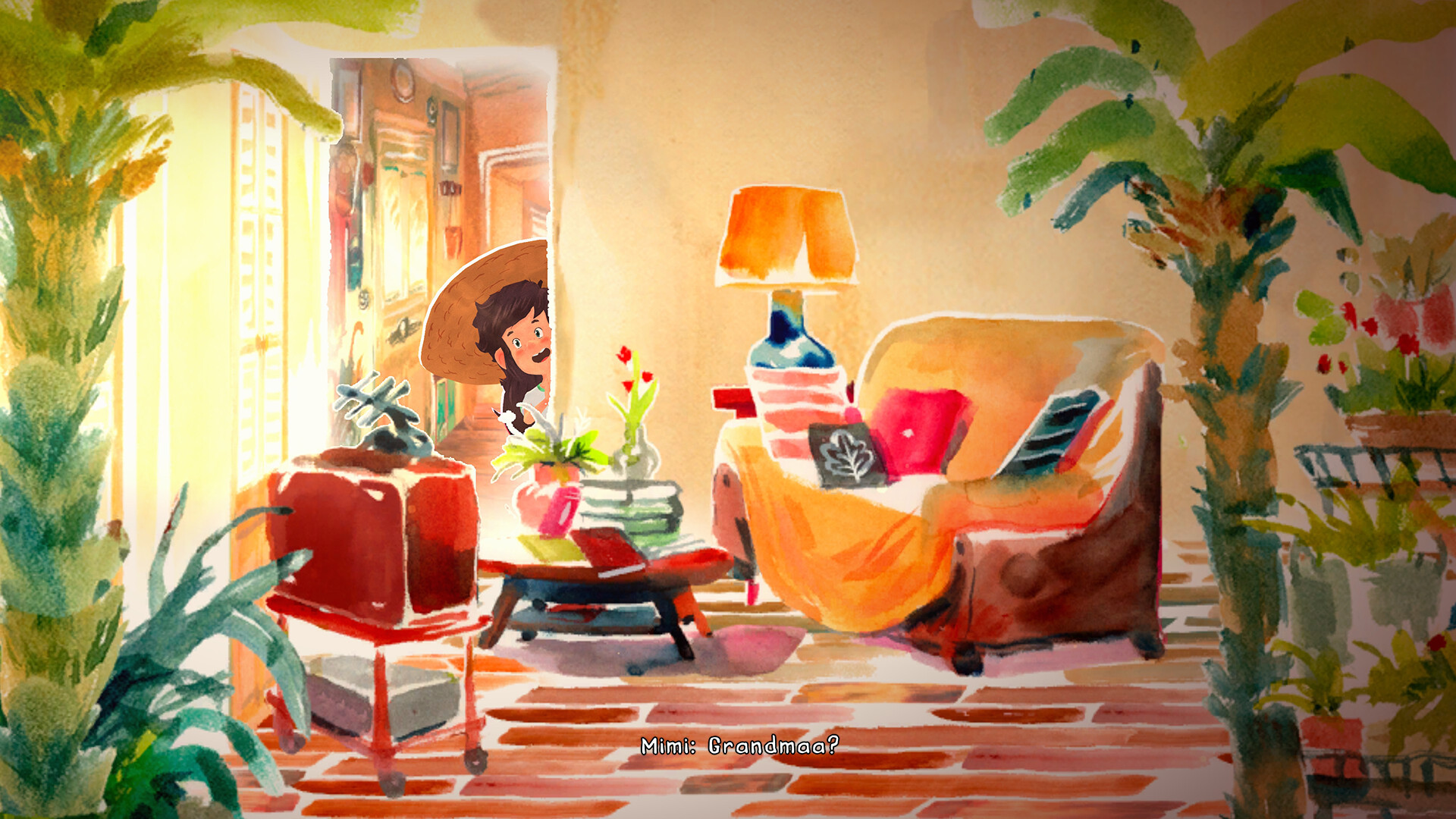
Dordogne’s presentation supports this close, chapter-by-chapter structure. The painterly backgrounds use visible watercolor texture, while the characters move through them as illustrated figures. Light, rain, color, and the shape of a room help distinguish a childhood recollection from the quieter adult return. The soundtrack and environmental sounds sit alongside the recorder mechanic, so listening belongs to the same act of paying attention as looking and taking photographs. The game is a single-player narrative adventure with no combat mode or separate multiplayer component on the Steam edition. Its progression is built around story chapters, short interactions, conversations, discoveries, and the scrapbook pages that close out parts of Mimi’s summer. It is available on PC as well as consoles; the Steam page identifies Un Je Ne Sais Quoi and Umanimation as developers and Focus Entertainment as publisher. The central activity stays consistent throughout: move through a carefully framed place, notice what has been left there, and connect a present-day return with a child’s view of the same landscape. The scrapbook, physical interactions, and letters each give that process a different form, while Mimi’s relationship with Nora anchors the journey.
- Developer
- Un Je Ne Sais Quoi and Umanimation
- Genre
- Narrative adventure