
About DOOM Eternal
Earth has fallen under a demonic invasion, and the DOOM Slayer fights across devastated human territory and other dimensions to stop Hell. This single-player first-person campaign combines fast arena combat, movement through dangerous environments, weapon upgrades and a resource loop that rewards pressing attacks with health, armour and ammunition.
Hell’s forces have overrun Earth, leaving humanity close to extinction. DOOM Eternal is the direct sequel to DOOM (2016), casting the player as the DOOM Slayer in a single-player campaign to stop the invasion and save humanity. The journey crosses Earth, Hell and other dimensions as the invasion spreads beyond ruined human cities. Each mission sends the Slayer further into the demonic assault, where progress is made by defeating the forces blocking the way. The campaign stays focused on his effort to turn back Hell’s armies and keep humanity from destruction. The Ancient Gods is a separate paid campaign expansion.
Combat is built around an aggressive cycle of spending and replenishing resources. Ammunition is limited, so the Chainsaw is a practical way to refill it by killing a demon, with fuel reserves affecting when it is available. Weaken an enemy enough and a Glory Kill can restore health. The shoulder-mounted Flame Belch sets demons alight; damaging burning targets produces armour pickups. These tools give the player a reason to change tactics as supplies run low: move toward a target for ammunition, stagger another for health, or ignite a group before attacking to collect armour. If ammunition and health are both low, the player has to weigh the immediate safety of a Glory Kill against the approach needed to reach a Chainsaw target. The loop rewards reading the fight and acting on what the Slayer currently needs, rather than relying on one weapon or staying at a distance.
The arsenal adds specialist options to that resource cycle. Guns have alternate modifications that change their use, and the player can switch between them during combat. The Plasma Rifle’s Heat Blast and the Heavy Cannon’s Micro Missiles provide distinct attacks, while the Super Shotgun’s Meat Hook pulls the Slayer toward a demon. Enemy anatomy also matters: heavy demons can lose their primary guns when those parts are targeted, reducing the danger they pose. The Sticky Bomb modification gives a direct answer to a Cacodemon, which can gulp down the projectile. An Ice Bomb can freeze DOOM Hunter boss variants, creating a window to attack. These details make enemy recognition part of the fight; the player can respond to a particular threat with a fitting weapon mod or piece of equipment rather than firing every tool in the same way.
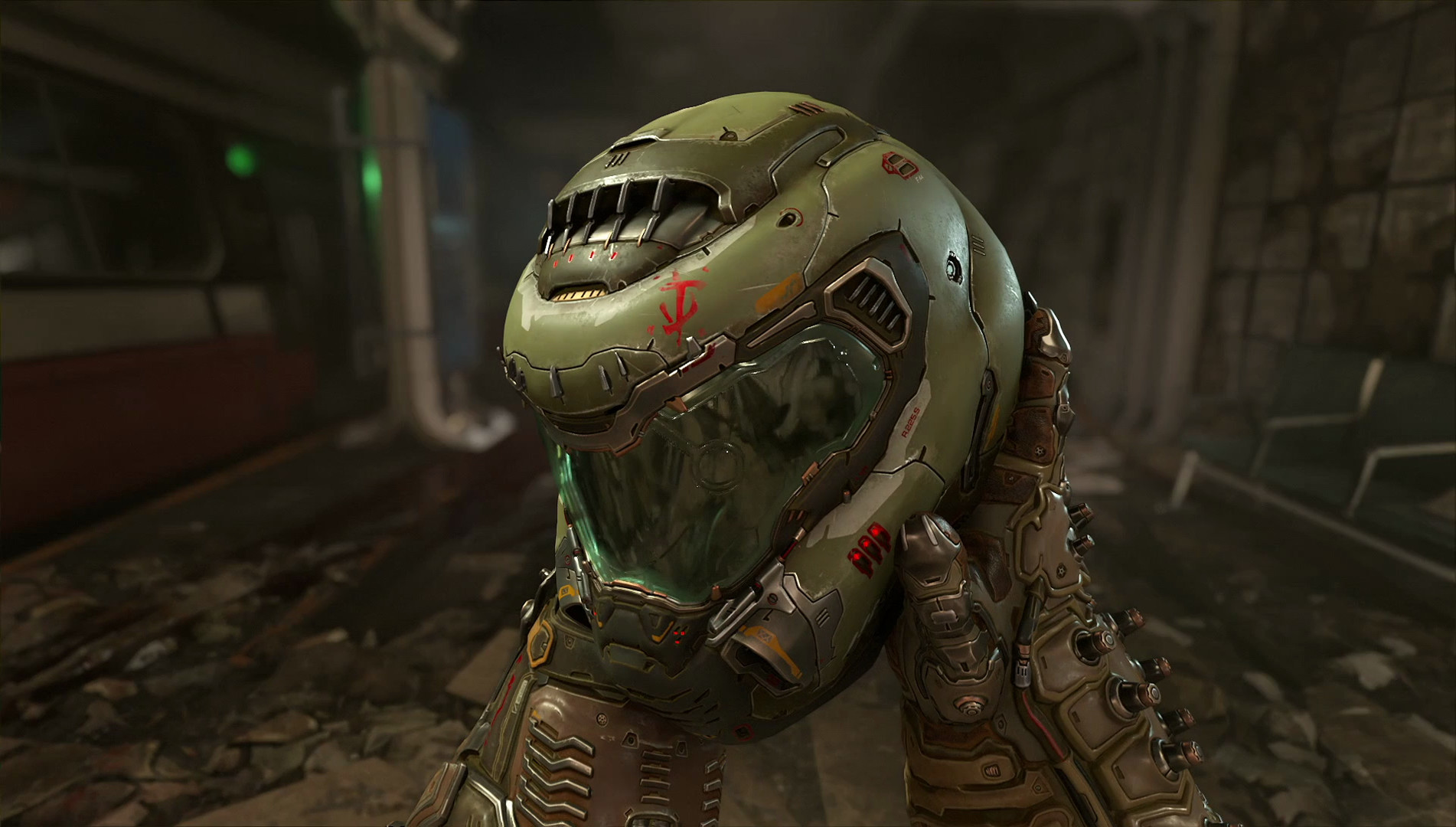
Movement carries from fights into the spaces between them. The Slayer can dash in the air or on the ground, cross gaps, evade projectiles and reach ledges. Once learned, Dash can be used twice in quick succession before its cooldown resets; certain level pickups restore the charge for another burst. Levels add climbable walls, monkey bars, punchable barriers and broken chains that can open environmental routes. Navigation can therefore ask for a mix of actions: grab a wall, vault from a bar, or break through an obstacle before reaching the next combat space. Arenas also give the Slayer room to circle between targets and pickups as attacks cross the floor.
The campaign’s upgrade systems let players shape the Slayer as the demon threat grows. Weapon Upgrade Points improve unlocked weapon modifications; clearing demons reduces a level’s Demonic Corruption and earns points, while mod challenges or Weapon Mastery Tokens unlock mastery effects. Praetor Suit Points purchase perks, including options in the Frag Grenade and Ice Bomb categories. Collectible Runes grant special abilities, but only a limited number can be equipped at once. Sentinel Crystals increase the suit’s health, armour and ammunition reserves, then allow bonus upgrades such as collecting resources from farther away or keeping demons aflame longer. Along with grenade and equipment perks, Praetor Suit categories include Fundamentals, Exploration and Environment.
Between major fights, levels include collectibles and optional challenges. Slayer Gate keys open arenas with harder encounters, and completing them contributes to equipment upgrades, so a key found off the main route leads to a distinct combat trial. Difficulty settings adjust the campaign’s challenge, while Master Levels remix campaign stages with a fresh arrangement of combat. The separate online BATTLEMODE pits one Slayer against two player-controlled demons, who face the Slayer together as a team.
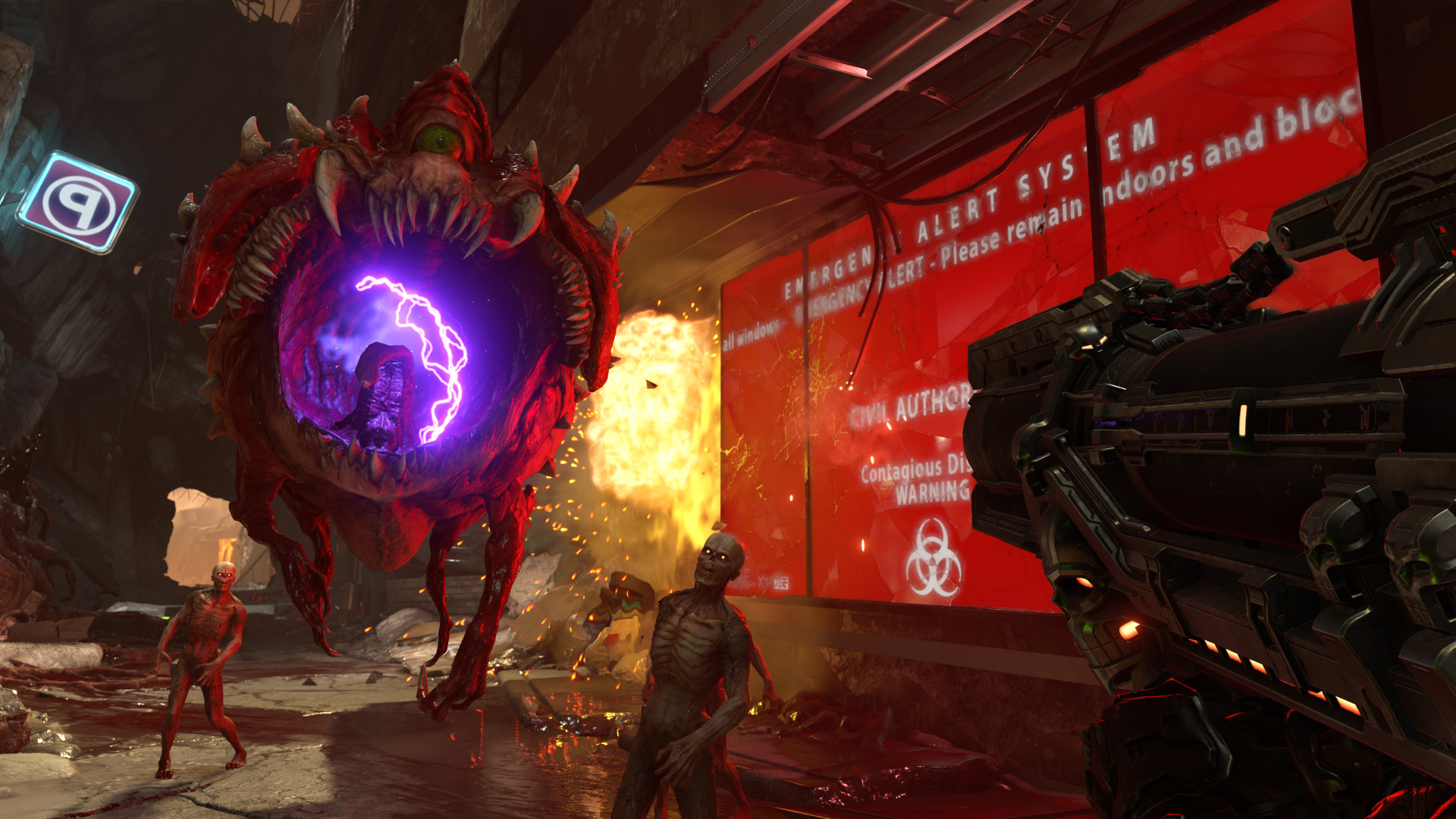
Horde Mode offers a separate single-player score challenge. The Slayer enters with perks, Runes and weapon mods already unlocked and upgraded, but starts with only the Combat Shotgun; the arsenal grows during the run. Its sequence spans three levels, with combat and challenges feeding a score rather than advancing the story of the invasion. Bounty demons give encounters another priority, since defeating them quickly can improve the score. This changes what preparation means: campaign progress normally builds the Slayer over many missions, whereas Horde Mode supplies the upgrades and asks the player to work with the weapons earned within that attempt. It gives the combat systems another setting in which target selection, speed and keeping control of a crowded arena matter, without adding a new chapter to the main campaign.
- Developer
- id Software
- Genre
- First-person shooter