
About Don't Starve Together
Don't Starve Together is a wilderness survival game in which one or more survivors explore the strange world of the Constant, gather resources, craft equipment and build shelter against darkness, hostile creatures and changing seasons. Its open-ended loop combines food, farming, combat and exploration, with caves, islands and deeper regions offering new resources and dangers.
Don't Starve Together takes place in the Constant, a strange wilderness filled with unfamiliar creatures, hidden dangers and old mysteries. It is the standalone multiplayer companion to Don't Starve, built so that players can cooperate in a shared world, host privately, join online or set out alone. Each new world is procedurally generated, so the shape of its biomes and the locations of resources vary between games. Survivors arrive with little equipment and must turn what they find into tools, light, food and protection. Rather than following a sequence of missions, the game leaves the group to decide whether to map the land, establish a base, farm, hunt, venture underground or sail away from the main island. The central task is to keep the characters alive while gradually learning which parts of the world are useful and which are dangerous.
The day-night cycle makes time itself a survival resource. During daylight, survivors can travel, gather grass and twigs, cut trees, mine rocks, collect food and inspect unfamiliar terrain. As dusk approaches, they need to be near a source of light or carry a torch; complete darkness is dangerous and also puts pressure on sanity. Health, hunger and sanity describe separate problems, so a full stomach does not guarantee safety. Food maintains hunger, injuries reduce health, while darkness, hostile creatures and other conditions can erode sanity. When sanity becomes low, shadow creatures can appear and attack, turning a declining meter into a combat hazard. Players therefore decide when to spend daylight travelling and when to pause for campfires, supplies or a safer route home. A short trip made late in the day can become risky if the return journey runs into night.
Gathering and crafting create the game's steady progression. Basic materials lead to simple tools such as an axe for wood and a pickaxe for rock, while traps can catch small animals and campfires provide light and heat through the night. The Science Machine lets a survivor prototype a wider set of recipes, making a settled camp valuable as a place to return, store materials and prepare equipment. Later, the Alchemy Engine expands the available recipes again. This creates a chain of practical goals: find the materials needed for a station, build it, then use its recipes to make better tools, weapons, armour, storage and survival structures. Items have durability, so equipment must be replaced or repaired through continued resource gathering. Inventory space is limited, and the group has to choose what to carry on an expedition and what to leave at camp.
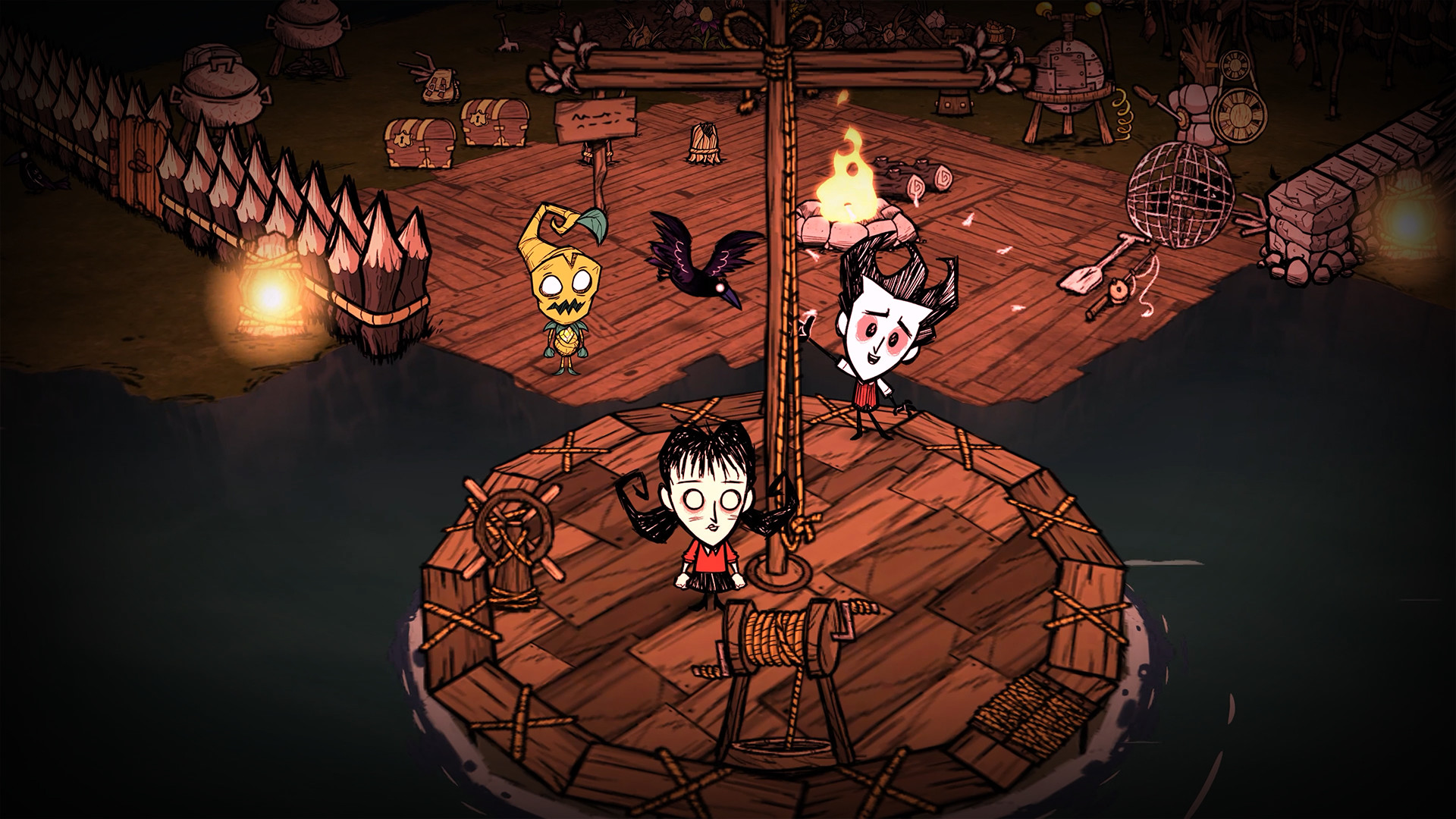
Food production can shift from opportunistic gathering to planned supply. Players can collect berries and other plants, set traps for small animals, hunt creatures for meat, and cultivate crops. A Crock Pot turns ingredients into prepared meals, making food a crafting problem as well as a scavenging one: ingredients gathered in several biomes can be brought together to produce more useful dishes. Chests keep spare materials organised, while a base can hold the structures and supplies needed for longer expeditions. Players may also encounter creatures such as spiders, pigmen and merms, whose drops or behaviour can make an area worth visiting. The group must balance the benefit of bringing back rare materials against the danger and time involved in reaching them. In multiplayer, players can divide gathering and construction tasks, but food, equipment and safe storage still need to support everyone sharing the world.
The environment changes across seasons, and preparation has to change with it. Temperature, rain and seasonal conditions affect how long a survivor can travel and what equipment is useful. Clothing and crafted items can help resist cold or heat; thermal stones provide a portable way to manage temperature after being warmed or cooled. Darkness remains a recurring concern, while hostile wildlife and seasonal bosses can threaten a camp or expedition. The game also includes recurring hound attacks, which make it important to keep weapons and armour ready instead of treating a base as completely safe. A group can respond by fighting, moving away from valuable structures or using the surrounding creatures and terrain to manage a threat. These pressures make a supply stockpile meaningful: resources gathered during a calmer period can become the difference between maintaining a camp and losing access to it when conditions worsen.
Beyond the surface, exploration opens several different kinds of destination. Caves take survivors below ground, where darkness, monsters and valuable resources change the risks of travel. The Ancient Archive provides a more unusual underground area, while the Lunar islands offer another remote destination across the ocean. Boats allow a group to leave the main landmass, carry equipment over water and look for islands, resources and creatures that are not part of an ordinary land journey. The game also features seasonal bosses and roaming threats, so exploring further can mean encountering stronger opposition as well as finding new materials. These areas are part of the same survival sandbox rather than separate story chapters: players equip themselves, travel out, respond to what they encounter and bring useful supplies back if they can. Each new region adds another set of decisions about preparation, transport, light and retreat.
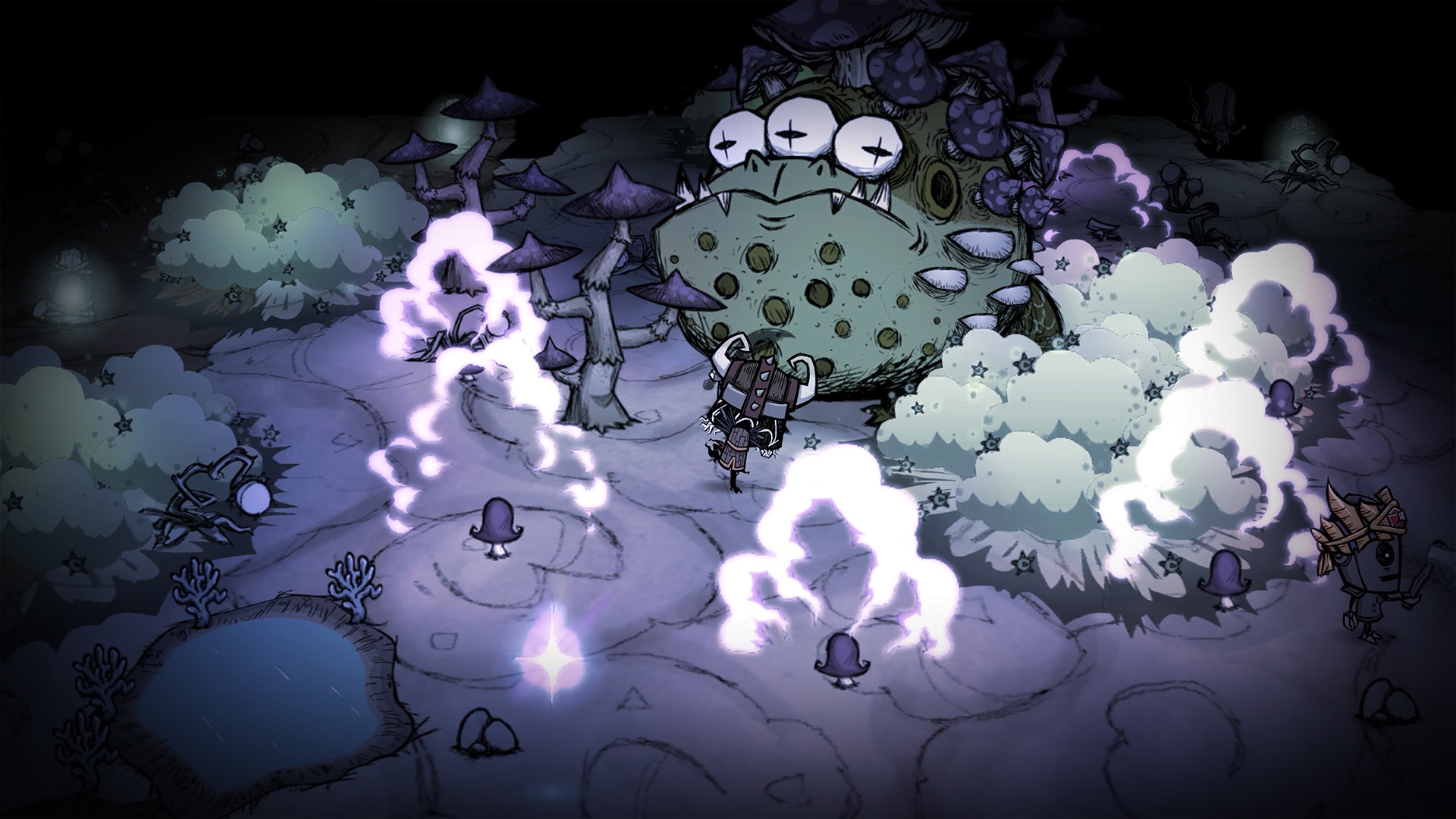
Don't Starve Together's longer-term rhythm comes from developing a camp and learning how systems support one another. Farming can add renewable ingredients, traps and hunting supply meat, and crafted cooking structures convert gathered food into meals. Science and alchemy stations unlock equipment that makes later trips possible; armour, weapons and light sources help with threats that would overwhelm an unprepared survivor. Players can choose different characters, share work in a cooperative session or play alone in the same world framework. With a base established, the group can keep exploring the map, sail between islands, venture into caves, prepare for seasonal encounters or build up its stores for the next change in weather. There is no single required order for these activities. The ongoing objective is to understand the Constant well enough to keep its changing demands from ending the current survival attempt.
- Developer
- Klei Entertainment
- Genre
- Wilderness survival, crafting and multiplayer sandbox