
About Don't Knock Twice
Don’t Knock Twice is a first-person horror game about a mother searching a manor for her estranged daughter and clues to a vengeful witch legend. Explore rooms, inspect and combine objects, uncover evidence, and use items to resist or escape the supernatural threat. The Steam game supports standard play and optional virtual reality.
Don’t Knock Twice is a first-person horror game built around a mother’s search for her estranged daughter. The mother is guilt-ridden, and finding the girl means uncovering the truth behind an urban legend about a vengeful demonic witch. The story unfolds within a large manor house, where the mother searches rooms and hidden corners for clues that connect the legend to the threat around her. Its title draws on the warning that one knock wakes the witch and a second raises her from the dead. The game was developed alongside the 2017 horror film of the same name. Its story centers on the mother’s search inside the manor and the legend shaping the threat. The premise gives the exploration a personal purpose as well as a supernatural mystery.
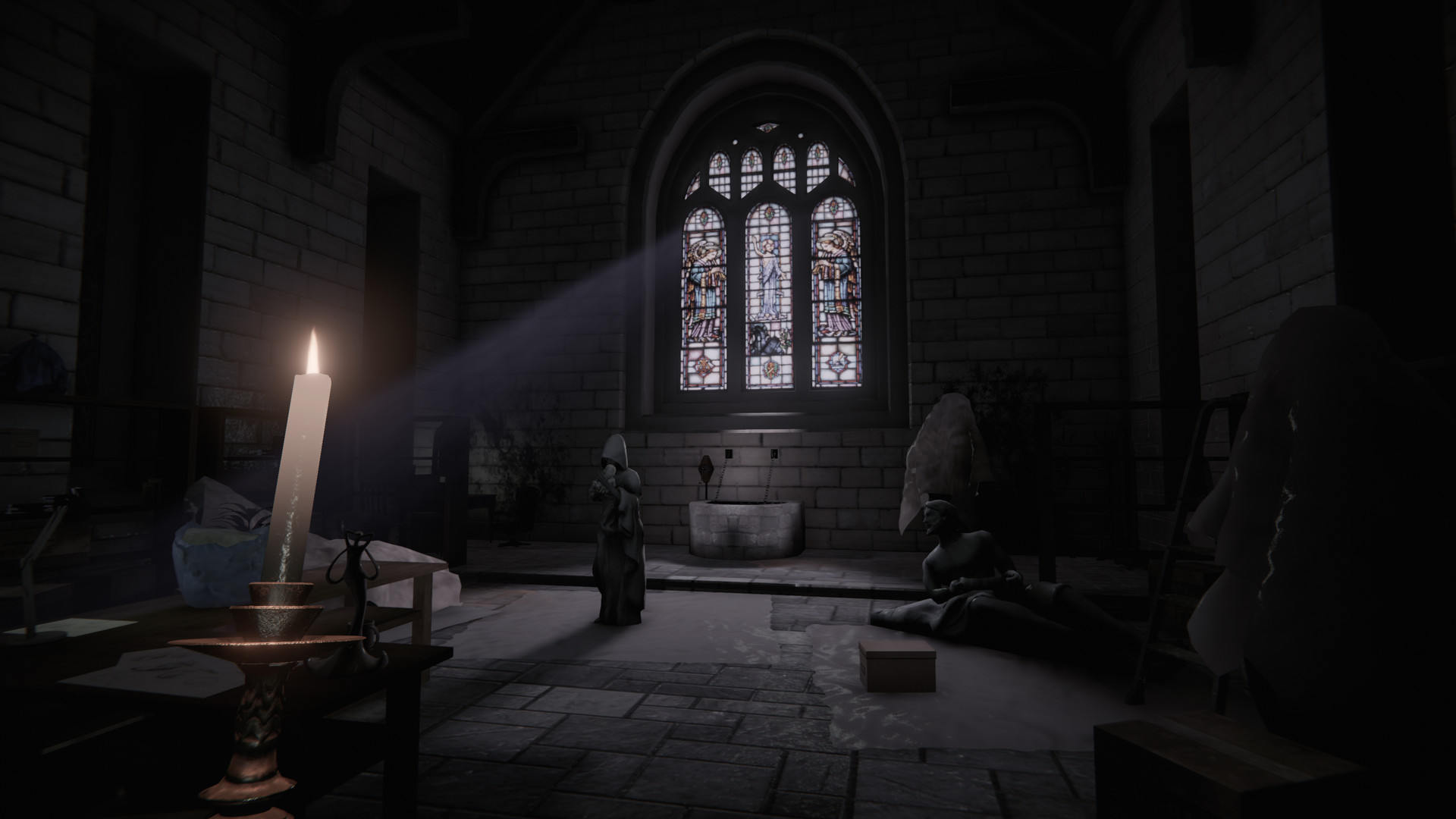
The manor is the central place of investigation. Players move from room to room, examining objects and looking for details that may provide a clue, unlock a way forward, or explain more about the haunting. Nearly every object can be examined, making close inspection a regular part of progress. The house’s different areas hold pieces of the search for the daughter and the history of the witch legend. This focus on a single large environment lets familiar domestic objects become part of a threatening setting: something that first appears to be decoration may matter to a puzzle or to understanding danger. Exploration is active and observational, with the player searching the house instead of following an external map through a broad open world. Rooms form a connected space to be read closely.
Items found in the manor can be used to interact with the environment and solve puzzles. Some objects can be combined, and the resulting tools may help the mother fight or escape the threat. This gives inventory decisions a practical role: a discovered item may be useful because of where it fits or what it can be paired with, rather than simply because it is collectible. Clues also build the larger investigation, connecting the mother’s search to the legend surrounding the witch. The puzzle structure and item use keep the player engaged with the physical layout of the house, asking them to consider both what a room reveals and what it makes possible. The game’s interactions make ordinary objects useful for interpreting and navigating a place that has become dangerous.
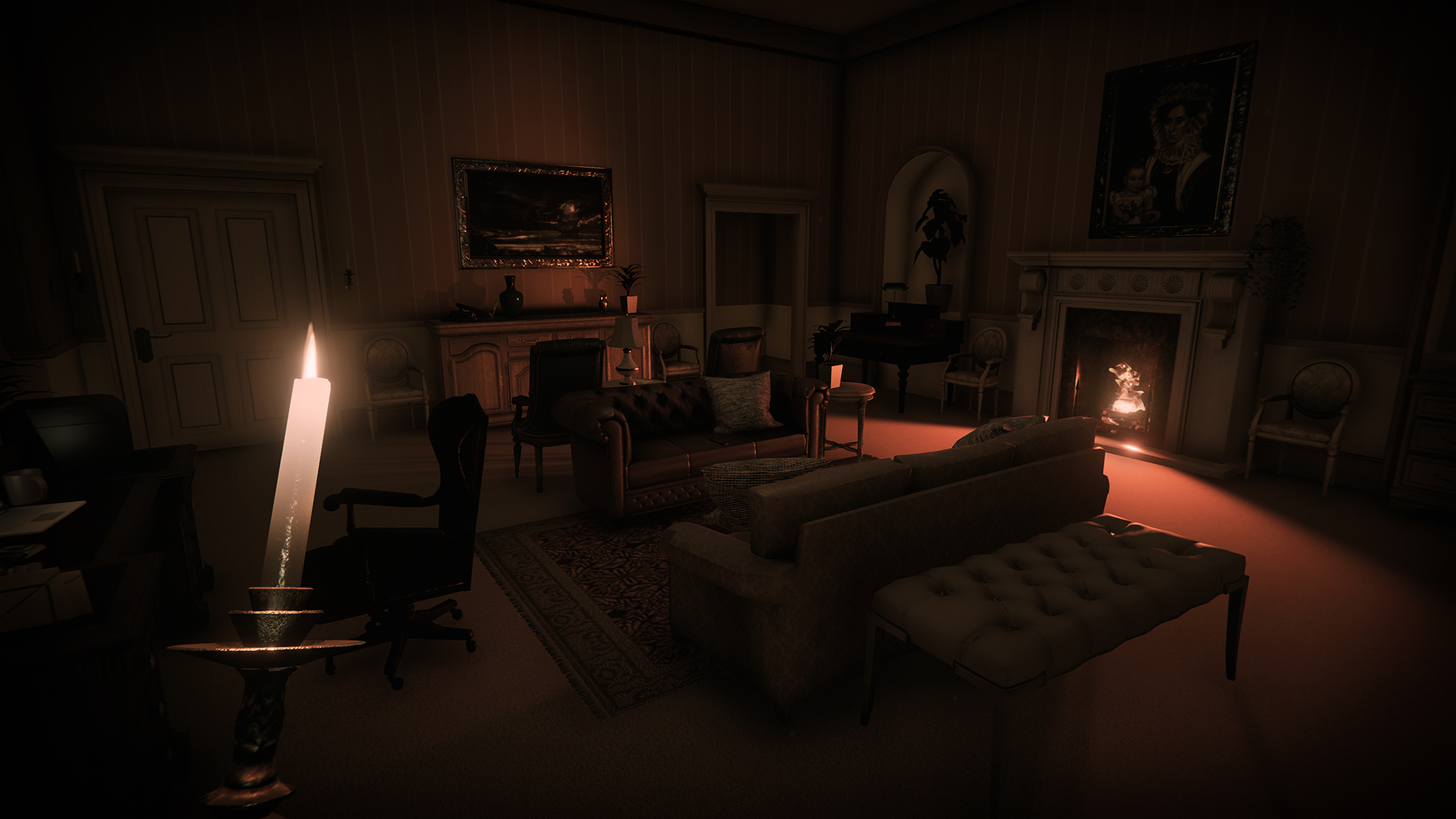
The supernatural danger gives ordinary exploration a persistent edge. The mother is not sent to hunt the witch as a conventional action hero; her task is to find her daughter and survive what confronts her inside the manor. An item might offer a way to push back against danger or create an opportunity to escape, while a clue can make the legend more understandable without making the house safe. The psychological horror draws on an urban legend, and the first-person view keeps the player close to each room and object. The game uses atmospheric 3D sound to support that enclosed setting. Careful searching, sound, and the possibility of a sudden threat shape the experience around attention and unease. The goal remains investigation and survival within the house.
Don’t Knock Twice can be played with or without a VR headset. Players can choose a mode at the start and switch between them while keeping their progress. Standard play supports keyboard and mouse or a conventional controller; virtual reality offers walking or teleport movement. The game can be played seated, standing, or room-scale in VR. These options change how the player searches the manor: a screen-based view uses familiar controls, while a headset places the player inside the rooms and lets them reach toward objects. VR changes how the player examines and handles the environment, but the investigation still depends on finding clues and working out how objects connect.
The manor’s layout draws on the genuine location used in the companion film, giving the game’s central setting a real-world reference. Its rooms were shaped to feel believable and avoid a repetitive environment, while the presentation was tuned for a smooth experience that reduces motion-sickness risk. The scare design also changes with perspective. In virtual reality, head tracking can draw the player’s attention toward a place they might prefer not to look, making the act of turning to inspect a room part of how a scare is staged. Standard screen play cannot force a player’s head in the same way, so the scares are balanced for both forms. Alongside the main narrative clues, hidden collectibles offer optional reasons to look more closely. These optional finds sit apart from the clues that carry the story: a room may advance the mother’s search, reward a closer look, or do both. That adds a completion-oriented layer to the manor exploration. The recognizable manor and gaze-directed set pieces tie the place the player searches to the way some scares unfold.
- Developer
- Wales Interactive
- Genre
- First-person horror adventure