
About Doki Doki Literature Club Plus!
Doki Doki Literature Club Plus! combines the original psychological horror visual novel with six additional Side Stories about the club members becoming friends. Join Sayori, Natsuki, Yuri and Monika in the Literature Club, write poems and make choices, then explore the added stories, music player and unlockable gallery.
Doki Doki Literature Club Plus! begins with a familiar school-club invitation. The protagonist joins the Literature Club after childhood friend Sayori brings them in, hoping to meet someone romantically. The club’s other members are president Monika, quiet bookworm Yuri and Natsuki, who guards a softer side behind a tough manner. The story is presented as a visual novel: dialogue and illustrated scenes carry the action, while choices shape how the protagonist relates to the club members. The original experience builds its horror around that setting of poems, friendship and school romance. At first, the tension sits within ordinary meetings and small decisions, while deeper revelations emerge through the story.
Poetry is the central activity that connects the protagonist with the club. The player writes poems and makes choices during conversations, with the aim of attracting a crush and discovering where the school-romance story leads. The words and choices matter because the characters respond to what the protagonist shares, giving the quiet club meetings a sense of direction. Sayori’s warmth, Natsuki’s interest in cute things, Yuri’s reserved bookishness and Monika’s leadership provide different personalities around the same activity. Rather than treating the club as a backdrop for a separate action system, the game uses reading, writing and conversation to move the story forward. Its psychological horror develops within those familiar visual-novel interactions, so ordinary social moments carry narrative weight.
The Plus edition retains the original core experience and adds a separate set of six Side Stories. These stories sit outside the original game’s timeline and focus on how the club members first meet and gradually become close friends. Each story follows a pair of characters, giving the relationships more space through conflicts about communication, respecting one another’s needs and understanding personal insecurities. They are additional narrative chapters rather than new romantic routes for the player character. Their focus is on the group’s formation and on the ways the members learn to work through misunderstandings. This parallel structure lets players spend more time with the club without replacing the original story or requiring its ending to be explained in advance.
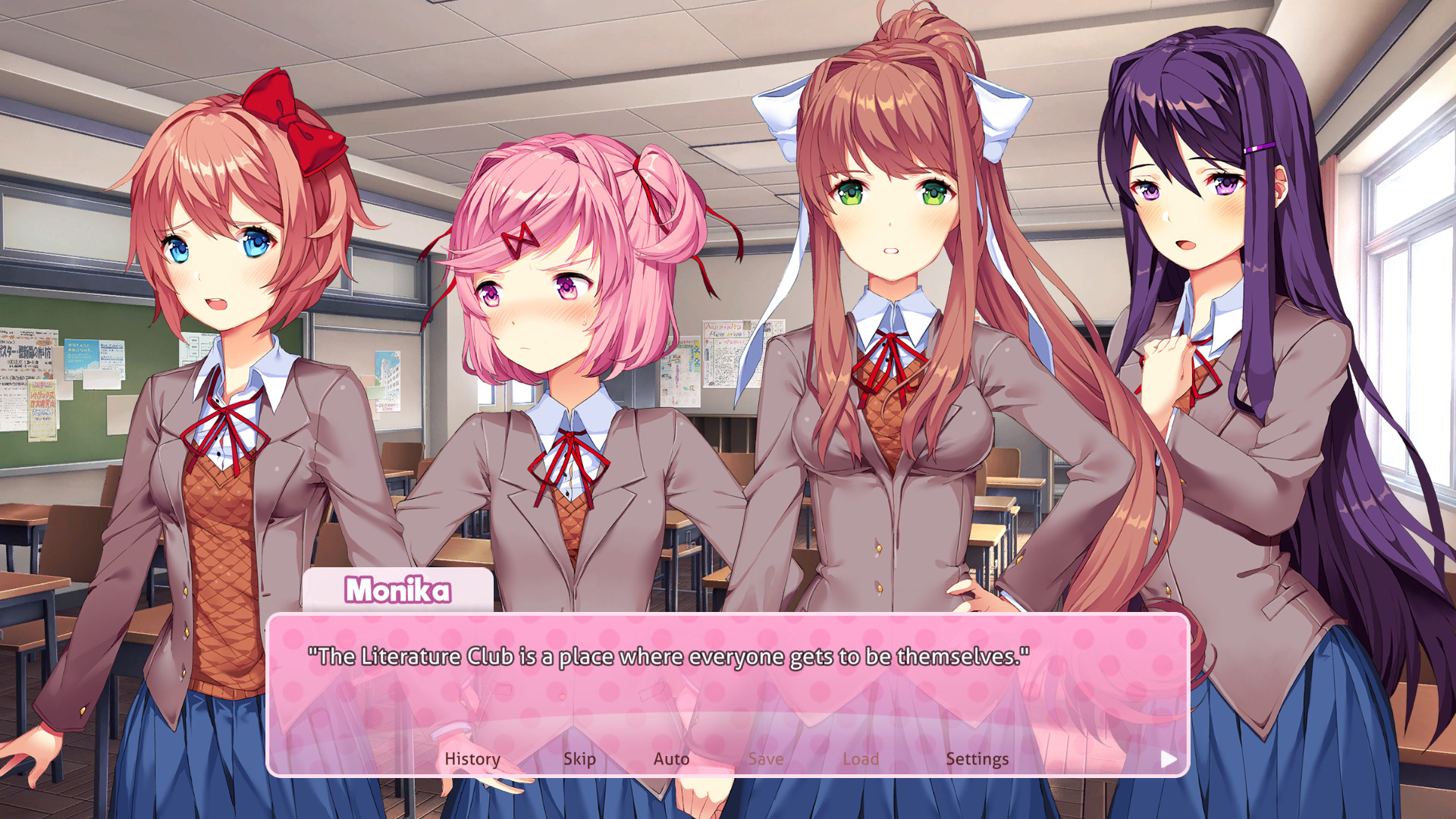
The Side Stories use the same broad language of dialogue, character portraits and literary interests, but their subject is friendship as it develops among the members. The stories show pairings of club members navigating challenges and learning about themselves and one another. That emphasis gives the group a history beyond the protagonist’s arrival: the club is something these characters build together. Each chapter can be approached as another piece of that origin, widening the view of how Sayori, Natsuki, Yuri and Monika relate to one another. The writing remains the main form of interaction, with conversations carrying changes in trust and understanding. This added material supplies more context for the relationships while staying distinct from the original route through the school-romance premise.
Plus also adds a music player, an expanded soundtrack and a gallery of unlockable images. The complete music library contains twenty-six tracks, including thirteen new pieces, and the player can create a playlist or repeat one song. New music accompanies the Side Stories, and playing those stories unlocks tracks for the music player. The image gallery includes more than one hundred pieces such as game art, wallpapers and concept sketches. Pictures are unlocked as you explore the game and try different content, making the gallery a record of what you have discovered. These features sit alongside the narrative rather than serving as a separate campaign: reading and exploring unlocks material that can then be revisited from the additional menus.
The Plus release presents the original artwork in Full HD, bringing its illustrations to 1080p while preserving the visual-novel format. It also includes optional content warnings that can alert players before scenes with sensitive material. Both features change how the original story is presented without replacing its core scenes. The warning option gives players a way to receive advance notice, and the visual upgrade makes the character art and backgrounds sharper on supported displays. The Steam edition is single-player and includes the original experience, the six Side Stories and the added music and gallery features. The digital edition’s game content is the focus here; physical-package collectibles are not part of the in-game story or features.
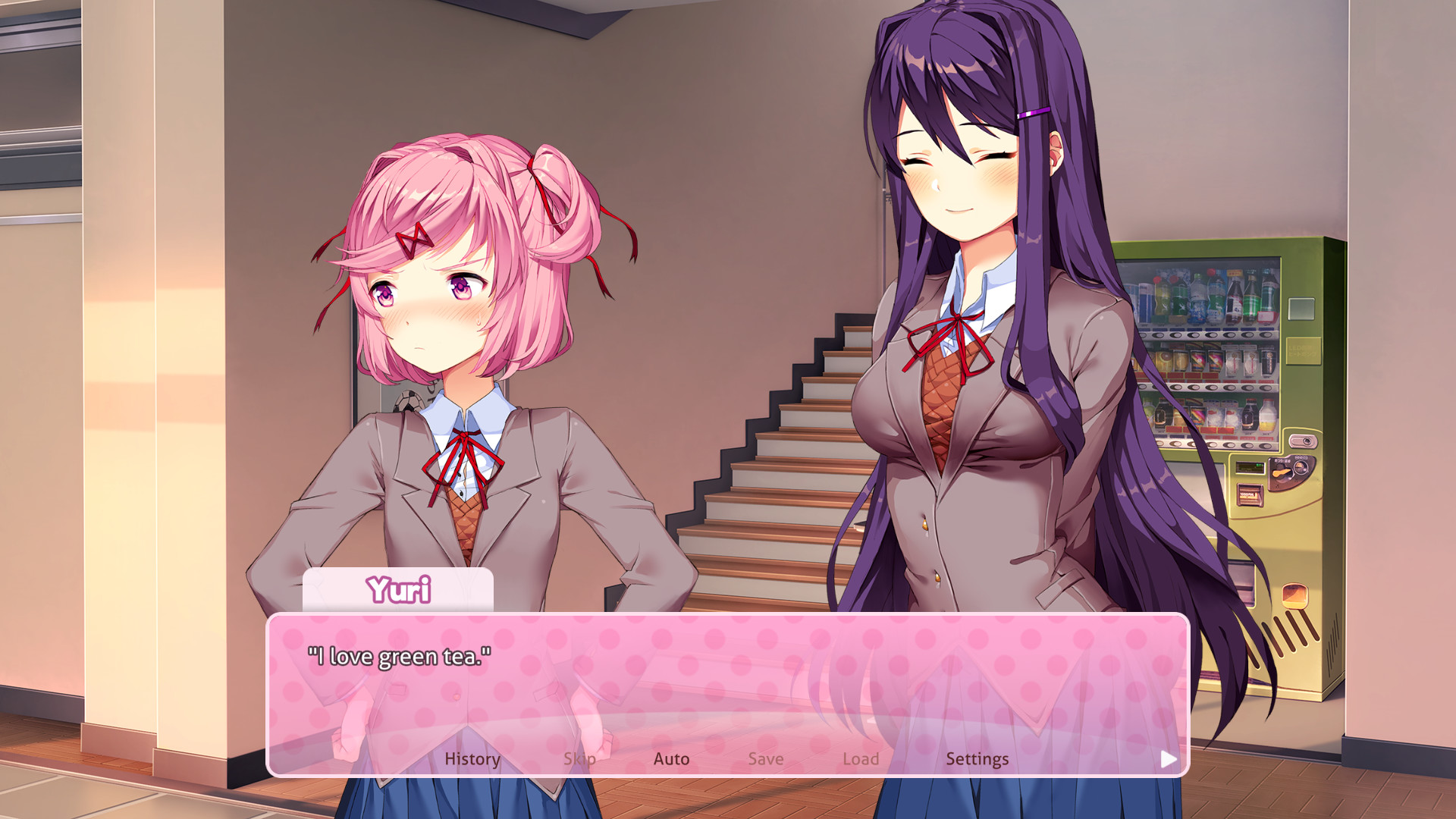
The cast’s different temperaments give the conversations their shape. Sayori is the childhood friend who recruits the protagonist and is known for her cheerful outlook; Natsuki can be prickly but cares about cute things; Yuri is reserved and passionate about books; and Monika leads the club. The game’s choices play out within a psychological horror visual novel, where familiar social rituals such as sharing a poem can lead into less comfortable territory. The added Side Stories provide another way to spend time with the same characters, showing their friendship developing outside the original timeline. The release pairs the protagonist’s story with a look at how the four club members became a group.
- Developer
- Team Salvato
- Genre
- Psychological horror visual novel