
About Divinity: Original Sin - Enhanced Edition
In Rivellon, two newly appointed Source Hunters travel to Cyseal to investigate the murder of Councillor Jake. The inquiry quickly intersects with attacks on the city and a threat to time itself. You shape both protagonists, build a party, follow leads across an explorable world, and use turn-based combat, elemental spell combinations and co-operative choices to advance.
Divinity: Original Sin – Enhanced Edition opens with two player-created Source Hunters sent to the coastal city of Cyseal to investigate Councillor Jake’s murder. The assignment sounds contained, but an orc assault interrupts their arrival and pushes the investigators into a wider crisis. A Star Stone found at the murder scene links the local case to the Homestead, a realm at the End of Time, and to Zixzax, an imp historian who warns that time itself faces destruction. The route from a crime scene to a cosmic threat gives the party’s work two connected scales: gather evidence about what happened in Cyseal, then learn why the strange stones matter to Rivellon.
The murder investigation is a social and exploratory loop as well as a story hook. In Cyseal, the Source Hunters question residents, examine places and objects, and pursue leads while the city responds to an attack by orcs and an undead threat. Captain Aureus and the mage Arhu can direct them toward local problems; Mayor Cecil, the King Crab Tavern, the clinic and the cemetery broaden the inquiry beyond a single room. The player can take time to speak with suspects and townspeople, read notes, search containers and pursue side quests. A clue may clarify a conversation, open another lead or send the party away from town, so progress can come from connecting observations rather than following a single marker. Several quests can be active at once, and some leads wait until the party has gained enough experience or found a new route. The journal keeps their status and newly learned information together, giving the player a way to return to an unresolved thread after exploring elsewhere.
Beyond Cyseal, the investigation opens onto different regions and a widening conflict around Source, the dangerous magic the Hunters are charged with confronting. The early story introduces the Star Stones and the Homestead as more than unusual objects: their use opens travel portals and reveals a broader struggle whose consequences reach past the city. Zixzax and Astarte become recurring figures in that thread, while later areas introduce the Immaculates and other forces tied to the threat. The Enhanced Edition revises and extends the original game’s story, adding new and changed content and a different ending, so its plot and quest sequence should be understood as this distinct edition rather than as a simple visual or audio upgrade.
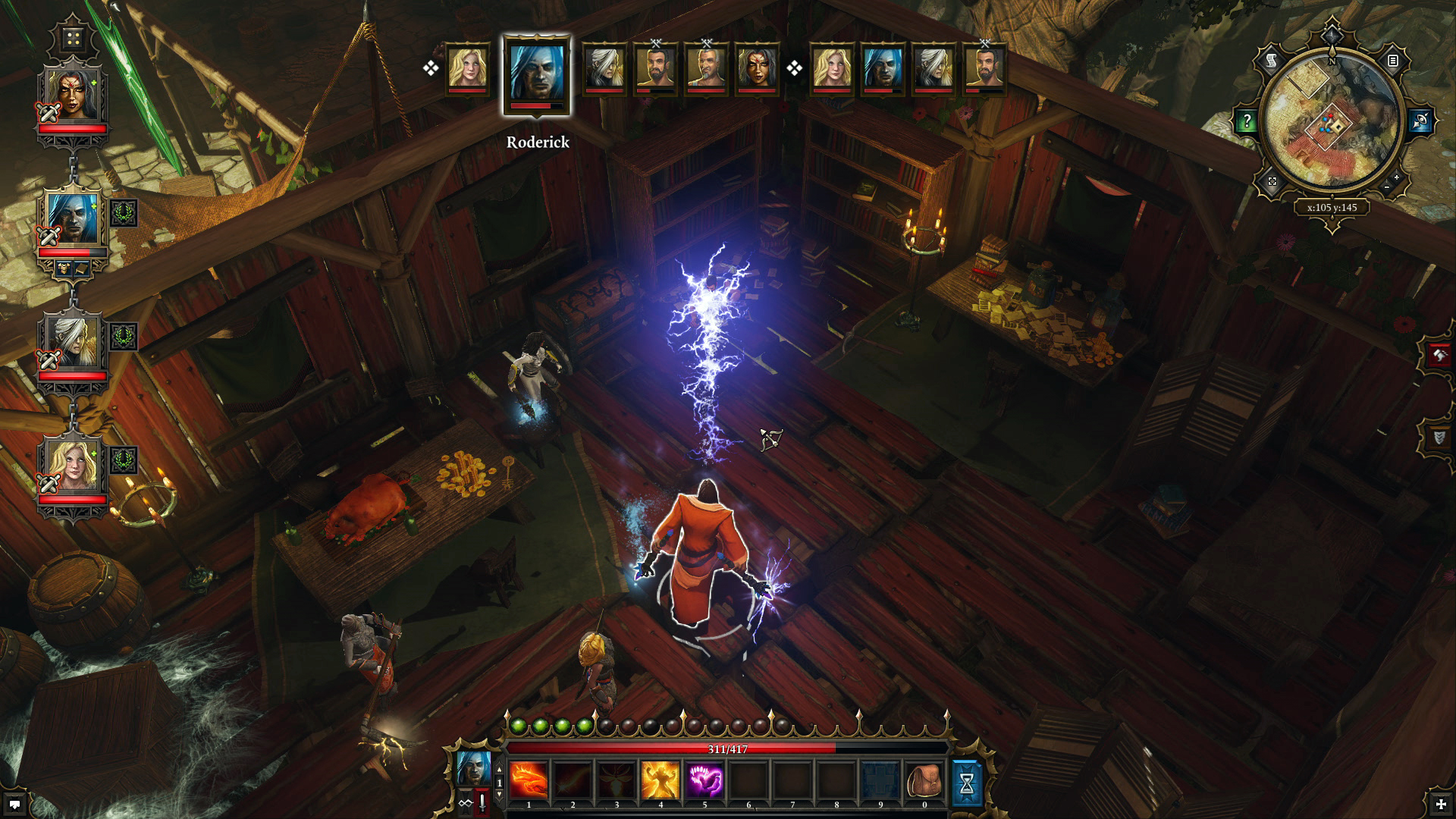
The two protagonists are created together before the journey begins. Their appearances, talents, attributes and skills can be customized, and the game does not lock them into fixed classes: a character built around weapons can also learn healing magic, while a spellcaster can take up other skills. Recruited companions add additional party members and personal perspectives. Madora and Jahan are among the companions encountered around Cyseal; a four-person party means deciding which abilities and roles to bring along. Party members can be separated during exploration, allowing one character to approach or distract while others wait elsewhere, then reunited when the situation calls for the group.
Combat uses turns and action points, with movement, weapon attacks, skills and items all drawing from the points available to a character. The turn order includes allies, enemies and friendly characters, so a turn is a short resource puzzle: close distance, strike, use an ability, or keep points for the next round. The game previews how much movement and an attack will cost before committing. Skills learned through character development add tactical options, and their range or area can make positioning decisive. Party members who are outside combat can still move independently if the group has been split, creating a way to coordinate an encounter before everyone enters the turn sequence.
Elemental interactions make the battlefield itself part of the party’s toolset. Water can be electrified to shock characters standing in it; oil can slow an enemy and then be ignited; rain can extinguish burning surfaces. A spell choice therefore changes both damage and the hazards or safe routes left behind. The Enhanced Edition’s broader skill and spell combinations let characters prepare one another’s opportunities, while objects and surfaces can make a familiar attack behave differently. Outside combat, the same experimental habit applies to objects, dialogue and crafting: items can be combined into potions, scrolls, arrows, food, weapons and armour, and some recipes are found in books while others can be discovered by testing combinations.
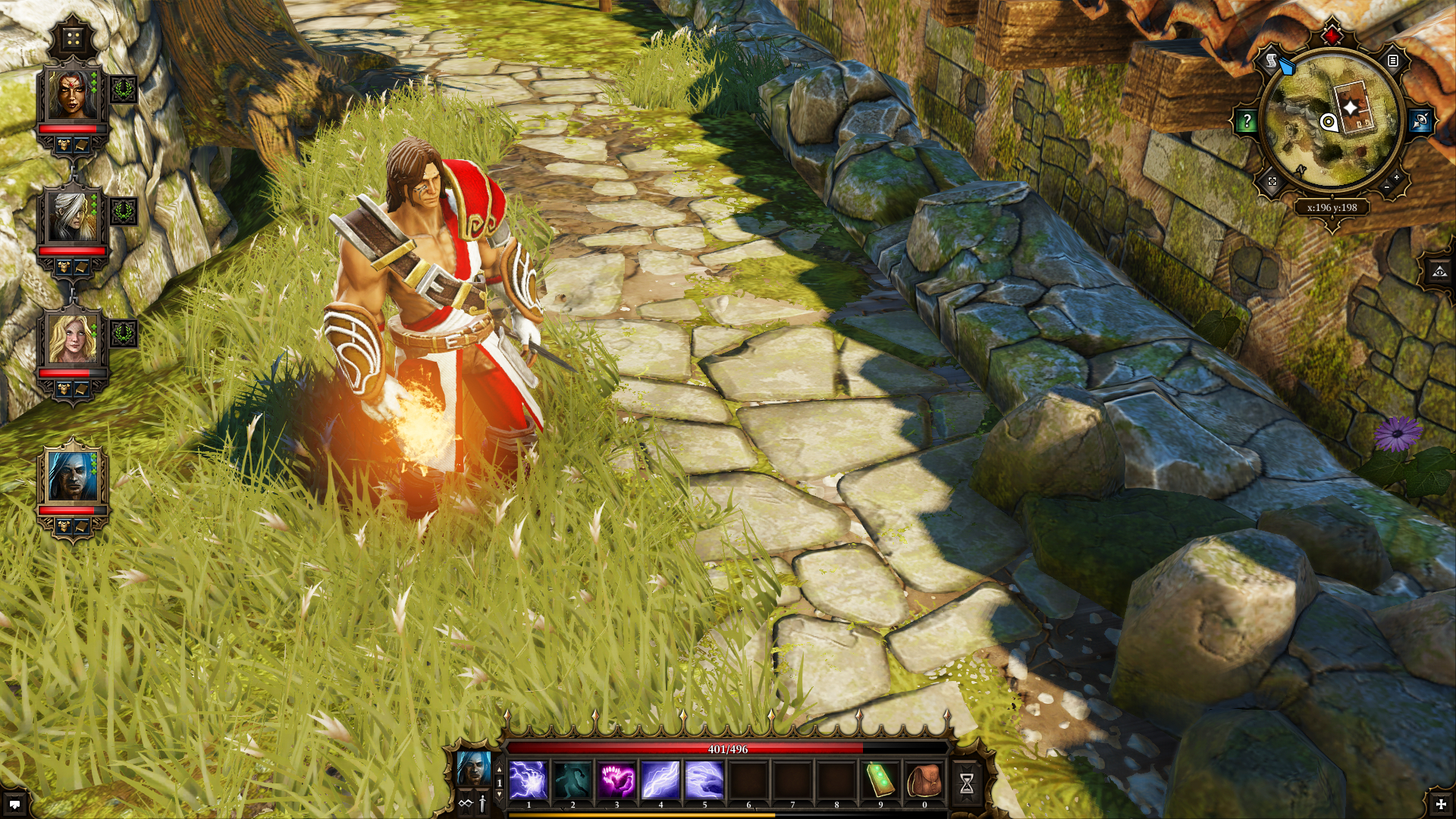
Progress depends on exploring, resolving quests and finding the resources that make a party more capable. Experience raises levels, at which the player can adjust attributes, skills, abilities and talents; weapons and armour also change what each character can do. Inventory weight limits how much a character can carry, and the journal records quest status and recent information. Waypoints let the party return to places they have already discovered, while portals associated with the Homestead open further connections as the story advances. The Enhanced Edition supports solo play and co-op, including local split-screen; in multiplayer, each player controls one of the two main heroes during conversations as well as combat, so choices can become a shared discussion rather than a single-player selection.
- Developer
- Larian Studios
- Genre
- Adventure and role-playing game with turn-based combat