
About Disgaea PC
Two years after Overlord Krichevskoy's death, demon prince Laharl wakes to find the Netherworld unsettled and its throne contested. With his ambitious vassal Etna and the angel trainee Flonne, he fights rival forces while pursuing succession. Disgaea PC brings the first Disgaea's tactical role-playing adventure to PC with the content of Afternoon of Darkness.
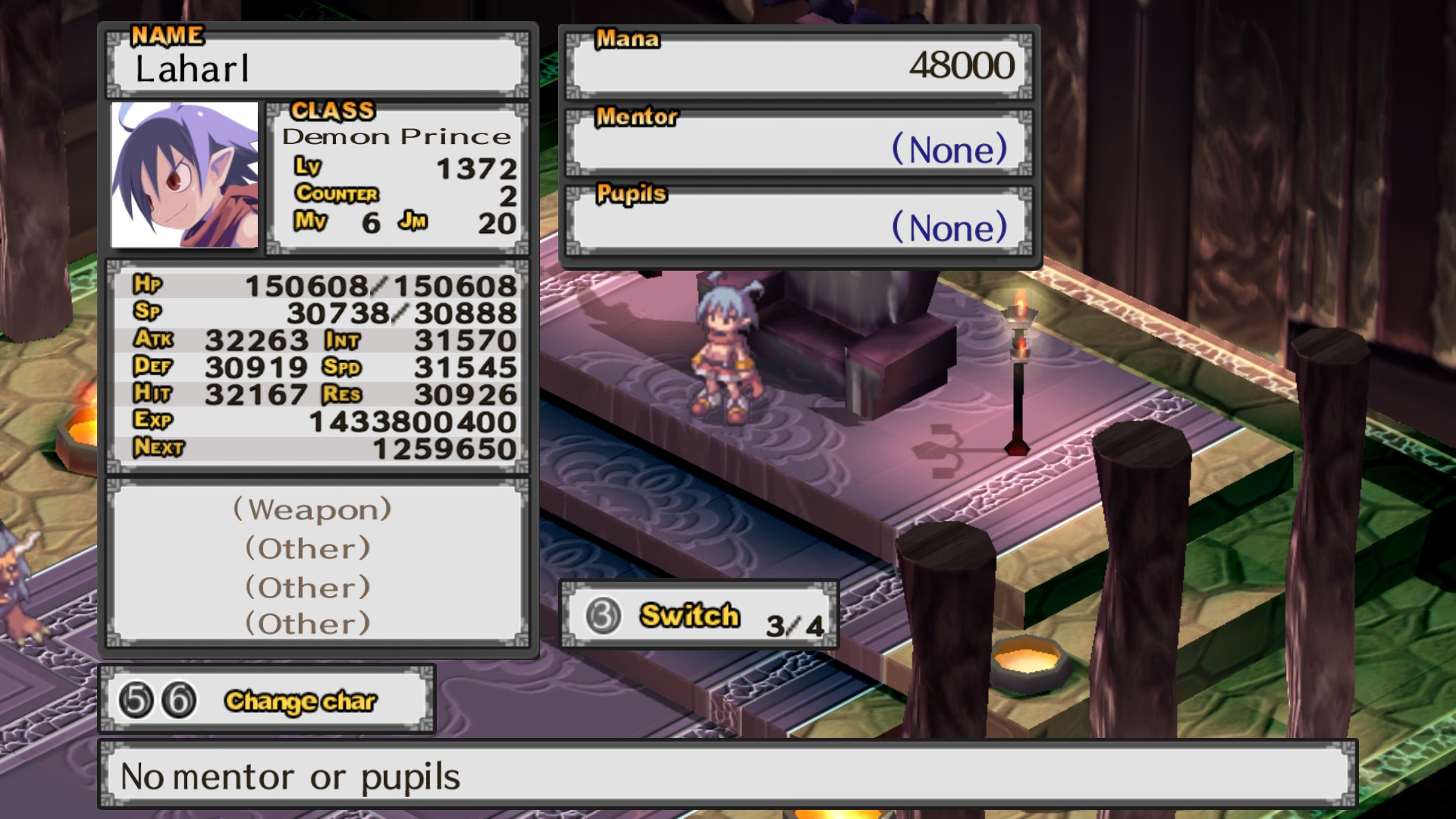
The Netherworld loses its ruler when Overlord Krichevskoy dies, and the demons whose ambitions had been held in check begin competing for power. Two years later, his son Laharl wakes from a long sleep intent on claiming the vacant throne. His outlook is bluntly self-centred: he treats succession as a contest of strength and rejects ideas such as love and kindness. That attitude puts him at the centre of a story where familiar moral labels have been rearranged. Demons govern this world, angels arrive with their own plans, and the political struggle often turns into a comic clash between grand claims and petty motives. The plot follows Laharl's campaign for supremacy rather than a party of conventional heroes trying to restore a human kingdom. The Netherworld is not a single battlefield or a realistic political map; it is the setting for a succession story that advances through a sequence of tactical stages and character scenes. Its tone comes from the friction between Laharl's domineering self-image and the people who travel with him, including those who do not share his definition of what an Overlord should be.
Laharl's companions make that conflict personal. Etna is his vassal, but she has ambitions of her own and is not simply an obedient aide; she also respected the late Krichevskoy. Flonne enters the Netherworld as an angel trainee sent on a mission connected to Krichevskoy's death. She is an enthusiastic advocate for love among demons, a belief Laharl openly resists. Their disagreement supplies a continuing source of dialogue as the party moves from one confrontation to the next. Other figures complicate the contest, including the self-styled Baron Mid-Boss, who repeatedly appears and appoints himself Laharl's rival, and leaders in the Celestial Realm whose intentions are not identical to Flonne's. The story moves through fourteen episodes, with scenes and character exchanges marking important turns and previews leading into the next episode. The central question stays focused on succession and the competing motives around it. The differences among Laharl, Etna and Flonne give their uneasy alliance a reason to keep changing as each confrontation tests their ideas about power and goodness.
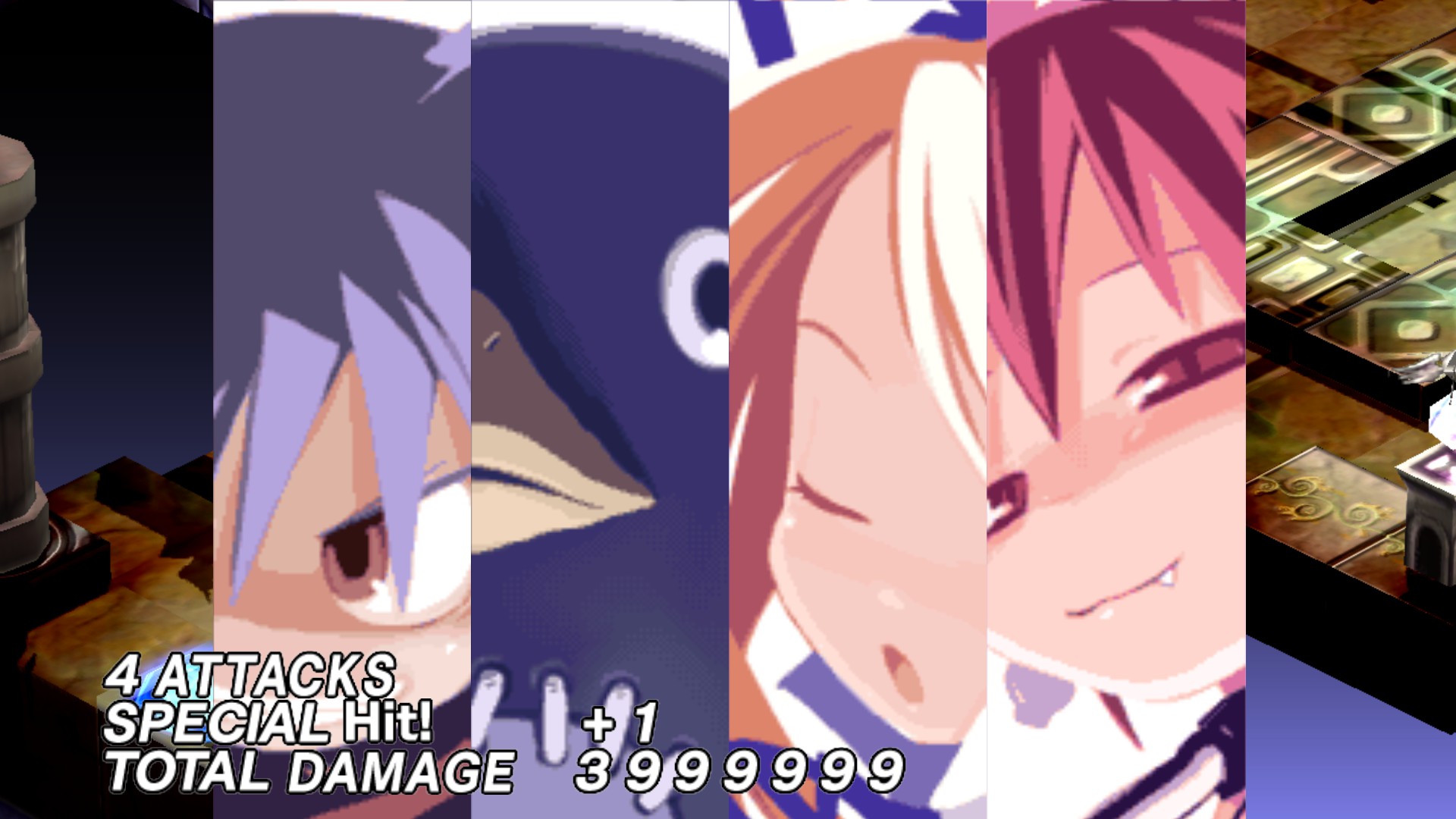
Progress is organized around area maps, each with a stated condition that must be met to finish the stage. Battles use a tactical grid: the player selects allied units, moves them across the map and chooses attacks or abilities, then the enemy side takes its turn after allied actions are complete. Completing a stage advances the story and gives the roster another opportunity to grow. The attack command plays out through character animations on the map, so a decision made through menus becomes a visible exchange of weapon strikes, spells and special techniques. This alternation between planning and action is the basic rhythm of a mission. Position and reach matter because a unit must be moved into a useful place before its attack can connect, while the stage's particular objective determines what counts as progress. The game identifies itself as a strategy role-playing game, but its maps also carry puzzle-like features that can change the value of a route or a target. Instead of resolving every problem through raw damage, players can use terrain effects and the game's unusual lifting and throwing actions to alter access and enemy placement. The tactical layer and the broad character growth systems work together: battles are both story gates and the main setting for trying out the units and equipment assembled between them.
Lift and Throw gives humanoid allies a way to move characters across more ground than ordinary movement allows. A unit can pick up a nearby character, friend or foe, then choose a direction and distance to throw it. That can send an ally toward enemies or push an opponent away from a threatened position. The throw range differs by character, so the maneuver depends on who is carrying whom and where the target needs to land. The chain can also be extended: one character can lift another who is already holding a unit, creating a relay that passes a teammate across the map. The official system description restricts the Lift and Throw commands to allied humanoid characters, making unit composition relevant to this mobility trick. Stages also use Geo Panels and Geo Symbols. A symbol placed on a colored panel grants its effect to units standing on panels of that color; listed effects can raise attack or lower defense. Destroying a symbol causes the same-colored panels to change to its color and sends a damaging wave across them, affecting both sides. A map can therefore become a spatial puzzle: the player weighs whether to exploit a beneficial effect, remove a dangerous one or trigger a color change that will hit multiple units.
The roster can grow beyond the named story cast. The Dark Assembly lets the player propose requests, including creating allied characters and changing what is available for purchase. Senators can support or oppose a proposal; bribery can influence their position, and a rejected request can be contested by fighting the dissenting members. Character creation begins with basic jobs, while raising units makes higher-ranked jobs available. The first game's official materials name roles such as warriors, martial artists, mages, clerics, thieves, archers, samurai and ninjas, alongside monster characters. These are not merely different portraits: the PC listing advertises more than forty character types, and describes a wide range of spells and special skills. That breadth gives the player room to assemble a force around different weapons and abilities, then take those choices into maps whose layouts and objectives vary. Recruitment is tied to the same political system used for other requests, so growing the army is part of the Netherworld's institutional satire as well as a menu-based management task. The parliamentary process can turn a request for a new ally into another tactical encounter, connecting preparation, character development and combat rather than keeping them in separate modes.
Equipment has its own route for growth through the Item World, a randomly generated dungeon world inside each item. A weapon or piece of armour has a sequence of changing area maps, and clearing floors raises that item's level. Enemies appear inside these maps, so an equipment expedition is still a series of tactical battles rather than a passive upgrade screen. Defeated item residents can be moved into other equipment, letting the player combine their influence to customize an item's properties. As floors get deeper, enemy levels rise, which makes preparation and the decision to continue part of the expedition. That structure creates a second progression path alongside character training. A difficult encounter may prompt the player to raise a character's level, improve the weapon or armour carried into battle, or return to the Dark Assembly to change the composition of the squad. The Item World ties those choices together because its battles develop the force while changing the equipment it uses. An item that began as a simple stat increase becomes a destination in its own right, with its own succession of maps and opponents.
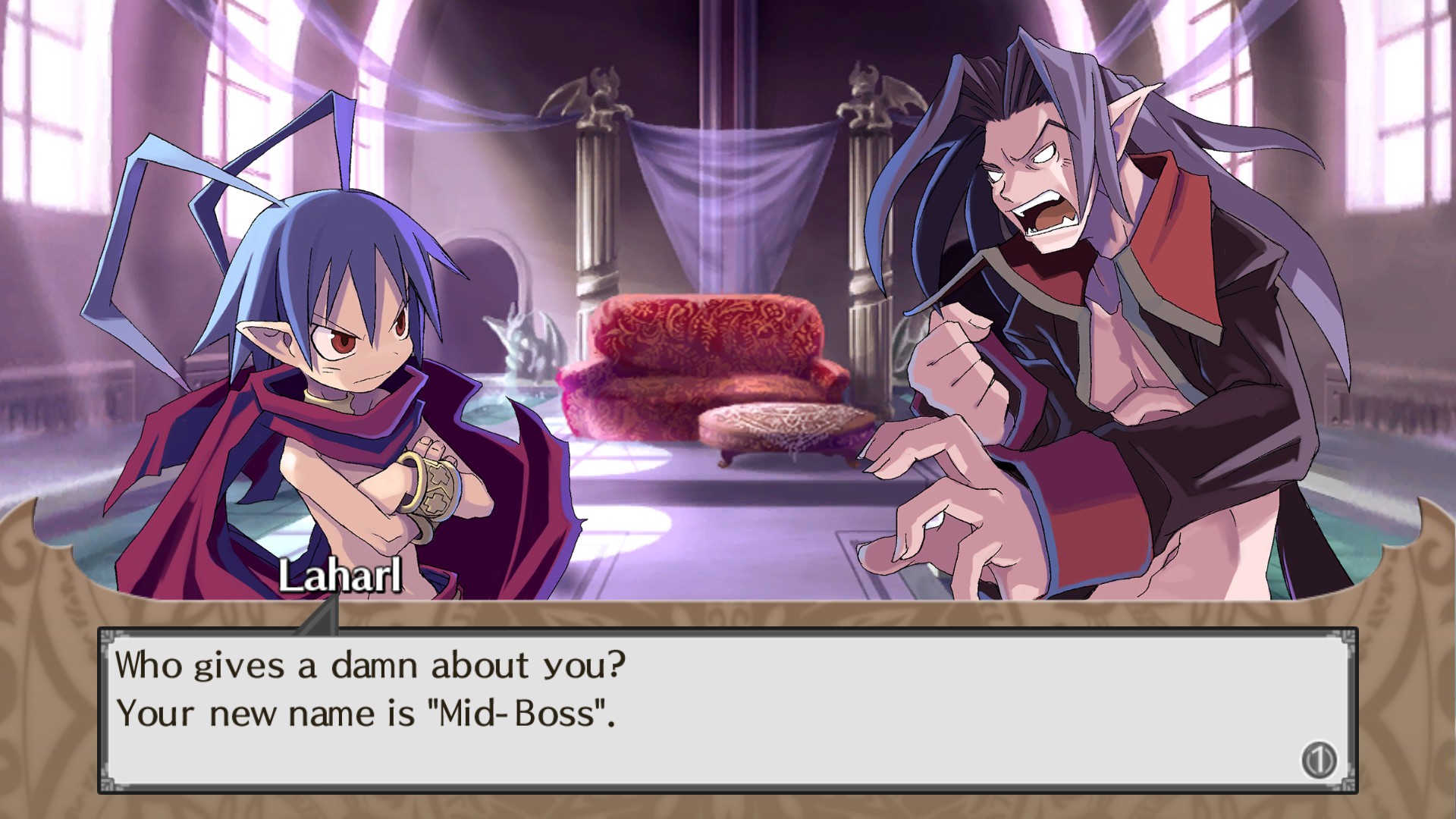
Disgaea PC is the 2016 Windows release of the first Disgaea, developed by Nippon Ichi Software and published by NIS America. It includes the content from Disgaea: Afternoon of Darkness, with updated interface and textures, keyboard and mouse support, and controller support. Steam also offers cloud saves and achievements. Illustrated character scenes give the cast room to argue and scheme between battles, while tactical attacks use dramatic animations and bursts of colour. The scale of a single encounter can be modest, but the surrounding systems make it part of a much longer campaign of raising allies, passing bills, changing equipment and learning how to exploit the map. An ally thrown over a ledge may reach a target one turn earlier; a Geo Symbol destroyed at the right moment may change several squares at once. Disgaea's interest in extreme character growth sits beside a story driven by the clash between a prince who wants absolute authority and companions who keep challenging what he thinks it means to rule.
- Developer
- Nippon Ichi Software, Inc.
- Genre
- Strategy role-playing game