
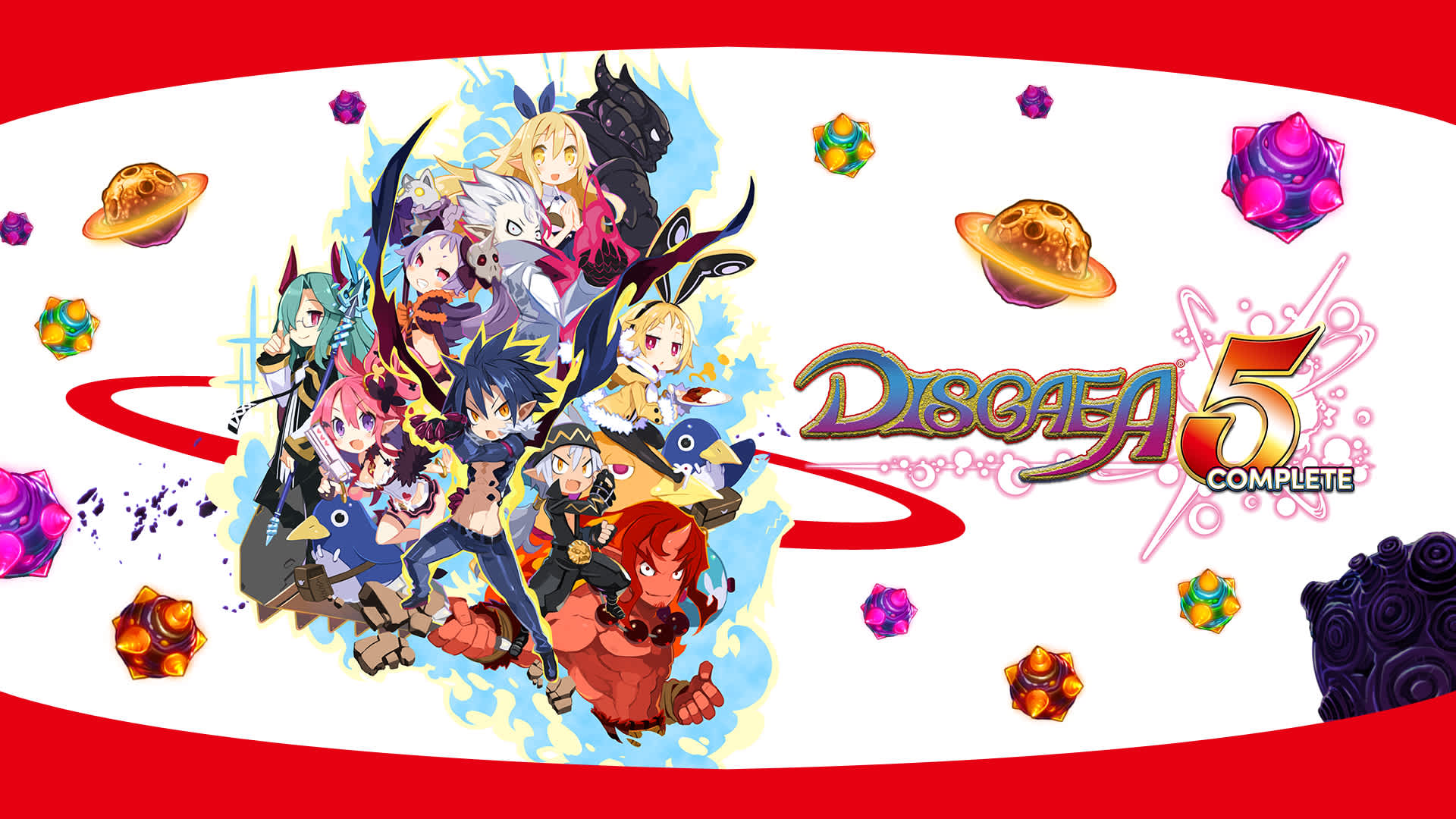
About Disgaea 5 Complete
Disgaea 5 Complete is a strategy RPG about Killia and a growing rebel army resisting Overlord Void Dark's campaign across the Netherworlds. Prepare units in the Pocket Netherworld, then direct them across grid-based battlefields using class skills, weapon techniques, squad effects and terrain systems. This edition includes the main story and additional scenarios, characters and classes.
Across a galaxy of Netherworlds, each realm is ruled by an Overlord, and the competing powers traditionally keep one another in check. That balance breaks when Void Dark and his army, the Lost, begin ravaging realms and forcing their rulers to submit. Killia, a young demon already set on revenge against Void Dark, becomes the centre of a rebellion after rescuing Seraphina, an Overlord princess. Their alliance begins as an uneasy arrangement: Seraphina treats Killia as a capable servant, while he agrees to accompany her against the enemy that threatens the Netherworlds. As more demons and Overlords join the cause, the campaign follows a coalition being assembled across very different territories. The story’s central movement is from resistance to organised rebellion, with the characters’ motives and alliances providing the thread between individual battles. Its tone mixes a serious revenge conflict with the series’ exaggerated demon society and comic exchanges, so the story events and tactical preparation are both part of the regular rhythm.
The campaign is organised around a repeated sequence of story event, preparation at the Pocket Netherworld, and battle. The Pocket Netherworld is a mobile base from which Killia’s rebellion recruits, equips and manages its members; its facilities open as the campaign progresses, so returning there connects one chapter to the next. Battles take place on isometric grid maps, where a unit’s position and the chosen action matter as much as its roster role. Each unit has movement and attack options; attack choices depend on class, weapon and learned techniques. The maps can add elevation, environmental hazards and Geo Effect panels or crystals that alter how units perform, making the layout a tactical condition rather than a blank board. Players deploy selected members from their larger force, move them into range, choose a weapon or skill, and then issue the action. Because an action can involve several nested choices, the battle loop rewards checking unit profiles and enemy strengths before committing the team. Physical and elemental attacks, range, adjacency and map effects all influence what a good turn looks like.
Combat also gives the party ways to cooperate that change the shape of a turn. Adjacent allies can trigger team attacks, while the Lift and Throw system lets units pick up allies, enemies or objects and reposition them by throwing; lifting several units in sequence can form a tower. Monster units add Magichange, transforming into weapons that human units can equip in battle. Named main characters can use Alliance Skills when the required characters stand next to one another, and some combinations are framed around relationships such as rivalry or affection. These systems coexist with ordinary weapon and class skills rather than replacing them. Disgaea 5’s Revenge Gauge builds when allies are hurt or defeated; when it fills, Revenge Mode activates. Overlords and characters with Overlord-class power can unleash Overload during that state. The gauge therefore makes damage to the group part of a future tactical resource, while also creating a distinct window in which an eligible character’s signature ability can alter the battle. Squad assignments add another layer: they provide combat or training effects and can unlock base facilities, while squad leaders can use skills that strike units belonging to an opposing squad.
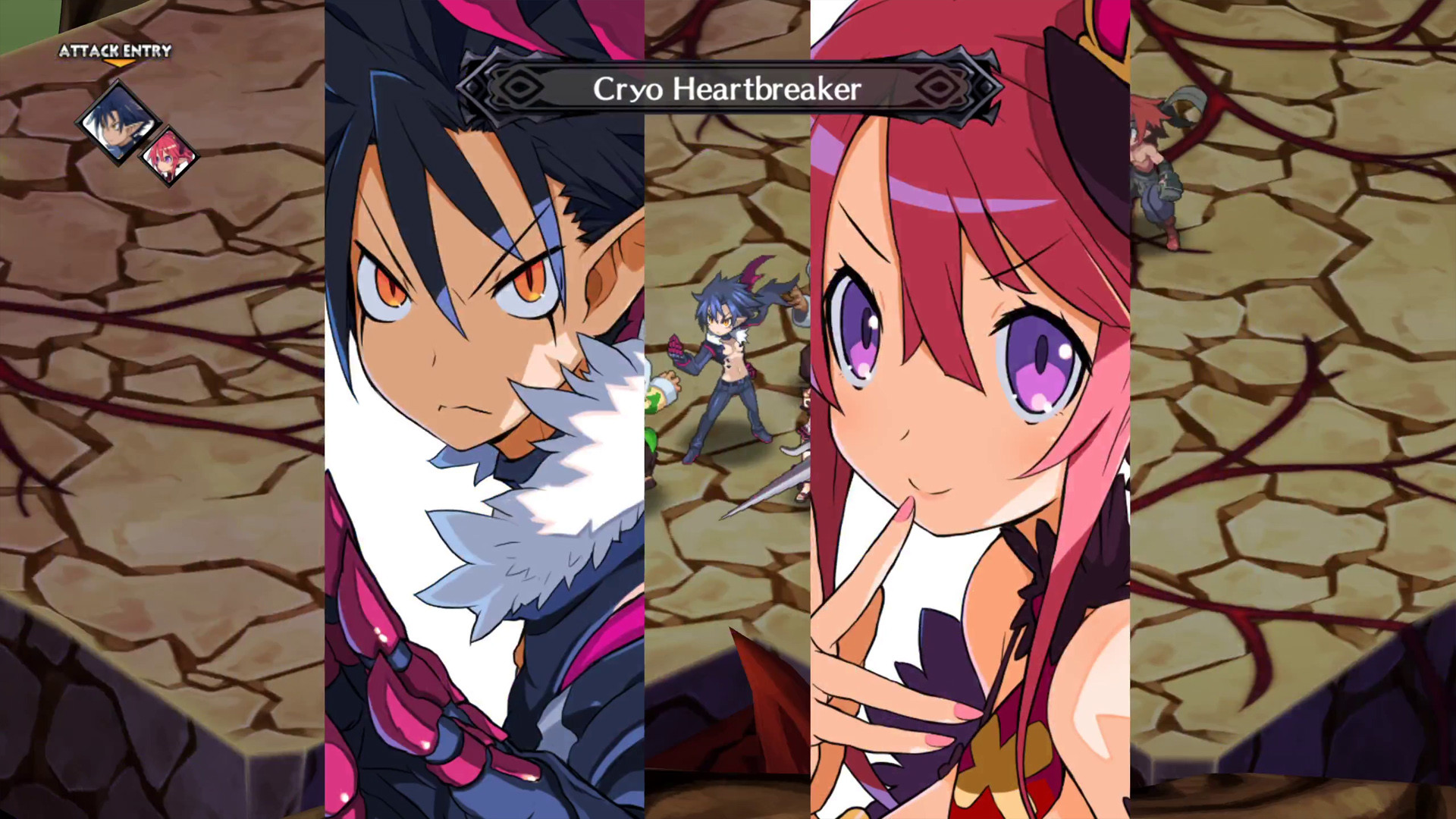
The rebel army is built from story characters and created recruits. The Recruiter spends HL, the game’s currency, to hire units and lets the player set a recruit’s class, statistics and colour. More than 40 jobs and species are available, and created characters can be named and trained toward the game’s high level cap. Changing a recruit’s job is one way to broaden the skills available to that character, while the Skill Shop provides skills and Evilities and can improve skill levels. Evilities give units specific tactical characteristics, so a team can be shaped around its members’ strengths rather than built only from raw statistics. The Chara World offers another character-focused route: it is a world within an individual unit, and clearing its battles can raise that unit’s stats beyond their ordinary limits. Squad placement complements these personal systems by applying group effects across members and by growing through squad levels. The result is a roster in which creation, training, skill selection and team organisation feed back into battlefield roles. A recruit who starts as a particular job is not necessarily locked into that identity, and the player can develop different units toward distinct combinations of weapons, skills and support effects.
Several base facilities handle the resources and decisions that surround the campaign. The Quest Shop offers tasks that can reveal new character classes and items, turning optional objectives into routes toward more recruitment choices and equipment. The Dark Assembly is a vote-based body where requests can unlock characters or stages; its representatives may need to be persuaded or bribed before a proposal passes. The Cheat Shop adjusts parameters such as enemy strength and the amount of experience earned, allowing players to tune the conditions of a battle or a training session. The Curry Shop consumes items to prepare curries that grant temporary boosts, giving otherwise unused supplies a role in planning. Captured enemies can be sent through the Interrogator system, where they may be persuaded to join the party or become residents of the Pocket Netherworld. Captures can come from battles or Netherworld Research, but research expeditions have a tradeoff: dispatched units are unavailable for battle until they return. These facilities make preparation active. Players can pursue a class unlock, seek a particular item, adjust the next training challenge, or spend resources for a temporary advantage before returning to the story map.
Items have their own progression space in the Item World. Entering a piece of equipment leads to a sequence of battles inside it; clearing those encounters strengthens the item, so an ordinary weapon or piece of armour can become a long-term project. Items can also contain Innocents, residents with effects that can be managed through the Innocent Shop, tying the equipment’s growth to another set of customisable properties. The Alchemist lets players make items, while the Item World lets them improve equipment and uncover its hidden abilities. This loop can develop a unit and its gear at the same time: fights inside an item provide battles for the team while changing the object that brought them there. Netherworld Research works in a different way. Rather than directly controlling a stage, the player sends units away to investigate other realms, accepting that those members cannot join battles until the expedition ends; their returns may include special rewards. The two systems therefore use the larger Netherworld setting for different purposes, one as a tactical dungeon inside equipment and the other as an expedition undertaken by reserve units. Replaying campaign stages and completing quests gives players further ways to strengthen the army between major story events.
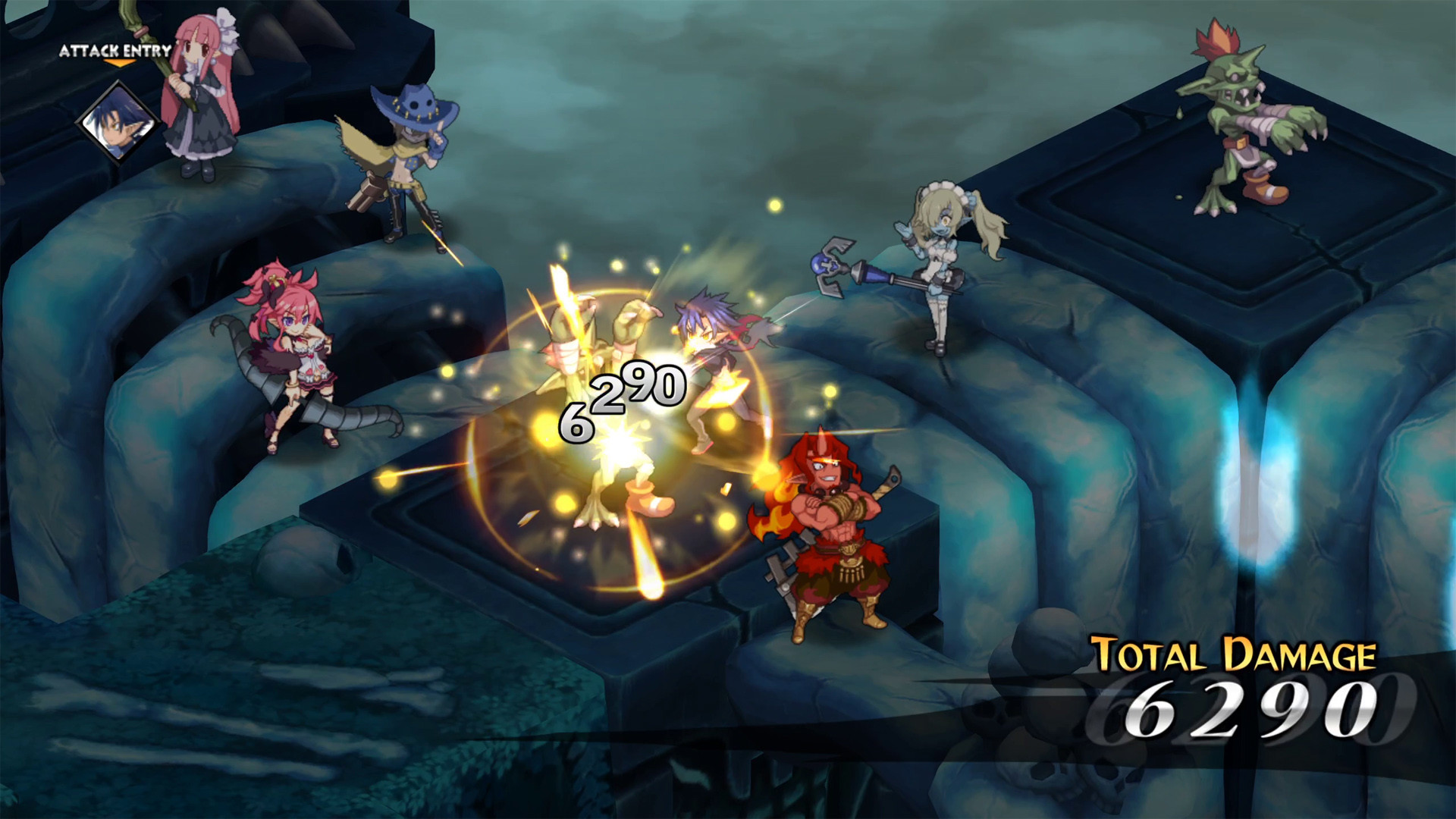
Disgaea 5 Complete packages the full Disgaea 5 story with eight bonus scenarios and additional character and class content that was originally downloadable content for the PlayStation 4 release, Disgaea 5: Alliance of Vengeance. The extra scenarios provide side-story material and post-game chapters, while recruited characters can join the wider army and added classes expand the options for created units. The PlayStation 4 base release used the distinct title Disgaea 5: Alliance of Vengeance; the Complete editions on PC and Nintendo Switch bundle content from that release's DLC. The presentation combines voiced story events and character exchanges with illustrated portraits, sprite-based combat maps and attack animations. Weapon and special-skill effects provide the visual punctuation of a turn, while the base's menus keep recruitment, training, equipment and expedition management close to the next battle. The PC edition lists both English and Japanese voice tracks and several interface languages. Together, the additional scenarios and roster options extend the campaign's already broad cycle of tactical encounters and army development without changing the revenge story at its centre.
- Developer
- Nippon Ichi Software, Inc.
- Genre
- Strategy RPG