
About Deus Ex: Mankind Divided
In 2029, augmented humans face segregation, and covert operative Adam Jensen works amid the resulting political crisis while investigating a worldwide conspiracy. Deus Ex: Mankind Divided is an action role-playing game set largely in Prague, where missions combine stealth, combat, hacking and conversation. Jensen’s augmentations, equipment and choices shape how he enters and handles each objective.
Deus Ex: Mankind Divided takes place in 2029, two years after the events of Deus Ex: Human Revolution. Mechanically augmented people have been made outcasts and subjected to segregation, placing a personal and political conflict around Adam Jensen, himself extensively augmented. He is an experienced covert operative in a world suspicious of people like him, investigating a conspiracy connected to acts of crime and terror; an early mission briefing takes place aboard a Task Force 29 aircraft. The story follows Jensen through missions and conversations in which information, trust and competing interests matter. It continues his storyline, but presents its own campaign and systems; it is a separate game from Human Revolution and its Director’s Cut edition.
Prague is the main hub for much of the campaign, giving Jensen a dense urban area to revisit as assignments and side missions develop. The city’s streets, apartments, businesses and restricted spaces contain people to question, security to evade and clues to find. Other locations broaden the investigation, including the segregated district of Golem City. Rather than treating each mission as a single corridor, the game uses rooms, rooftops, passages and secured entrances to create alternate ways toward objectives. Exploring can uncover supplies, optional tasks and story records, while conversations with residents make the social consequences of the division visible at street level.
The core missions support stealth, direct combat and approaches that mix the two. Jensen can use cover to move between protected positions, watch enemy patrols and avoid being detected, or draw a weapon when an encounter turns into a firefight. Close takedowns can be lethal or non-lethal: a quiet knockout may leave someone vulnerable to being discovered and woken by an ally, while a lethal takedown is noisier and can alert nearby opponents. Weapons also accept upgrades paid for with crafting parts, including improvements to damage, ammunition capacity and firing rate. Attachments such as scopes or laser sights must be found before they can be fitted, linking scavenging to combat preparation.
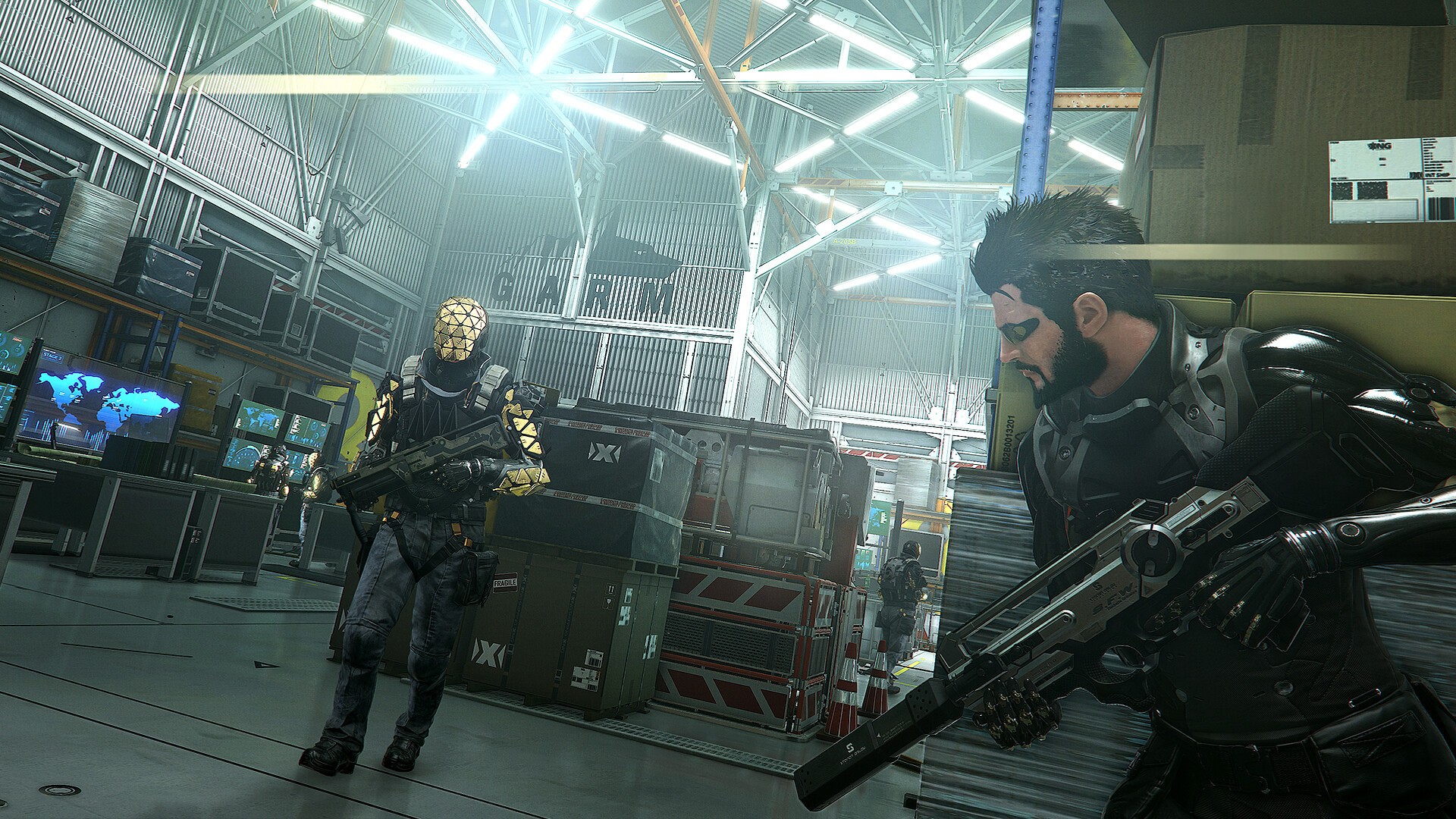
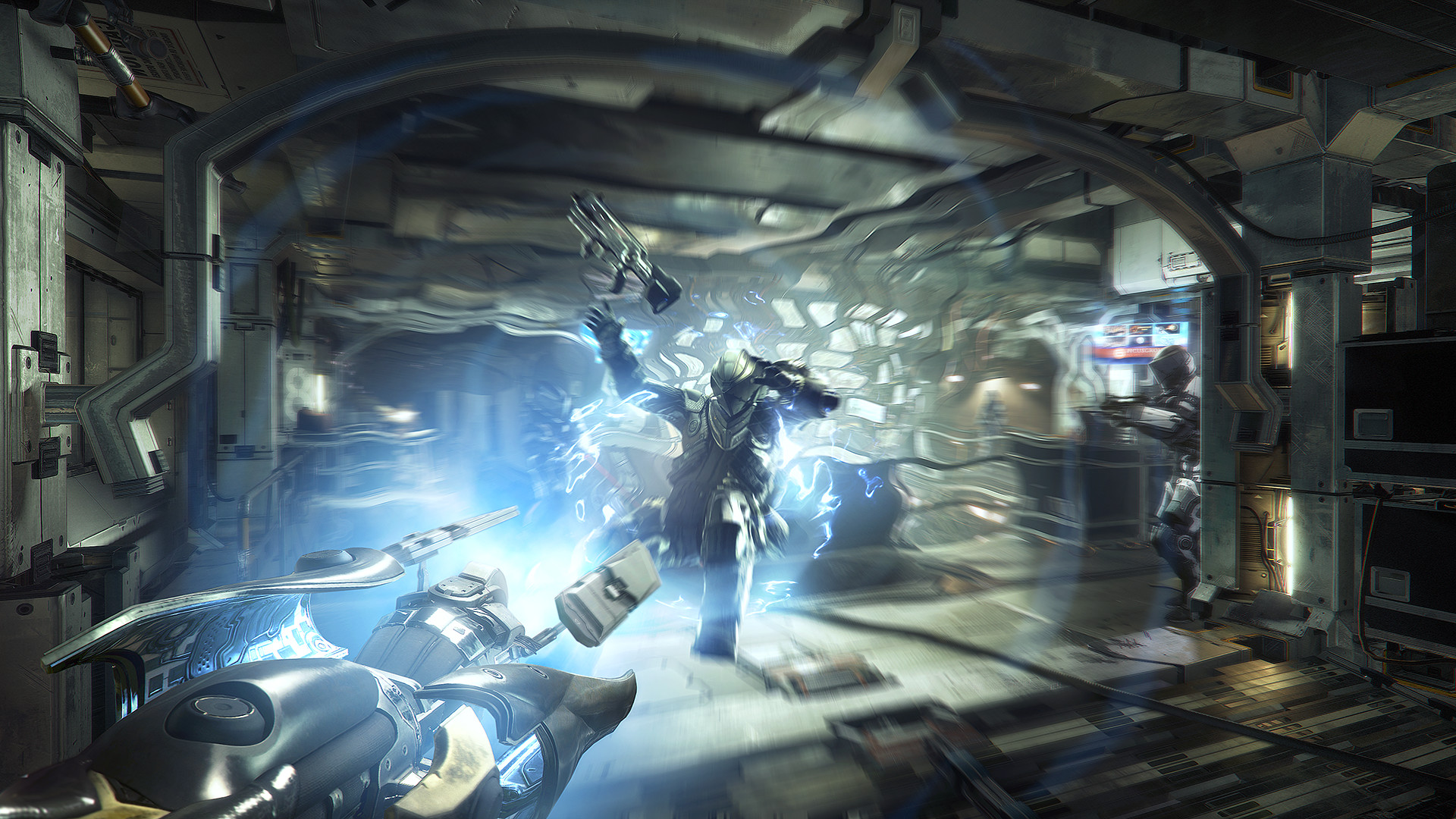
Augmentations give Jensen additional ways to move, gather information, fight and access protected spaces. The upgrade tree is advanced with Praxis points earned through experience for activities such as completing objectives, defeating enemies and exploring unseen. Some abilities cost more than one point, so choosing an upgrade means setting a direction for the character rather than unlocking everything at once. Active abilities and takedowns consume energy. Energy regenerates when Jensen is not using it, while Biocells found or purchased in the world can restore it quickly; some augmentations also reduce the maximum energy available until a Biocell resets it. The energy supply therefore shapes when special abilities and close takedowns are practical.
Hacking is a tactical option for locks, safes, computers and connected systems. Devices have security ratings, and Jensen’s Hacking Capture augmentation sets the highest rating he can attempt. Once inside a network, the player captures connected nodes from an entry point to reach the green registry targets. Each capture takes time and carries a detection chance; if security activates a trace, a countdown begins as it works back toward the entry point. Reaching all registries before the trace arrives succeeds, while being locked out can close off that device temporarily. Hacking software can offer specific benefits, and Multi-Tools provide another way to open highly secured keypads and computers. Crafting these tools from parts makes exploration and inventory decisions relevant to infiltration.
Conversation and investigation supply alternatives to force. Jensen’s objectives include side missions and points of interest that can be selected in the mission menu and tracked on the map or radar. Emails, pocket secretaries, ebooks and other records are stored in the database, allowing players to piece together personal and institutional context from material found in the environment. Decisions and actions can influence the campaign’s outcome, while dialogue and trust help determine what information is available. The game’s main Story mode is distinct from Breach, a separate arcade-style puzzle shooter in which a Ripper infiltrates secure corporate servers to obtain classified data and uses funds to improve skills and equipment. Jensen’s Stories, in turn, opens purchased DLC missions; these are separate from the main story campaign.
The hacking tools give network infiltration more than one pace. Datascan exposes datastore contents and hidden firewalls before Jensen commits to a route; Overclock briefly speeds node capture, while Stealth software lets one action avoid detection. Nuke captures a selected node immediately but alerts the diagnostic trace, turning a shortcut into a race toward the registry. Reveal exposes hidden nodes, and Stop! Worm pauses an active trace for a few seconds. Each program is consumed on use, so carrying several is a way to prepare for a difficult terminal rather than a permanent improvement to Jensen’s hacking skill. These options sit alongside the basic choice to seek a password, spend Praxis on hacking ability, craft a Multi-Tool or find a physical route around the lock.
- Developer
- Eidos-Montréal (original developer; Linux port developed and published by Feral Interactive)
- Genre
- Action role-playing game with stealth and shooter systems