
About Detroit: Become Human
In Detroit in 2038, humanlike androids serve people across a city marked by growing unrest. Play as Kara, Connor and Markus as their separate lives intersect, investigate android incidents, navigate tense encounters and make choices that can reshape relationships, public attitudes and the wider course of the story.
Detroit: Become Human is set in Detroit in 2038, where humanlike androids have become part of everyday life. They work in homes, shops and public spaces, speaking and moving like people while remaining property in a society that expects them to obey. The city’s advanced technology exists beside visible economic strain and suspicion between humans and androids. Rather than follow one central hero, the story moves among three androids whose experiences reveal different parts of this divided world. Their personal situations begin separately, but the decisions made in one thread can influence events elsewhere, connecting private encounters to a larger conflict over the place androids occupy in Detroit.
Kara is an AX400 domestic assistant designed for housework and childcare. Her perspective begins inside a household where she is expected to carry out everyday tasks, but her connection with the young Alice changes the meaning of that routine. Connor, a CyberLife RK800 prototype, is sent to assist Detroit police with cases involving androids behaving outside their expected programming. His assignment places him alongside Lieutenant Hank Anderson, a human detective whose distrust makes cooperation uncertain. Markus is first a caregiver to the celebrated painter Carl Manfred, who treats him with unusual warmth and encourages his interests. As the three lives develop, Kara’s search for safety, Connor’s investigations and Markus’s growing public role offer distinct ways into the same changing city.
Connor’s chapters ask the player to examine scenes and make use of his android abilities. At an incident, he can scan objects, identify details and use a simulator to reconstruct what may have happened, turning evidence into a clearer account of events. That process is time-sensitive in some situations: gathering clues can affect what options are available when he has to speak or act. Conversation is also investigative work. Connor can ask questions, assess another person’s responses and choose how to approach them, while his exchanges with Hank place the casework inside a developing partnership. The player is therefore balancing evidence, timing and rapport rather than simply selecting dialogue in isolation.
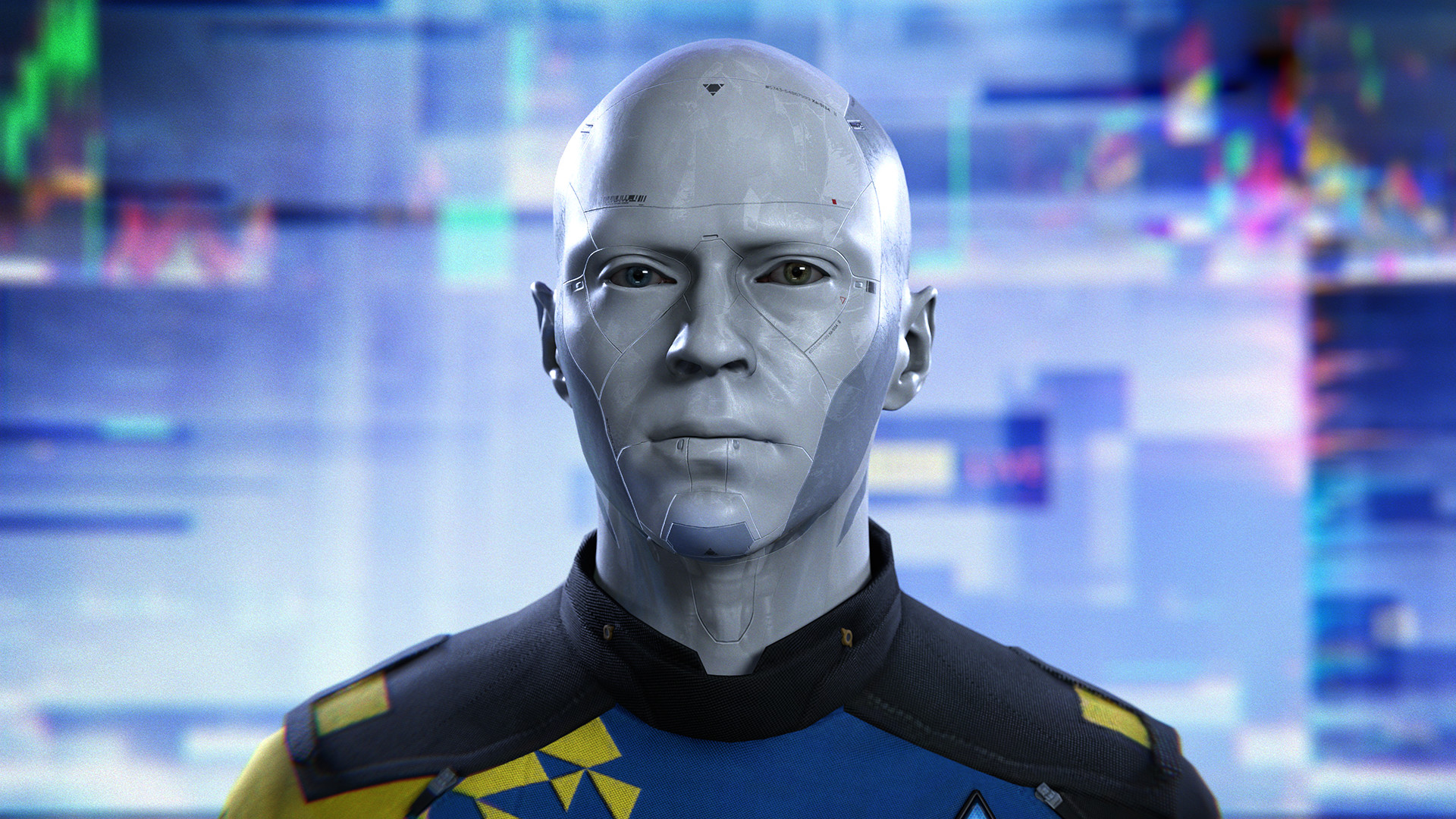
Kara’s route gives close attention to domestic spaces and to the small actions that make up care. Looking around, speaking with Alice and choosing how Kara responds to people in the home shape the scene before the story moves into more urgent moments. The player encounters interactive objects and contextual prompts, including actions that involve moving, holding or combining inputs to match what Kara is doing. Some decisions appear modest—a response, a pause, or whether to examine something nearby—yet can affect trust and available options. Her chapters connect everyday routines with the practical problem of keeping two people safe, so exploration and interaction help establish both the environment and the risks within it.
Markus’s story widens from his life with Carl into questions about how androids should respond to their treatment. His chapters include movement through public spaces, interaction with people and decisions that shape how other androids and humans perceive him. When opportunities arise to address groups or take action, the player weighs different ways of pursuing change, including whether to emphasize restraint or confrontation. These choices are framed through consequences for individuals and for the community around him, rather than as a detached morality score. The surrounding city supplies context: monuments, commercial streets and poorer areas show contrasts in who benefits from technology, while protest and public hostility make the social divide visible.
Across all three perspectives, play alternates between looking closely, moving through a space, choosing a response and carrying out actions under pressure. Contextual prompts can ask for a button press, a directional movement or a sequence of inputs that follows the character’s physical action. During chases and confrontations, timing and accuracy matter; during quieter scenes, interaction may mean examining an object, completing a task or deciding whether to engage with someone. The difficulty setting changes how demanding controls are and how exposed the characters can be to fatal outcomes. Reading the scene matters because an unnoticed clue or earlier choice may change which actions and dialogue become possible later.
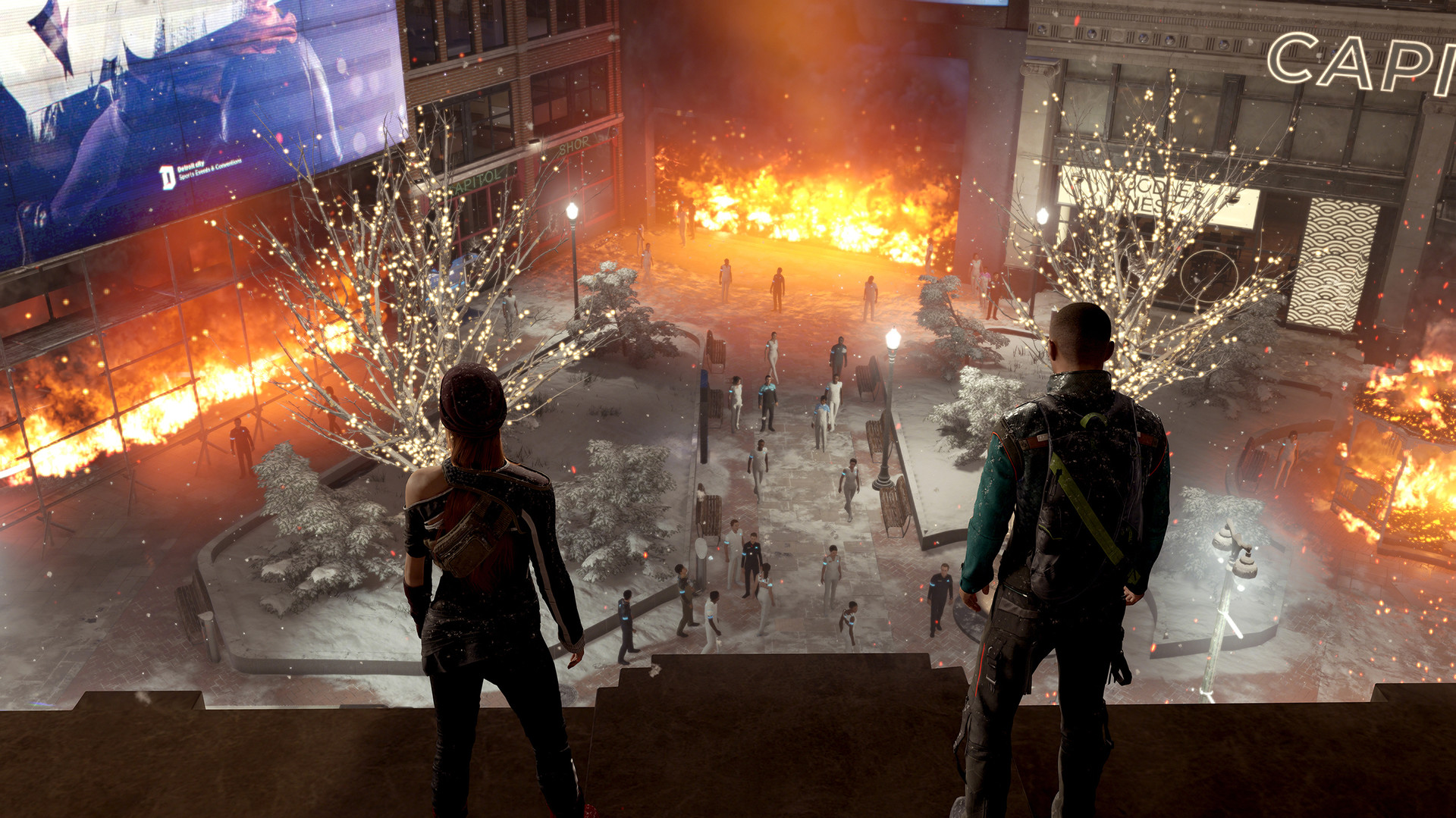
The branching structure ties these systems together. Choices can shift a conversation immediately, alter a relationship, influence public opinion or change which scenes follow. A character’s survival is not guaranteed, and the wider narrative continues to adapt if an individual thread takes a different turn. At the end of chapters, a flowchart records the route taken and shows that other branches exist, giving a visible record of how actions opened or closed possibilities without explaining every alternative in advance. Chapter replay lets players revisit decisions and see different consequences. Looking at that map after a chapter can connect a quiet observation or missed action with the route just taken. The result is a story told through connected viewpoints, where investigation, observation and quick responses all feed into the evolving account of Detroit’s androids.
- Developer
- Quantic Dream
- Genre
- Narrative adventure / interactive drama; Steam lists Action and Adventure.