

About Detention
In 1960s Taiwan under martial law, Greenwood High School becomes a place its students no longer recognise. Two are left inside as familiar rooms fill with supernatural dangers. Detention is a side-scrolling horror adventure about searching the campus, using objects to solve its puzzles and understanding how the school's history and the lives of its students have become entangled.
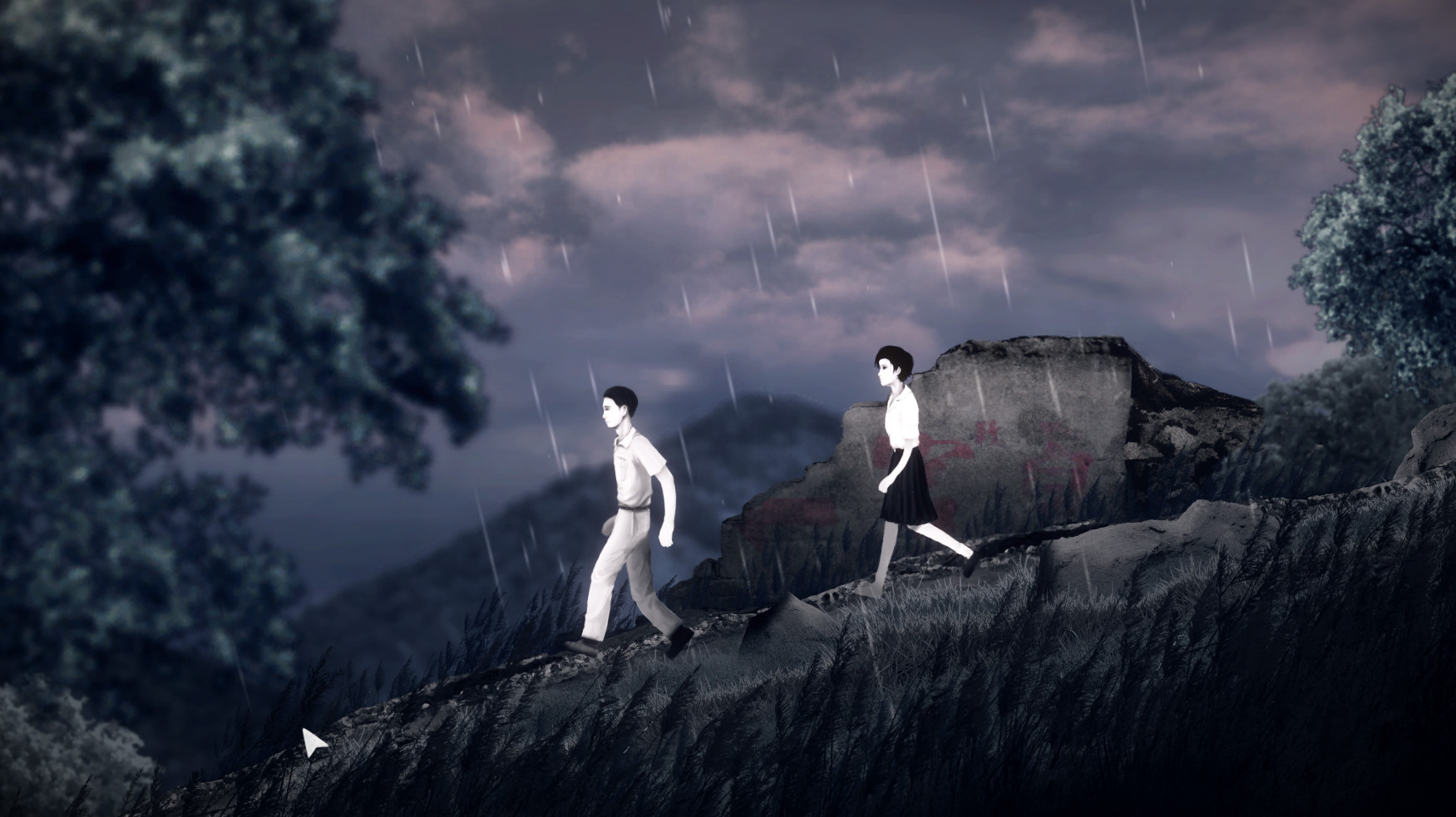
Greenwood High School stands in a remote mountainous part of a fictionalised 1960s Taiwan governed under martial law. Wei wakes to find a campus that seems emptied of its ordinary life; he encounters fellow student Ray as the two try to make sense of an apparent evacuation and a building that no longer behaves as it should. The school's corridors, classrooms and gathering places are still recognisable, which makes the changes more disturbing. A room can contain evidence of lessons and student routines while another detail suggests that something hostile has entered the same space. Detention starts with the urgent desire to leave, then uses that journey to ask what the school has concealed. Ray becomes the main figure through much of the story, and the search for a way out grows into an examination of memories, institutional pressure and choices made by people who once moved through these halls. The political setting is not an interchangeable horror backdrop. Red Candle Games places the school in the atmosphere of Taiwan's martial-law period, while drawing on local religious and mythological imagery to make its supernatural world distinct from a generic haunted building.
The player moves through the school on a two-dimensional plane, with side-on rooms and point-and-click interactions. A corridor may end at a locked passage or lead to a room containing an item that has no immediate use. Examining the surroundings can reveal a note, a ritual object or the next clue that makes an earlier obstacle intelligible. Picked-up items go into an inventory for use on another part of the campus, so progress often involves remembering where an unusual feature was first seen. The game highlights objects that can be interacted with when a character approaches them, keeping the challenge closer to understanding what an object means than trying to locate a tiny clickable pixel. A newly opened room may offer both the material needed for the next puzzle and a document that changes the player's idea of what happened at Greenwood. This produces a steady exchange between exploration and interpretation. The school becomes more accessible as puzzles are solved, but also less easy to explain. Detention does not use a large open world to create mystery; it makes repeated visits to a relatively contained campus feel different as its history comes into view.
Hostile spirits complicate the search. When one occupies a route, Ray cannot solve the encounter by attacking it with a conventional weapon. Holding her breath can help her pass without drawing attention, while an offering can distract certain creatures long enough to move through an otherwise dangerous space. Different apparitions call for different caution, so noticing their presence and behaviour matters. The audio can warn of something before it becomes visible, turning an ordinary passage into a decision about whether to continue or wait. These encounters are placed among the puzzles rather than replacing them with a combat campaign. An item that seems to belong to a ritual or a schoolroom can have a practical use in getting past a spirit, and a corridor that was harmless on one visit may become threatening on another. Being caught can interrupt progress, but the main demand is observation and timing, not a growing arsenal or a character-level statistic. The lack of combat also keeps the spirits difficult to reduce to targets. They remain signs that the school's familiar rules have failed, even when the player learns a technique for passing one particular kind of threat.
The supernatural imagery is tied to Taiwanese cultural references, including elements drawn from Taoism, Buddhism and local traditions. An offering therefore belongs to a larger symbolic world even when it serves a clear purpose in play. Religious objects, omens and documents help transform Greenwood into a place where personal history, collective fear and ritual coexist. The game does not ask a newcomer to arrive knowing every reference before a door can be opened. A player can follow the immediate clue while noticing that the image or practice carries another meaning in the setting. Those meanings become more important as the account of the school deepens. Red Candle Games developed Detention partly from a desire to make a horror game connected to the culture in which its creators grew up, rather than transplanting familiar imported monsters into a Taiwanese classroom. That intention is visible in the meeting of ordinary school spaces and uncanny forms. It also gives the player's reading of a note or object a second job: beyond finding a solution, it can reveal how the people at Greenwood understood danger, authority and one another.
Martial law shapes the human story as much as the empty building shapes its opening. Surveillance, forbidden ideas and the cost of association give a classroom or office a weight that does not depend on a ghost appearing in it. Detention uses its fiction to approach those pressures through the lives of students and teachers, with Ray's growing understanding of the school intertwined with her own past. The investigation is not delivered in a single explanatory speech. Discovered papers and altered locations gradually place one event beside another, and scenes can become more symbolic as the personal stakes emerge. The game asks the player to connect what was done under institutional rules with what the haunted campus now displays. That is why a locked room is more than a delay before the next scare: reaching it can change the context for an earlier memory or a person's behaviour. A spoiler-light account can describe this relationship without naming the decisions behind the school's final revelation. The lasting tension comes from a place where the human and supernatural threats reflect each other, and where escaping the immediate danger cannot by itself make the past disappear.
Detention's artwork uses flat side views, abrupt shifts in colour and bleak interiors to make each ordinary location capable of becoming unfamiliar. A staircase or hallway can be read quickly as a route, while a change in light or a disturbing image makes it feel less dependable. The score combines electronic, lo-fi and rock textures with traditional Asian instruments, and the soundscape lets a distant presence trouble a room before a spirit appears. Red Candle Games also drew on Taiwanese literature, film and music from the decades around its setting. The result is an audiovisual language that changes alongside the inquiry rather than merely filling silence between puzzles. At times the campus is almost still enough for the player to study an object; at others, the sound and the composition make moving toward a door feel risky. Characters are viewed at the scale of the school, not as action heroes filling the screen, so a small figure crossing a dark hall emphasises how exposed Ray is. The style makes the political and cultural specificity of the story visible without needing a constant explanatory overlay.
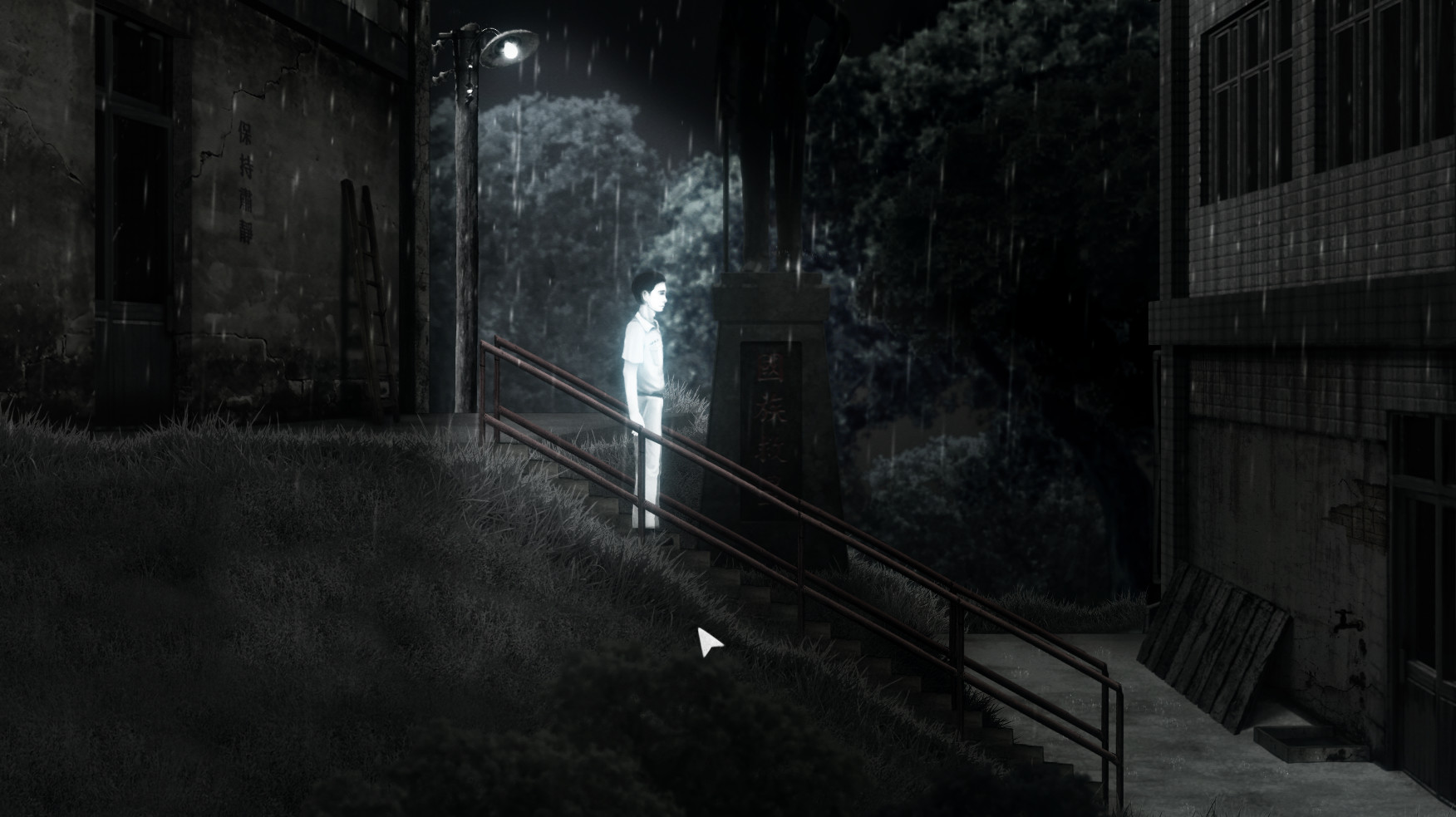
Red Candle Games released the original Detention for PC in 2017, with later PlayStation 4, Nintendo Switch and mobile editions identified in its press material. The Steam Deluxe bundle pairs the game with its original soundtrack, rather than adding a separate playable chapter. Across those versions, the core work remains the same: move through Greenwood, inspect and combine clues, pass threatening spirits and uncover why the school has become a place of fear. The game's emphasis changes as its mystery develops. Early progress may be measured by a key, an opened route or a successfully avoided apparition; later discoveries place more weight on the relationships and historical conditions behind the haunting. It remains a compact side-scrolling adventure rather than a sprawling survival system. A player who returns to a known corridor does so with another object, another account of the past or a different understanding of what the same image might mean. Greenwood is both the space to navigate and the question to answer, and the acts of looking closely and moving carefully serve both purposes.
- Developer
- Red Candle Games
- Genre
- 2D point-and-click atmospheric horror adventure