
About Desta: The Memories Between
Desta returns to Hargate carrying worries about old relationships, and those anxieties become surreal, turn-based dodgeball dreams. Recruit friends with distinct abilities, plan moves and ricocheting throws, then follow the changing conversations and modes gathered in Steam’s Dream Team Edition.
Desta: The Memories Between follows Desta, a non-binary young person returning to Hargate after time away, with difficult relationships and unfinished conversations weighing on them. Each night turns that unease into a dream landscape assembled from places and memories they once knew. Streets, rooms and familiar surroundings are rearranged into arenas where people from Desta’s life appear as opponents, allies or figures to be understood. The dream logic keeps the setting personal by turning confrontations into tactical ball games that externalize the trouble of finding the right thing to say. Encounters can change the direction of a conversation as well as the immediate shape of a battle. The story moves through recurring faces and the fragments attached to them, gradually giving the player a clearer sense of what Desta fears, regrets and hopes to repair. The adventure stays close to the emotional geography of returning home and trying to reconnect with people whose histories are shared with Desta. Hargate provides the emotional reference points for that surreal map: the game returns to the same broad questions of family, friendship and what has gone unsaid, while letting each dream distort the location and the people in it. The result is a campaign whose scale stays close to one person’s circle of relationships even as its battlefields become strange and symbolic.
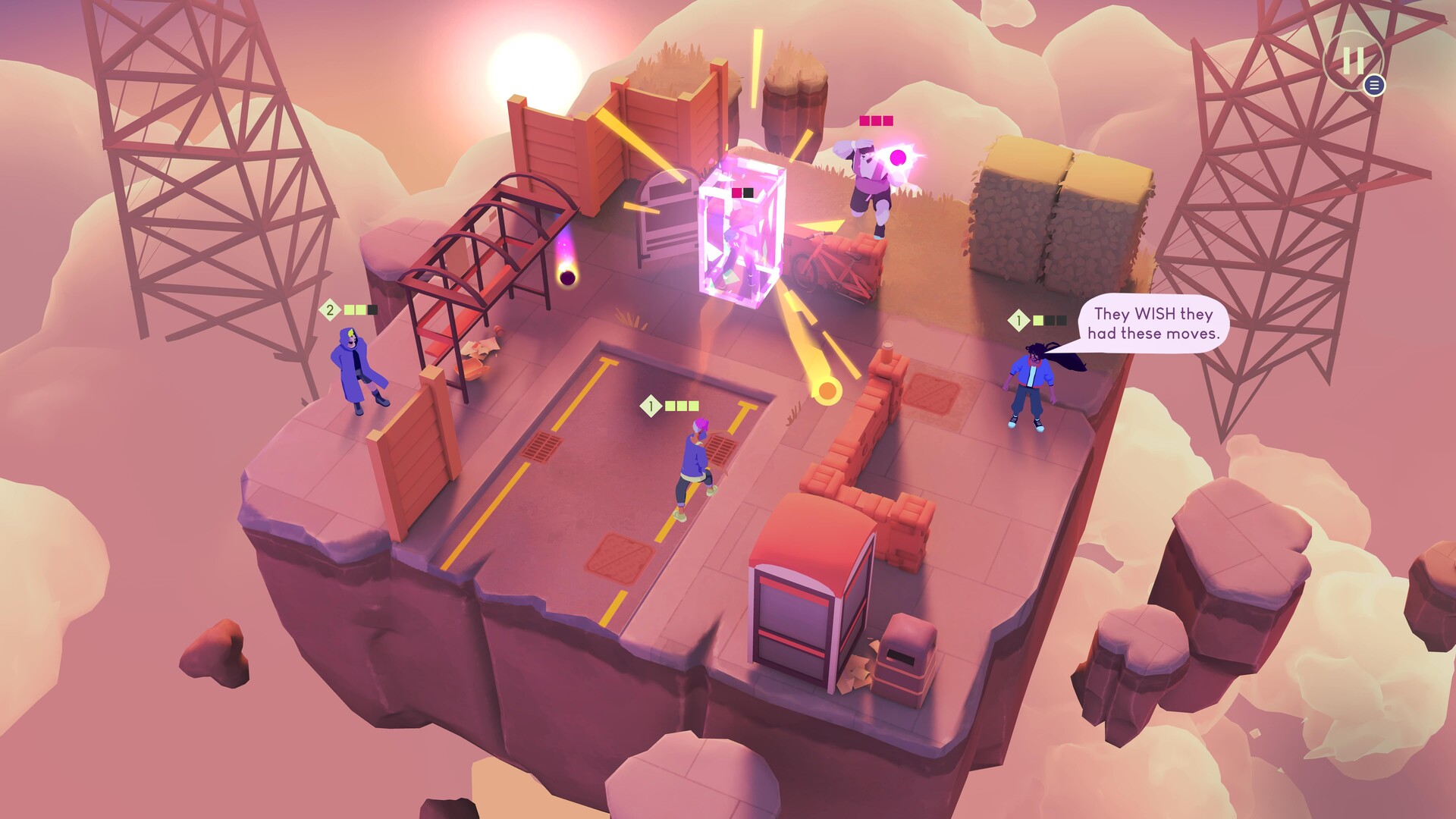
Those dreams are played as turn-based, team-based dodgeball. In a compact arena laid out around squares and obstacles, Desta and their companions move, collect balls and take turns acting while opponents try to create pressure from the other side. Position matters before a throw: a clear lane can become blocked by a barrier, an ally may be close enough to receive a pass, and the distance between characters affects how much space remains for the next action. A thrown ball travels through the arena, with its route shaped by player aim and surrounding geometry. Players can aim for a direct hit, use walls to bend a path around cover, or bounce the ball through more than one opponent. A ball can also be sent to a teammate or arranged to return to the thrower, preserving possession for a later action. The physical route of each throw makes geometry part of the turn-based puzzle. Aiming asks for control and judgement alongside tactical planning, so one attack can solve a problem while setting up another. The same open lanes and ricochets that enable clever combinations can also make the battlefield feel risky when the ball takes an unexpected path. A good throw can also do more than reduce an opponent’s health. Passing the ball moves a resource to a useful teammate, while a ricochet can let the thrower retain it for the next decision. The player is constantly weighing immediate damage against a safer position, a better line or a setup for a second character.
The ball anchors combat, and every encounter combines attacks with decisions about positioning and timing. Enemies occupy the same limited spaces as Desta’s team, so movement has to account for both a possible throw and the retaliation that may follow. Characters have different abilities, and their roles can change how the team handles a particular arena. Some powers improve a throw or change positions; others can alter the movement or opportunities available during a turn. The best sequence is therefore often a small chain: move into a lane, let one character create or recover the ball, use a special effect to open a safer angle, and place another teammate where the next pass can continue. The game asks the player to consider who is holding the ball, what its path will cross, and where the group will be left once the action ends. Because the action is divided into turns, there is room to inspect the board and think through a plan; because the throws depend on trajectory, the plan still has a physical element. Repeated decisions make the unusual premise legible through play, giving the dream’s symbolism a tactical form. The arenas reward looking at the whole team and the ways its members can support an attack. A character who is poorly placed for a direct hit may still help by creating an opening, receiving a pass or drawing attention away from another route. When the plan works, the ball’s motion ties those roles together in one readable sequence.
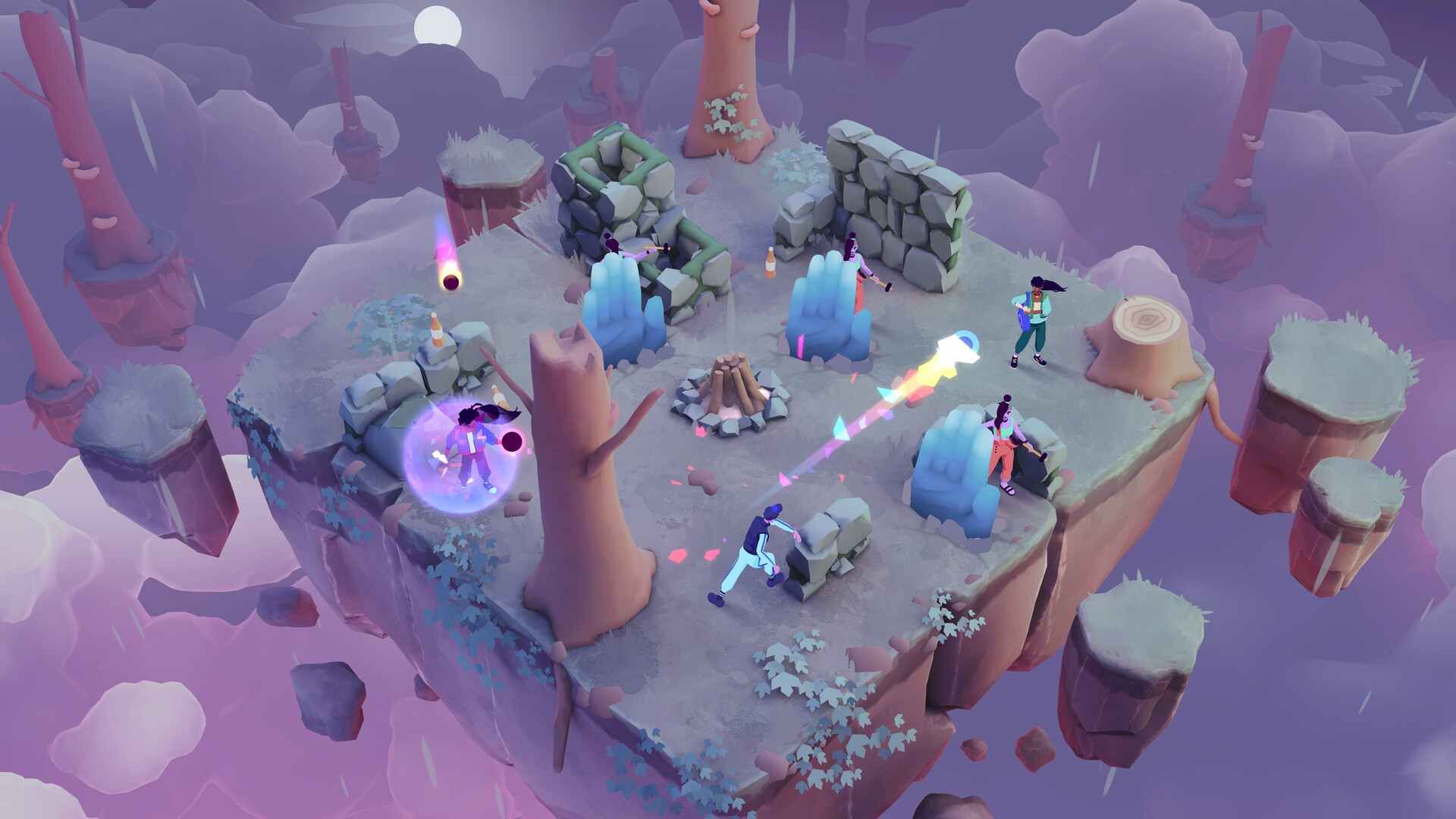
Desta’s companions join them throughout these encounters. Friends and family from Hargate join the dream journey, and the growing team provides more combinations of movement, special abilities and ball play. Each person has a connection to the dream world and a distinct place in Desta’s recollections, so recruitment also develops the network of relationships at the heart of the story. The party’s members each bring different abilities, so choosing who accompanies Desta shapes how an arena’s geometry can be used. Dialogue before and after an encounter adds context to the conflict being replayed, while the full voice cast gives conversations a presence separate from their tactical representation. The people who appear as opponents are tied to what Desta expects a difficult talk to become, and the dream transforms that expectation into a board the player can read and act upon. This arrangement lets character dynamics appear in both the narrative scenes and the rules of a fight. New teammates and powers expand the tactical vocabulary over time, while personal histories place each addition within Desta’s effort to understand old bonds. The returning cast includes people whose place in Desta’s life is recognizable through the kind of unfinished exchange they represent, from a friend who has drifted out of contact to a teacher whose support went unacknowledged. Their dream encounters turn tactical opposition into fears about what real conversations might bring, giving each opponent a relationship context.
The main journey is arranged around successive nights and runs through the dream encounters. Progress brings new people, abilities and parts of Desta’s story into view, but being knocked out can wake the protagonist and send them back to an earlier point in the dream. That reset is part of the roguelike structure: the player uses what they have learned about the arenas and their possible team combinations when attempting the sequence again. Growth across encounters gives Desta and companions additional capability, while repeated attempts change which options are available in the moment. The cycle connects gameplay repetition to the story’s subject of revisiting difficult conversations, though each return is still a practical tactical challenge that has to be solved afresh. In the Steam edition, the Dream Team Edition gathers the major content updates into the current package and includes every character, additional modes, the soundtrack and a digital art book. That edition scope matters because it adds ways to approach the material beyond the original run-based story, without changing the central premise of the dream battles. A failed attempt still teaches the player how a familiar arena can be approached: which obstacles obstruct a straight throw, where an ally can safely wait, and what ability might make a later combination possible. Repeating a night is therefore both a narrative return and a chance to apply a more informed tactical plan.
Steam’s Dream Team Edition includes Shortcuts for players who want to move past already-reached chapters with a broader set of teammates, Challenge Mode’s standalone tactical scenarios, and Nightmare Mode’s tougher extended sequence. Challenges provide separate tests and can unlock additional teammates for the main dream; Nightmare changes the rules and carries health loss from one memory into the next, making preservation part of the route through the sequence. The modes give the same ball-and-positioning system different stakes: a short, focused puzzle can isolate a tactical idea, while Nightmare makes each encounter part of a longer resource-management problem. The stylized dream locations and voiced cast give each encounter a personal setting. As another familiar relationship enters the arena, companion choice and the route of a throw become the player’s immediate way to work through that conflict.
- Developer
- ustwo games
- Genre
- Narrative turn-based tactical dodgeball adventure with roguelike runs