
About despelote
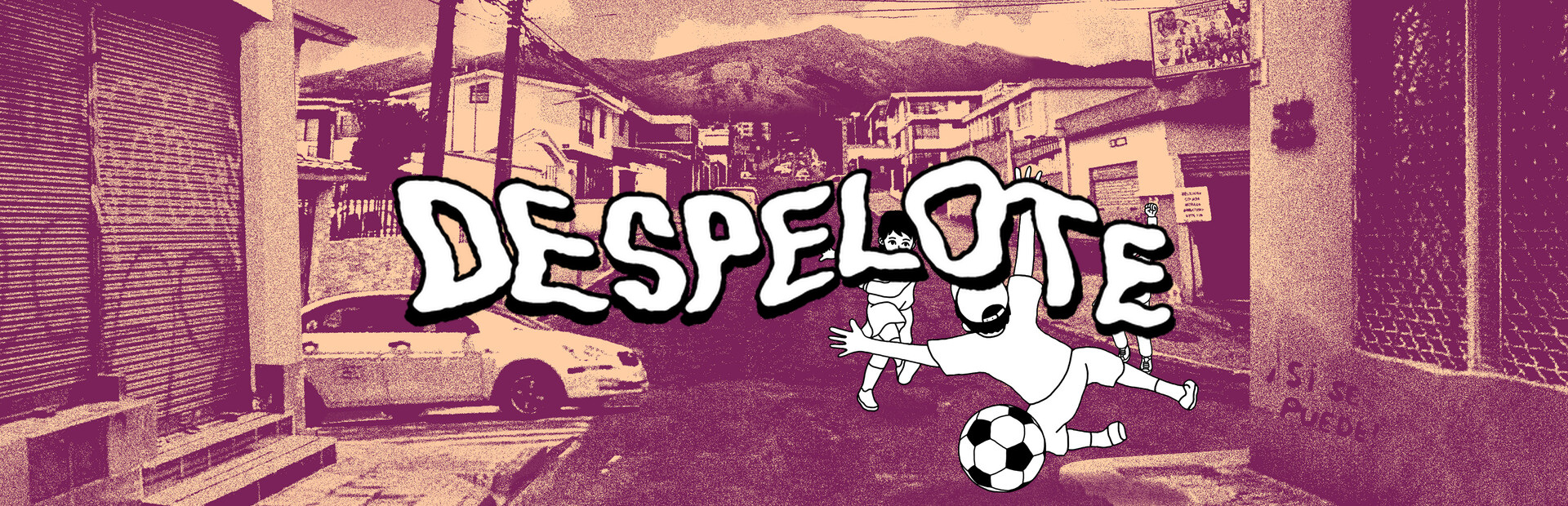
In Quito in 2001, eight-year-old Julián kicks a football through parks and streets while Ecuador moves toward its first World Cup qualification. Despelote uses a first-person ball, neighbourhood conversations and sounds recorded in Ecuador to make a childhood memory playable. It is a story about a city sharing an extraordinary sporting moment, seen at a child's height.
A football can turn a familiar street into a place to explore. In despelote, the player sees Quito through the eyes of eight-year-old Julián Cordero, whose interest in the ball gives him a reason to wander, interrupt a conversation or linger in a park. The setting is Ecuador in 2001, when the national team is drawing closer to a first World Cup qualification. That larger event reaches a child as fragments: other people's excitement, the sound of a match, a sense that the ordinary city is paying attention to the same thing. This is not a conventional climb through leagues toward a final. It is a semi-autobiographical account of being young in a particular place at a moment when football seemed to belong to everyone. The game's small scale matters. Julián is not deciding the country's fate on a pitch; he is moving through the spaces where the anticipation is lived. The contrast between his playful freedom and the collective stakes beyond him gives the story its shape. Despelote makes a case that a football game can tell us as much about the people around the ball as about the result of a match. There is a particular pleasure in that framing: the game does not ask the child to stand for an entire country. He is one small observer in a shared event, free to be preoccupied with a stray ball while something much bigger gathers around him. The public story and the private one can coexist without being forced into the same scale.
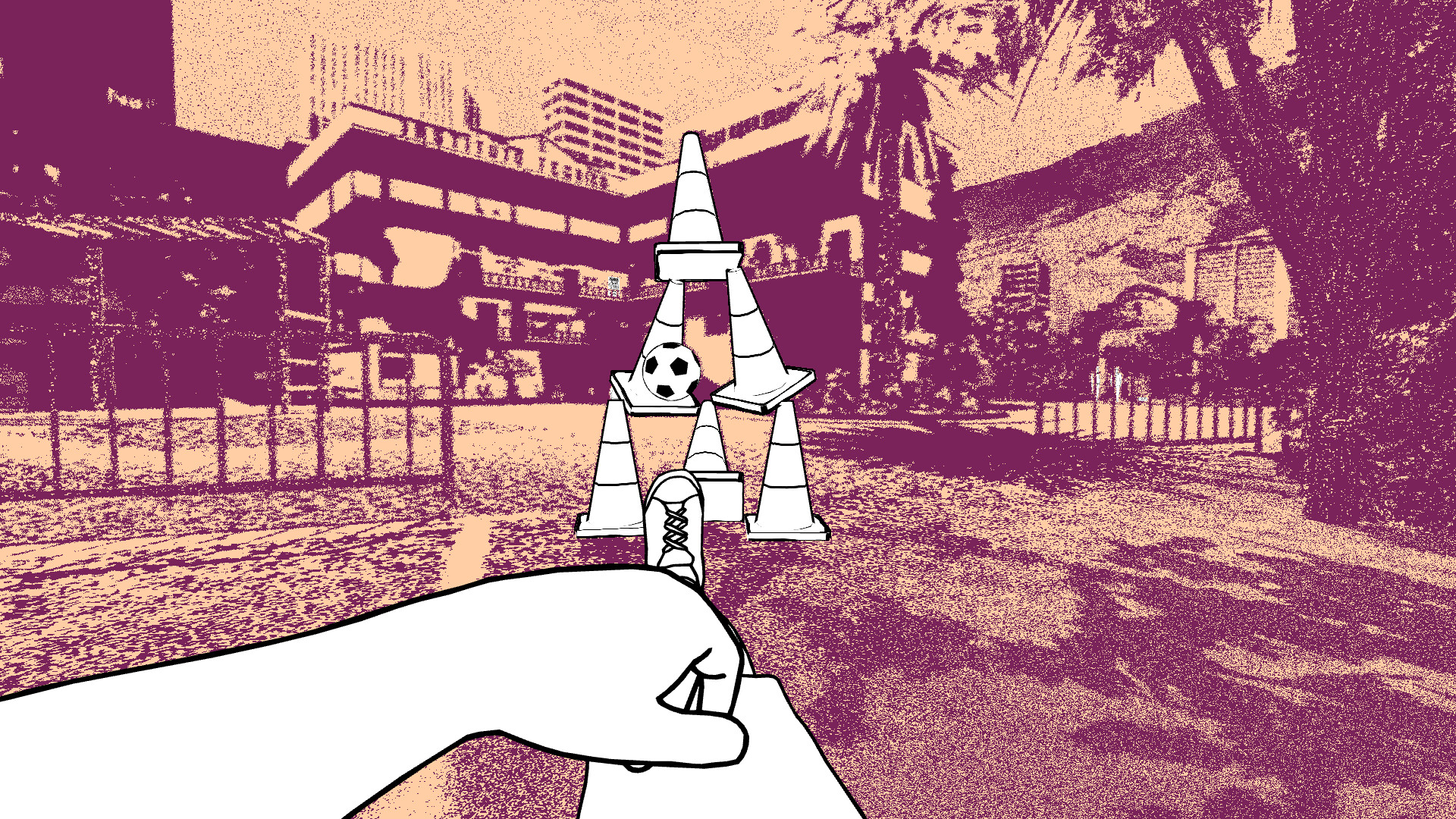
The ball is the player's most direct way of touching that world. From the first-person view, Julián can dribble it along, pass it or shoot it toward something that catches his attention. Its physics mean that the object has a path of its own once kicked; the next moment depends on where it goes and who happens to be nearby. The developers built the town as a dense space with activities, conversations and opportunities for mischief, so an apparently aimless kick can become a social encounter. A person may react to the ball, while another scene can unfold whether Julián is looking for it or not. That makes attention part of play. Rather than presenting every resident as an obstacle to a sports objective, the game lets them remain people with their own business, voices and moods. The player can follow the main thread of Julián's day while still noticing how much is happening beside it. Its interactive language is deliberately modest: movement, a ball and the invitation to see what happens. Anyone expecting a fixture list, team management or elaborate football tactics should understand that these actions serve a slice-of-life adventure instead.
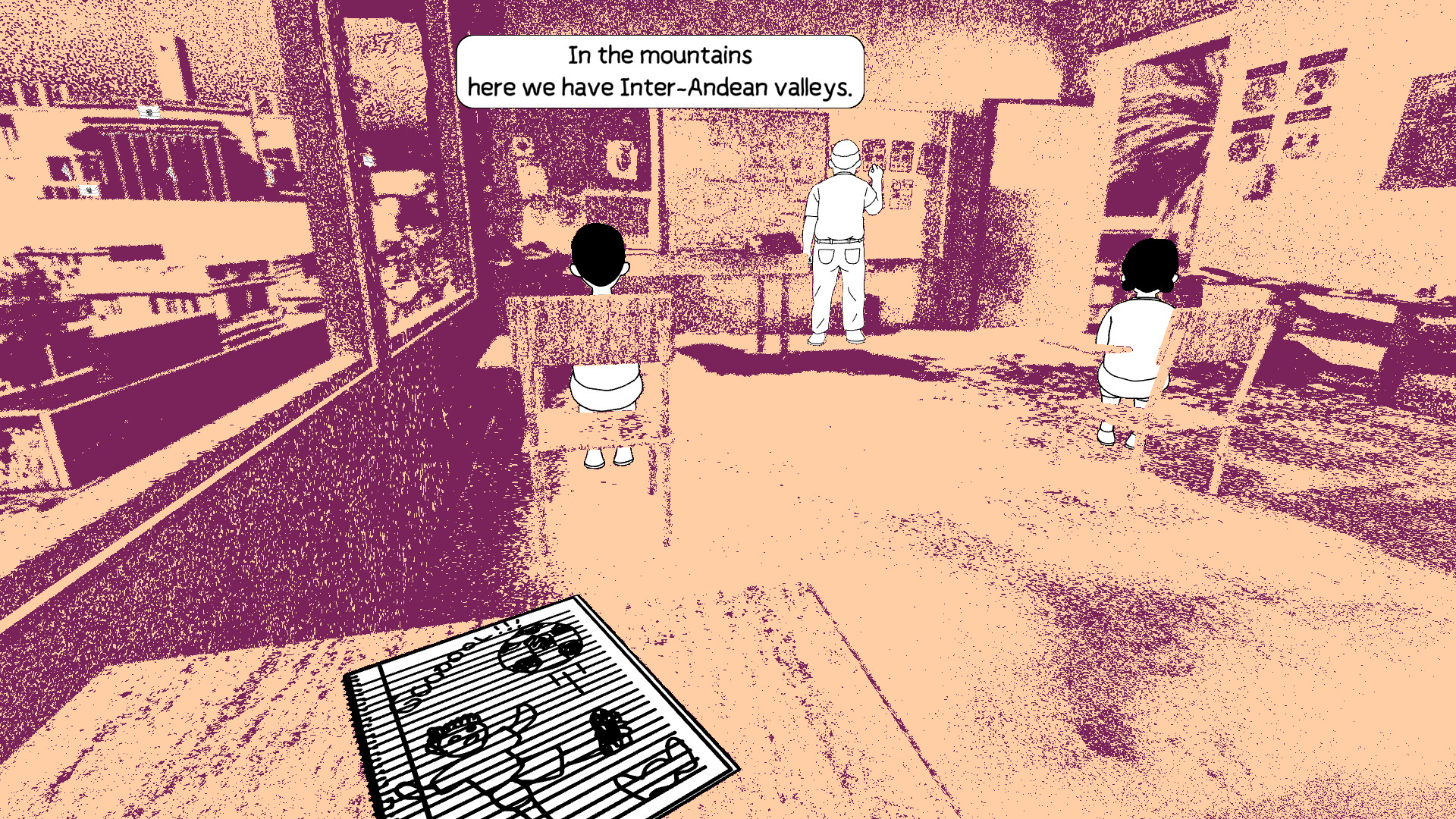
Quito is more than a period backdrop. The creators, Julián Cordero and Sebastián Valbuena, used photographs, textures, recorded conversations and city ambience from Ecuador in the game's audiovisual construction. Those materials help give the streets a lived-in texture without pretending that the game is a documentary reproduction of every location. The figures have a distinctive illustrated quality against their surroundings, and the image can feel like a remembered scene assembled from several kinds of material. Spanish voices and subtitled dialogue preserve the sound of the place and its people. Ambient talk is especially important in a story about a child who catches only part of what adults are saying. A sentence overheard while moving through town can tell Julián, and the player, something about the fever around football or about an entirely ordinary concern. The result is a setting with more than one register: public celebration, private routine, childish curiosity and the passing noises of city life. There is no need for a narrator to explain every resident or street when the act of passing through them already gives the player a sense of how the neighbourhood works.
The historical moment is precise. Ecuador qualified for the 2002 FIFA World Cup for the first time, and despelote places the build-up within Julián's 2001 childhood. It uses that prospect as an atmosphere and a social current, not as a substitute for explaining the rules of international football. The game's focus remains on what a child might notice as adults invest hope in something beyond the block where he plays. That perspective also keeps the story from becoming a simple nostalgia catalogue. A child can enjoy a kickabout without fully understanding why a result on the radio matters so much to the people around him. He can be drawn into the excitement while still thinking about his friends, his own ball and the next place he wants to go. The gap between those scales is where much of the game's meaning sits. The creators describe the project as informed by Julián's own upbringing and relationship to soccer, but semi-autobiographical does not mean that every exchange should be read as a literal historical record. The game turns memory into an explorable experience, allowing everyday encounters to carry the feeling of a nation waiting.
The structure invites the player to pay attention to changes in tone rather than to master a complicated set of systems. Its crowded town gives the football room to travel and other people room to respond; movement through that environment becomes a way of hearing and seeing how the wider moment evolves. The player may spend a while doing something as simple as keeping the ball in motion, then find that a conversation nearby has become the most interesting part of the scene. Despelote's design treats those shifts as its subject. It does not need every interaction to be a scored challenge. The freedom to kick the ball toward a person, to explore at leisure or to be distracted by an incidental exchange fits a story told from childhood, where a day's importance is often discovered afterward. The first-person camera gives a close relation to the ball and to the people on the pavement, while the mixture of drawn figures and recorded material gives the city a different presence from a conventional sports arena. It is worth entering on those terms: as an adventure through a place and its conversations, with football as a guide rather than an end in itself.
There is a more conventional piece of football tucked inside this unusual adventure. A post-release update added a free-play version of Tino Tini's Soccer 99, the game's football minigame. After finishing the story, players can return to it repeatedly, choose among countries from the South American qualifiers and encounter different difficulty levels. The same update added scene selection, letting a completed-game player revisit moments and look for interactions they missed. The developers also described local play against a friend in the minigame when a second controller is connected. These are later additions to the finished game, not evidence that the main childhood narrative is a multiplayer sports campaign. The distinction is useful because it gives players two different reasons to return: replaying a compact football contest, or wandering back through a remembered place with more attention to a conversation or detail. Julián Cordero and Sebastián Valbuena developed despelote, with Panic publishing its 2025 release. Steam, PlayStation and Xbox launched on 1 May, with Mac and Switch listings following later. An early announcement had expected a 2024 PS5 launch; the completed game's release came the following year.
- Developer
- Julián Cordero and Sebastián Valbuena
- Genre
- First-person slice-of-life football adventure