
About Deliver Us Mars
Ten years after the Fortuna mission, Earth is nearing extinction when a distress call from Mars prompts astronaut Kathy Johanson to join the Zephyr’s crew. Her mission is to recover the ARK colony ships stolen by Outward, crossing harsh terrain, climbing with paired axes and solving energy-routing puzzles while investigating what lies behind the signal.
Deliver Us Mars is a science-fiction adventure set ten years after the Fortuna mission in Deliver Us The Moon. Earth is again facing a crisis severe enough to threaten humanity’s survival, and a distress call from Mars draws attention to the stolen ARK colony ships. The youngest astronaut, Kathy Johanson, joins the crew of the Zephyr to recover them. The stakes are planetary, but the mission also has a personal thread: Kathy hopes to find her father, Isaac, whose connection to the Outward group makes the expedition more complicated than a straightforward recovery operation. The story brings the two games into the same future while giving this journey its own protagonist, crew and central mystery. Familiar context enriches the sequel, but the immediate objective is clear even for newcomers.
The mission begins before the crew reaches Mars. Kathy’s path includes Earth-based sections, preparations for launch, work aboard the Zephyr and the hazards of travelling through space. These sequences let the player take part in practical astronaut tasks, including checks on ship systems and an exterior repair after damage. Movement can shift from third-person exploration to a first-person view when using equipment or navigating zero gravity. The change in perspective supports a sequence of distinct activities rather than a single continuous walking or climbing loop. Once the crew reaches the red planet, the search moves through abandoned installations and the landscape between them. Exploring each site means examining what Outward left behind while using the available equipment to make the next part of the route possible.
On Mars, traversal is built around Kathy’s paired climbing axes. She can anchor one axe, release and reposition the other, and repeat the motion to move across designated climbable surfaces. The mechanic gives cliffs, walls and parts of large structures a direct role in navigation: reaching a ledge or upper platform depends on placing each tool where the surface will hold it. Climbing asks for measured movement, since rushing can leave Kathy without a secure grip. The terrain also includes sections where the axes cannot attach, so route-finding involves reading the wall as well as operating the controls. The game combines these climbs with ordinary platforming and movement through habitats, making elevation changes one of the ways Mars’ facilities and outdoor spaces connect.
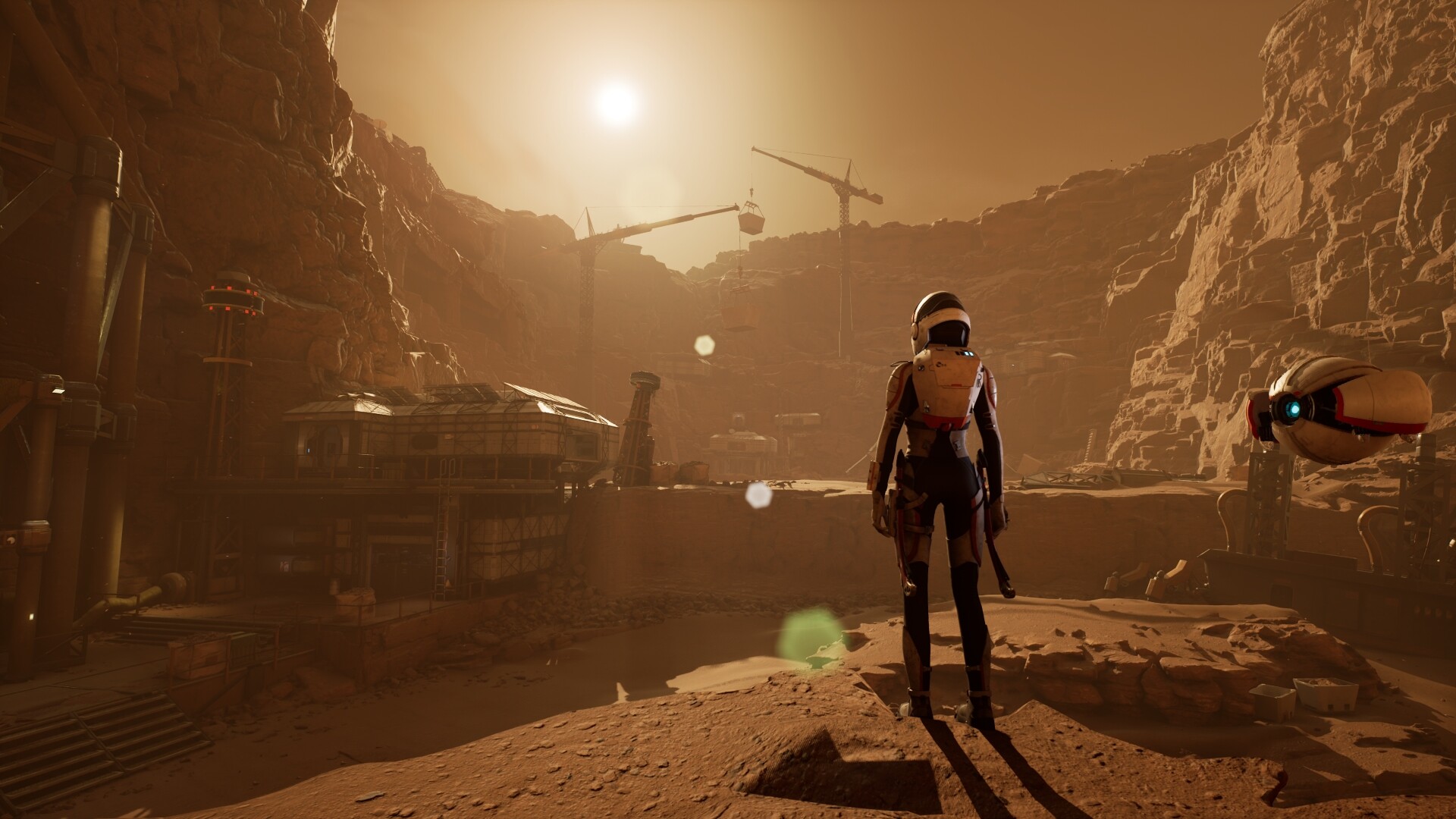
Energy-routing puzzles return in a new planetary setting. Kathy encounters unpowered terminals and devices that need a working supply before they can perform their function. MPT beams carry energy between emitters and targets; the player redirects them with nearby equipment such as splitters and dampening fields. Some arrangements require several devices to receive power together, or require connections to be activated in a particular order. As the number of endpoints grows, a beam that first appears to be a simple line across a room can become a small network that must be understood and adjusted. Kathy’s laser cutter deals with a different kind of obstacle, removing metal fastenings or debris that block access. These tools make the puzzle rooms part of the mission’s infrastructure work rather than abstract riddles separated from the equipment around them.
Kathy is accompanied by AYLA, an A.S.E. unit that can be piloted into places too small for her to enter. Directing the hovering robot lets the player inspect objects, open certain doors and interact with systems from another viewpoint. AYLA also helps unlock holographic recordings. These encrypted memories require aligning the drone’s position along spatial axes, turning information gathering into a brief positioning puzzle. The recordings and other logs gradually disclose how earlier inhabitants used the facilities and why the ARKs matter to the wider mission. Because much of the Martian story survives as traces left in deserted places, scanning and listening are part of understanding the expedition, not just optional decoration. The robot’s utility also extends the pattern established by the first game, while giving Kathy a distinct companion for this mission.
Travel between Martian facilities also includes rover passages across the planet’s exterior. They connect separate areas and make the landscape itself part of the expedition: the view moves from the dusty plains associated with Mars to icy craters and canyons. These changes in terrain give the search a physical geography beyond the interiors of research stations and habitats, while the rover carries Kathy between places where the crew can continue investigating Outward’s traces. The surface remains a harsh environment to cross, and the contrast between open ground and enclosed installations changes how each location is approached. A station can concentrate attention on machinery and records; an outdoor route opens the view across the red planet before the next structure brings the mission back to close exploration.
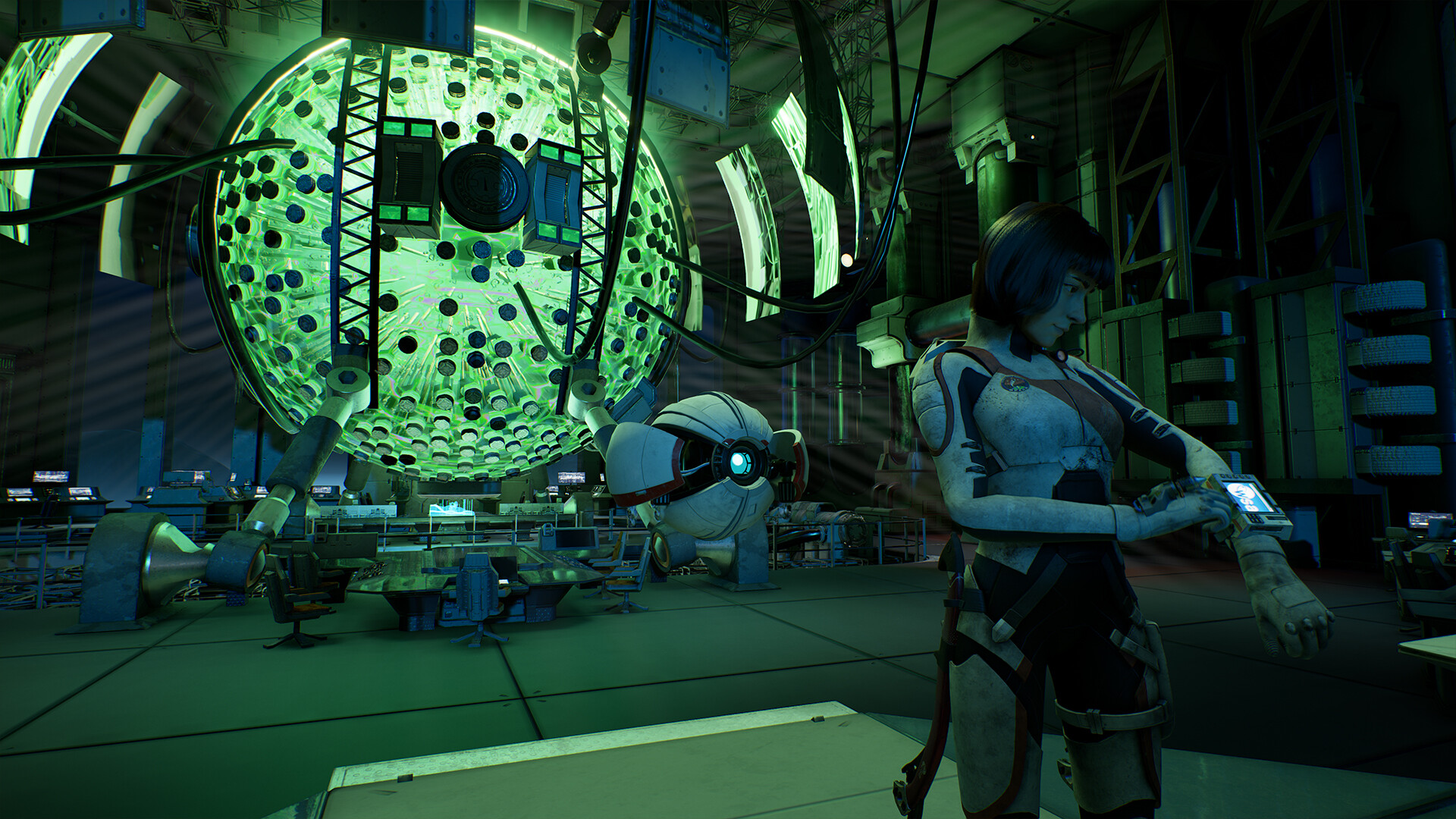
Kathy’s childhood appears through flashbacks that revisit formative moments as the mission unfolds. Early memories show her fascination with underwater diving, a kind of exploration that later connects in her imagination to travelling beyond Earth. The scenes also establish her family relationships, especially the tension and closeness between Kathy and her older sister Claire, as well as the complicated place their father occupies in their lives. These recollections give the protagonist context beyond her astronaut qualification and current assignment. They are woven into the chronology rather than presented as a separate biography, so a memory can acquire a different emotional weight as the player learns more about the people in it. The personal story stays beside the crew’s Mars mission, giving the expedition stakes inside Kathy’s family as well as on Earth.
- Developer
- KeokeN Interactive
- Genre
- Science-fiction action-adventure with exploration and puzzles