
About Deep Rock Galactic
Deep Rock Galactic sends four dwarven classes into destructible caves on Hoxxes IV to mine valuable resources, complete corporate assignments and survive hostile creatures. Choose missions and equipment aboard the Space Rig, then combine traversal tools, weapons and teamwork underground before making the hazardous return to the Drop Pod.
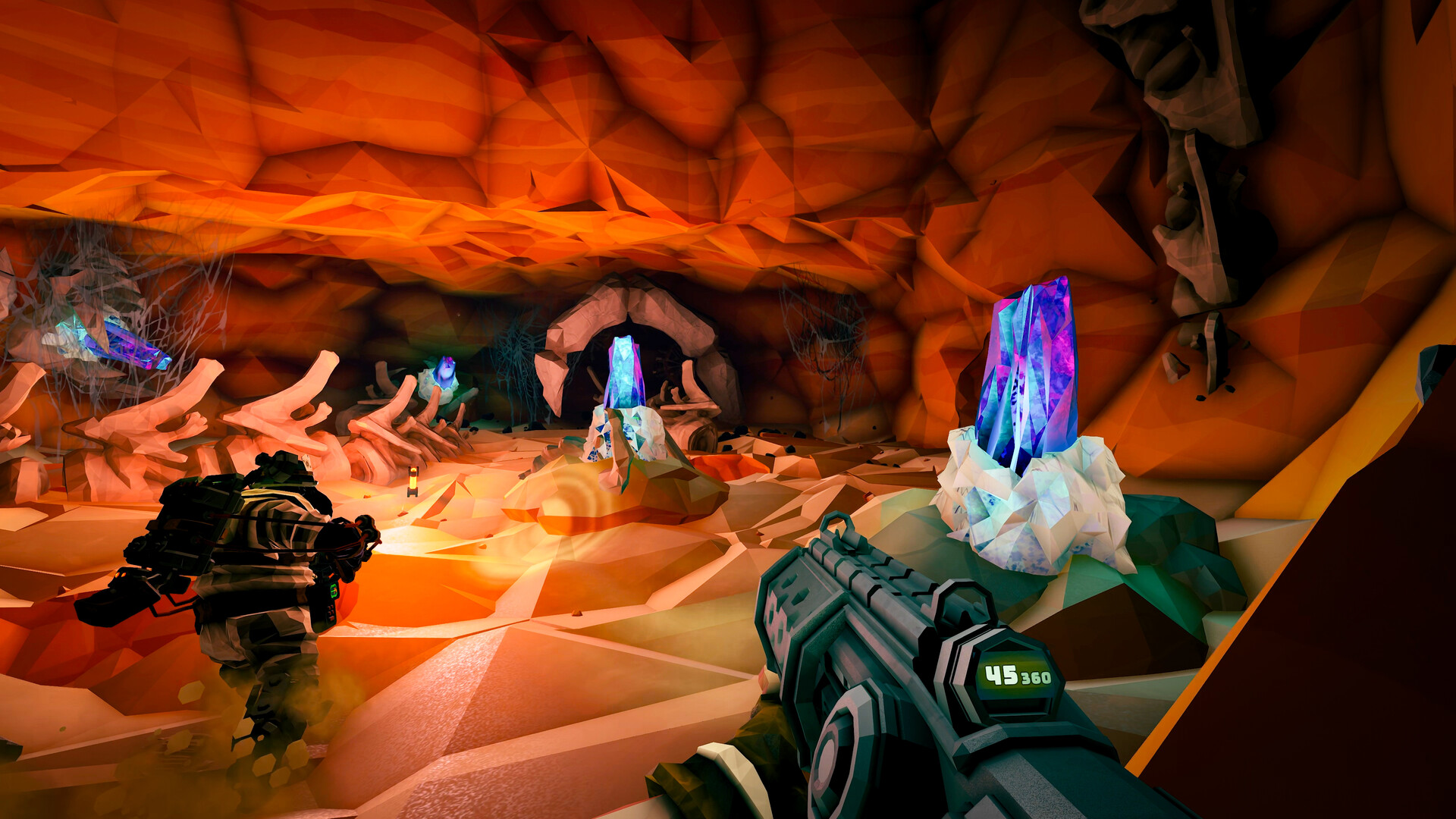
Deep Rock Galactic sends a crew of spacefaring dwarves employed by the mining corporation Deep Rock Galactic into Hoxxes IV, a planet whose valuable minerals lie beneath hostile, destructible terrain. Missions take place in procedurally generated cave systems, so routes, vertical drops and the placement of deposits change between expeditions. The crew’s contract sets the main objective, while alien creatures attack as the miners travel and work. A mission begins from the Space Rig, where players choose an assignment and prepare a class loadout, then descend by Drop Pod. Underground, the team explores, mines, fights and handles machinery before calling for extraction. Success depends on completing the contract and reaching the returning pod; the caves are not a safe base to linger in once the job is done. Assignments connect successive deployments to unlocks, so the mission board can make a cave objective part of a longer career task.
The four classes divide useful tools across the same mining-and-combat loop. The Scout uses a grappling hook to reach ledges and a flare gun to illuminate broad cave spaces, while the Engineer places platforms that can give the Scout a landing or create routes along walls. Engineers also deploy sentry guns. The Gunner brings heavier weapons, a shield generator for temporary cover and a zipline launcher that can help the crew cross steep gaps while carrying bulky objects. The Driller cuts tunnels with powered drills, changing the terrain to connect chambers or make a direct route back. Each dwarf also carries weapons and support equipment, but traversal tools are what make the team’s different capabilities fit together: lighting, climbing, bridging and digging can turn a cave obstacle into a shared route. In solo missions, Bosco provides an automated partner who can assist with combat and mining, while a human crew can divide the work across complementary tools.
Objectives give each cave a different task. In Mining Expedition, dwarves collect and deposit Morkite from mineral veins. Egg Hunt asks them to find alien eggs embedded in the cave and bring them back, with digging one out liable to draw hostile creatures. On-Site Refining sends the team to locate Liquid Morkite geysers, connect each one to a central refinery with buildable pipelines, and defend and repair the lines while the refinery pumps. The pipes can also be ridden to travel between the refinery and pump stations. These missions turn mining into logistics: resources must be located in the terrain, carried back to a deposit point, or linked to machinery before the crew can complete the order. Because the cave is generated around each contract, locating a vein or geyser is part of the objective rather than a fixed route through a memorized level.
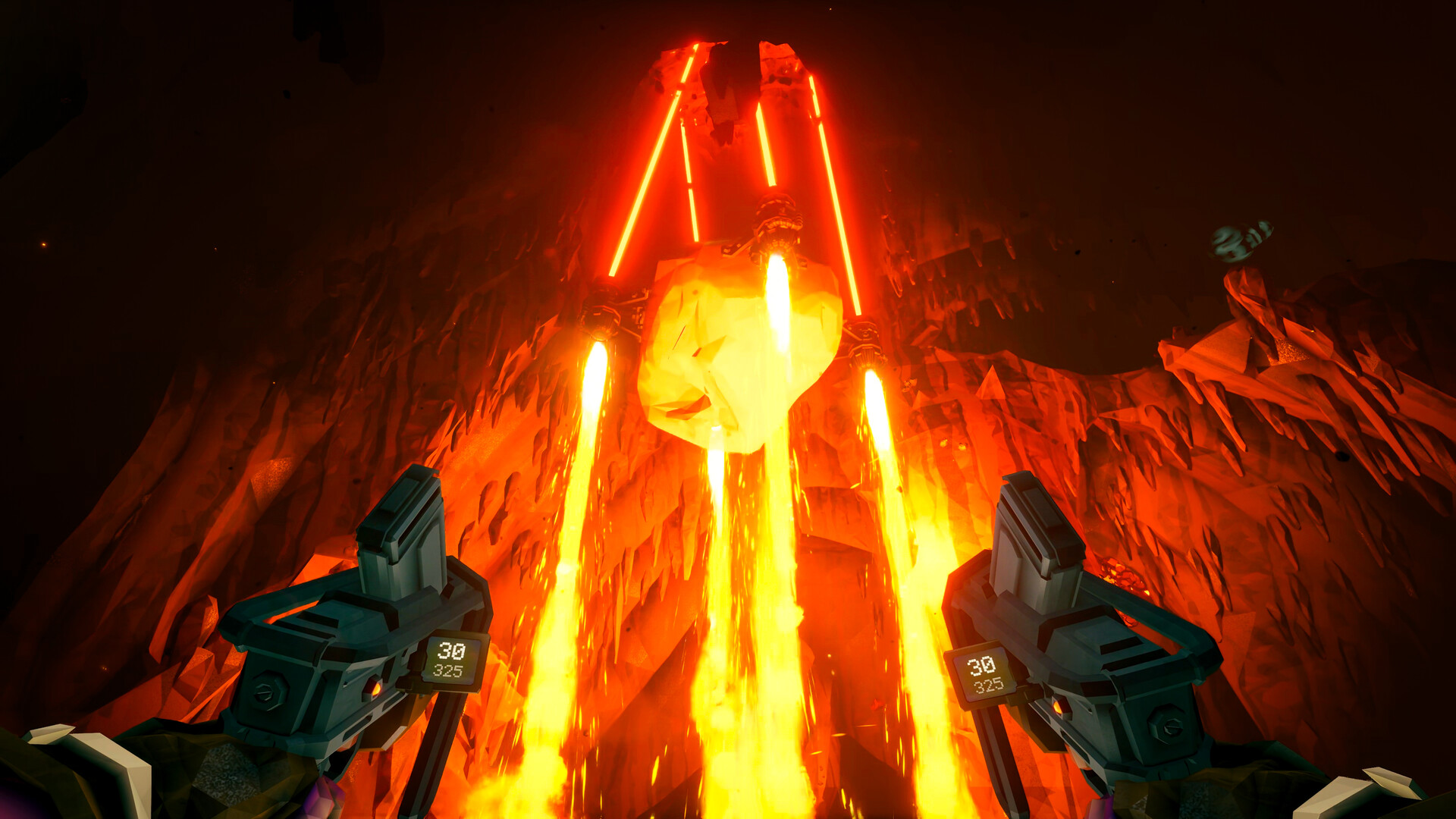
Other contracts ask the team to operate or protect equipment. Salvage Operation involves recovering damaged mini-M.U.L.E. units and repairing them with retrieved legs; the crew then defends an uplink and a fuel pod by staying within their marked areas as each completes its process. Point Extraction instead scatters Aquarqs through a large cavern and asks the miners to carry them back to a Minehead before holding out for extraction. In Escort Duty, the crew protects and repairs the moving Drilldozer, refuels its batteries by mining nearby Oil Shale, and guards it as it breaks through the Ommoran Heartstone’s defenses. Elimination contracts focus on opening Dreadnought cocoons and defeating the creatures inside, while Industrial Sabotage pairs hacking tasks with a fight against the rival facility’s Caretaker.
The same supplies matter across those different assignments. Mined minerals can be deposited in the walking M.U.L.E. or in mission machinery, freeing a dwarf to keep gathering. Nitra is collected from cave walls and spent by calling a resupply pod, which provides ammunition and equipment refills; because the resource pool is shared by the squad, the group has to decide when a refill is worth using. Flares, the terrain scanner and the laser pointer help the team see, map and mark routes or objectives in darkness. When the primary task is complete, a player can trigger the Drop Pod’s return and the crew must navigate back through the same destructible cave, using existing tunnels or their tools to clear a route as enemies continue to pressure them. A resupply is called at a chosen position, making access and team coordination relevant in a cavern where sight lines and paths may be broken by rock.
Work on Hoxxes also feeds a longer progression loop aboard the Space Rig. Class-specific experience advances each dwarf, while credits and minerals gathered in completed missions pay for weapon and equipment modifications. Assignments connect a sequence of missions to unlock additional weapons and features. A class that reaches its first promotion gains access to systems including Deep Dives, the Forge and Machine Events; these offer additional high-difficulty objectives and opportunities to use Matrix Cores for weapon or cosmetic Overclocks. Players choose which upgrades to equip and can change their class and configuration between deployments. The result is a cycle of selecting a contract, shaping a loadout for its objective, coordinating class tools underground, and investing mission rewards in equipment for later work. Class upgrades and weapon choices are separate from cosmetic packs: the job board and mission rewards drive functional progression through play.
- Developer
- Ghost Ship Games
- Genre
- co-operative first-person shooter