
About DEATH STRANDING DIRECTOR’S CUT
In a fractured America where the dead and living worlds have collided, porter Sam Bridges carries supplies between isolated communities. DEATH STRANDING DIRECTOR’S CUT builds its journey around route planning, cargo balance, traversal tools and a shared network of player-built aids, with extra missions, equipment and facilities woven into the campaign.
DEATH STRANDING DIRECTOR’S CUT follows Sam Bridges, a porter crossing a broken version of America after the Death Stranding opened a passage between the living and the dead. The land is scattered with isolated facilities and settlements, and Sam’s work is to carry what people need while bringing those locations into the Chiral Network. Fragile and the staff of Bridges are among the people tied to that effort; a BB is carried in a pod as part of Sam’s gear. The story gives each delivery a human destination, but the moment-to-moment play is often about making the trip possible: reading a slope, checking a load, choosing a route around danger and deciding which tools are worth carrying. The Director’s Cut keeps that porter journey at the centre and introduces extra content into its existing progression.
Every order starts with a practical problem: what cargo must arrive, how far the recipient is, and what the terrain between them will demand. Sam can carry packages on his back and limbs, but a heavy or poorly balanced stack strains his movement and can throw him off balance. The cargo screen lets you rearrange the load, placing weight close to his centre of gravity; special parcels may also have handling instructions. Falling can damage containers, while Timefall, the rain and snow that rapidly age what they touch, wears cargo cases down during a trip. Container Repair Spray can address that damage if you packed it. Before leaving a terminal, you can choose the order of jobs, set map markers and sketch a line across the terrain. A seemingly direct route may mean a steep climb, so a longer path across gentler ground can be safer and faster overall.
Walking is an active part of the delivery system. Rocky drops, rivers and mountain slopes ask you to manage Sam’s balance and stamina, while ladders and climbing ropes help cross obstacles that are awkward to traverse unaided. A ladder can bridge a gap or reach a ledge; a rope gives you a handhold down a steep face. As the Chiral Network spreads into more areas, you gain access to more construction options and can place equipment such as bridges or ziplines where they solve a route problem. You can also use other porters’ structures when the online connection makes them appear in your world. Their placement may turn an isolated climb into a quick traverse, while a structure you build can help someone else later. Every trip therefore changes the map a little, through your own choices and the useful traces left by other players.
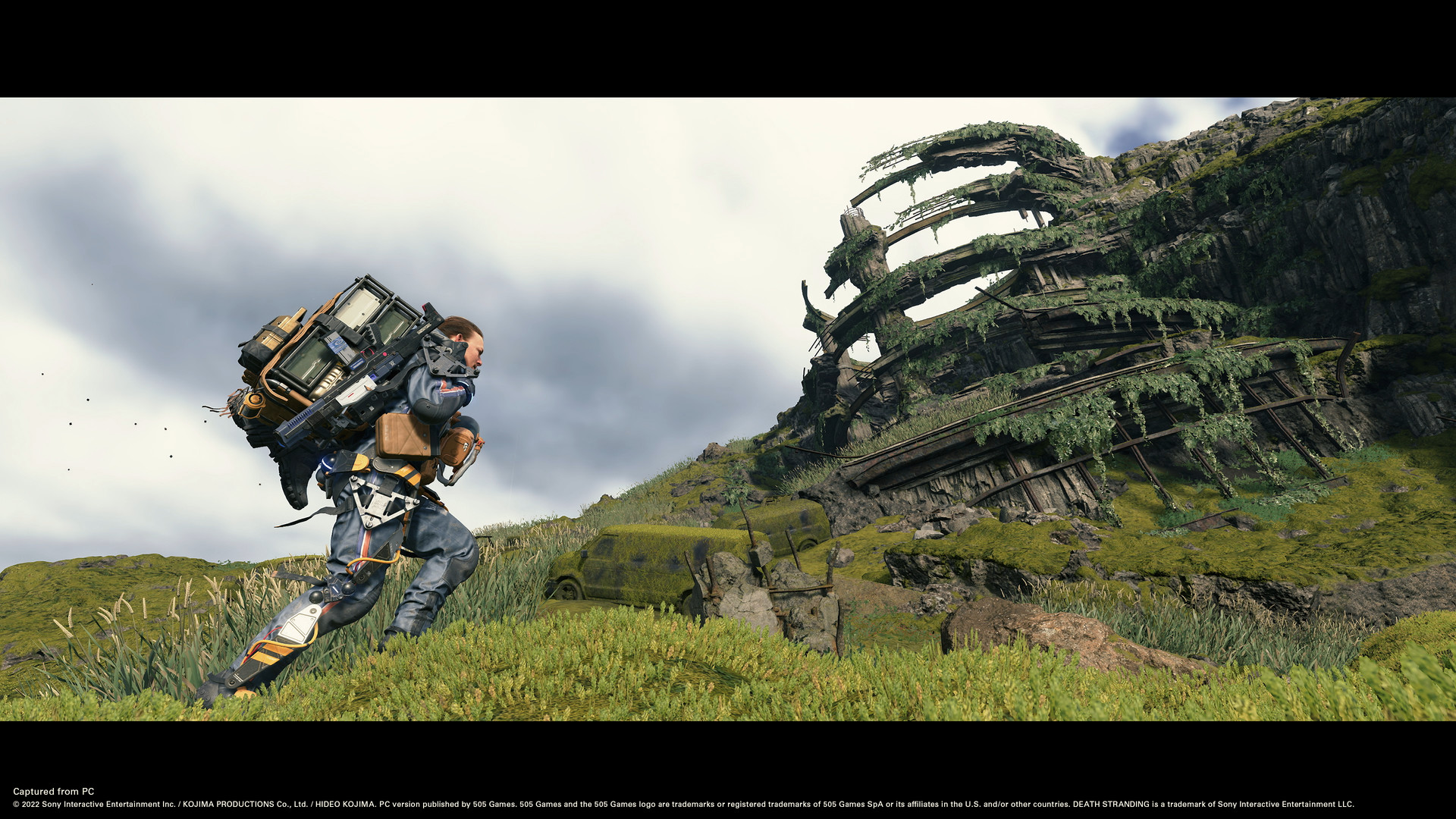
The landscape is not the only obstacle. MULEs are human cargo thieves who patrol territory and target porter loads. Inside a camp’s sensor poles, their cargo scanner detects Sam’s cargo and draws MULEs toward the scanned location. He can check the Odradek to track their positions, stay low in tall grass, approach from behind to restrain one with the Strand, or run if protecting the delivery matters more than fighting. BTs, the otherworldly beings associated with the Death Stranding, create a different kind of threat. Sam reads the Odradek scanner’s movements to locate BTs and moves carefully through affected areas rather than treating each crossing as a straightforward firefight. These encounters can turn a routine delivery into a decision about whether to proceed, detour or prepare. Vehicles help cover ground once routes and equipment permit them, but rough slopes and damaged roads can make a vehicle a liability. The cargo still has to arrive in acceptable condition, so speed matters only when the chosen route and load can support it.
Completing deliveries reconnects facilities to the Chiral Network and moves the main journey forward. As locations join the network, they can offer new orders and make equipment and shared construction options available. The Social Strand System connects players through asynchronous traces in the world: ladders, signs, vehicles, supplies and larger structures from other players can show up where you need them. You can leave equipment or build a route aid for porters who travel later. In facilities and safe houses, Sam can rest in a private room and prepare for the next trip. Fragile Jump provides fast travel between known connected centres, facilities and safe houses, though cargo and equipment logistics still shape how useful it is for a particular delivery.
The Director’s Cut adds missions, facilities and equipment to the delivery journey. The Ruined Factory is a new location with missions that unlock as the story progresses. The Maser Gun stuns human threats such as MULEs, while the Support Skeleton reduces the strain of a heavy load and can boost Sam’s travel speed at the cost of battery power. A Buddy Bot can carry cargo or make deliveries within Chiral Network range; orders it completes are capped at an A rating. Jump Ramps propel Sam and his vehicle over obstacles, and a Cargo Catapult sends parcels across difficult ground so he can retrieve them beyond a ravine or mountain pass. Other new structures include the Chiral Bridge, which spans narrow ground where an ordinary bridge cannot be built. The new firing range offers weapon drills and ranked challenges, while the Fragile Circuit lets vehicles run time trials.
- Developer
- Kojima Productions
- Genre
- Action adventure; porter and delivery focused