
About Death of the Reprobate
The dying Immortal John gives his heir one last instruction: perform seven good deeds before the end. Death of the Reprobate turns that apparently simple errand into a painted point-and-click world of questionable charity, absurd conversations and item puzzles. Joe Richardson assembles figures and landscapes from historical art, then makes them move and misbehave.
Immortal John has reached the end of a life that, by its very title, should never have ended. His son receives a final demand: do seven good deeds. That is the disarmingly tidy beginning of Death of the Reprobate, a point-and-click adventure whose surrounding world refuses to behave as tidily as the instruction. The heir has to move through towns, interiors and landscapes populated by people with their own troubles, schemes and peculiar definitions of help. A charitable action may require listening to a stranger, finding an object or working through a chain of interactions that only makes sense after learning the local situation. The game draws its humour from the distance between a solemn moral assignment and the messy behaviour of the people involved. An apparently noble task can be brought down to earth by an undignified conversation or an object put to an absurd use. The player is not asked to command an army or improve a numerical virtue meter; progress comes from understanding what the inhabitants want and how this painted world allows a problem to be changed. The seven deeds give the journey direction while leaving room for the individual episodes to take surprising turns.
The picture-book appearance is assembled from actual historical paintings. Richardson cuts figures, buildings and scenery from works made across several centuries and joins them into places through which the player can walk. The publisher specifies Renaissance, Rococo and even Romantic-era material rather than a single, historically consistent period. That matters when reading a screen: its people and architecture may look as if they belong in a museum, but they have been placed together for a new comic story. Painted bodies gesture, speak and respond, while familiar visual signs of religious grandeur or aristocratic dignity meet much less dignified human needs. A richly coloured landscape is a navigable scene, not a static backdrop. A portrait may be an inhabitant with a request; a crowd may conceal a useful conversation. Richardson's collage method supplies the game's visual jokes as well as its atmosphere. The pleasure of looking closely at a scene has a practical purpose, because useful things and people are embedded in the same thickly detailed artwork that carries the setting. The result is less a lesson in art history than a strange inhabited world made from art's raw materials.
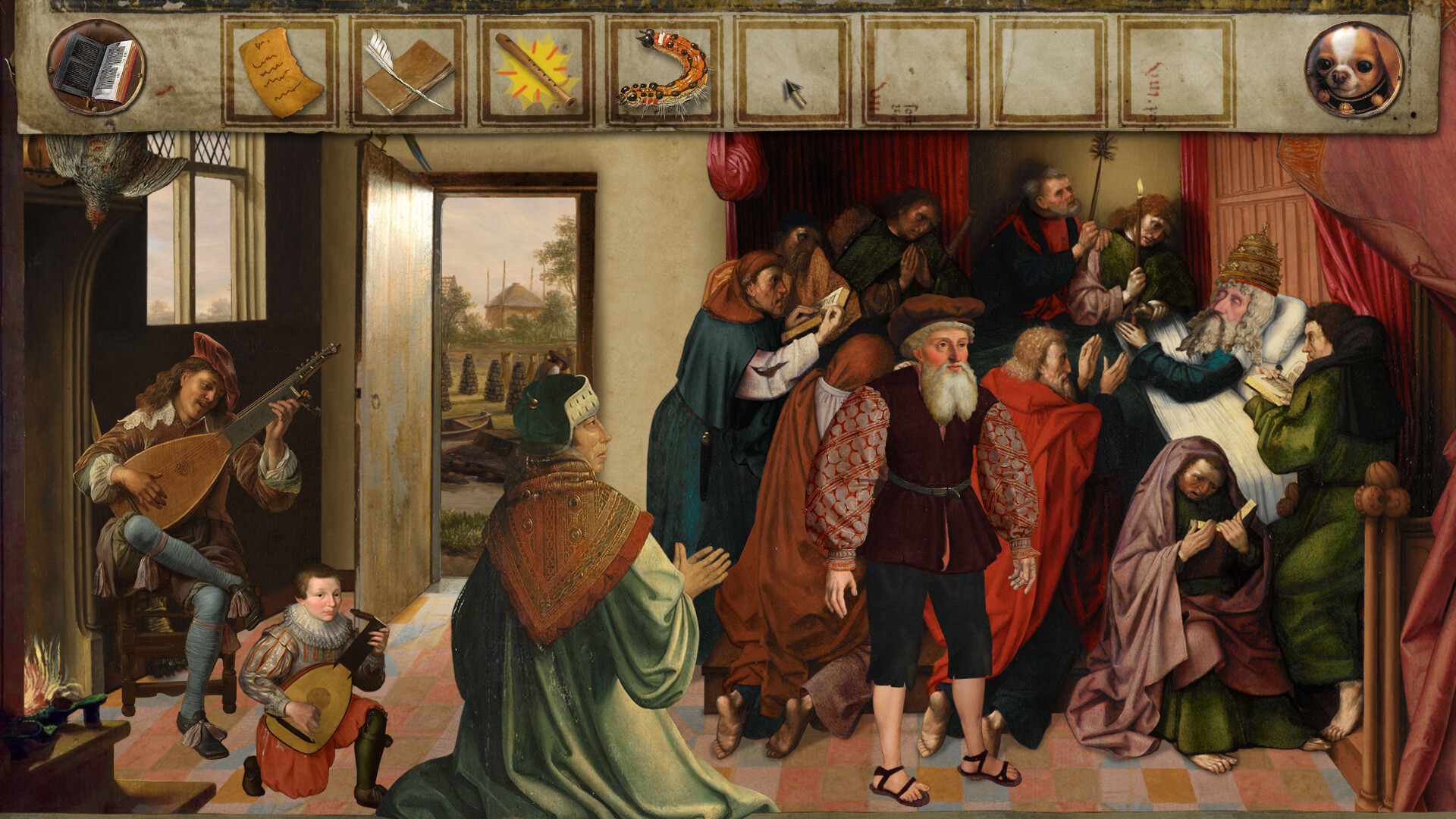
The interaction remains recognisably traditional adventure-game work. A pointer selects a place or character, a verb-coin menu offers possible actions, and a small inventory holds objects that may matter later. Items can be dragged into the world or combined with another part of a situation. The publisher promises puzzles that follow an internal logic even when the jokes around them are deliberately ridiculous. That distinction is useful. A scene may ask for a preposterous solution, yet the player still has to notice what an object can do, who needs it and what must happen first. Conversations can change the apparent purpose of a room: someone who sounded like a distraction may give the detail that makes an earlier discovery usable. Revisiting locations is therefore part of the investigation, rather than a sign that the game has run out of new places. There is no reason to treat the painted setting as a random hunt for invisible hotspots. Its inhabitants explain needs and constraints, and the adventure expects the player to connect those needs with things seen elsewhere. The seven-deed structure gives each solved problem a place in the larger errand without reducing the world to a checklist of identical favours.
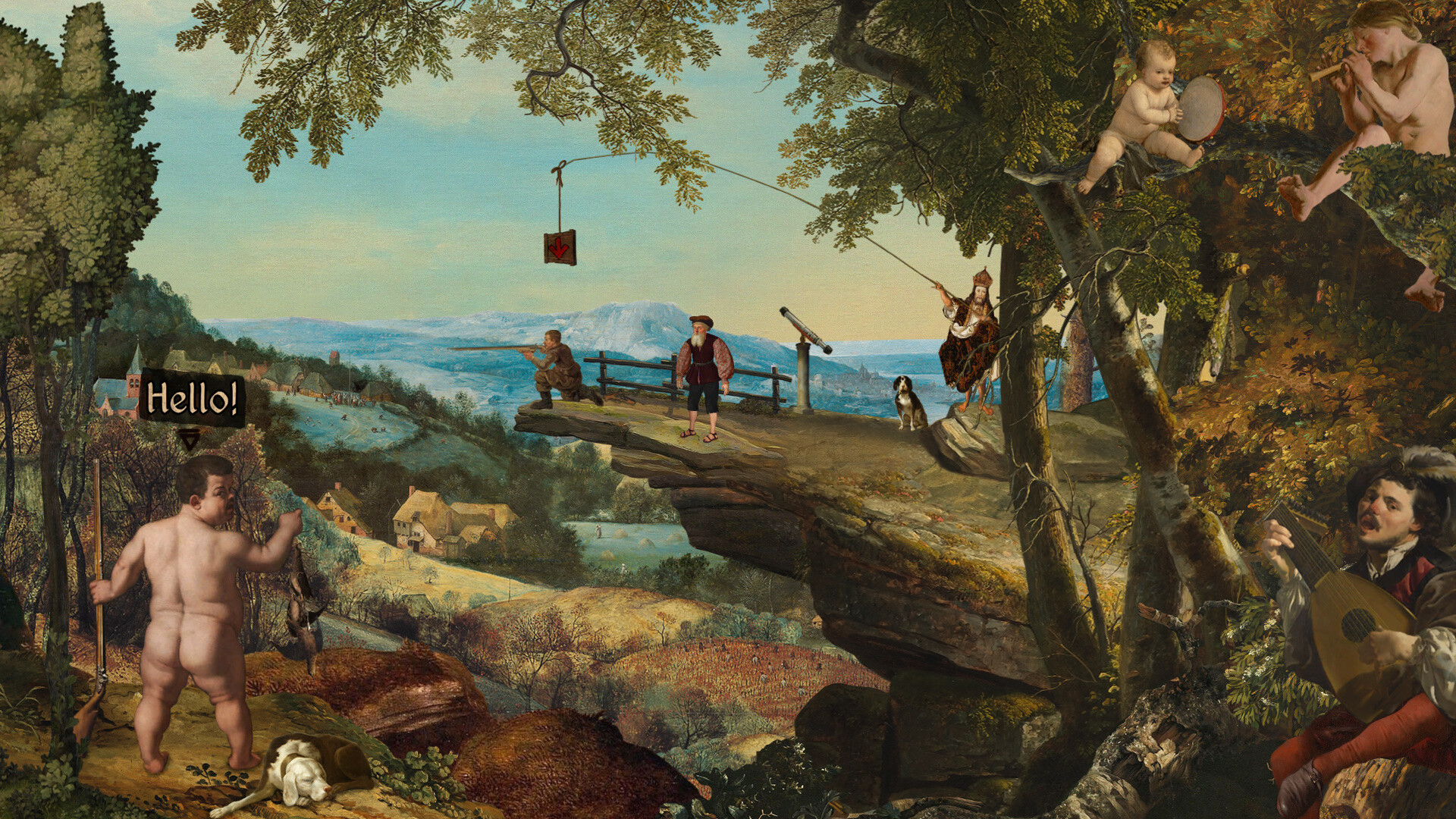
Its comedy depends on abrupt changes of register. A scene can borrow the scale and religious language of an old master painting, then give a character a petty complaint or a very bodily concern. Richardson has described the work as a combination of high culture and low behaviour; the publisher calls it highbrow buffoonery. Neither phrase means the game is simply mocking its source pictures. The painted figures are allowed to become characters with motives, frustrations and habits. Their unheroic conversations make the quest for moral improvement feel both human and suspect. The heir is supposed to perform good deeds, but the mechanics of doing good are rarely as simple as saying the correct thing. Who counts as helped, and whether a clever solution serves anyone besides the person carrying it out, become part of the joke. That tone also prevents the promised deeds from sounding like a conventional virtue campaign. Richardson has explained that the three related games mirror one another thematically: an earlier protagonist commits bad deeds for a good reason, while this final story asks for good deeds from a more doubtful starting point. That is a useful way to understand why a simple act of assistance can carry an uneasy edge here. The story is willing to be crude, morbid and silly while repeatedly returning to death, judgement and how someone chooses to spend the time left to them. Its philosophical material arrives through the people and puzzles rather than a detached lecture.
Music strengthens the contrast between the imagery's grandeur and the comic trouble on screen. Eduardo Antonello created a period-minded score recorded with medieval and Renaissance instruments, and the publisher says the music adapts as the story advances. These sounds can make a room feel ceremonial just before someone punctures that ceremony with a joke. The same design principle shapes movement and pacing: the player has time to examine a composition, hear what its residents have to say and try objects against the problems they describe. The work is a single-player, dialogue-and-puzzle adventure, so the important changes occur in a person's understanding of the scene. An item may stop being mere decoration once a conversation gives it a use. A painting becomes a place with exits, a room with residents and a sequence of possible actions. This lets the historical collage do more than advertise the game's aesthetic. It determines the shapes of the people the player meets, the spaces they can explore and the visual absurdity of making an old painting respond to a modern adventure-game command.
Death of the Reprobate belongs to the same world as Four Last Things and The Procession to Calvary, with recurring themes and some familiar faces, but the publisher presents it as a standalone story. A newcomer can begin with the dying father's command rather than needing to reconstruct two earlier plots. The Steam release dates to 2024 and credits Joe Richardson as developer; Akupara Games is listed as publisher. Later collections and bundles can package the three adventures together, but they should not be mistaken for a different account of this game's original story. Its central question remains unusually compact: what might seven good deeds actually require of an heir travelling through a world of selfish, foolish and occasionally sympathetic people? The player learns the answer by clicking, listening, carrying odd objects and seeing what a seemingly generous intervention changes. The details of the later deeds and the ending are best discovered inside the game. What the opening establishes is enough to make the whole painted world feel unsettled: a man who could not die now is dying, and his successor has been handed a moral task with no simple manual for completing it.
- Developer
- Joe Richardson
- Genre
- Painted point-and-click comedy adventure