
About Dead Space 3
Isaac Clarke joins a mission to Tau Volantis, an icebound planet tied to the Necromorph outbreak. There he fights through abandoned settlements, wreckage and hostile terrain while searching for the source of the threat. John Carver can join the full campaign in online co-op, with combat and some story moments shaped around two players.
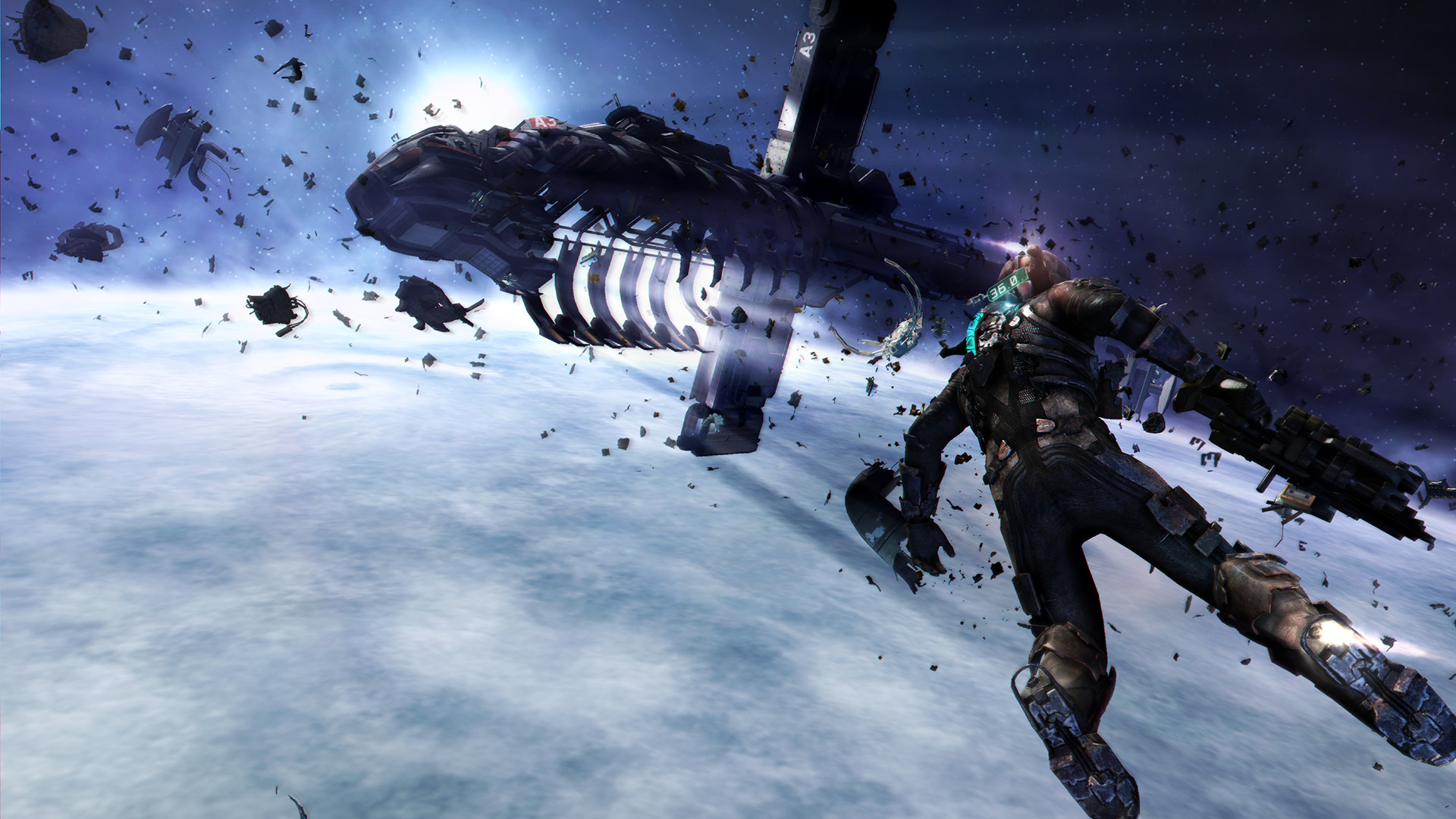
Dead Space 3 follows engineer Isaac Clarke after the events of the earlier games, sending him on an expedition to Tau Volantis, a frozen world believed to be connected to the origin of the Necromorph threat. Isaac joins Sergeant John Carver and other human forces attempting to understand the outbreak and stop its spread. The journey moves between spacecraft wreckage, military installations and planet-side ruins, putting the Marker crisis into a larger conflict that includes Unitologists, the sect that worships the alien artifacts. The story alternates between human opponents and reanimated creatures, while the group searches for evidence about the planet and the forces that shaped its history. Carver’s personal story and some of his reactions are explored specifically in co-op play.
Tau Volantis changes the texture of the campaign. Isaac moves through snow-covered terrain, wind-battered outposts and abandoned encampments as well as the industrial corridors and derelict ships associated with the series. The cold and exposed wilderness create hazards beyond combat: blizzards intensify the exposure, unstable routes lead to climbing sections, and traversing open ground can leave little cover from enemies. The journey also reaches buried cities and branches into optional expeditions through hostile areas. Between those larger vistas, interior spaces return to close-quarters movement, where vents, narrow passages and damaged machinery can make a room dangerous before an enemy appears. The settings provide different kinds of encounters while keeping the search for a way off the planet at the center of the expedition.
Combat preserves the series’ emphasis on cutting down Necromorphs by targeting limbs. Isaac can slow enemies with Stasis, use Kinesis to move or fire objects, and bring industrial tools and firearms into fights against creatures that attack at different ranges and speeds. The campaign also pits him against Unitologist soldiers, adding human gunfights and scenes that use cover to the familiar encounters with mutated enemies. A crowded room can therefore call for a different response from a single charging Necromorph: players can interrupt movement with Stasis, aim at limbs to reduce a creature’s threat, or use a weapon’s alternate fire to manage groups. Weapons can be rebuilt as the campaign progresses, so the way Isaac handles combat depends increasingly on parts and upgrades collected along the route.
Weapon construction is built around the Bench rather than a fixed catalogue of guns. A frame sets the basic form: Compact frames support one-handed weapons, while Heavy Frames make two-handed builds. Each gun combines an Upper Tool for primary fire with a Lower Tool for alternate fire, and different Tips alter how those tools deliver damage. Attachments can add effects or practical benefits, while Circuits adjust attributes such as damage, rate of fire, reload speed or clip size. Resource materials and parts gathered in the world feed these choices; blueprints offer a faster way to assemble a known design. The arrangement encourages players to adapt weapons to the next set of threats, balancing a preferred firing style against the materials available at a bench.
Resource gathering connects exploration with equipment progression. Isaac searches containers and defeated enemies for parts, and optional side missions lead into areas that expand on the people and places encountered in the campaign while offering further materials. A Scavenger Bot can be deployed to locate resources; its locator display points toward a deposit and signals more strongly as it gets close, then the bot returns its finds for use at a Bench. There, resources can be spent on weapon construction, Circuits, ammunition, Med Packs and Stasis packs. Inventory management matters because items occupy space, while the Safe keeps equipment that Isaac does not need immediately. Exploring a side route can therefore support a later weapon build or replenish supplies rather than functioning only as a narrative detour.
The complete story can be played alone or in online co-op, with a second player taking the role of Carver. The campaign supports drop-in and drop-out play, and some puzzles are arranged for two people to work together. Cooperation can change how combat unfolds: one player may use Stasis to hold an attacker while the other is pinned, and partners can coordinate weapon builds to cover different ranges or enemy types. Some of Carver’s personal history appears only during cooperative play, so the two modes reveal different character material even while following the same campaign. Online co-op lets a partner join that journey as Carver.
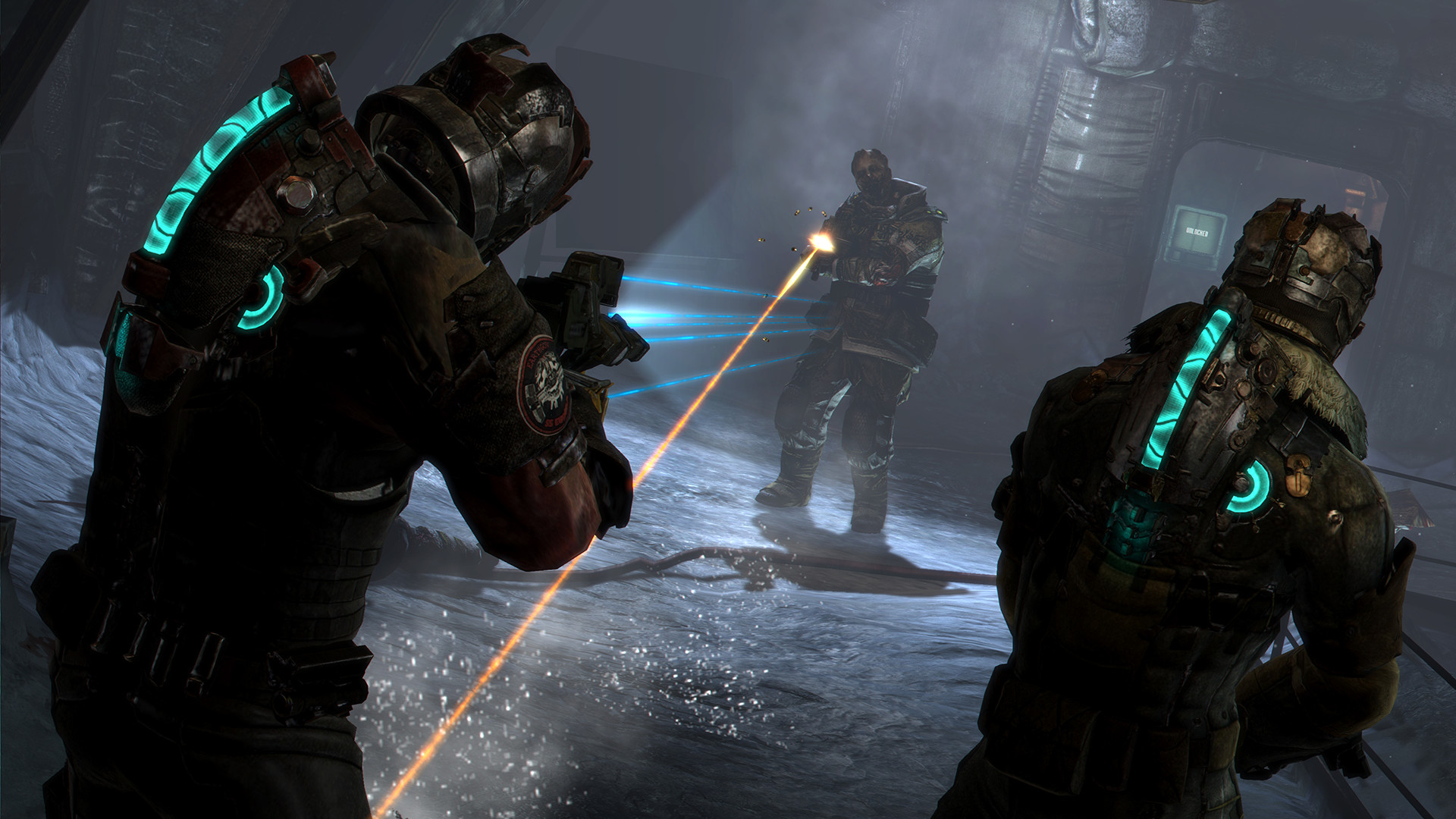
Optional missions add another route through the expedition. They branch into ravaged sections of levels and abandoned facilities, offering additional context about the places Isaac and Carver pass through and more opportunities to collect weapon parts. Some are designed around co-op, while most can also be completed solo. Alongside the main journey, these excursions vary the pace between combat encounters and give players further reasons to revisit the Bench and refine a build. Dead Space 3’s progression consequently links three activities: surviving encounters with the tools at hand, searching the environment for resources and using those resources to prepare a more tailored weapon for the next stretch of Tau Volantis.
- Developer
- Visceral Games
- Genre
- Survival horror action