
About Dead Rising 3
Mechanic Nick Ramos is trapped in Los Perdidos during a zombie outbreak, with a military strike looming over the city. Dead Rising 3 combines a chapter-based escape story with open-city scavenging, timed side missions, survivors to assist, and improvised weapons and vehicles. Apocalypse Edition on Steam also includes four separate Untold Stories of Los Perdidos chapters.
Dead Rising 3 follows Nick Ramos, a mechanic caught in a zombie outbreak in Los Perdidos, a sprawling California city. The threat is not limited to the infected crowding its streets: the military plans to destroy the city, giving Nick and the other people he encounters a fixed window to find a way out. The campaign moves through numbered chapters as Nick investigates what caused the crisis and tries to assemble an escape plan. Survivors who cross paths with him give that effort a human scale, while the story keeps its point of view rooted in an ordinary mechanic’s practical choices. Nick is a new protagonist for the series, not a returning lead from an earlier game.
Los Perdidos is divided into four districts, and travel between them is part of the survival routine. Nick searches shops, homes, streets, and vehicles for food, weapons, and useful parts, then chooses whether to press toward the current chapter objective or spend time on optional calls for help. Dead Rising 3 sets an overall countdown before the military bombs the city; in Story Mode, that deadline leaves room for detours, while Nightmare Mode restores a more demanding countdown and restrictions. Individual side missions can also expire if ignored. The map and mission display show both the current objective and remaining time, helping the player weigh a nearby task against the longer escape timetable. The clock creates a broad deadline even when the main story is not immediately demanding a sprint.
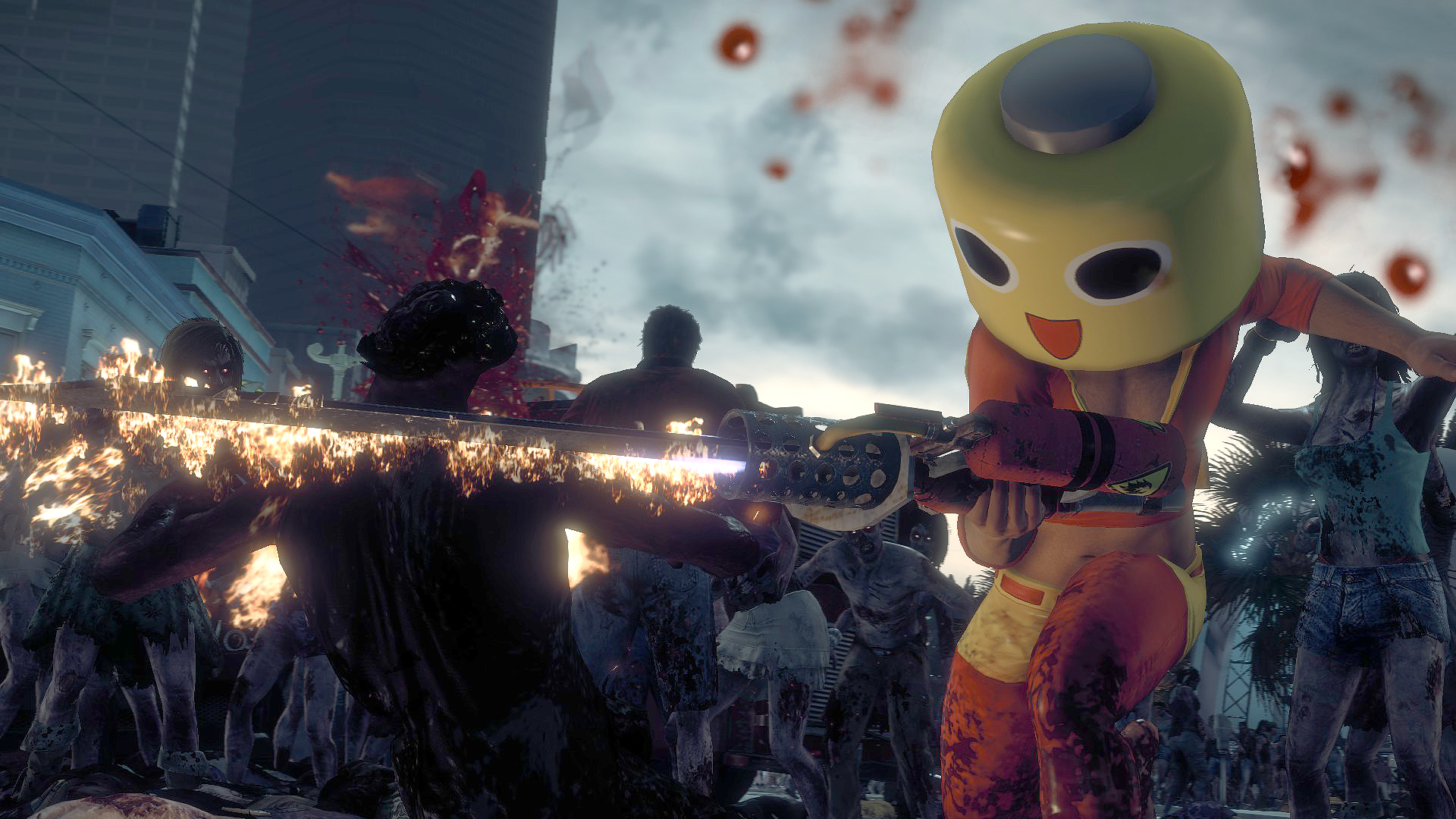
Improvised equipment is the other half of moving through the infected city. Ordinary objects can be turned into combo weapons, but Nick needs to find the relevant blueprint before making a particular design. Unlike earlier entries that require a workbench, he can combine the required components from his inventory while out in the world, leaving him exposed during the short crafting action. Some constructions can themselves be combined into more powerful super combo weapons, so a first recipe can become a step toward a larger build. For instance, a scythe and katana form the Grim Reaper, which can then take a gasoline tank to become the Fire Reaper. Vehicles follow the same inventive logic: Nick can pair vehicles into machines that help cross the city’s connected districts and clear space through a crowd. Weapons and vehicles wear down, so a powerful build is a resource to use with intent rather than permanent equipment; the search for parts and alternate tools continues alongside the crafting.
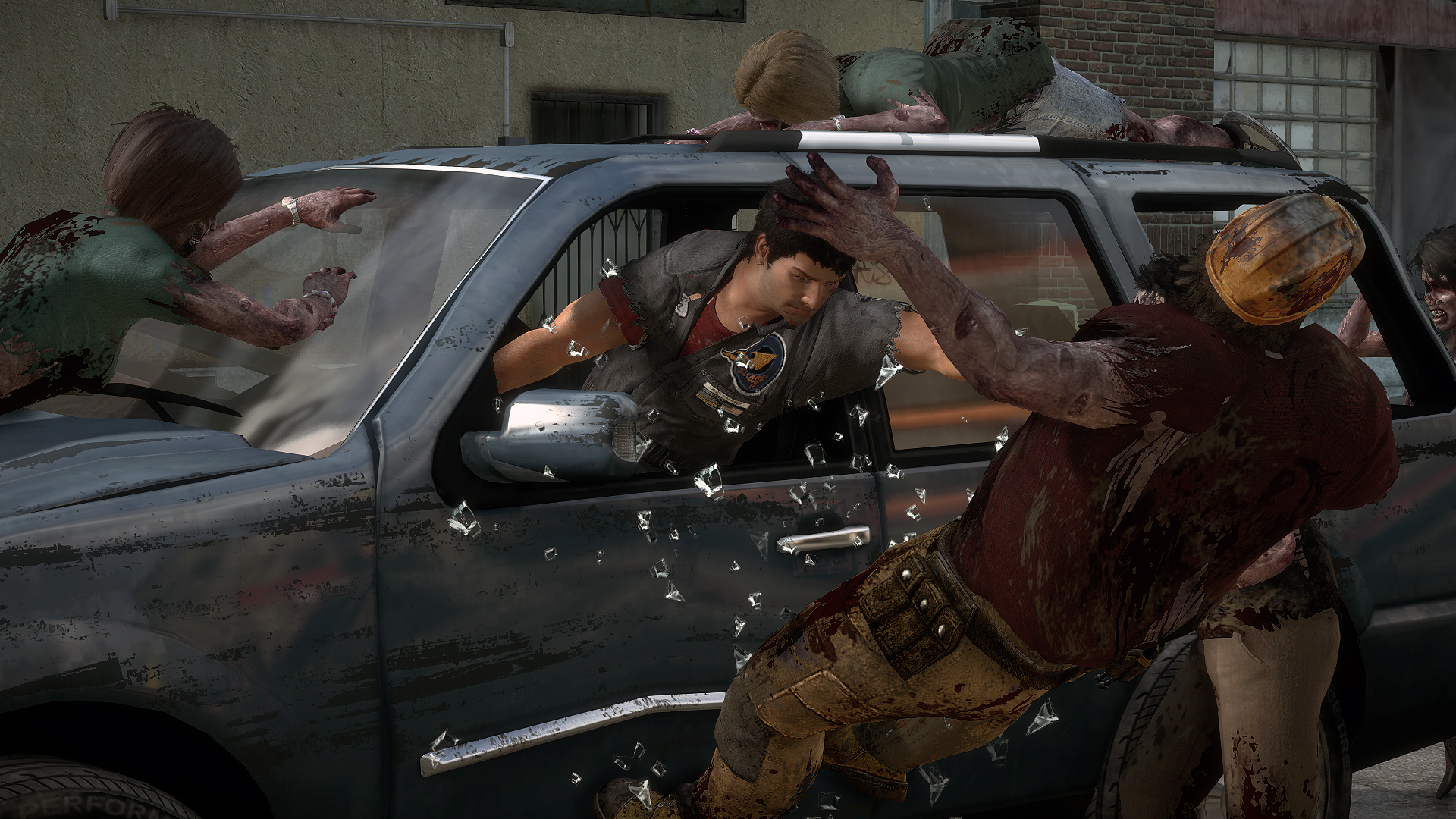
The campaign’s optional work gives exploration a progression purpose. Survivor missions ask Nick to help people with problems that vary from reaching safety to finding or recovering something; some survivors can later join his posse, and the survivor board lets him call on available companions, while others reward completion without becoming companions. Psycho missions put him against people whose behaviour has become dangerous during the outbreak, and stranded-survivor encounters reward clearing a path so someone can escape. Survival Training challenges him to kill zombies under a time limit using specified methods. Completing chapters, side missions, rescues, and other activities earns Prestige Points, or PP. PP raises Nick’s level and provides attribute points that expand his capabilities, so a detour can improve his carrying capacity, combat options, or other parts of his build as the story advances.
Combat is designed around using the environment and changing tools as the situation shifts. A basic object may be enough for a few enemies, while a blueprint-built weapon or a vehicle can help break through a dense group; both can eventually fail from wear. The city’s size makes vehicles useful for more than fighting, but driving does not remove the threat around the player. Safe rooms act as pauses between outings, with recharging lockers that can supply items and combo weapons Nick has already used, reducing the need to remake every tool from scratch. Survivors who join Nick can carry weapons and fight alongside him, or be led back to safety for later deployment. Because a locker can provide gear Nick has previously handled or crafted, experimenting with a construction can make it available again on a later outing. The rooms turn earlier scavenging and crafting into repeatable options between missions.
The Steam release is titled Dead Rising 3 Apocalypse Edition. Capcom’s announcement says that this PC edition includes the four Untold Stories of Los Perdidos add-on chapters alongside the base game. Each chapter follows a different protagonist during the outbreak and grants weapons and vehicles that can carry over into the main game. They expand the package beyond Nick’s central escape campaign, but remain distinct side stories rather than additional chapters of his main plot. A player can therefore treat the city’s main timed escape as one campaign, with the add-ons providing separate survivor perspectives and additional equipment that feeds back into Nick’s sandbox. The additions broaden the edition’s playable cast while preserving the identity of the original campaign.
- Developer
- Capcom Game Studio Vancouver (also styled Capcom Vancouver)
- Genre
- Action; open-world survival action