
About Dead Island: Riptide Definitive Edition
After the survivors flee Banoi, a storm carries the infection to Palanai, where flooded jungle routes and the city of Henderson frame a new struggle. Dead Island: Riptide Definitive Edition continues the first game's story with returning survivors, newcomer John Morgan, weapon-focused progression, cooperative quests and preparations to defend settlements from zombie attacks.
Dead Island: Riptide begins after the survivors' escape from Banoi, when a storm and another outbreak leave them stranded in a new crisis. The returning group is joined by John Morgan, an Australian Defence Force soldier with a hand-to-hand fighting style. The immediate goal is to find help and understand the spread of the infection, while also protecting people who have no immunity. The story moves through survivor settlements and isolated facilities rather than revisiting the first game's island districts. It is a continuation with its own campaign and locations, not an additional chapter set in Banoi, and it can be played with up to four players in story-based co-op.
Palanai's flooded jungle changes how the group moves through the world. Some routes cross water by boat, and the Flooded Jungle includes huts and buildings surrounded by rising water; a missing boat engine and carried equipment become objectives in their own right. Vehicles still matter on passable ground, but waterways and blocked paths force players to change route or continue on foot. As the campaign progresses, the survivors reach Henderson, whose marina, streets, cinema and militarised areas replace the village and jungle paths with tighter urban spaces. The change from flooded vegetation to city streets gives exploration a different rhythm and alters the sightlines around fights.
Quests connect the survivors to local people and practical needs. The group searches for tools, supplies and equipment, escorts or assists other survivors, and follows leads through the island's settlements. Side tasks and the main story both award experience and resources, so checking an area for useful items can support future combat and repairs. Some missions turn directly into a siege: the party may have time to prepare, repair weapons and place defensive fencing before zombies arrive. During larger holds, players protect the site through successive attacks; one mission asks the group to recover mounted heavy machine guns and install them before fighting another wave. These encounters make preparation and defending a position an explicit part of Riptide's quest structure.
The playable roster contains the four survivors from the first game and John Morgan. Logan remains oriented around thrown weapons, Purna around firearms, Xian around blades and Sam B around blunt weapons, while John focuses on hand-to-hand combat. His skill progression can unlock attacks such as a heavy uppercut and a running kick, with stamina cost and knockdown potential shaping when those moves are useful. The game also offers the option to import a character from the original Dead Island when starting Riptide, giving players a way to continue with an existing survivor. The imported character joins a new story and setting, while the new playable soldier supplies a distinct close-combat route through the same campaign.
Each character has Fury, Combat and Survival skill trees. Fury improves the temporary special mode, Combat builds around weapons and attack techniques, and Survival develops staying power or utility. Skills are arranged in tiers: investing in a tier opens access to later choices, and some abilities can be upgraded by buying them more than once. At character selection, players can set skill points to an automatic combat, survival or balanced pattern, or choose custom distribution and place points themselves. That lets the progression system serve both players who want a quick role and those who want to plan a build. The roster's different specialties make the same skill-tree structure lead to different combat emphases.
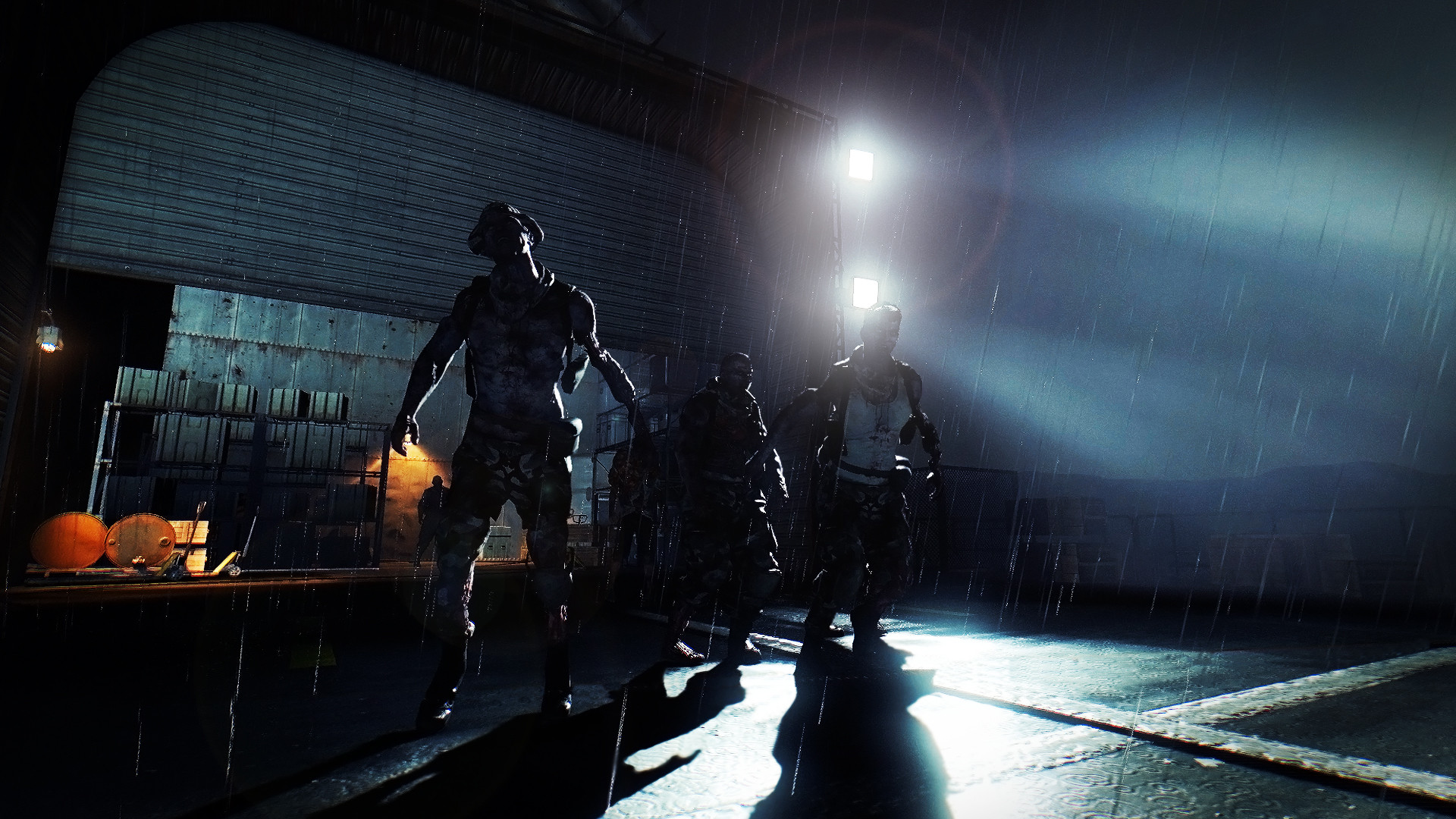
Fights still depend on timing, stamina and equipment condition. Melee swings and movement use stamina, while a kick can interrupt or make room to retreat. Weapons deteriorate, and workbenches let the party repair or improve equipment between attacks; skill choices can change the durability or stamina cost of a weapon style. Guns offer another way to handle dangerous targets but require ammunition, while close combat risks being surrounded. Riptide adds enemy types that alter a fight's priorities. A Screamer can revive fallen zombies and empower others during a wave, making it a dangerous presence while the horde continues to pressure the defended area.
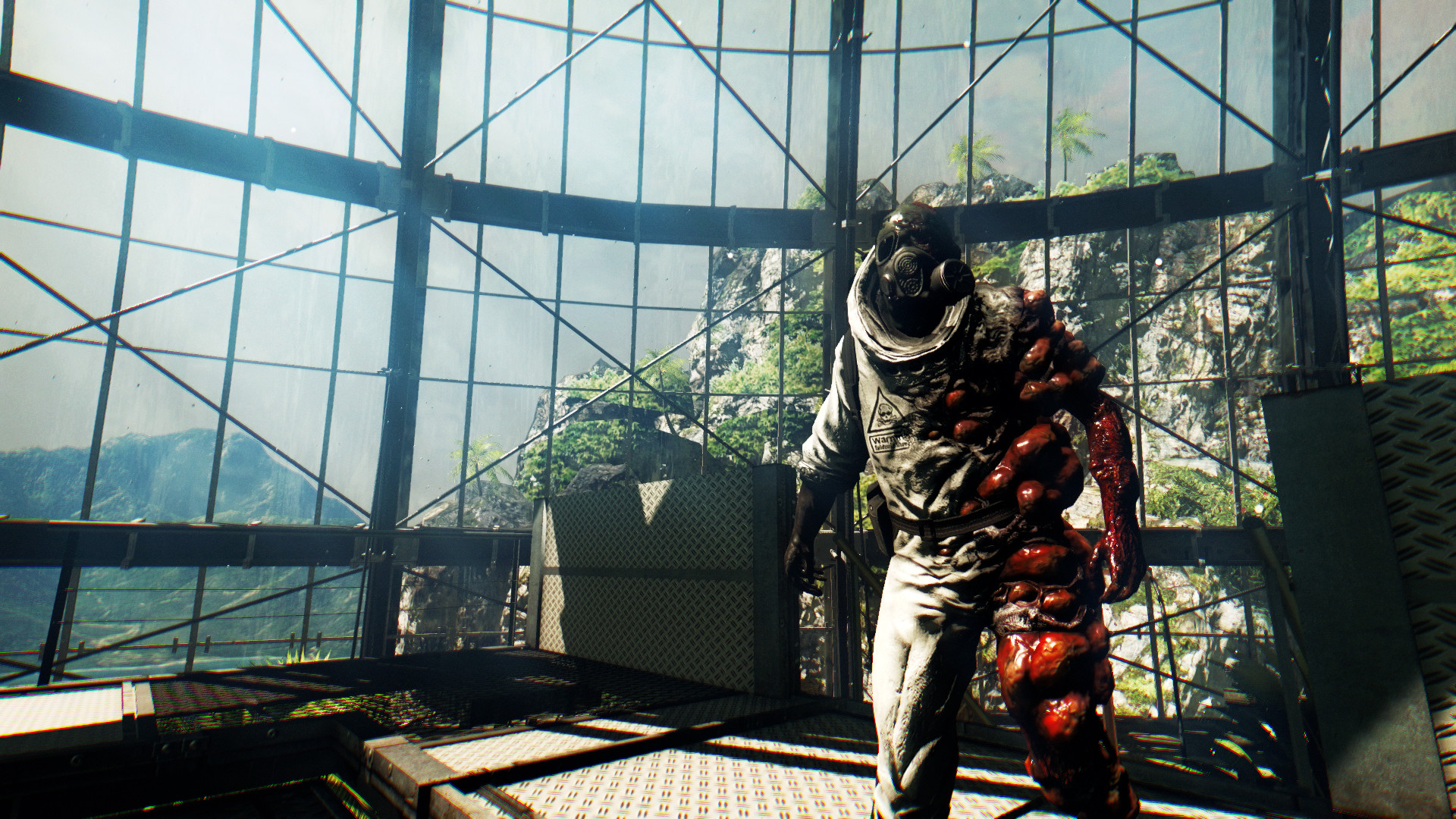
The campaign alternates open travel, settlement tasks, enclosed spaces and defensive set pieces. In the flooded jungle, boats link routes over water and flooded huts create raised and submerged approaches; in Henderson, gates, alleys and public buildings shape city navigation. Tunnels and dark interiors call for a flashlight, while repair benches and supply crates give players a chance to reset between major fights. The mix encourages co-op partners to divide practical jobs, such as securing a route or protecting someone carrying mission equipment, without requiring a fixed class party. Players can also search side areas for supplies and experience while pursuing the main objective.
Riptide Definitive Edition brings improved graphics and game models, full HD presentation, physically based shading in a photorealistic lighting system, and the previously released DLC to this separate follow-up. Its updated presentation frames a campaign that moves from Palanai's Flooded Jungle to Henderson and includes settlement-defense missions. The remaster keeps Riptide's distinct story and world structure separate from the first game's Banoi resort, Moresby, jungle and prison progression.
- Developer
- Techland
- Genre
- First-person action role-playing game