
About Dead Island Definitive Edition
On Banoi, a remote island turned into a quarantine zone, four survivors cross a resort, city, jungle and prison landscape while searching for a way through a zombie outbreak. Dead Island Definitive Edition remasters the original first-person action role-playing game, retaining its quest-driven exploration, weapon crafting, character skill trees and four-player cooperative story.
Banoi is introduced as a tropical destination whose beaches, resort grounds and highlands become part of a spreading disaster. The story follows four survivors who are immune to the infection: Logan Carter, former American football player; Purna Jackson, a Sydney police detective; Xian Mei, a hotel employee with combat training; and Sam B, a rapper visiting the island. Their different backgrounds give the group distinct voices and combat specialities as they move between settlements and try to learn what is happening. The campaign shifts through recognisably different parts of the island, from resort grounds to the city of Moresby, the jungle interior and a prison island, so travel also changes the kinds of routes, threats and survivors encountered.
The main loop combines story quests with optional jobs for people trying to survive. A task can send the player to recover supplies, reach a stranded person, clear an area or carry an object between safe points. Completing quests earns experience and money, while searches through rooms, vehicles and containers turn up weapons, cash, medical items and crafting ingredients. New routes and named quest givers pull the group deeper into Banoi, but the island is not simply a sequence of combat arenas: doors, stairways, vehicles and environmental obstacles shape how an objective is approached. The large connected world can be explored with friends in story-based co-op for up to four players, with the same survival problem shared across the party.
Combat is built around close-range weapons and their physical properties. Blades, blunt weapons, firearms and thrown weapons suit different approaches, and each survivor has a specialty that can be strengthened through skills. Swinging, sprinting and other exertion draw on stamina, so a player must balance a heavy attack against the need to move or kick an enemy away. Sharp weapons can sever limbs while blunt weapons can cripple them, giving weapon choice a visible effect in a fight. Human opponents also appear, changing some encounters from purely undead crowds to fights that can involve firearms as well as melee.
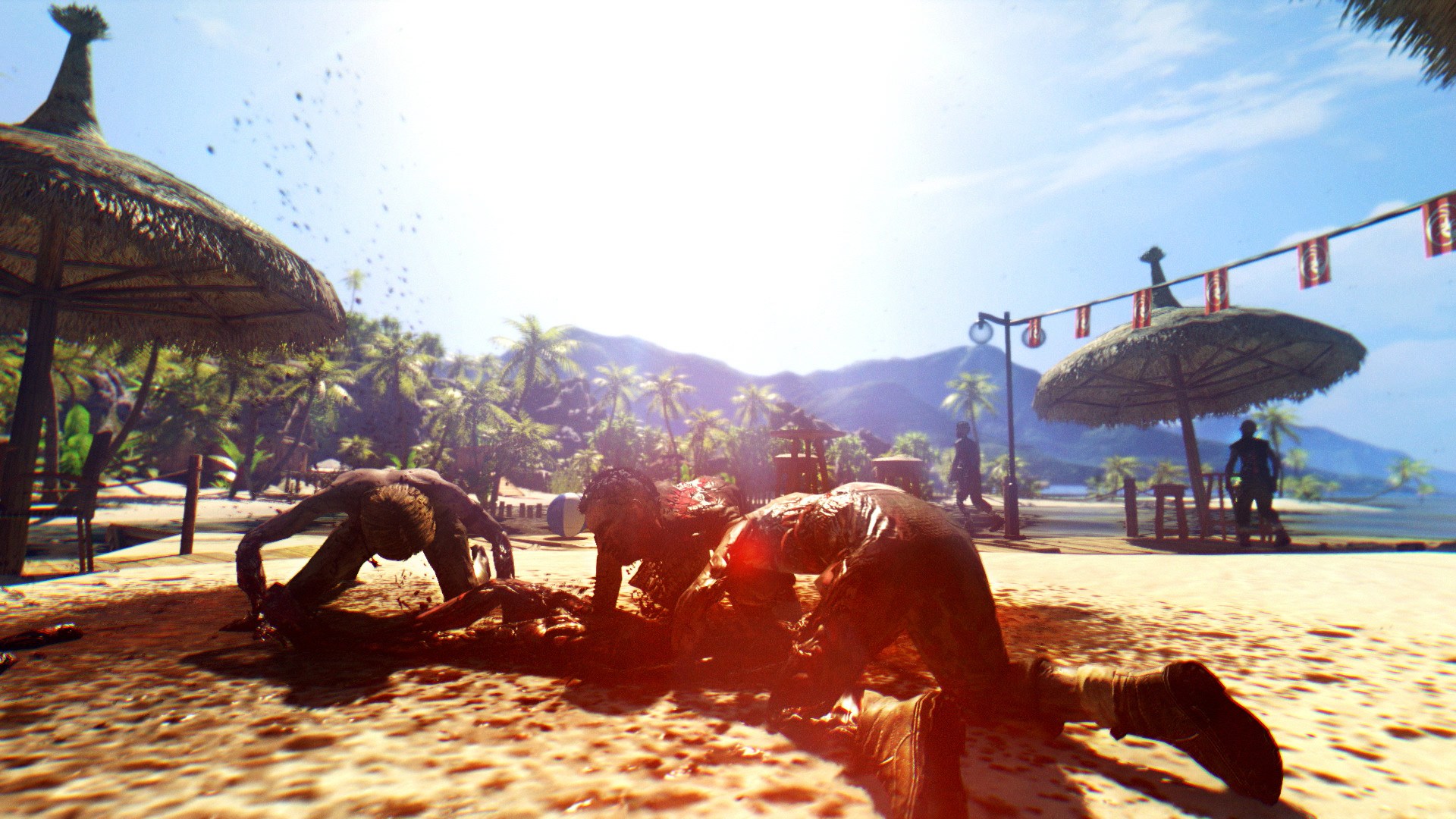
Weapons are equipment to maintain as well as damage tools. Melee weapons lose condition through use and can break until repaired at a workbench, where repair costs depend on the item's state and value. Workbenches also support upgrades and modifications when the required parts and cash are available. Recipes combine scavenged components with weapons to add effects such as elemental damage, while weapon statistics distinguish damage, force, durability and handling. These trade-offs give a crafted weapon a role: force can knock an enemy down, durability extends its usable life and handling affects stamina expenditure. Firearms exchange this wear problem for ammunition management, and ammunition is another reason to loot and plan before leaving a safe area.
Each of the four survivors develops through Fury, Combat and Survival skill trees. Combat skills support a character's preferred weapon style; Survival skills affect resilience and practical abilities; Fury improves the special attack mode charged during combat. Logan specialises in throwing weapons, Purna in firearms, Xian in bladed weapons and Sam B in blunt weapons. A character gains skill points as levels increase, and deeper tiers open after investment in earlier skills, so progression is a series of focused choices rather than a way to unlock everything at once. The resulting build can reduce costs or increase damage in its chosen style, while Fury skills change how a temporary burst of power works.
The skill trees connect combat choices to the wider scavenging loop. A player can invest in weapon bonuses and special attacks, or take survival-oriented improvements such as extra carrying capacity or more useful healing. A workbench becomes a regular stop because a reliable weapon can be repaired or improved before another trip outside, while consumables and ingredients compete for limited carried slots. The danger also rises as the story advances: zombies gain health and damage as they level, and additional enemy types appear. This keeps equipment, skill investment and quest preparation linked to the threats encountered later in the campaign.
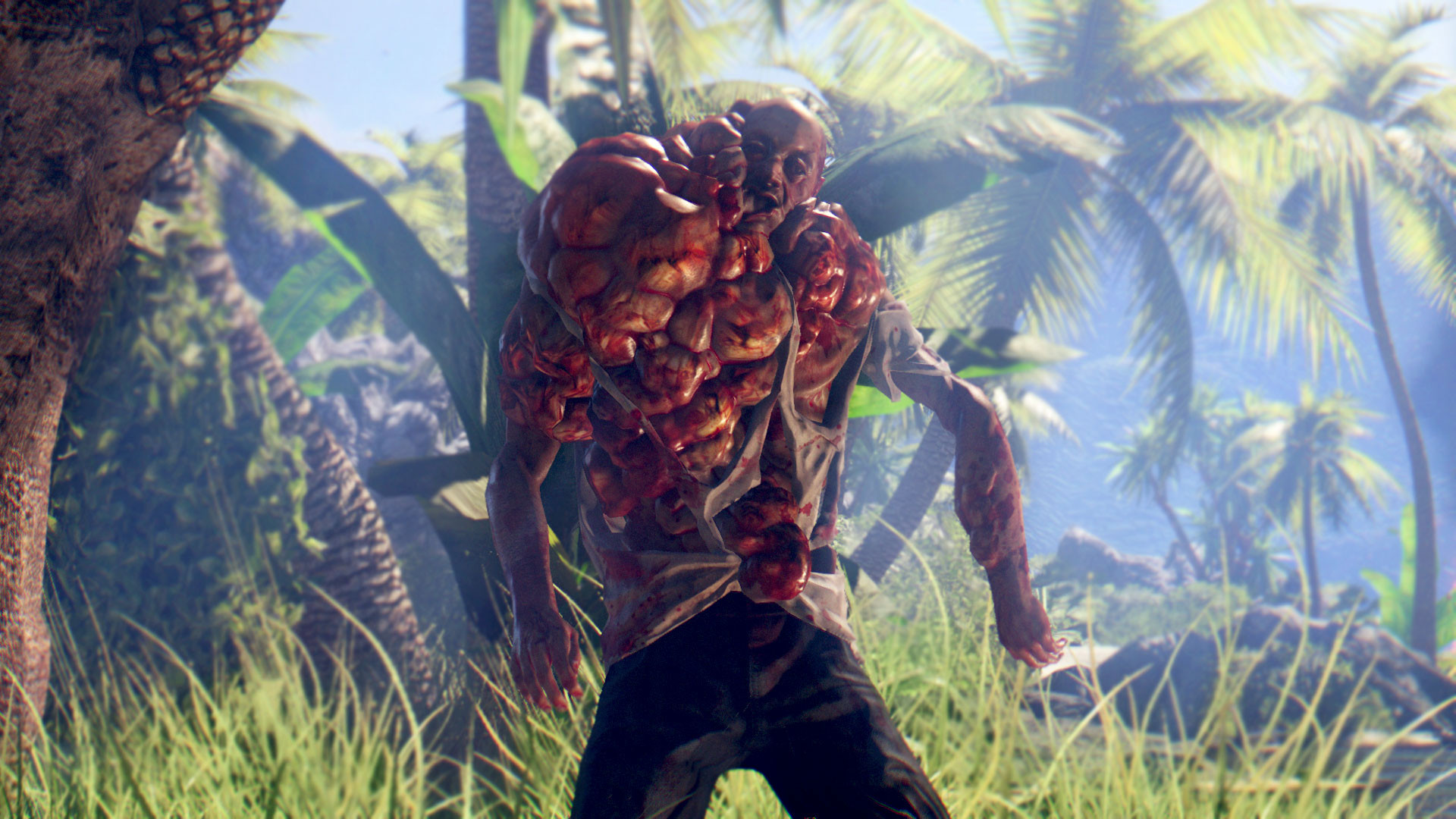
Exploration is also the way the game reveals the outbreak and the island's human cost. Safe locations and settlements act as points where survivors offer new objectives, while abandoned public spaces and the routes between them expose the disruption left behind. The flashlight is useful in dark interiors and drains while switched on, recovering when unused. A vehicle can make some journeys across the island faster, but foot travel remains central in enclosed spaces and on paths where driving is impossible. Along the way, the player can choose to pursue side quests and search for supplies alongside the main story, gaining more experience and resources without turning the campaign into a linear chain of mandatory fights.
This is the remastered edition of the first Dead Island, set on Banoi and built around the original four-player cooperative campaign. The Definitive Edition updates the graphics and game models and uses a photorealistic lighting system with physically based shading. Previously released DLC is included. Its presentation is updated while its setting, survivors and quest structure remain those of the first game; the separate follow-up moves the outbreak to another island and has its own campaign and systems.
- Developer
- Techland
- Genre
- First-person action role-playing game