
About Dead Cells
A failed alchemical experiment inhabits a body and tries to escape a cursed island prison. Dead Cells combines side-scrolling combat and platforming with branching routes through changing biomes: each run assembles a different set of weapons and abilities, while death resets the attempt and lasting unlocks open more ways forward.
Dead Cells is a single-player action-platformer set on a shifting island whose prison and surrounding regions are filled with hostile creatures. The player controls an alchemical experiment that takes over a body, moving through the island to find out what happened and fight its way onward. Its fiction is delivered through brief encounters, environmental details and the strange inhabitants encountered along a run, rather than a long sequence of explanatory scenes. That premise supports the central structure: a fragile host makes each attempt temporary, while the being inside it keeps returning to the dungeon and trying another route through the island.
A run begins in the Prisoners' Quarters and proceeds through connected biomes, with exits that can branch toward different regions. The levels are assembled in changing configurations, so their rooms and enemy placements vary between attempts even as the larger network of destinations remains recognizable. Paths can lead through places such as the sewers or ramparts, and the choice of exit changes the hazards, opponents and rewards waiting next. Secret rooms and hidden passages add reasons to inspect the surroundings instead of simply running toward the next door. Reaching a later biome is both a survival test and a chance to make another route choice.
Combat asks the player to read enemy patterns and respond with attacks, dodges and positioning. Weapons and spells have distinct behavior, while melee strikes, ranged attacks and deployable gadgets create different ways to approach a crowded room. A roll can evade many threats and reposition the character, but mistimed movement can leave the player exposed to the next attack. Enemies and bosses telegraph patterns that can be studied over repeated encounters; learning when to strike, retreat or use a skill is part of making progress. The same basic controls carry across the game, while the equipment found in a run changes the rhythm and reach of each fight.
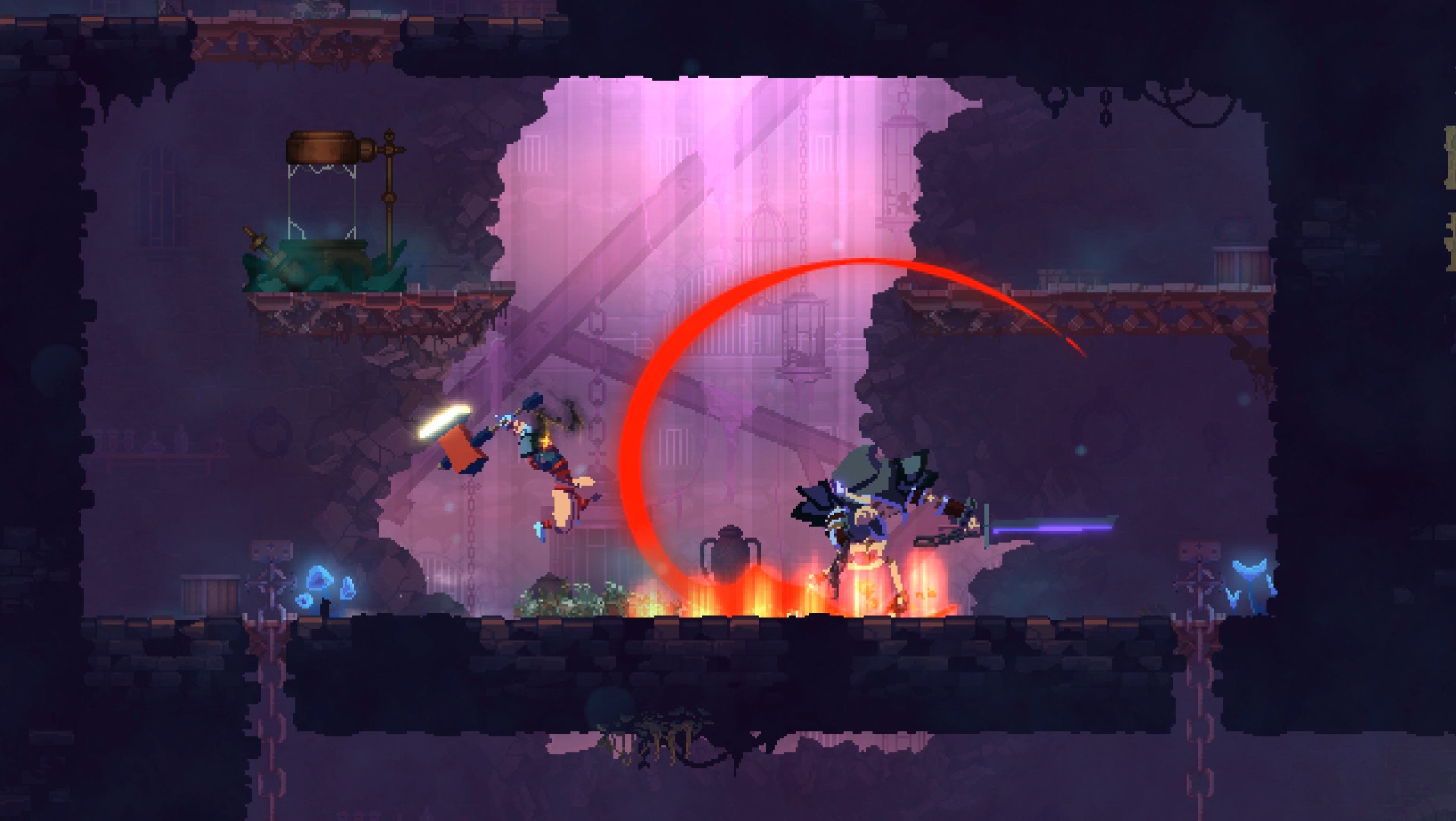
The equipment assembled during a run is central to adapting to its changing dangers. A character can carry weapons and skills with different ranges and effects, such as blades, bows, shields, traps or grenades, and decide how to use those tools together. Some gear is better suited to dealing direct damage, while other pieces control space or interrupt an enemy. The island's chests, shops and encounters can offer replacements, so a new find may prompt a change in tactics rather than simply add power. This makes each run a series of build decisions: keep a familiar setup or trade it for an item that may work better with the threats ahead.
Alongside equipment, mutations shape a run's character. These perks customize strategy and play style around the gear found while exploring, adding effects that can complement a weapon or skill choice. Selecting mutations as the journey advances lets the player tune the current setup, whether that means supporting a particular attack or reinforcing the way a piece of equipment controls space. Because the available gear changes from run to run, a useful mutation combination can change too. These choices do not create a permanent class: they are decisions for this attempt, made with whatever equipment the island has provided and revised as new options appear.
Death ends the current expedition and sends the protagonist back to the dungeon to begin again. Dead Cells keeps parts of progression across attempts, including access to new levels, paths, mutations, abilities and weapons, so a failed run can still widen future options. Cells gathered during play can be spent with the Collector to unlock items from blueprints. These lasting additions expand the pool of possibilities rather than making every later run identical. The loop is therefore built from both immediate adaptation and longer-term discovery: improvise with what is available now, then use accumulated progress to open more tools and routes for a later escape attempt.
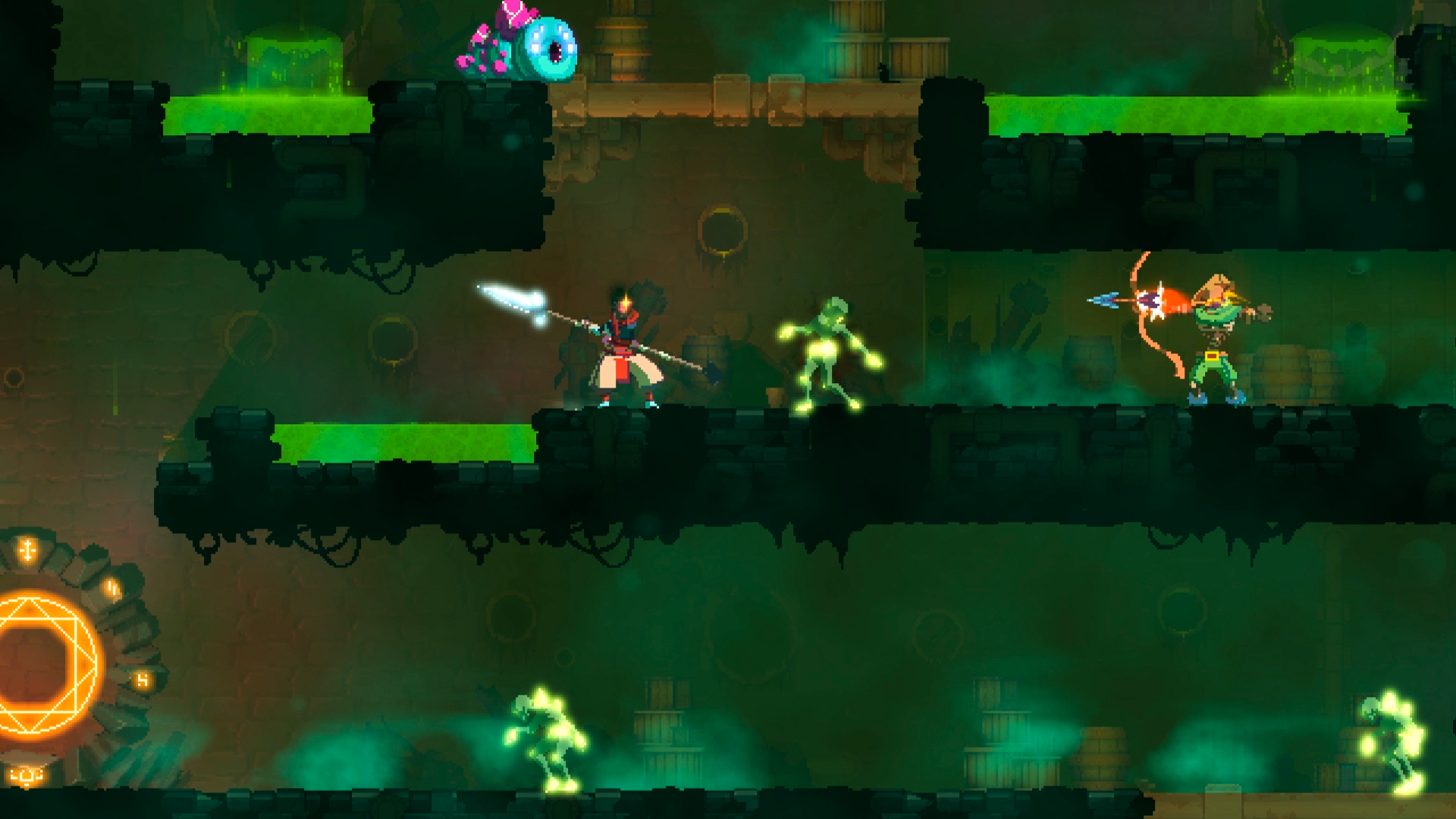
Permanent traversal runes add a lasting layer to route discovery. Unlike the weapons and skills assembled for one expedition, a rune remains available after death and changes how the island can be crossed on later attempts. Some routes require a way to climb a wall, raise a path or break through the floor; a permanent ability can turn that obstacle into a usable connection. Unlocking one therefore changes which branches are reachable in future runs, while the player still chooses among the exits available during each expedition. This progression gives exploration a concrete payoff: revisiting a familiar biome with another rune can reveal a route that was previously closed.
Scrolls build the current run around three attributes: Brutality, Tactics and Survival. Weapons and skills are associated with these categories, so a scroll choice can strengthen the equipment already carried or steer a build toward something found later. Mutations add passive effects that can support the player's gear and chosen approach, linking stat investment, equipment and perks into one temporary configuration. A red-focused setup might emphasize close combat, while a player investing in the other attributes can shape a different combination of ranged tools, skills, shields or heavier weapons. Those choices matter within the current attempt; once the host falls, the build ends, while permanent unlocks and traversal runes remain for the next run.
- Developer
- Motion Twin
- Genre
- Roguelite, metroidvania-inspired 2D action-platformer