
About Darkwood
In Darkwood, a stranger trapped in a corrupted forest searches for a way out. Explore its shifting woods by day, gather supplies, and decide which locals to trust. At night, reinforce a hideout, manage its light and defenses, and survive what reaches the doors until morning opens the forest again.
Darkwood begins with a simple problem and withholds the answer behind it: the protagonist has arrived in a ruined woodland and wants to escape, but how they got there is a mystery. The forest is a sprawling, hostile place with villages, abandoned buildings, swamps, catacombs and other dense biomes, where people and creatures have become difficult to distinguish from the land’s corruption. The story unfolds through exploration, conversations and the consequences of choices. You gather information as well as food and weapons, and the residents’ competing interests can put the protagonist between groups that have little reason to cooperate. The setting’s larger mystery emerges gradually through discoveries and conversations.
The main cycle is divided by daylight. During the day, you leave a hideout to search nearby locations, scavenge materials and decide how far to travel before returning. The world is free-roaming, and there are no quest markers directing every step; clues, landmarks and conversations have to guide your next move. A trip can provide resources, a new route, an ally or information about the woods, but time away from shelter increases the chance that the return will be difficult. The forest rearranges places of interest between new games, so remembered directions do not make every run identical. Hand-crafted locations and quests sit inside that changing arrangement, mixing authored discoveries with uncertainty about what lies along a particular path.
A hideout is a temporary base that has to be made defensible. When evening approaches, you repair what you can, move furniture to barricade doors and windows, and set traps where an intruder might enter. Fuel keeps a generator running and powers the remaining lights. Light can discourage some of the creatures that appear at night, while other dangers may still reach the room or behave in ways that ordinary weapons cannot solve. This makes preparation a practical puzzle: you choose which openings to cover, what materials to spend, where to place a trap, and whether the available fuel will last. The goal is not to make a hideout permanently safe. It is to improve your odds for one night, then use the next morning to continue searching.
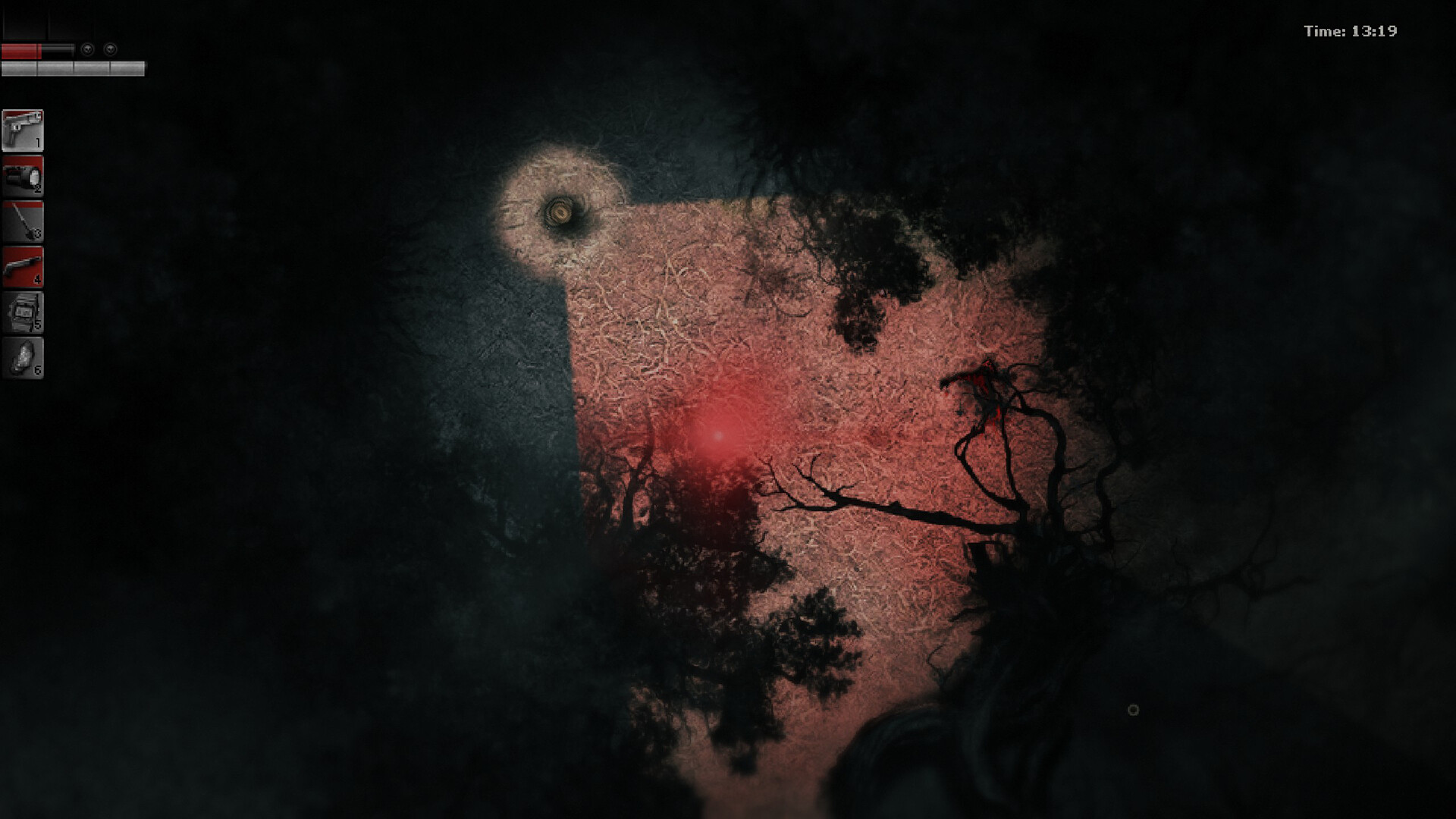
Night changes how the same room and supplies feel. The player waits inside the hideout while the woods outside become dangerous, listening and reacting as creatures approach. A barricade can buy time, but it can also be broken; a trap can hurt an intruder, but its value depends on where it is placed. The generator creates light and consumes fuel, so running it is a choice with a cost. Some nights bring an attack, while others may feature strange events or rituals that leave questions to investigate later. Observation and patience matter because rushing out or wasting a resource can leave the protagonist exposed. When morning returns, survival gives you another chance to understand what happened and prepare differently.
Scavenged materials support more than shelter. Strange mushrooms, meat and other finds can be brought back and refined, opening mutations that change what the protagonist can do. One example grants invisibility while standing still; another allows regeneration through eating wood. These powers have drawbacks as well as benefits, so choosing one means accepting a vulnerability alongside its advantage. Weapons also develop from whatever is at hand toward firearms and crafted equipment. A plank can serve as an improvised defense, while weapons found or made in the forest give stronger options. The hideout lets you upgrade weapons and produce items such as Molotov cocktails. The system ties a dangerous expedition to a decision at base: keep a resource for immediate survival, or invest it in a capability that may help on later trips.
The people living in the forest add decisions that do not have a universally safe answer. Locals may ask for help and offer quests or rewards, but their aims can conflict with those of other inhabitants. A creature might promise a reward for an action that would doom a village; helping a remaining human community may close off another opportunity. Conversations and discoveries can change the story, and information is often incomplete when a decision must be made. The game does not place a marker over a morally correct option or explain every consequence in advance. The player weighs what is known, what is needed to escape and how much risk to accept. These choices shape which parts of the world become accessible and which relationships survive, while maintaining uncertainty about who can be trusted.
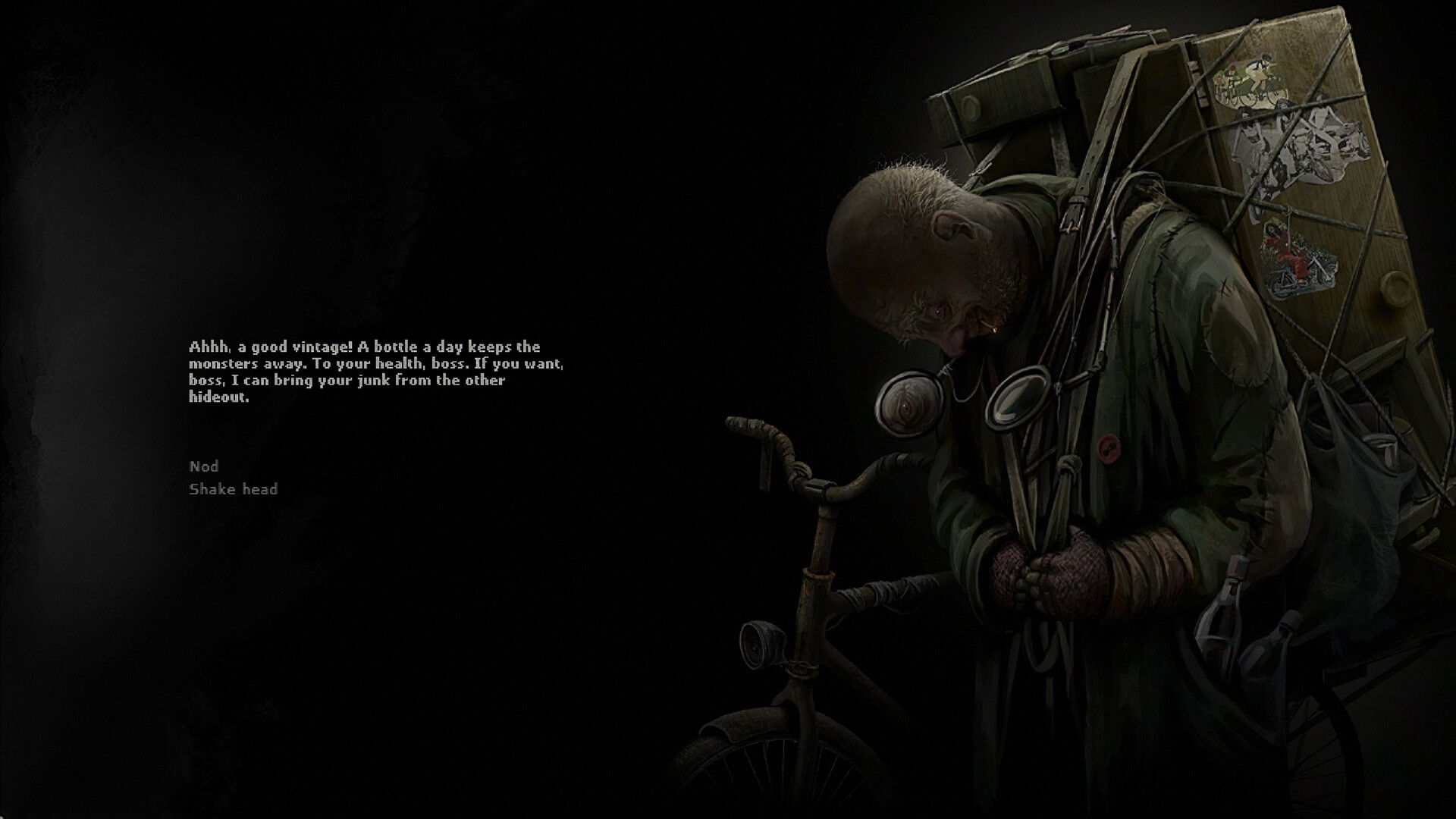
Darkwood uses a top-down view and a stark visual style to make the surrounding space readable while leaving much of it threatening. It builds horror through the contrast between open exploration in daylight and the narrower, defensive perspective of a hideout after dark. The story’s disturbing vignettes can appear as the journey continues, and their images may carry clues whose meaning is clearer only after later discoveries. The game includes adjustable difficulty, from a story setting with unlimited lives to Nightmare difficulty with permadeath. That changes the cost of failure while the central tasks remain exploring, gathering and holding shelter through the night. Each new game rearranges the forest’s landmarks, so learning its inhabitants and systems matters as much as memorizing a map.
- Developer
- Acid Wizard Studio
- Genre
- Survival horror with exploration, crafting and role-playing elements