
About Darksiders II Deathinitive Edition
As the End of Days begins, Death rides beyond Heaven and Hell to restore humanity and clear his brother War's name. Across connected realms, he fights with scythes and found weapons, follows a trail of quests, solves dungeon puzzles with evolving traversal tools, and shapes his abilities and equipment through levels and loot.
Darksiders II follows Death, one of the Four Horsemen, during the same broad End of Days that frames his brother War’s story. Death sets out to restore mankind and redeem War’s name, but the journey reaches far beyond a ruined Earth. Its realms bring together fantastic landscapes and threats beyond the familiar conflict between Heaven and Hell, while an ancient grudge hints at stakes that extend to all of Creation. The premise gives Death a clear personal motive, but his investigation steadily draws him into a larger crisis. The game keeps the exact resolution in reserve as Death pursues answers through places, characters and conflicts that complicate his effort to help his brother.
The world is arranged as large areas linked by a main quest, optional errands and dungeons. Death can ride his horse Despair to cross long distances, explore side routes, and follow objectives through open terrain before entering more enclosed spaces. A crow named Dust can point toward the next objective when available, while the quest map tracks accepted tasks and marks main and secondary objectives. Discovered fast-travel points shorten later journeys, including movement between some dungeon locations, although nearby enemies prevent their use. Chests and defeated foes provide equipment and currency, giving exploration a practical purpose beyond reaching the next marker. Each region therefore supports both directed progress and detours for additional rewards or quests.
Dungeon progression mixes fights with mechanisms and traversal challenges. Death moves across gaps, climbs through constructed spaces and uses abilities found along the way to reach new paths. Deathgrip acts as a spectral claw: it can pull smaller enemies toward him, draw him toward larger targets, or help him cross otherwise inaccessible gaps by latching on to designated points. Other tools make the environment itself part of a puzzle. The Interdiction Stone, for example, lets Death summon Dead Lords at marked pads and command them to stand on pressure plates or interact with switches. A room may require changing the order of actions, moving a summoned ally, or using a newly acquired tool to reach the next chamber; completion opens more of the realm and carries the main quest forward.
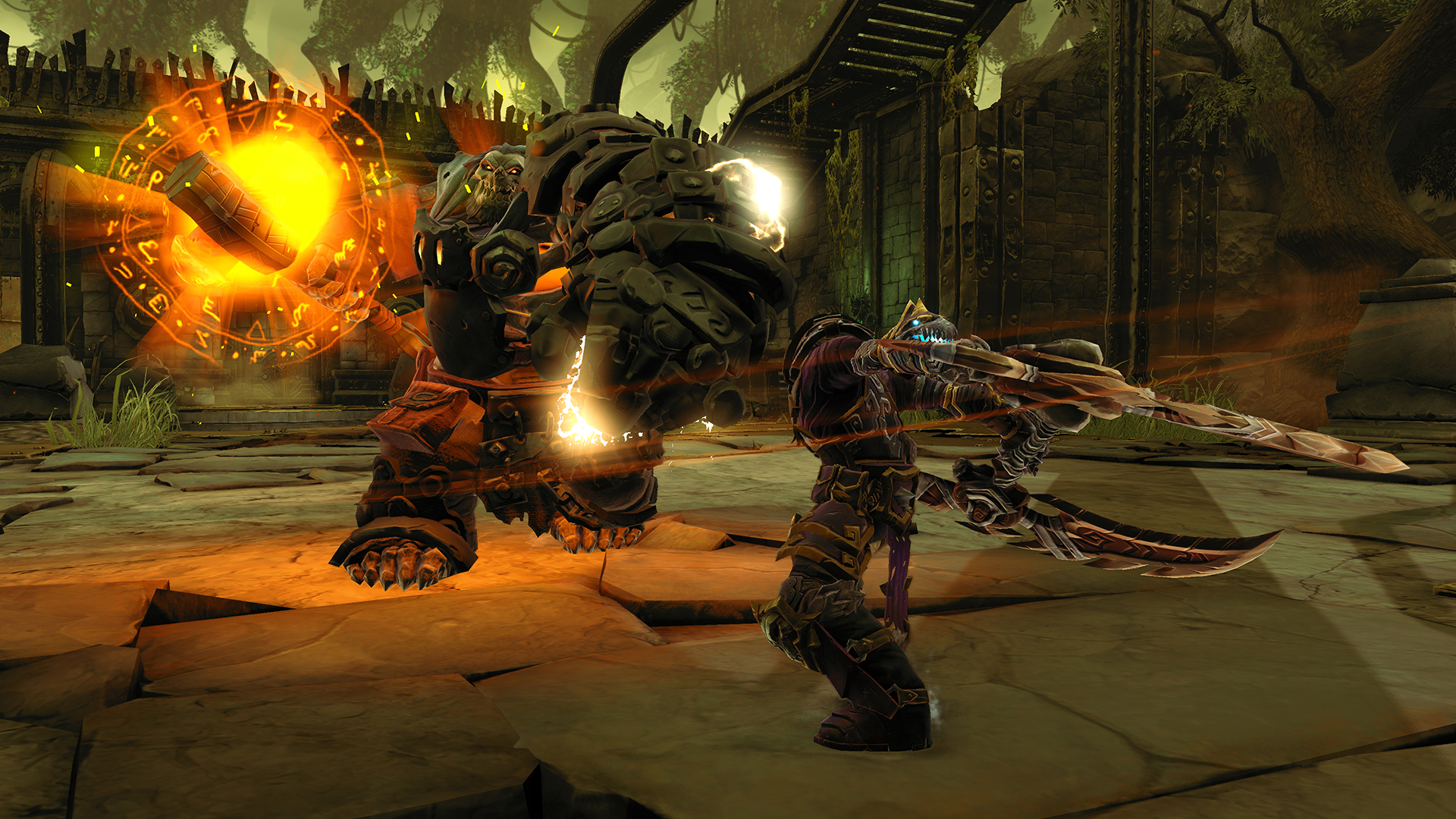
Combat lets Death pair his signature Scythes with a secondary weapon. Loot includes long weapons such as hammers, axes and maces, which swing more slowly for heavier hits, and compact hand weapons that trade damage for speed. Weapons and armour gathered from chests or enemies can be equipped, sold, or compared against current gear; different pieces change Death’s statistics and appearance. Possessed Weapons offer a further investment: feeding them other weapons and armour upgrades and customises the item. These choices make equipment management an ongoing loop rather than a single reward screen. Before and after a fight, the player can adjust the build around the weapon types and attributes currently available, then test that setup against the next group of enemies.
Character growth ties experience to a choice between two skill branches. Each level grants a point to spend on unlocking or improving Wrath abilities, with some skills held behind level requirements. The Harbinger branch includes direct attacks such as Teleport Slash and Harvest, while the Necromancer branch provides options such as summoning ghouls or raising Death’s defence. Wrath is a separate resource consumed by these spells, so using a skill has a cost alongside ordinary weapon attacks. Health, Wrath, strength, defence, arcane power and resistance are tracked as distinct attributes, and equipment can affect the way those statistics support a build. As Death gains levels and changes gear, the player decides whether to favour close combat, spell use, toughness or a mixture of roles.
Several abilities connect combat to exploration. Redemption, a ranged weapon acquired early in the quest, lets Death attack enemies from a distance. The Soul Splitter separates him into two controllable souls for certain puzzles; the player can switch between them to reach separate positions, but must keep them within range and protect them from damage. The Voidwalker creates a shortcut between specific surfaces, allowing Death to pass through space and emerge elsewhere; charging a portal accelerates his exit. These tools give dungeons a changing vocabulary: a path that was unreachable before may become accessible once Death can create a portal or control two bodies at once. The same expedition can alternate between using a power to solve a spatial problem and using weapons or Wrath abilities to survive its enemies.
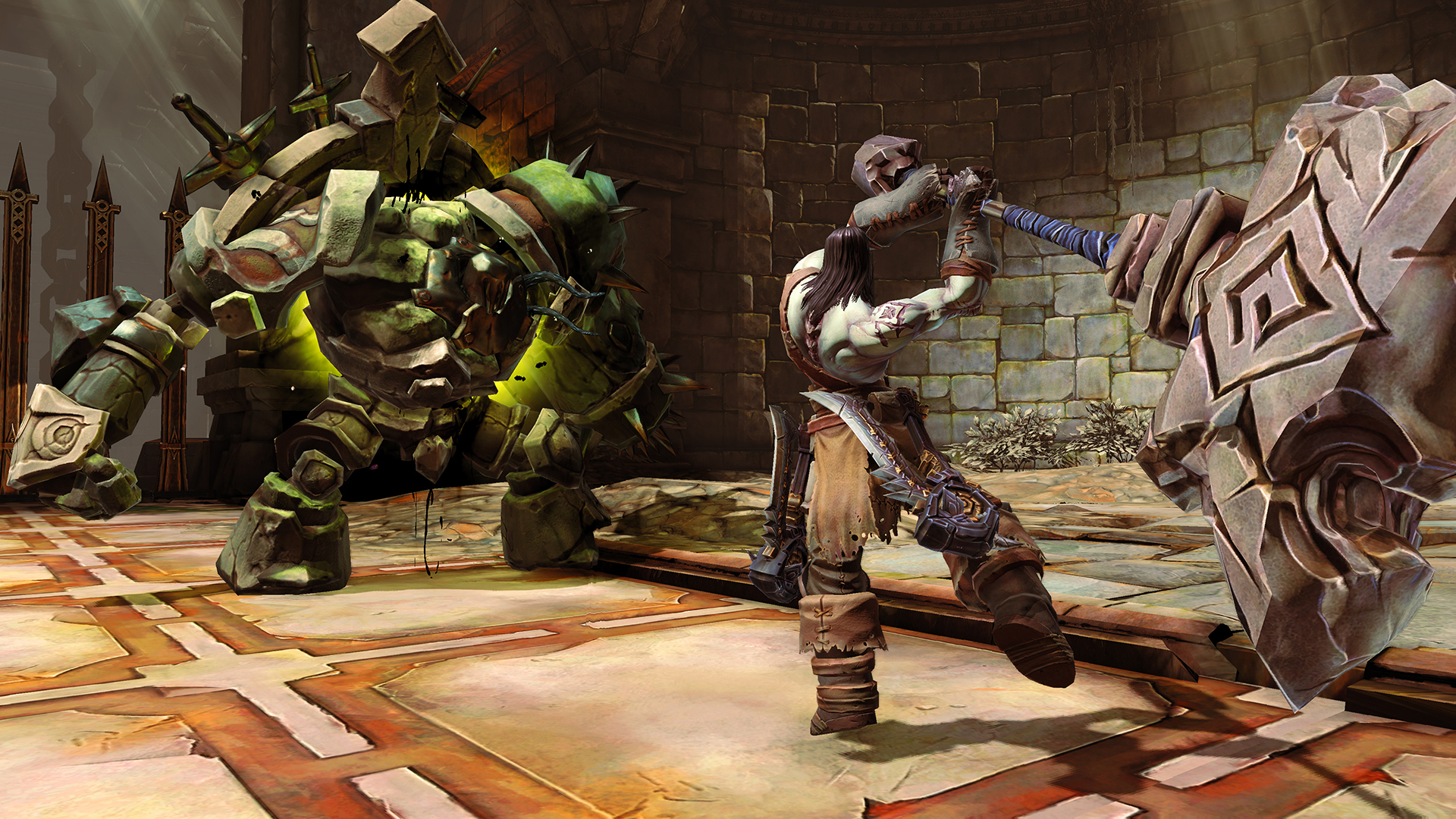
Deathinitive Edition packages Darksiders II with its downloadable content integrated into the game, and its edition-specific revisions include adjusted balance and loot distribution plus improved graphics for levels, characters and environments. The campaign remains Death’s quest to restore humanity and defend his brother’s name; the edition does not shift the story to another Horseman. Optional side quests add tasks alongside the central journey, while included content expands the places and equipment available across the adventure. The combination of realm travel, gear changes, skill choices and tools earned through progression gives the player several ways to approach each new stretch. The story’s later revelations remain beyond this overview, leaving its central mystery for the campaign itself.
- Developer
- Gunfire Games, originally developed by Vigil Games with THQ Nordic support
- Genre
- Action-adventure RPG