
About Darkest Dungeon
Darkest Dungeon is a gothic, turn-based role-playing game about reclaiming a corrupted family estate. Recruit a shifting roster of adventurers, lead four-person parties through hostile regions, and balance tactical combat against stress, injury, darkness, and limited supplies. Between expeditions, rebuild the Hamlet and prepare new teams to descend toward the source of the estate’s horrors.
A letter from a deceased ancestor draws the heir back to a ruined estate where his experiments have opened the way to horrors beneath the family lands. The player directs the campaign from the Hamlet, dispatching hired adventurers to investigate the surrounding wilderness and the depths below the manor. The Ancestor’s narrated recollections frame the expeditions: the family’s history is bound to the corruption now spreading through the Estate. The central task is to reclaim that inheritance by surviving a sequence of increasingly dangerous missions and confronting the threat at its source. The story is told through the Ancestor’s account, short introductions, and the accumulating consequences of each expedition rather than through a single continuously controlled hero.
Each outing begins with a quest selection and the assembly of a four-hero party. The base campaign sends teams into distinct regions, including the Ruins, Weald, Warrens, and Cove, before the culminating expeditions into the Darkest Dungeon itself. Routes through these areas connect rooms and corridors, with battles, obstacles, curios, and supplies shaping the trip. Quests vary in objective and length, so the player weighs expected rewards against the condition of the available roster and the cost of preparation. Returning to town closes one expedition and advances the campaign: rewards fund training and facilities, while injuries, stress, quirks, and deaths influence who can make the next journey.
The Stage Coach supplies new recruits, and each class brings a different collection of combat skills. A Vestal can provide dependable healing, a Plague Doctor can control enemies with debilitating effects, and a Hellion can strike from the front ranks; these examples illustrate how roles fit together, rather than defining a required party. The player selects each hero’s equipped skills and arranges the group before departing. The formation is a working part of the party’s plan: front-line and rear-line heroes have different strengths, and an attack or enemy move can shift characters out of place. Trinkets add individual bonuses with trade-offs, so choosing equipment and a balanced range of capabilities matters as much as selecting familiar class names.
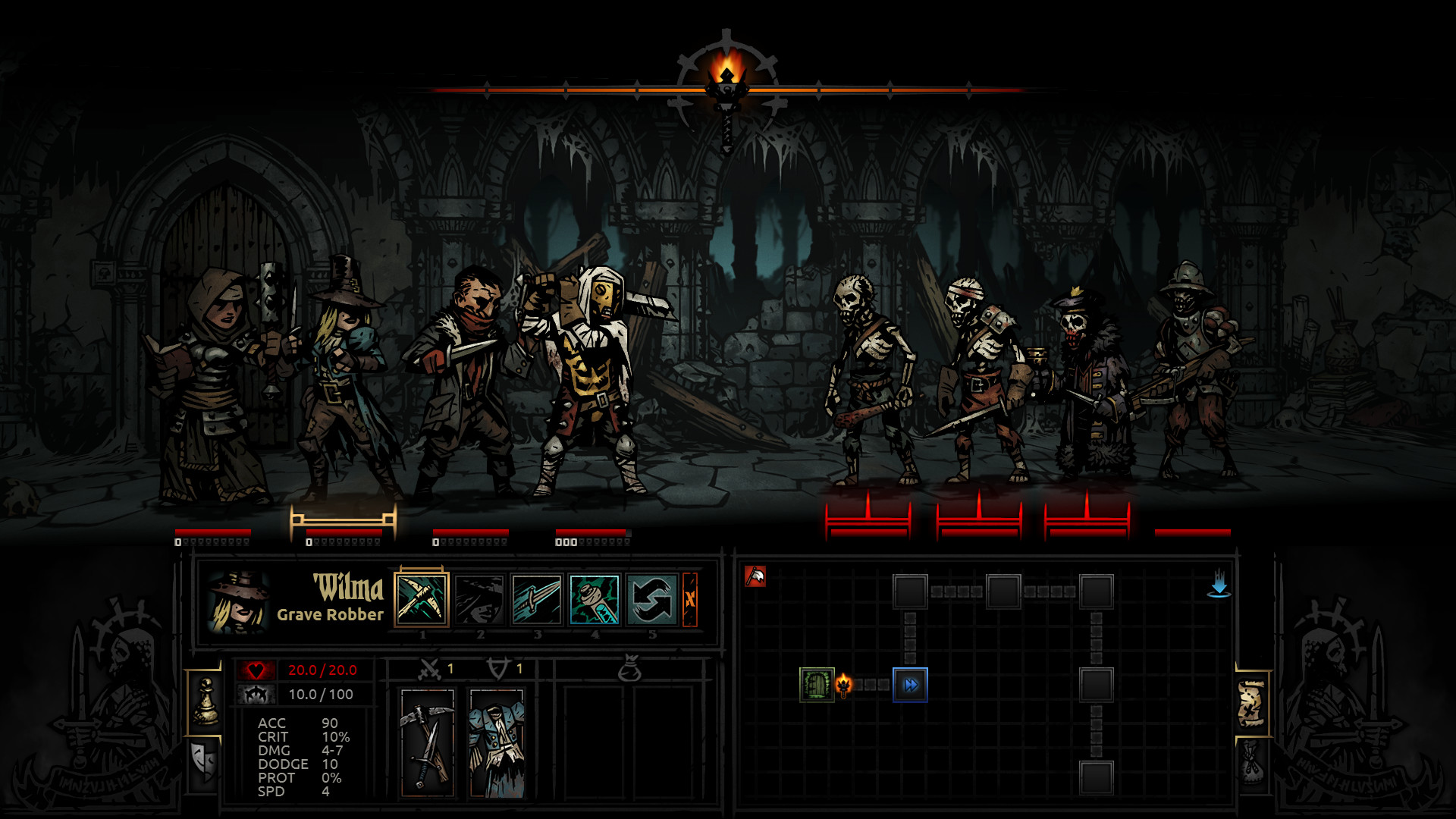
Combat is turn-based, with heroes and monsters arranged in opposing rows. On a hero’s turn, the player chooses an available skill, target, or tactical action; each skill has its own restrictions on where its user must stand and which enemy ranks it can reach. A back-row threat may continue disrupting the party if only front-rank attacks are available, while movement skills can reposition an ally or bring a dangerous enemy into reach. Stuns, healing, damage over time, and direct attacks all compete for limited turns. Because attacks can displace either formation, the party’s useful options can change during a fight. Success depends on responding to the current order of combatants and restoring access to key skills after the ranks are disrupted.
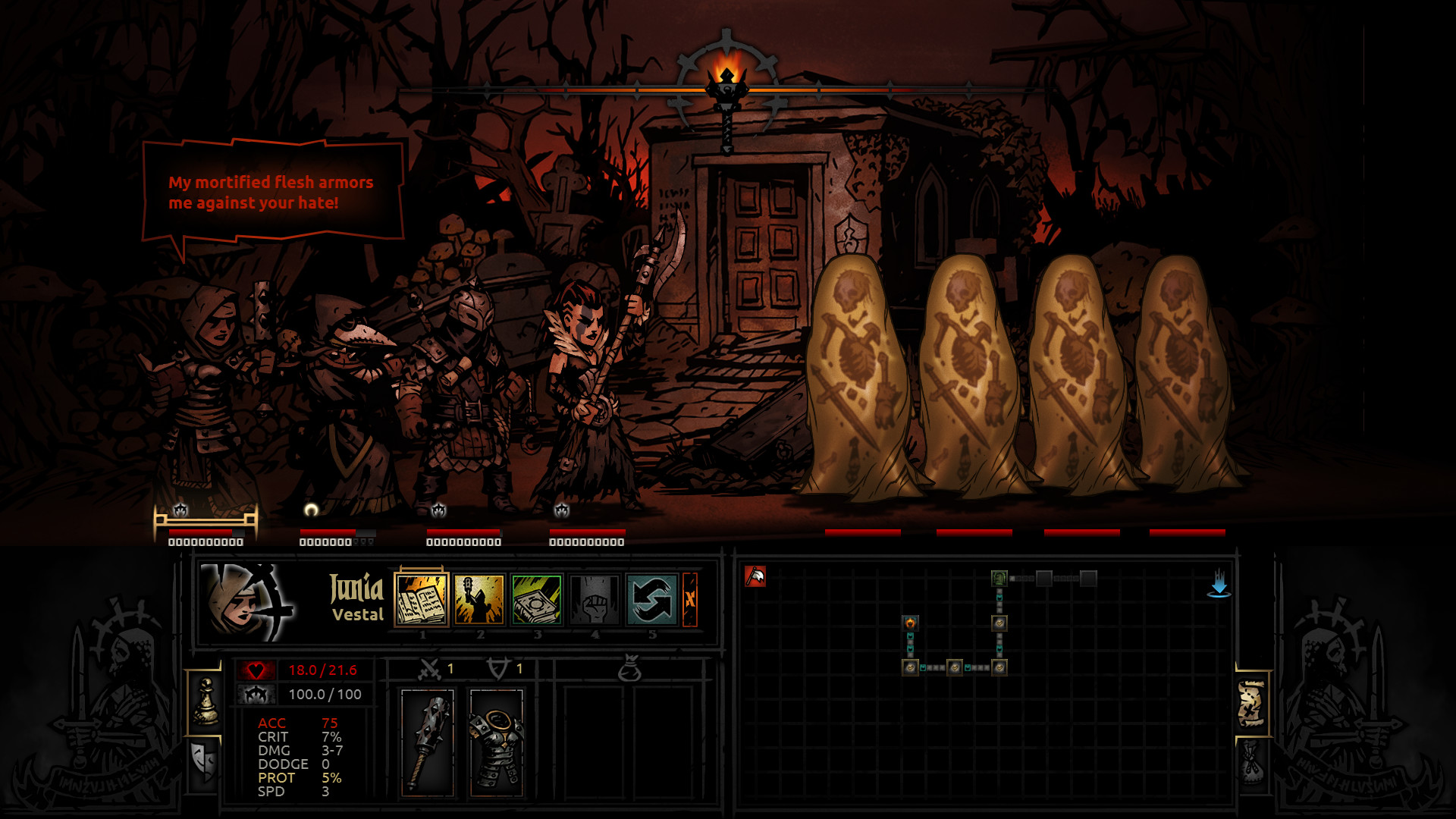
The expedition also tests the party’s mental endurance. Heroes gain stress from frightening events and hostile encounters; as that pressure accumulates, reaching a breaking point can produce an affliction that interferes with reliable control. An afflicted adventurer might disobey an order, worsen an ally’s stress, or otherwise undermine the group, while a rare positive response can instead create a virtue. Stress therefore sits alongside health as a resource that must be managed across a whole mission, not just restored after a battle. Quirks and diseases add persistent traits or vulnerabilities, and difficult events can leave a hero less prepared for the next trip. Some heroes can ease companions’ stress in battle or while camping, and the Hamlet offers further recovery options.
Before entering a dungeon, the player buys provisions such as food, torches, and tools, balancing useful supplies against limited carrying space and the expedition’s expense. Food can address hunger and support recovery during a camp, while torches let the party manage its light as it explores. Darkness changes the danger of a journey: the team faces greater psychological pressure and combat risk as illumination falls, even though choosing to travel with less light can make the expedition riskier in exchange for potential rewards. Curios encountered on a route can be examined or used with an item, so a provision may serve either as insurance or as a way to interact with the environment. Every choice consumes something the party could have saved for a later room.
Between trips, the Hamlet turns expedition rewards into longer-term capability. The Stage Coach expands access to recruits; the Blacksmith improves weapons and armour; and the Guild trains combat skills. The Tavern and Abbey provide ways to relieve stress, while the Sanitarium can address troublesome quirks or disease. Upgrading these facilities costs heirlooms gathered in the field, and the services used on individual heroes also require gold, creating a steady competition between immediate recovery and investment in future teams. A graveyard records those who do not return. Since the campaign depends on a pool of replaceable adventurers rather than one permanent protagonist, losing a veteran can erase training and equipment investment, but refusing to rotate or retire strained heroes can also weaken the next expedition.
- Developer
- Red Hook Studios
- Genre
- Gothic turn-based role-playing game / dungeon crawler