
About Darkest Dungeon II
Darkest Dungeon II is a turn-based roguelike about four heroes taking a stagecoach across a world collapsing under supernatural corruption. In Confessions, the party follows a branching route through hostile regions toward the Mountain, balancing combat, stress and relationships between stops. A separate Kingdoms mode expands the game with a persistent roster and strategic campaign.
A supernatural catastrophe has left the world beyond the heroes’ carriage succumbing to a spreading blight. Four adventurers set out with a stagecoach and the Flame of Hope, attempting to cross the broken landscape and confront the source of the crisis at the Mountain. The returning narrator Wayne June frames the expedition in bleak, theatrical language, while Red Hook renders the heroes and horrors as animated three-dimensional figures against illustrated backdrops. The named roster includes familiar specialists such as the Highwayman, Plague Doctor and Man-at-Arms, alongside heroes introduced for the sequel. Their personal histories are revealed in playable memories, but the central premise stays focused on the journey itself: keep a team intact long enough to carry its dwindling hope through hostile regions and reach the end of an expedition.
In the Confessions mode, a run begins with one party and follows a branching route across a map toward an Inn and, ultimately, the Mountain. Between landmarks the stagecoach travels along the road, where its wheels may strike debris and useful objects can be gathered; at a fork, the selected path determines which kinds of encounters lie ahead. Nodes can lead to battles, assistance, hospitals, shrines, lairs or other events, and decisions at some stops affect the heroes’ standing with one another. The different regions, including the burning Sprawl and diseased Foetor, bring their own enemies and pressures. The stagecoach is both transport and equipment carrier, so its upgrades and the party’s supplies matter on the road. An expedition may end in defeat, but resources gained along the way feed improvements for future attempts.
Combat remains turn-based and formation-driven. Four heroes face an enemy line, and the skills available to each character depend on their position and the ranks they can reach. A move that shifts a hero or pulls an enemy can change which attacks are possible next, so turn order and formation work together. The sequel makes many conditions visible through tokens placed beneath fighters: Block can mitigate an incoming hit, Dodge can avoid an attack, and other symbols signal effects such as taunt or blind. Skills can create, remove or exploit these markers, giving the party a clear way to respond to the state of the field. Bleed, Blight and Burn continue to wear characters down over time, while guard effects, Combo tokens and movement skills help manage who is exposed. Each choice advances a fight that can cost health, stress and scarce supplies.
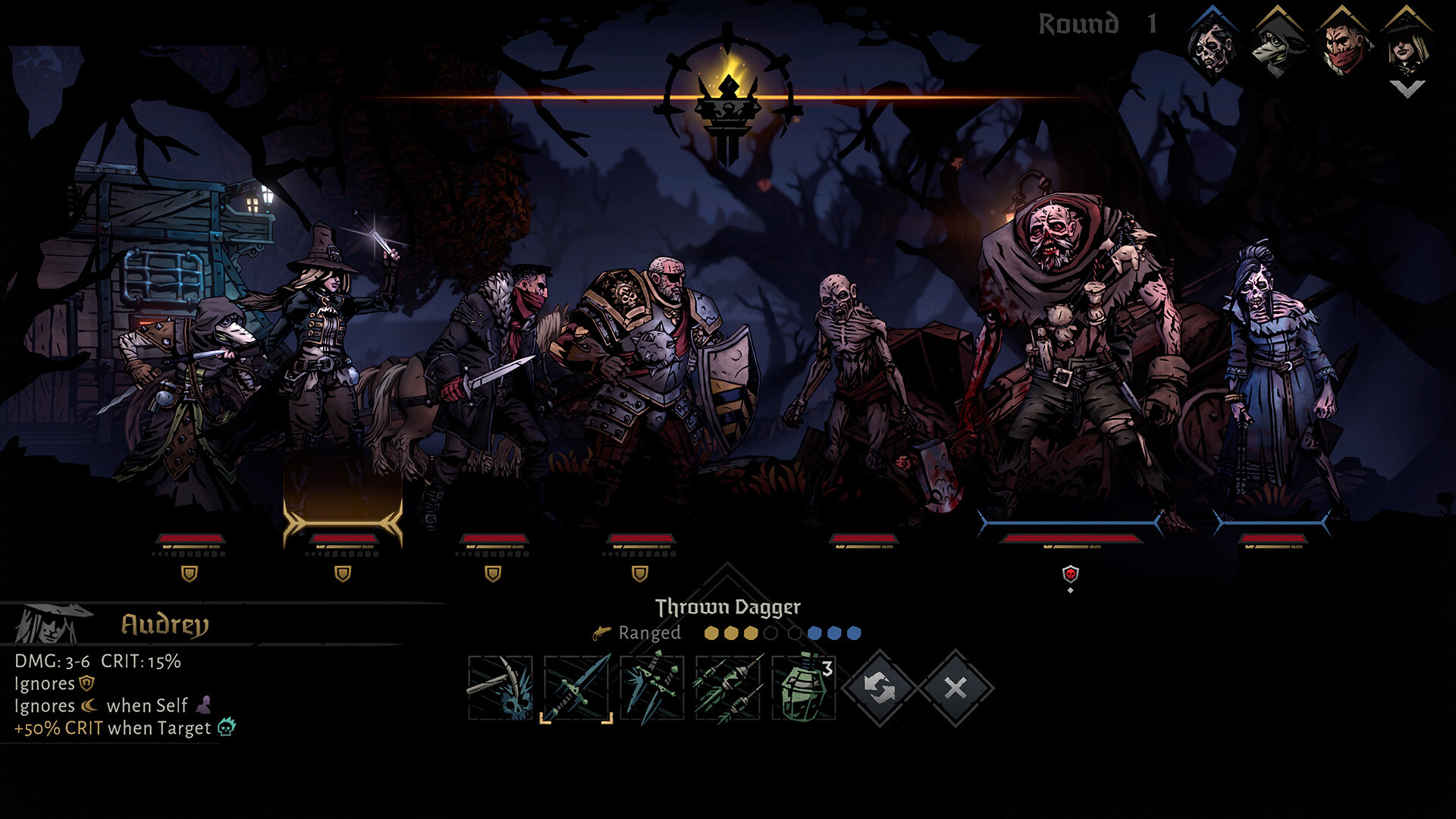
The heroes’ stress and their relationships form a second layer of party management. Stress rises through difficult encounters and tense travel; when a character reaches its limit, a Meltdown can sharply reduce health and damage the bonds among the group. Lower stress and supportive interactions can instead help the party remain functional. Affinity shifts as heroes react to combat actions and decisions on the road, and a relationship may develop into a positive or negative bond. Positive bonds can add combat assistance or bonuses to particular skills, while hostile ones can interfere with actions and cause further stress. The effects can spread: a disagreement over a choice can become a problem in a later battle, while a well-timed supportive skill can strengthen the group. Keeping health up is not enough if frayed relationships and stress make the party work against itself.
An Inn marks a pause between stretches of the road. There the player can use Inn Items to relieve stress, influence relationships and prepare for the route ahead, alongside equipping trinkets, combat items and stagecoach gear. Shrine of Reflection stops let individual heroes revisit parts of their histories; completing chapters reveals character background and unlocks skills that remain available on later runs. After an expedition, earned Candles can be invested at the Altar of Hope in lasting upgrades and new options. That progression gives a failed run a forward effect without turning its party into a permanent roster that the player must maintain across a long campaign. Confessions instead centres on building a capable four-person team for one attempt, learning from what happened, and carrying selected unlocks into the next trip toward the Mountain.
That structure differs from the original Darkest Dungeon’s estate campaign, where a Hamlet served as headquarters for recruiting a large roster, upgrading services and sending selected groups on separate dungeon expeditions. In Darkest Dungeon II’s core Confessions loop, the stagecoach and its four passengers are already on the expedition, with an Inn between regions and the Altar of Hope providing persistent upgrades outside runs. The current game also includes Kingdoms, a separate strategic campaign mode rather than another leg of a Confessions journey. Kingdoms asks the player to defend a realm against invading factions, gather resources, complete a quest and manage a persistent roster while upgrading Inns; its progress is tracked separately from Confessions. Both modes use the game’s party combat and bleak setting, but they organise travel and progression differently.
- Developer
- Red Hook Studios
- Genre
- Turn-based tactical roguelike RPG with dark-fantasy and stagecoach expedition structure