
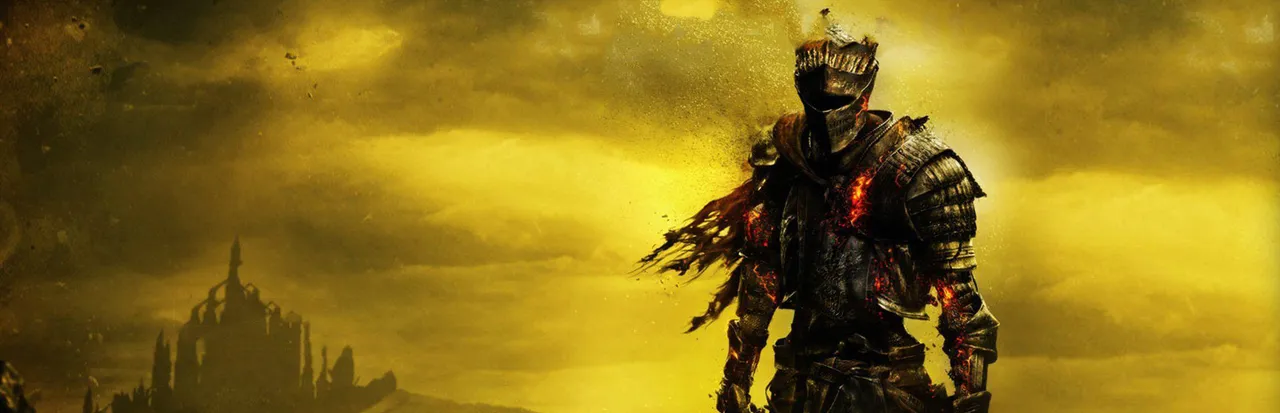
About Dark Souls III
Dark Souls III is an action role-playing game set in a kingdom approaching the end of an age of fire. As the Ashen One, travel through Lothric, confront the Lords of Cinder, and build a fighting style from weapons, armour, spells and weapon skills while uncovering the world’s history through its people and places.
The world of Dark Souls III is caught in the fading of the First Flame, a cycle that has shaped successive ages. The player is an Ashen One, an Unkindled who rises after the Lords of Cinder abandon their duty. Their task is to seek these powerful figures and bring them back to their thrones at Firelink Shrine, where the fire’s fate can be decided. The journey crosses the kingdom of Lothric, whose castles, settlements and sacred sites hold evidence of earlier kingdoms and repeated attempts to preserve the Age of Fire. The plot is deliberately delivered in fragments: conversations, enemy placement, architecture and item descriptions all contribute context, while characters such as the remaining Lord Ludleth and the Fire Keeper help frame the Ashen One’s purpose.
Progress is organized around connected locations rather than a single uninterrupted road. Bonfires provide places to rest, restore supplies and return to previously reached points, while discovering a new route can open a shortcut back to familiar ground. Each area mixes hostile soldiers, creatures, hazards and hidden paths with a larger encounter that tests what the player has learned about its enemies. Defeating major opponents advances the central search for the Lords of Cinder and opens onward routes. Side paths can lead to equipment, upgrade materials and optional characters, so careful exploration supports character development as well as the main journey. The setting’s visual details and scattered descriptions also reward attention, since they often explain the connections between places and the people who once occupied them.
Combat asks the player to manage stamina, spacing and timing while choosing how to answer an enemy’s attacks. Weapons differ in reach, speed and moveset, and shields can block or, with the right equipment and timing, parry. Dodging creates openings but uses stamina, as do attacks, so repeatedly striking can leave the Ashen One unable to respond. Weapon Skills add a move tied to the equipped weapon: some close distance, break a guard or deliver a distinctive attack, and they draw on FP. Spells use that same resource, which makes the allocation between regular Estus and Ashen Estus a practical build decision. The result is a system where equipment selection affects both a character’s role and the moment-to-moment rhythm of a fight.
Character growth combines leveling with the equipment found or forged on the road. Souls gained from defeated enemies can be spent at Firelink Shrine to improve attributes such as health, stamina, strength or intelligence, letting a build lean toward durable melee, quick weapons, spellcasting or a mixture. Weapons and armour can be changed as new options appear; weapons can also be reinforced with materials to improve their damage. The player is free to experiment, but equipment weight and attribute requirements shape which combinations are practical. Boss souls have a separate use: with the appropriate service at the shrine, they can be exchanged for distinctive weapons or spells. These choices make exploration consequential, because a new tool may suggest a different approach to an enemy or area.
The Estus system ties recovery to both combat and planning. Bonfire rests replenish healing and FP flasks, but the total number of uses is divided between the two types, so a spell-heavy character may reserve more Ashen Estus while a weapon-focused build favours healing. The Ashen One also carries a limited stock of healing between rests, making the location of the next bonfire meaningful during a long push through unfamiliar ground. Enemies return after resting, which turns a bonfire into a reset point as well as a safety anchor. When the player falls, unspent Souls remain at the place of death and can be reclaimed by reaching it again; another defeat before recovery loses that accumulated currency. This creates a steady tension between pressing forward and securing progress.
Online play gives Ember a clear role beyond restoring the Ashen One’s full strength: while embered, the player can see summon signs and call another player for help before a boss. A White Sign Soapstone separately lets the player offer assistance in someone else’s world. Helping another host can return an Ember. The same embered state also exposes a host to invasion, where another player enters as a hostile phantom; a Red Eye Orb can seek invasions, while a red sign offers an opted-in duel. Covenant effects add further context, since some groups reward hunting other players and others can bring defenders to a threatened host. These encounters are layered onto the same journey through Lothric, letting players choose between assistance, deliberate competition and solitary progress. Messages and bloodstains can also offer warnings or glimpses of another player’s final moments, making the online layer useful even when no one joins the fight. The Way of Blue adds a defensive response for hosts: its members may receive help from a blue sentinel when an invader appears. This makes covenant choice affect the character’s place in multiplayer, not only the online menu.
Arriving in April 2016, Dark Souls III walks back the branching detours of its predecessor and returns to the kind of large, interconnected world the first game built. It also fights faster than any of them, and that change is bigger than it sounds.
The world is the argument
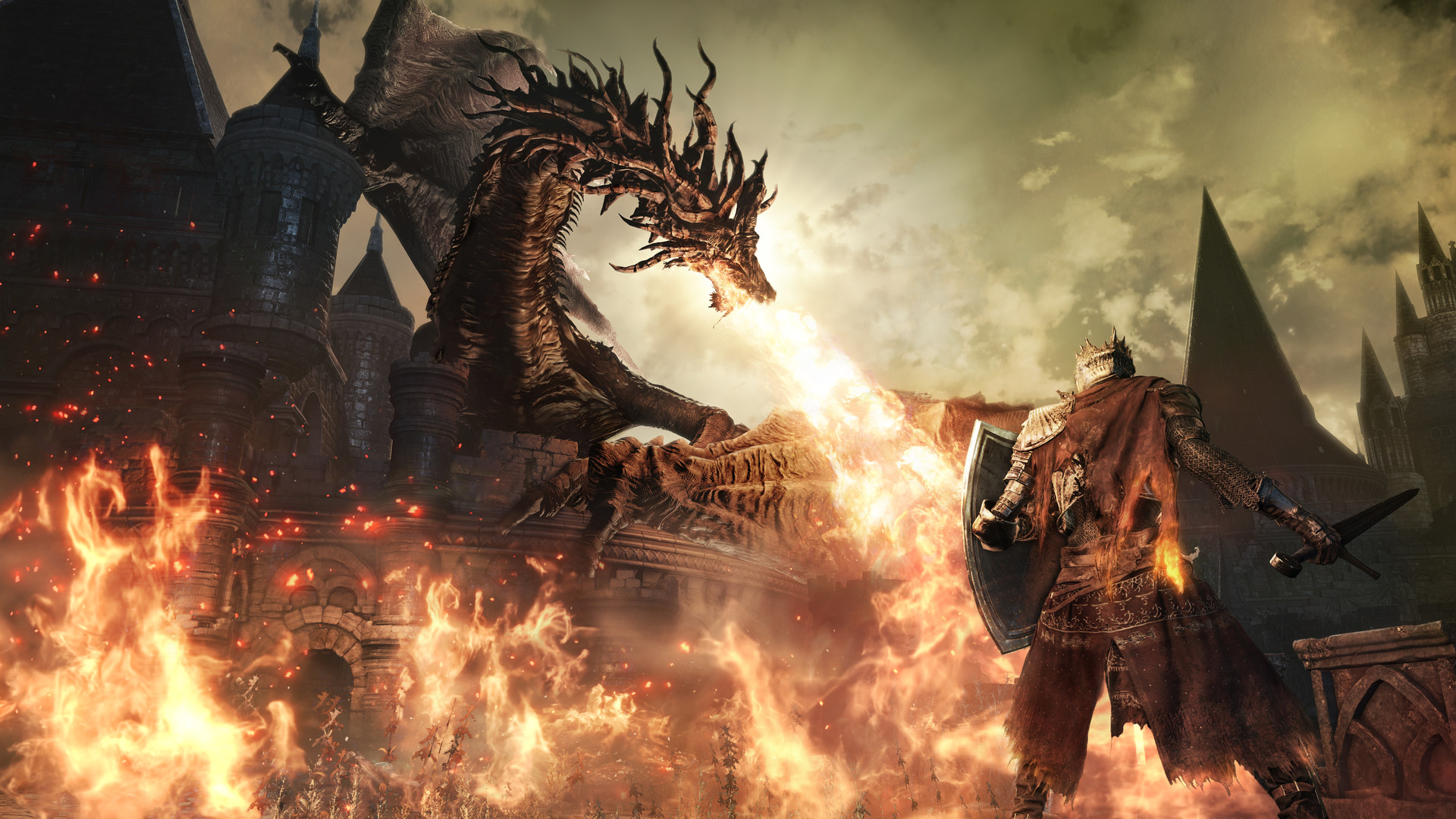
Developer FromSoftware built this one around place. The High Wall gives you your first look at a rotting kingdom and the valleys and snow-capped peaks past it, its inhabitants frozen mid-prayer as they turn to stone and wood. From there you work down through deliberate echoes of where the series has been before: catacombs, another poison swamp, a bone-cold dungeon, and a labyrinth of cursed bookshelves in the Grand Archives.
Some of those are recognisably the series revisiting its own ideas, and the game knows it — the reused pieces are distinguished well enough that they read as reference rather than recycling. The larger point is that the world rewards a thorough player. You can spend hours in one area pulling at dark corners and side roads and keep getting paid for it, with story fragments, gear, mini bosses and occasionally whole areas that most players never find. Illusory walls are back, and hitting every suspicious-looking brick holds up from the opening hours to the endgame.
Faster, and meaner for it
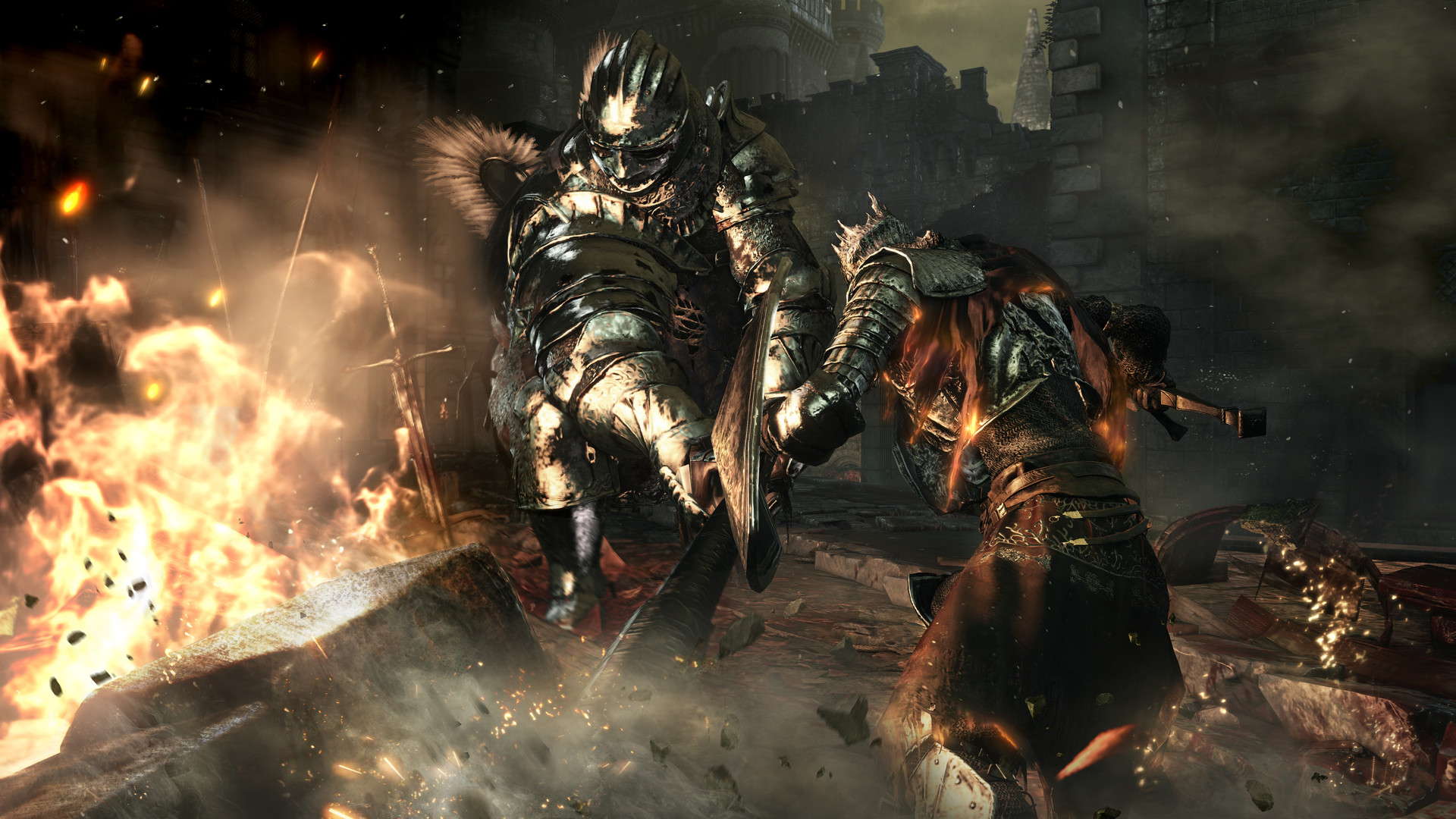
The combat is where the sequel differs most. Attacks come out quicker than in the earlier games, and enemies are built to punish the way you used to play — backing off, baiting, and picking your moment. Against groups this pushes you into something closer to crowd management than duelling, improvising rather than executing a plan you rehearsed. Boss fights remain the spine of the experience and the best of them are genuinely difficult in the way the series is known for.
Full honesty about launch performance, because it matters if you're coming to it now expecting a clean run: the areas that look the most impressive are the ones that struggled, with frame rate dipping hard in the busiest scenes even on a high-end machine at the time. On PC the game otherwise runs at a smooth 60. Whether that bothers you in 2026 depends entirely on your tolerance and your hardware, and the broadly accepted answer is that the spectacle is worth the occasional drag.
Nobody will tell you what's happening
The story is delivered the way this series always delivered it, which is to say almost not at all. Characters speak in fragments, item descriptions carry the rest, and the actual history of Lothric has to be assembled from what you notice. It's the most interesting thing about the game and the most divisive — the world's ambiguity is the point rather than a failure to communicate, and it's why the environments carry so much weight. A room full of petrified worshippers says more than any cutscene would.
The pulse
Time has been kind to this one. It's widely held up as the most consistent of the three Dark Souls games, and the argument for it is usually the same pair of points: the whole game feels focused where Dark Souls II sprawled, and the boss roster is the strongest in the trilogy. The criticisms that stuck are the ones we'd repeat — the series dipping into its own back catalogue a little too comfortably in places, and the launch performance issues that were well documented at the time. Nobody argues about the combat pace; the shift toward faster, more aggressive fights is broadly treated as the right call.
Should you play it
Yes, and if you're new to the series this is the one we'd start with. It's the most polished of the three, it's the least likely to lose you in a maze of unfinished systems, and its world is the easiest to admire even when you don't know what you're looking at. Returning players will find the faster combat a genuine change of habit rather than a rebalance.
Hold off if you want a story told to you, or if performance wobble in the showiest areas would bother you more than the scenery would reward you. And if you bounced off the earlier games because the difficulty felt arbitrary rather than earned, this one tightens the fighting without making it any more forgiving.
Go deeper with V4mp
- Developer
- FromSoftware
- Genre
- Dark fantasy action RPG
Explore Dark Souls III further
Explore the wiki for detailed reference pages on the game's world, systems, items and locations.