
About Dark Messiah of Might and Magic
Trained in weapons and magic by the wizard Phenrig, Sareth travels to Stonehelm and joins a search for the Skull of Shadows, a relic tied to an ancient demonic prison. This first-person fantasy action adventure combines close combat, bows, spells, stealth, objective-based skill growth and physical interaction with its environments.
Dark Messiah of Might and Magic follows Sareth, an apprentice raised and trained by the wizard Phenrig. His first assignment sends him to the free city of Stonehelm, where its ruler, the mage Menelag, has spent years searching for the Skull of Shadows. Menelag's niece Leanna joins the expedition, hoping to claim the relic as a defense for her city. The journey moves from Stonehelm toward a ruined temple on a remote island, then through other parts of Ashan as Sareth and his companions pursue the objects and people connected to the search. The story's stakes come from the setting's older conflict: the wizard Sar-Elam imprisoned the demons after the Wars of Fire, but a flaw in that prison lets their influence return during lunar eclipses.
The prophecy surrounding the Skull gives the adventure its central tension. Sar-Shazzar foretold a half-human, half-demon child who could break the prison, and the title's Dark Messiah is tied to that prediction. Phenrig has bound the guardian spirit Xana to Sareth to guide and protect him; Leanna brings a different purpose to the expedition, while Menelag's fixation has shaped the search that brought them together. The Demon Sovereign Kha Beleth waits beyond the prison with his infernal legions. These figures and the relics connect local journeys through Ashan to the larger danger, while the player travels with companions and fights human, undead and demonic enemies.
Combat is played from Sareth's first-person view, with swords, daggers, staves, bows and spells used at close or long range. A held attack charges a power strike, and the direction of the strike can vary with the movement inputs used while charging. Blocking at the right moment destabilizes an attacker and creates room for a counter. Striking enemies with weapons or spells fills an adrenaline meter; when it is full, a power strike can trigger a lethal finishing move, while spells gain stronger effects. Aiming also matters for some finishers, so a strike directed at an enemy's head can produce a different result from one aimed elsewhere. Mana limits spell use, while health and armor govern survival in a fight.
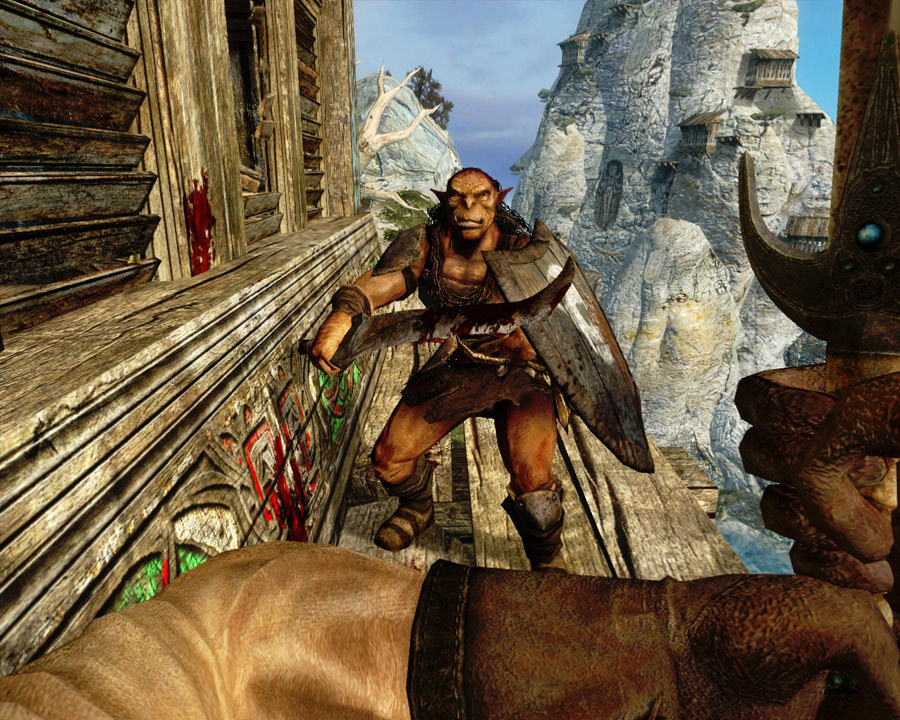
The arenas invite Sareth to use their objects and hazards as part of the fight. He can kick an enemy into a spiked wall, ignite oil-filled jars or barrels, and break wooden supports so boxes or barrels fall into the battle. Spells add further ways to change an encounter: Freeze can immobilize a target or make a patch of ground slippery, while Fire Trap creates a ward that detonates when an enemy crosses it. Telekinesis can move objects, and its adrenaline-enhanced form can seize and throw living enemies. These actions interact with the same physics-driven spaces as ordinary weapon attacks, making positioning, enemy movement and the layout of a room part of the combat loop. The player can also retreat, lure a foe toward a trap, or interrupt a group before engaging directly.
Growth follows objectives rather than a tally of defeated enemies. Completing mission objectives awards skill points, including some secret objectives, which Sareth spends in three categories: Weapon, Spell and Miscellaneous. Weapon abilities improve close or ranged combat, and some weapons require a particular skill level. Spell skills unlock new magical abilities; miscellaneous skills can add silent movement, trap disarming or increases to maximum health and mana. The points form a limited resource for shaping a character, so investing in one branch affects which other abilities are available during the same journey. Finding optional paths and completing their objectives can add growth opportunities alongside the required route.
A stealth or ranged approach uses different equipment and preparation from a direct melee build. Daggers support attacks from behind, bows let Sareth damage enemies at a distance, and stealth skills affect how visible he is as he moves. Alertness can reveal hidden items and secret areas after Sareth stands still, while Burglar lets him pick locks on doors and chests; these skills can expose shortcuts or supplies but are not required for the main route. Magic builds trade weapon emphasis for spell knowledge and mana management. The item belt makes selected weapons, spells and consumables quickly accessible, while health and mana potions, food, armor, shields and magical accessories help cover different needs as the adventure progresses.
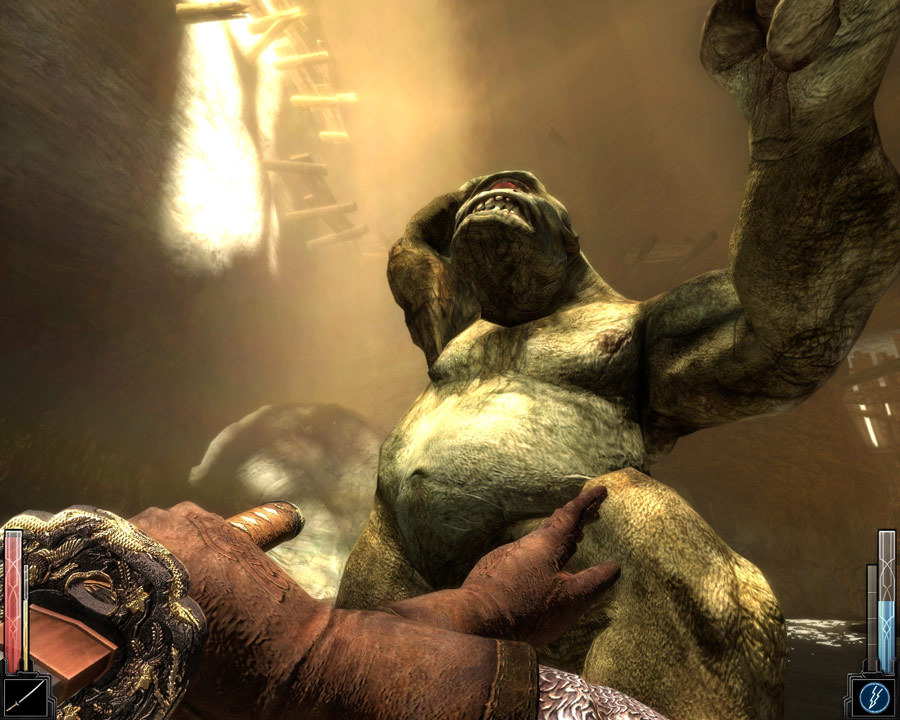
Traversal is woven into the level objectives as well as the fights. Sareth searches rooms for keys and other forms of access, operates switches, crosses gates and looks for paths above or beyond blocked passages. A rope bow, found during the journey, fires arrows that attach to beams and other wooden surfaces, giving him a line to climb across gaps or reach an elevated route. Some optional spaces contain extra items or skill-point objectives, rewarding attention to side passages and environmental clues. The PC release also has a distinct multiplayer component, but its class-based matches and progression are separate from Sareth's single-player campaign.
- Developer
- Arkane Studios
- Genre
- First-person fantasy action role-playing game