
About Dark Fall: The Journal
A frightened call from your architect brother draws you to Dowerton, where station and hotel guests vanished on 29 April 1947. Search the buildings, investigate ghost stories and use equipment to perceive the past. Puzzles, documents and conversations with the dead reveal the mystery surrounding this haunted place.
Dark Fall: The Journal is a first-person horror adventure set around Dowerton's disused railway station and the Station Hotel beside it. The hotel once served weary travellers, but on the night of 29 April 1947 its guests and staff disappeared without explanation. Decades later, the player receives a troubling message from a brother who is an architect and has arrived to redevelop the station and hotel. Strange whispers accompany his frightened call for help. The player travels to Dowerton and enters a place where the past has not stayed past: the buildings are empty, yet calls, footsteps and voices suggest an unseen presence. The mystery concerns both what happened in 1947 and what is happening now.
The setting is explored as a connected haunted location rather than through a sequence of action arenas. The player examines the station and hotel, moves between rooms and discovers traces left by former guests, staff and later visitors. The architecture matters because the brother came to renovate it, and because the buildings contain the history that must be pieced together. Dowerton's surrounding community has its own stories about the vanished people, including the belief that their souls were taken that night. Those accounts provide leads, but the investigation depends on examining places and evidence directly. Objects, written records and recorded material help turn a collection of eerie incidents into questions about the site's history.
Ghost-hunting equipment gives the player ways to see into the past and hear the dead. The gadgets and surveillance devices are investigative tools: they reveal supernatural activity that ordinary observation might miss and encourage the player to inspect a location from more than one perspective. Ghost-hunting goggles can disclose hidden scenes, while audio and monitoring equipment make voices and unexplained events part of the evidence. These tools do not replace exploration; the player must decide where to use them and interpret what they reveal. A room may contain a visible clue, an unseen image from another time or a sound that changes the meaning of the scene. The technology gives the adventure a distinctive detective rhythm built from observation and inference.
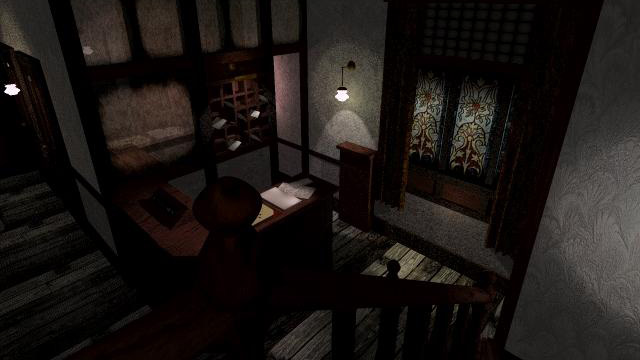
Puzzles connect that evidence to progress. The player solves mechanical and environmental problems, finds concealed places and deciphers an ancient language. Rather than rely on combat, the game asks for patient inspection of documents, symbols and surroundings. Some puzzles require information collected elsewhere, so remembering a phrase or comparing clues can matter as much as locating an item. The story also uses non-linear presentation: discoveries do not necessarily arrive in a single explanatory order, and the player assembles a picture of Dowerton by following leads across the station and hotel. That structure suits a place whose history is fragmented, while keeping the central goal legible: understand the haunting and help the brother whose call brought you there.
The dead can be approached through a Ouija board as well as through recorded or observed phenomena. Communication makes questions part of the investigation: a ghost may hold information, but the player has to work out what to ask and how a response fits with other evidence. Local ghost stories offer another thread, connecting the vanished hotel occupants to the beliefs of people nearby. The game treats the supernatural as a mystery to investigate, not merely a threat to evade. A voice heard in an empty corridor, a figure glimpsed through equipment and a historical account can point toward the same event from different angles. Together they make sound, place and testimony active parts of puzzle solving.
The presentation builds tension through the gap between what can be seen and what can be heard. The station and hotel are explored alone at night, and the invisible presence is established through strange calls, footsteps and distant voices before it is fully understood. The game's three-dimensional environments provide a navigable space for examining rooms and finding details, while the audio and cast of actors make recorded messages and ghostly communication central. Its postwar context and the 1947 disappearance give the abandoned buildings a specific history. The player is not asked to fight through waves of enemies; attention, deduction and a willingness to enter another dark room are the practical means of continuing.
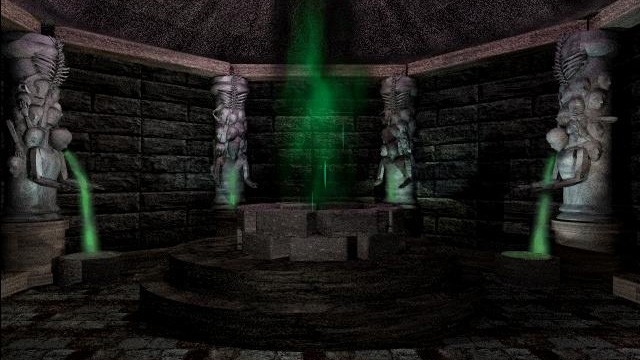
Dowerton's disappearance reaches beyond the hotel rooms. Two students arrive to investigate the place paranormally, and their work may have stirred something old and dangerous. The player follows this trail alongside the brother's redevelopment plans, finding a site caught between proposed renewal and a past that refuses to settle. The station's closure and the hotel's vanished guests belong to different layers of local memory; nearby villagers have their own explanation for those taken on the final night. Moving through this landscape means weighing stories against what the ghost-hunting equipment shows. The ordinary purpose of the buildings—trains arriving, travellers staying, an architect planning a return to use—sits uneasily beside the supernatural presence now occupying them.
- Developer
- Darkling Room
- Genre
- First-person supernatural horror adventure with puzzles