
About Dark Fall: Lost Souls
Dark Fall: Lost Souls returns a disgraced police inspector to Dowerton’s abandoned station and hotel, five years after Amy Haven vanished. Explore the decaying buildings, investigate the missing girl’s case, and communicate with the dead. Time slips, supernatural threats, light, and the spirits’ unfinished regrets connect the present investigation to the past.
Dark Fall: Lost Souls begins when the Inspector returns to Dowerton on the fifth anniversary of Amy Haven’s disappearance. He led the original investigation, believed he had identified the culprit, and broke rules to prove it; the case instead cost him his position and left him haunted by failure. Amy vanished after being expelled from Saint Swithin’s School for Girls, where macabre drawings and an interest in the dead unsettled her teachers. Her disappearance remains the question drawing him back, but the game frames it within a wider supernatural disturbance rather than a conventional police case.
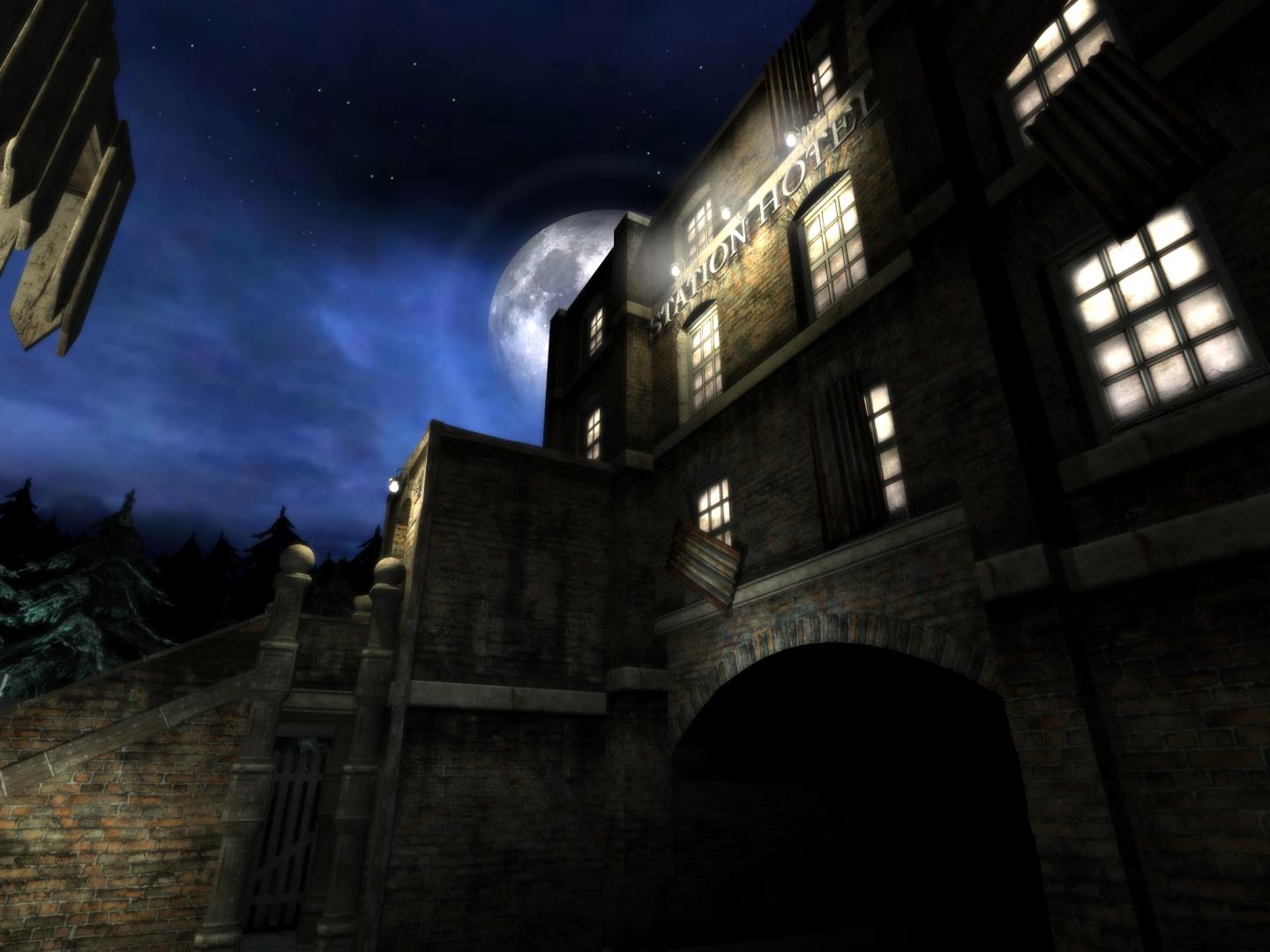
Dowerton is a rural English village whose old centre has become a place to avoid. The disused railway station once served as the community’s heart, while the adjoining Victorian Station Hotel accommodated travellers and clandestine visitors. Both buildings have deteriorated, and rooms, platforms and connecting spaces hold traces of people who lived there in different periods. The surrounding village suggests a place coming apart: some residents disappear into the woods, while others retreat indoors. Exploration means reading the environment. Decay, objects and sounds give the Inspector clues about who occupied a room and what might still be present.
The player moves through the station and hotel in first person, examining spaces and physically interacting with objects. The engine supports fuller movement through the buildings, while mouse-directed interaction lets the player handle parts of the environment instead of treating every scene as a static backdrop. Searching a room means looking closely, testing what can be moved or opened, and relating one discovery to the next. Puzzles arise from the setting and its history, so progress depends on observation and inference. The locations are evidence in the missing-person case and the medium through which the supernatural past becomes legible.
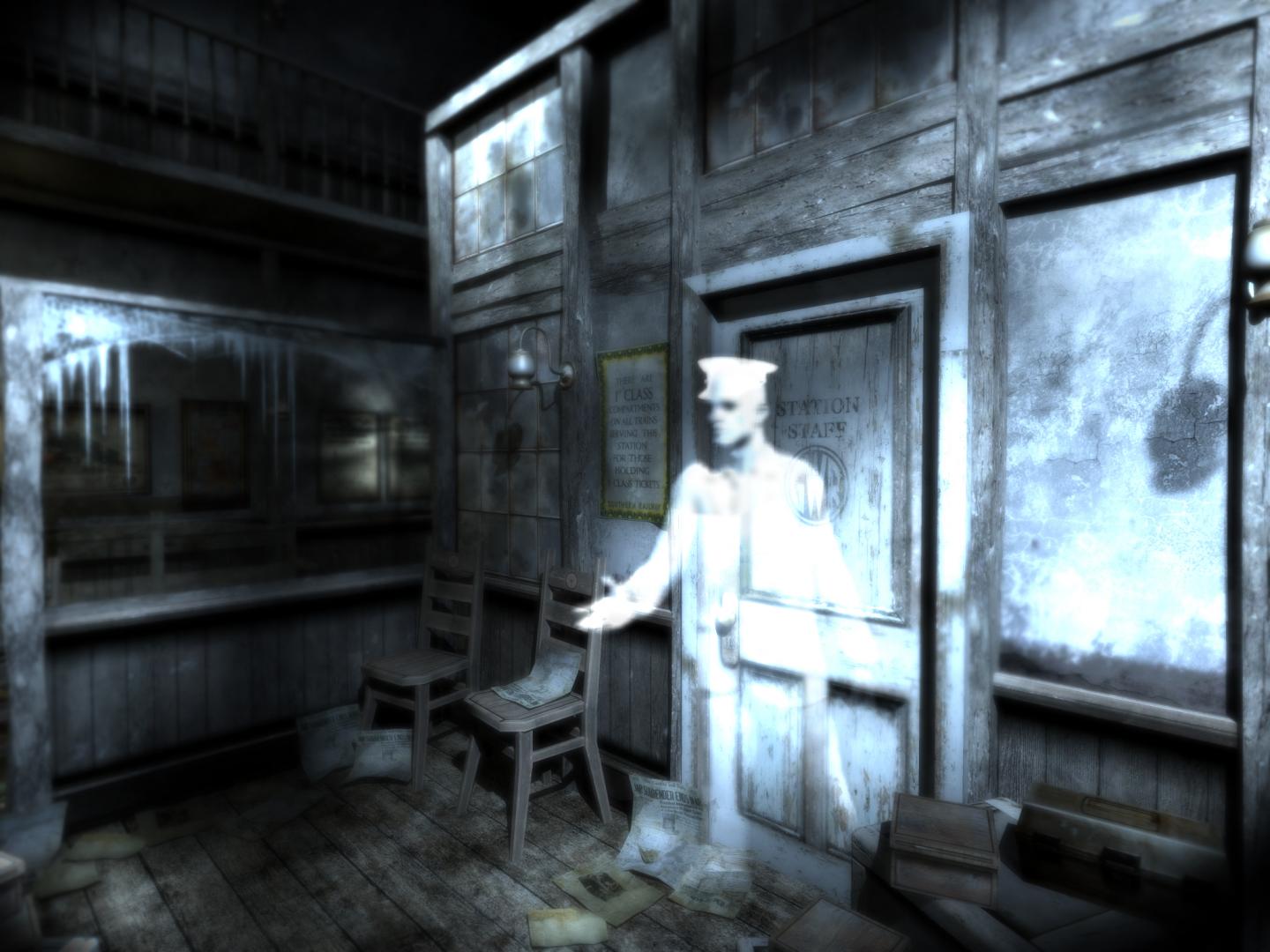
Time slips make history intrude directly into the investigation. In certain places the past seems to become the present, and the Inspector can encounter events or memories belonging to another time. These shifts connect the physical hotel to the dead who remain bound to it. A ghost may be confused, unable to remember its identity or the decision that preceded its death. Communication therefore involves more than finding a spirit and asking a question. The Inspector must learn enough about a lost person to understand what keeps them trapped, and these encounters turn environmental puzzles into fragments of individual stories.
The dead are called the Forgotten: spirits unable to pass on, often because a consequential choice at the end of life has left a disturbance in time. The game’s “Regrets” let the player enter a remembered moment tied to one of these spirits and alter the outcome that torments it. Exploring a Regret and learning its context can earn a ghost’s trust, making it possible to help the spirit move on. These episodes give puzzles an emotional purpose. The task is not simply to activate a mechanism; understanding what a person regrets determines how to respond, and successful exorcisms provide strength against the force stalking the Inspector.
Other supernatural presences shape movement through dark rooms. Shadowkin are half-formed spirits drawn to the warmth and light of the living; remaining in darkness near them is dangerous. A Life Leech feeds on the suffering of a ghost trapped in purgatory and can only be seen after a spirit has been called up. The Inspector has to make that brief opening count and vanquish it before it continues feeding. Light is both a practical defense and a way to confront what is hidden. Environmental audio and abrupt changes in familiar rooms reinforce the need to pay attention to where a threat is and what has changed.
A phone links the Inspector to Echo, an unsettling messenger whose text messages appear to guide the investigation while leaving their motives uncertain. A different connection to Amy runs through Mr. Bones, a vagrant who claims to contact the dead by divining from bones. Amy shared his fascination with the paranormal and joined his practice shortly before she disappeared. That link gives the search a human chain of evidence: the Inspector traces where Amy went and investigates the people and beliefs that shaped her final period in Dowerton. A Ouija board and the ghosts’ memories provide further ways to investigate what the living cannot explain.
The adventure also includes distorted party games, including Blind Man’s Buff and Statues. These recognizable activities appear within the haunted setting and extend the game’s puzzles beyond examining rooms and handling objects. To make progress, the player has to understand the activity being presented and respond to its conditions. Their presence connects Dowerton’s public past to its present as a place occupied by the dead: familiar social routines have become part of the supernatural environment. The games provide a different kind of encounter from entering a ghost’s personal Regret, while still asking the player to observe carefully and work out what the setting expects.
- Developer
- Darkling Room
- Genre
- First-person supernatural horror adventure with exploration and puzzles