
About CULTIC
CULTIC: Chapter One is a single-player first-person shooter about a lone fighter taking on a cult shaped by an unseen entity. Across ten maps, it combines mid-century firearms and explosives with running, sliding, cover, traps and environmental tactics. Its campaign is joined by a wave-based Survival Mode; the separately sold Chapter Two is outside this overview.
CULTIC: Chapter One opens with its protagonist presumed dead and cast into a grave, only for him to climb back out and take the fight to the cult responsible. The story frames the campaign as a descent into hostile territory: the cultists serve an unseen entity, and their altered minds and willingness to attack turn ordinary encounters into something threatening. The game keeps its narrative compact and lets its places, enemies and confrontations carry much of the atmosphere. Its world pairs recognizable firearms and mid-century details with occult horror, bloodshed and an old-school shooter presentation. The player is a lone combatant moving through this conflict, with no companion squad or multiplayer role to manage. The ten-map Chapter One campaign supplies the main story, while the included Survival Mode offers a separate wave-based challenge after the story. An interlude map introduces material associated with Chapter Two, which continues the conflict in a separately sold expansion.
The campaign is built from discrete maps rather than one continuous open world. Each location becomes a combat space to read: doorways and corridors can turn a rush into a close-range threat, while open ground gives enemies room to fire and the player more room to move. Cover, elevation and the arrangement of objects matter because the cultists return fire rather than serving only as targets. Using the environment, verticality and crowd analysis all matter to combat. That makes a room feel like a small tactical problem. A player can advance directly, pause behind cover, draw enemies into a prepared position or shift around the edges of a group. The ten maps give the campaign a defined progression, while exploration can uncover optional supplies and secrets that affect how well prepared the player is for later fights.
Movement gives the player several ways to stay alive when a room becomes dangerous. Running, jumping, sliding and dodging can break an enemy’s aim or carry the player between cover, while a slower approach can make use of concealment and a favorable firing angle. The game does not require a single pace for every encounter: charging through a group, retreating to a safer position or setting up a trap are all supported approaches. Enemy shots travel through the space, so lateral movement and timing can help avoid fire; standing still and trading damage can quickly become costly. This mixture of speed and deliberate positioning shapes the rhythm. A fight may begin with a quick push, then become a careful attempt to separate threats, find a safe angle and choose the right weapon. Movement is therefore part of combat planning as well as traversal between rooms.
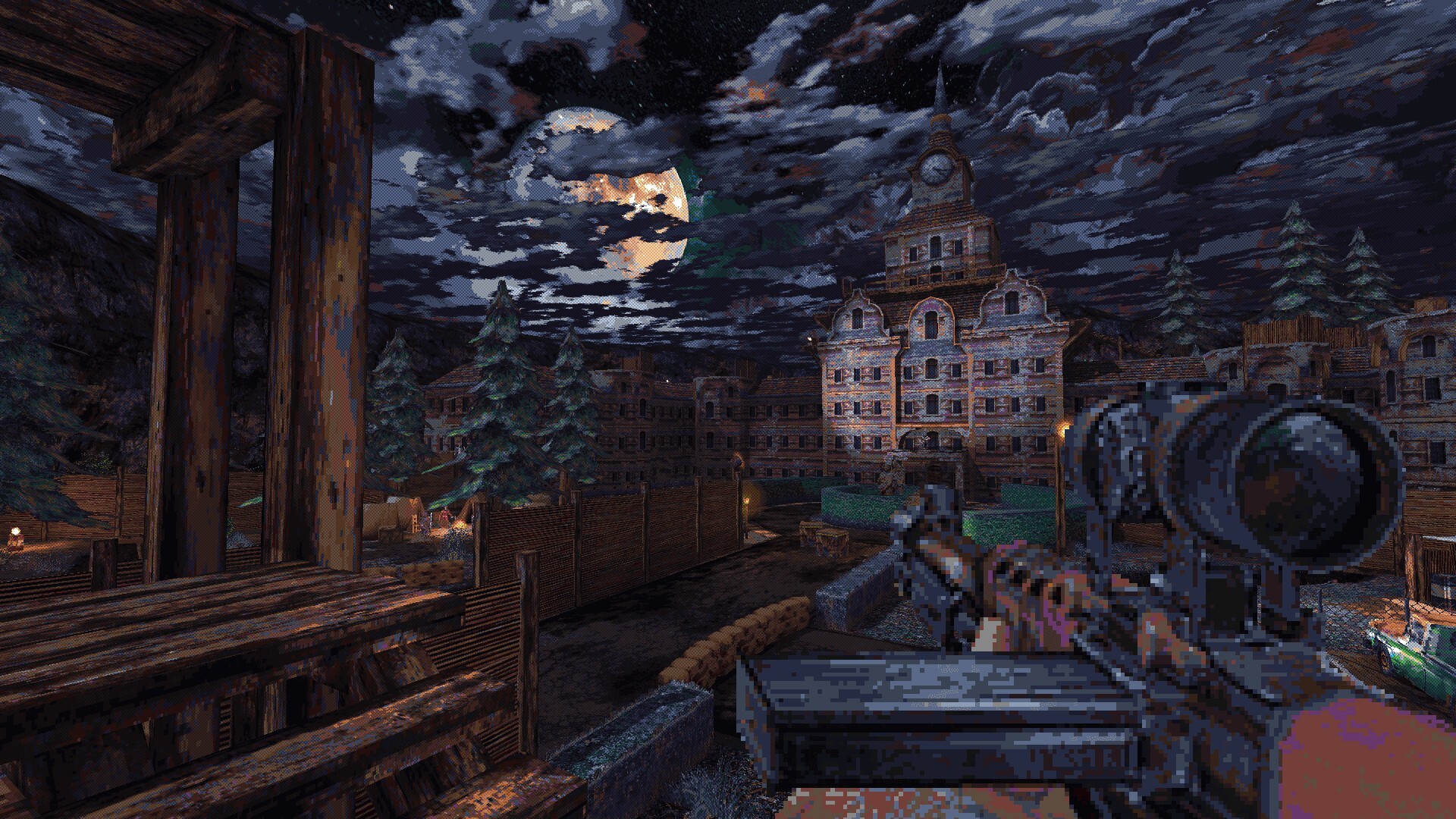
CULTIC’s arsenal centers on firearms and explosives with different uses at different distances. The pistol and shotgun offer direct answers when an enemy is visible, while heavier weapons and the grenade launcher add stronger options for groups or tougher resistance. Ammunition and health make exploration useful: side areas and hidden supplies can make a difficult stretch more manageable, while ignoring the surroundings may leave fewer options during a later fight. The developer has described CULTIC’s TNT as a tool for setting traps and controlling a throw, including timing a fuse, rather than simply a grenade that detonates on contact. That design gives explosives a planning role. They can be placed or thrown to shape the next engagement, and a well-timed blast can soften a crowd before the player follows with gunfire. Weapon choice and movement work together as the player judges distance, cover and the number of enemies in view.
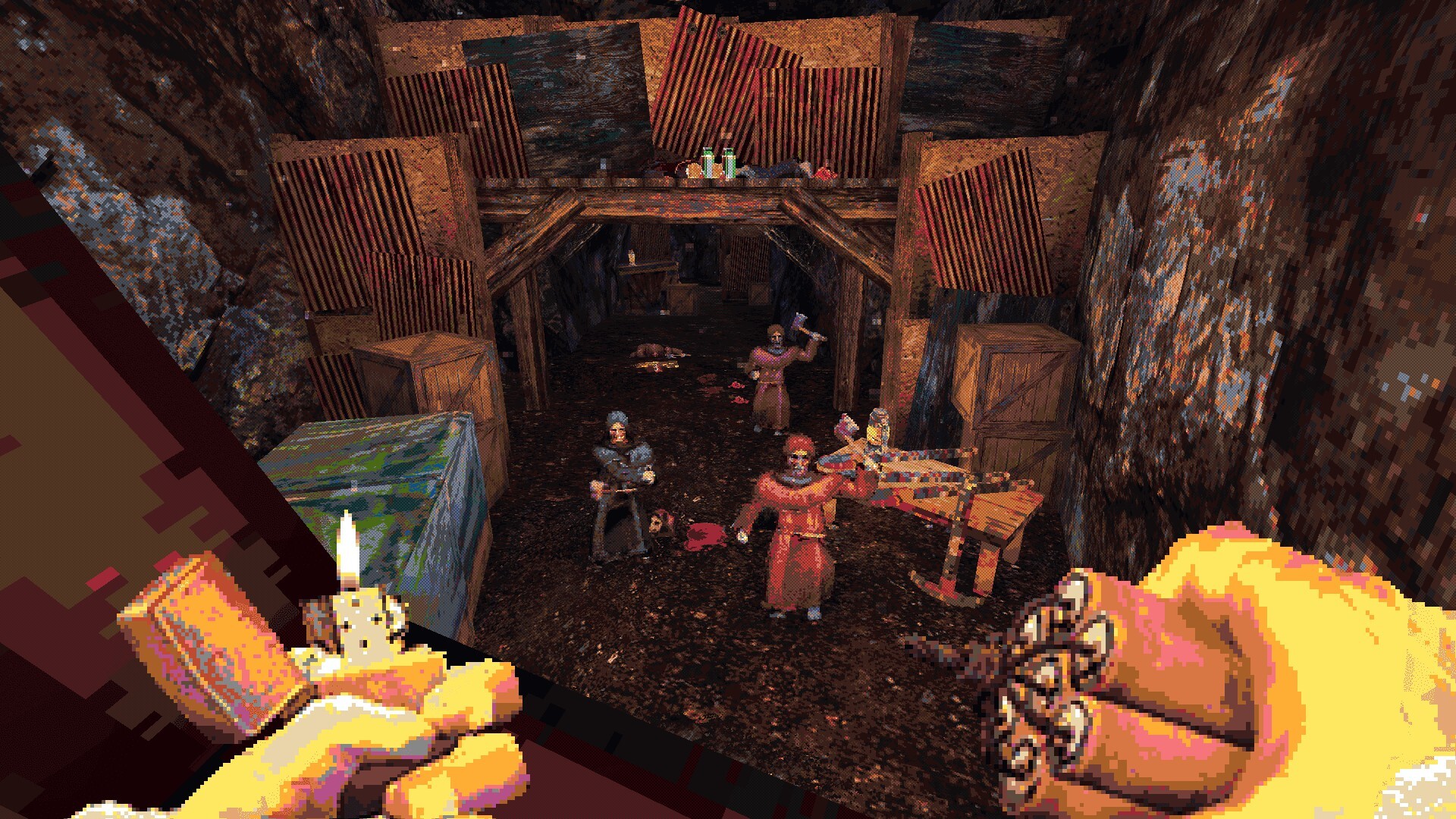
The cultists are dangerous because they fight back with enough force to make exposure matter. Their attacks encourage the player to watch the whole encounter instead of focusing only on the nearest opponent. A group can pressure the player from several directions, and a narrow approach may become hard to hold if enemies reach it together. The response is to read the formation, use cover, reposition and make opponents’ movement work in the player’s favor. The developer has discussed CULTIC’s combat in terms of analysing crowds and using verticality, which fits the way space and enemy placement affect a fight. The threat is not limited to aiming accurately: deciding when to retreat, when to draw enemies forward and when to spend an explosive can change the shape of the encounter. This helps give the campaign a horror edge even while its central activity remains first-person gun combat.
The game’s visual style combines a retro shooter sensibility with a fully three-dimensional world and modern effects. Its environments support both navigation and combat, while lighting and physics make objects and spaces feel active rather than flat backdrops. Mid-century firearms, cult imagery and graphic violence establish a distinctive historical-horror tone without turning the game into a military simulation. Audio and visual effects reinforce the impact of weapons and the danger of entering a room full of hostile figures. Chapter One’s ten maps lead through the original story, and the separate Survival Mode changes the structure into successive enemy waves. An interlude map provides a taste of the follow-up, but Chapter Two is sold separately and is not part of this overview. Together, the campaign and survival mode present CULTIC as a focused solo shooter built around movement, environmental awareness, weapons and traps.
- Developer
- Jasozz Games
- Genre
- Single-player first-person shooter with horror themes