
About Cult of the Lamb
A lamb brought back from death by the imprisoned god known as The One Who Waits must build a following in the Lands of the Old Faith. Between expeditions against rival bishops, the Lamb gathers woodland followers, tends their needs, develops a settlement and shapes its beliefs through sermons, doctrines and rituals.
Cult of the Lamb opens with the Lamb facing execution as the last surviving member of its kind. The four Bishops of the Old Faith preside over a world where rival faiths hold power, but the Lamb’s death becomes an encounter with The One Who Waits, a deity imprisoned by those Bishops. The stranger returns the Lamb to life and grants the Red Crown, binding the Lamb to a task: gather followers and establish a cult in the god’s name. Ratau, a former servant of The One Who Waits, directs the Lamb to a clearing that becomes the settlement. From there, the story moves between building this new community and challenging the forces that rule the surrounding regions, while keeping the larger conflict in view without requiring the Lamb to abandon the daily work of leadership.
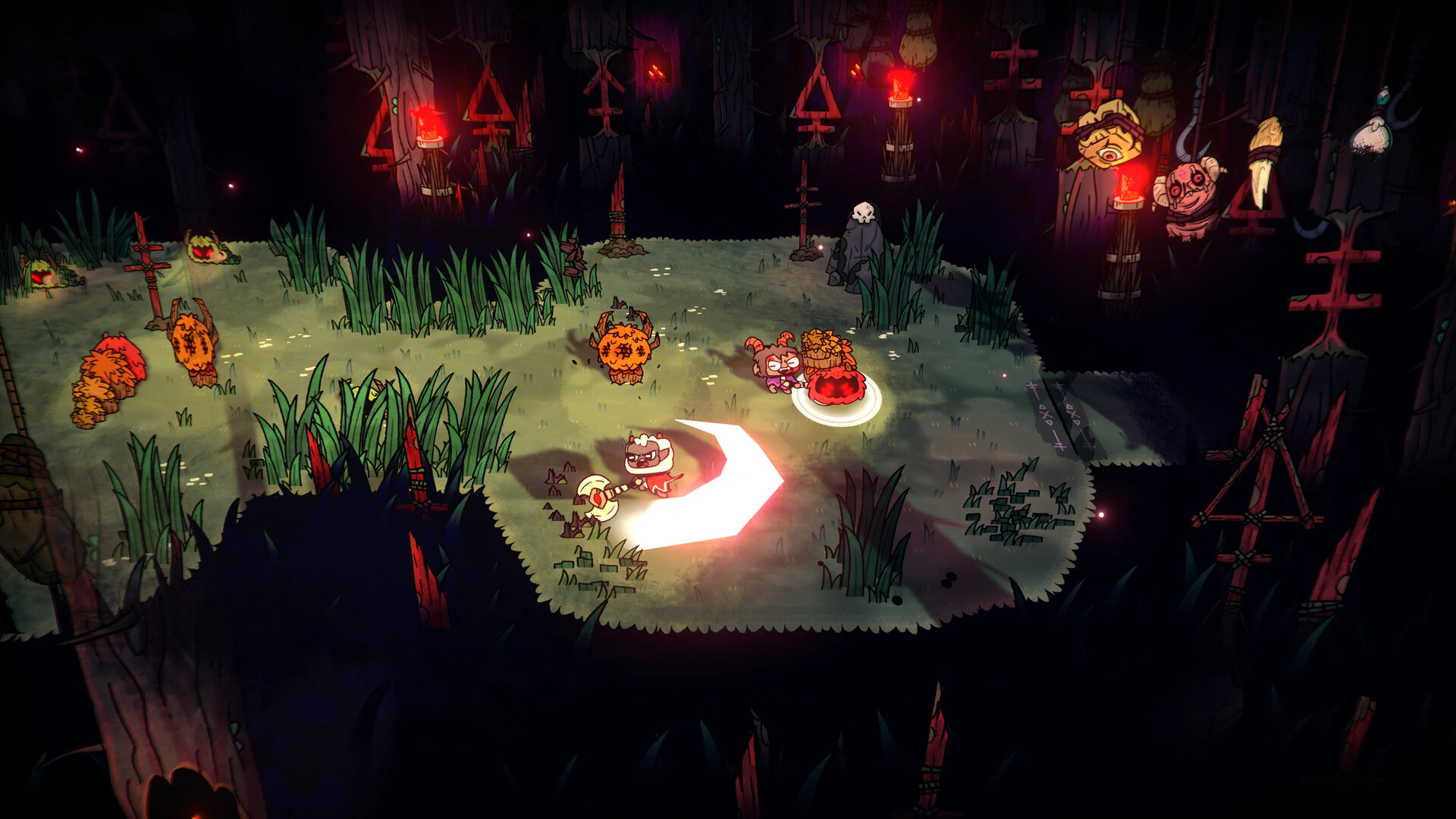
Crusades take the Lamb away from the settlement and into hostile regions controlled by the Bishops. Each expedition uses a branching map of rooms, letting the player choose among combat, resource, shop, tarot and follower encounters on a route toward a boss. Room layouts and rewards vary, so a run combines planned path choices with equipment drawn along the way. The Lamb fights with a melee weapon and a curse, a magical attack powered by Fervour collected during combat. Swords offer a balanced pace, daggers attack quickly, axes hit hard, and hammers trade speed for force; the weapon offered at a run’s start can change how the player approaches groups of enemies. Dodging through attacks, learning enemy patterns and clearing each room open the next choice on the map.
Combat power develops both within and between expeditions. During a run, tarot cards provide temporary bonuses, while weapon and curse offers can redirect an emerging build. Some rooms contain merchants, resources, challenges or captives who may join the flock, giving the player reasons to weigh safer or more rewarding routes. Back at the temple, daily sermons draw strength from the gathered followers and contribute toward permanent combat upgrades, including stronger attacks and expanded weapon or curse options. The progression loop therefore links the size and care of the community to the Lamb’s ability to venture further. The four principal regions each have a Bishop and their own enemies and encounters; defeating their rulers advances the central conflict and changes what challenges await on later excursions.
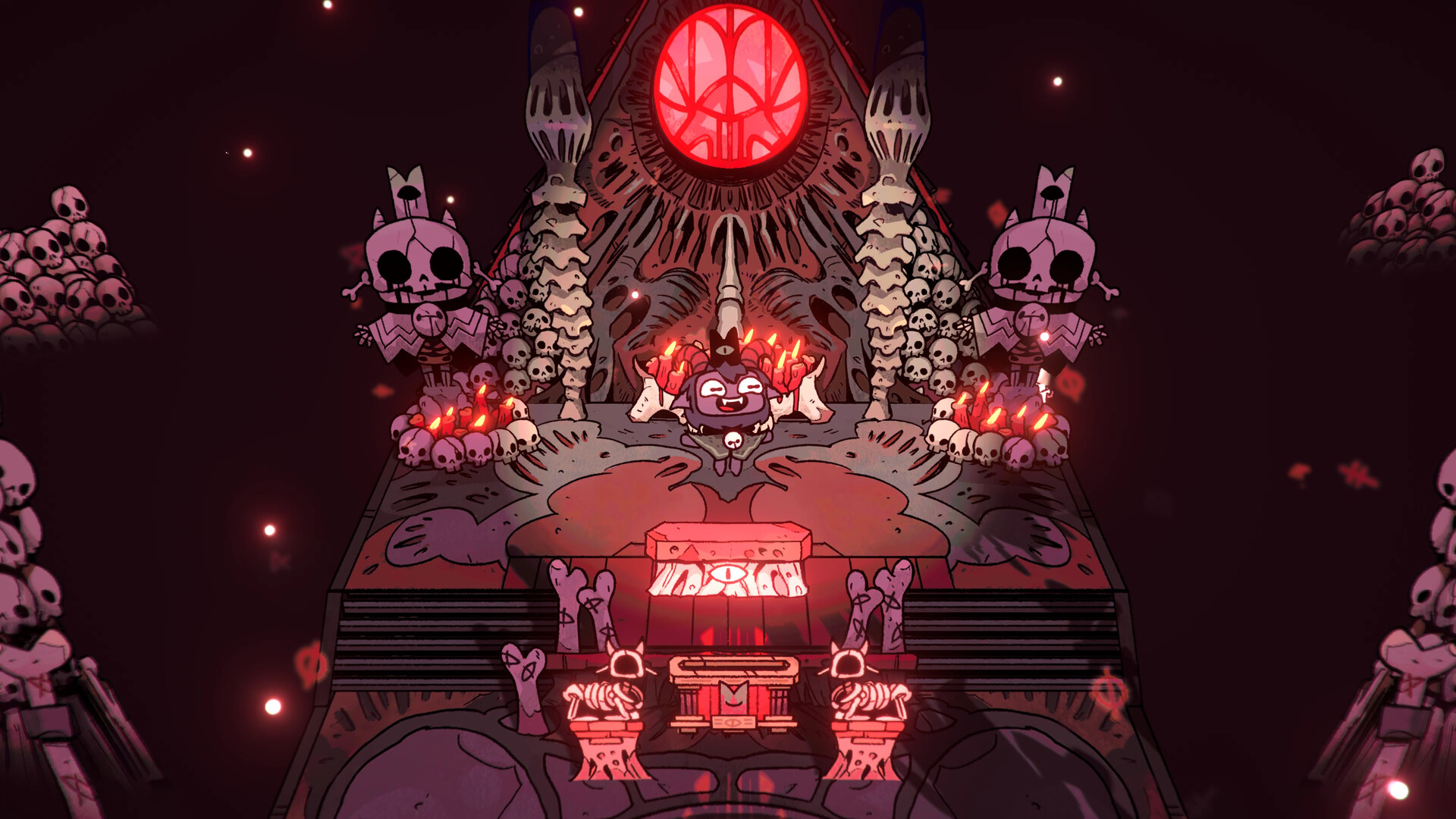
The settlement is a working camp whose routines continue to matter when the Lamb leaves. Followers need food, beds and a clean place to live. The player gathers wood, stone and other materials, places buildings, prepares meals and handles waste, while assigning followers to work such as harvesting resources or tending farms. Followers can also pray at the shrine, producing Devotion that contributes to unlocking new structures. This makes construction a practical part of progression: fields help provide food, work stations turn followers into a source of materials, and facilities can reduce the amount of direct maintenance the Lamb must perform. Time and attention are limited, so preparing the camp before a long crusade can determine whether the group remains stable until the Lamb returns.
Each follower has an individual animal form, name and traits, and the player can welcome new recruits rescued during crusades or encountered through the world. The cult shares a Faith measure shaped by the Lamb’s conduct and by whether basic needs are met. Sermons help reinforce belief, but hunger, illness, neglected bodies or visible dissent can unsettle the flock. The player speaks with followers, assigns jobs, cares for sick members and responds to dissenters, including through re-education or imprisonment once the relevant options are available. The community is therefore both a group of characters to manage and the foundation supporting further exploration.
At the temple, the Lamb can give a sermon, choose a Doctrine and perform rituals. Sermons are a recurring source of Faith and permanent combat growth; Doctrines establish rules that alter how the cult responds to life, death, work and loyalty. These decisions may unlock different rituals or change their effects, so the player defines the character of the community through systems as well as dialogue. Rituals spend resources such as bones and can provide benefits ranging from restoring Faith to addressing other needs, while some choices impose costs on followers. The game presents these actions within a comic, unsettling religious setting, but their mechanical consequences are concrete: a rite can steady the flock, spend a scarce resource or strengthen the Lamb. The player balances immediate stability against longer-term development.
As the cult expands, progression opens further buildings, doctrine choices, combat upgrades and routes into the Lands of the Old Faith. Materials gathered on crusades feed construction and rituals, while settlement devotion and sermons contribute to the Lamb’s permanent capabilities. The player returns from each expedition to see what needs attention, addresses the camp’s current problems, then decides whether to develop its infrastructure, reinforce its beliefs or depart again. Special activities beyond the main loop include fishing and Knucklebones, a dice game played with characters encountered outside the settlement. These quieter diversions sit alongside the larger cycle of recruiting, building and fighting.
- Developer
- Massive Monster
- Genre
- Action-adventure with roguelite combat and settlement management