
About Cruelty Squad
In a grotesque corporate dystopia, a chemically fuelled operative works for Cruelty Squad, a subsidiary tasked with liquidations. Missions send players into offices, suburbs and police stations to reach targets and escape, choosing equipment, routes and lethal or non-lethal approaches. A stock and organ market adds an economic system to this tactical first-person shooter’s surreal world.
Cruelty Squad casts the player as an emotionally dead, combat-substance-fuelled grunt employed by Cruelty Squad, a subsidiary that performs wetwork for its host conglomerate. The setting is a hardcore gig economy of corporate liquidations, where violence is a job and the corporation’s approval becomes an explicit pressure. Its sewage-infused, garbage-like world and blunt corporate language make the environment feel hostile and dehumanized. Rather than a conventional military campaign, the premise follows an operative carrying out assignments for an employer within a wider corporate order. Continued service and the risk of failure shape this arrangement, while missions focus on reaching targets and escaping alive.
Each mission is objective-based: kill or destroy the assigned target, then make it to the exit. The maps include offices, suburbs, police stations and secret compounds, with multiple viable routes and approaches rather than one required path. Players can plan a loadout before entering and choose between lethal and non-lethal options. That structure places preparation beside improvisation: selected equipment can help with a particular objective, while the open layouts leave room to change direction once inside. The game leaves players to learn spaces by observing entrances, targets, guards and escape routes. Revisiting a mission to improve a completion time or pursue an S-rank gives the same spaces an additional challenge beyond simply finishing the assignment.
The tactical first-person combat uses a varied collection of weapons, including a flechette shotgun, silenced 10mm pistol, radiation emitter, dart gun and corrosive gas launcher. Their distinct functions support different approaches to a target: direct force, quieter engagements, ranged tools or area effects. Non-lethal options let an operation be solved through different levels of violence. Even toilet bowls can be thrown at enemies, making objects in a space part of an encounter. Chosen gear and routes through the environment can change the way a contract unfolds, while the objective and extraction requirement remain clear.
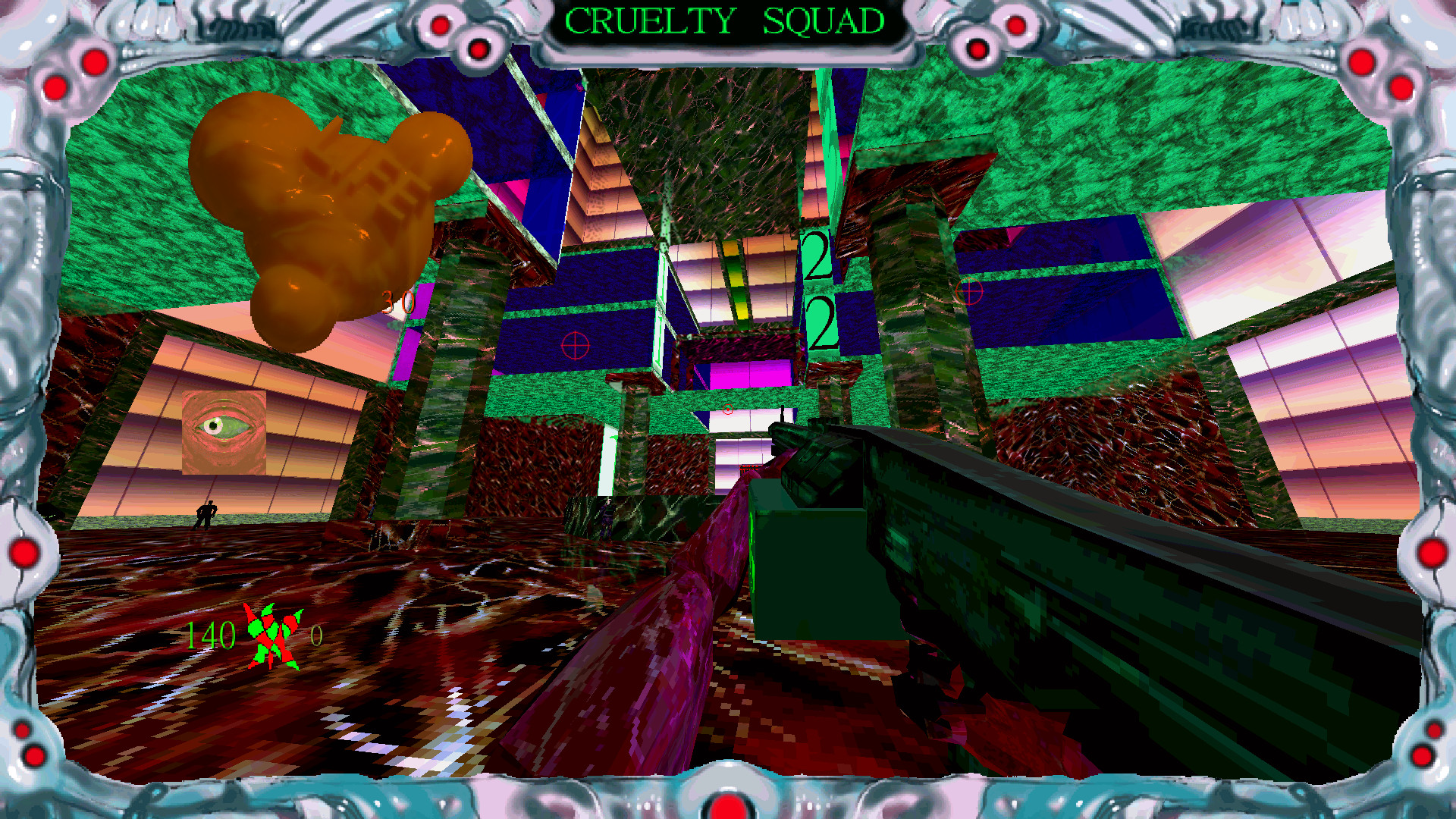
The world’s opposition is not limited to ordinary security. Enemies include private guards, police, unstable figures, flower hybrids, swamp cultists and mutant dogs. Those groups give assignments distinct local hazards, from armed protection in institutional or corporate spaces to stranger life forms in less conventional settings. Non-player characters can also be spoken to, providing a way to investigate the world’s mysteries. Conversations sit alongside the immediate work of finding a target and leaving, so information can be pursued within the same locations used for tactical planning. Hidden equipment and levels reward attention to places beyond the shortest route. The corporate premise also complicates the player’s position. The operative works for a company whose business is liquidation, but the surrounding world contains other factions, strange life forms and unexplained details. Players piece together that setting through missions, discoveries and interactions rather than through a conventional linear exposition first.
Cruelty Squad includes a stock and organ market simulation that connects grotesque body imagery to its economic setting. The market places organs inside the game’s corporate economy, extending the logic of liquidation beyond the mission targets. Death also has advanced mechanics, and the game features a punishment mode. Together these systems make mission failure part of the larger structure. The player is not simply moving from one gunfight to another: death, punishment and trading broaden the decisions surrounding an assignment and give the game’s economic satire an active gameplay component. The market and death systems add a layer of consequence around the missions, linking the violence of an operation to the corporate world that employs the player.
Mission completion feeds a cycle of replay and optimization. Players can return to earlier assignments, improve their best times and aim for S-ranks. Hidden gear and secret levels provide reasons to search away from the direct target route, while alternate approaches make repeated visits more than simple repetition. A player can test different equipment, take a quieter or more forceful path, and learn the connections between a mission’s spaces. The open mission design joins exploration with the pressure to perform efficiently for an employer, making the act of finding a route part of the objective. Replays can focus on speed, a different loadout, an alternate route or content missed on an earlier attempt, extending the life of spaces that remain open to different solutions. A quick route may minimize exposure, while a search for hidden equipment can draw the player into side rooms or alternate paths. The same map therefore supports both deliberate exploration and faster attempts to improve a previous time.
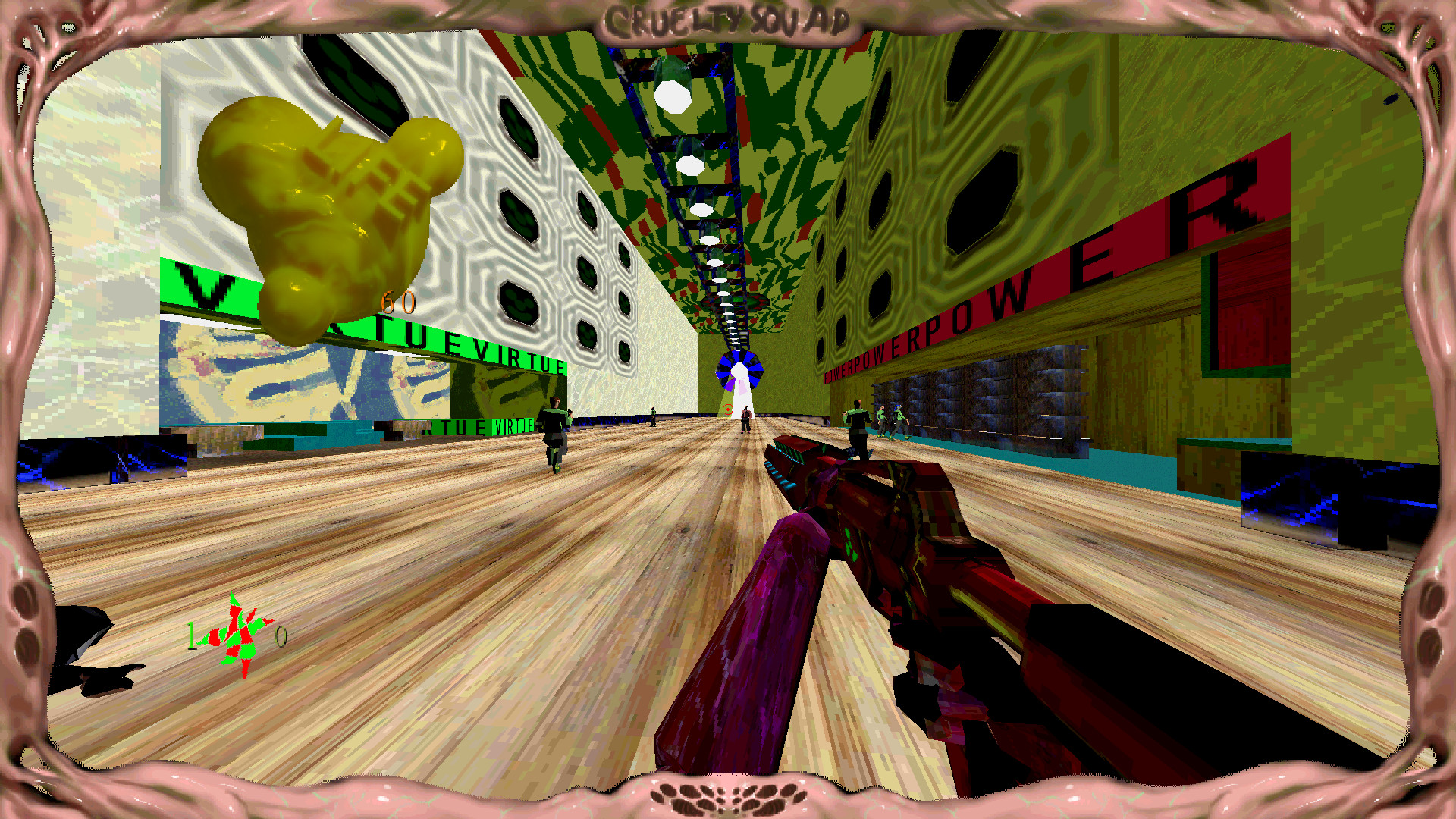
Cruelty Squad moved from Early Access to a complete release. Its completed campaign centers on the operative’s work inside an absurd corporate order: accept a contract, assemble tools, navigate a mutable space, deal with targets and escape. Mission play brings together stealth, force, equipment, exploration and time, while the surrounding systems extend the same world into markets, hidden levels and unusual death mechanics. The satirical premise remains tied to what the player does: corporate liquidation becomes a set of contracts, and the route from briefing to exit is shaped by the tools and choices made along the way.
- Developer
- Consumer Softproducts
- Genre
- Tactical first-person shooter with open mission objectives and stealth options