
About Crow Country
In 1990, investigator Mara Forest enters Crow Country, an abandoned theme park closed after its owner Edward Crow vanished two years earlier. She explores its themed attractions, solves riddles, searches for answers, and faces the creatures lurking among the park’s cheerful decorations, with an optional mode that removes combat.
Crow Country begins in 1990, two years after Edward Crow disappeared and his namesake theme park abruptly shut down. Mara Forest arrives at the silent attraction looking for answers, and her investigation takes her beyond the entrance and into a place that seems frozen between entertainment and abandonment. Bright colours, playful architecture, and visitor-facing displays remain among empty paths and buildings, but the quiet is misleading: something is wrong inside the park. The contrast is central to the setting. Each themed corner has the appearance of a designed diversion, while its empty attractions and threatening encounters suggest a darker history. The story gives Mara a direct reason to continue—understand what happened to Crow and the park—then lets the player uncover more by exploring rather than explaining the whole mystery at once.
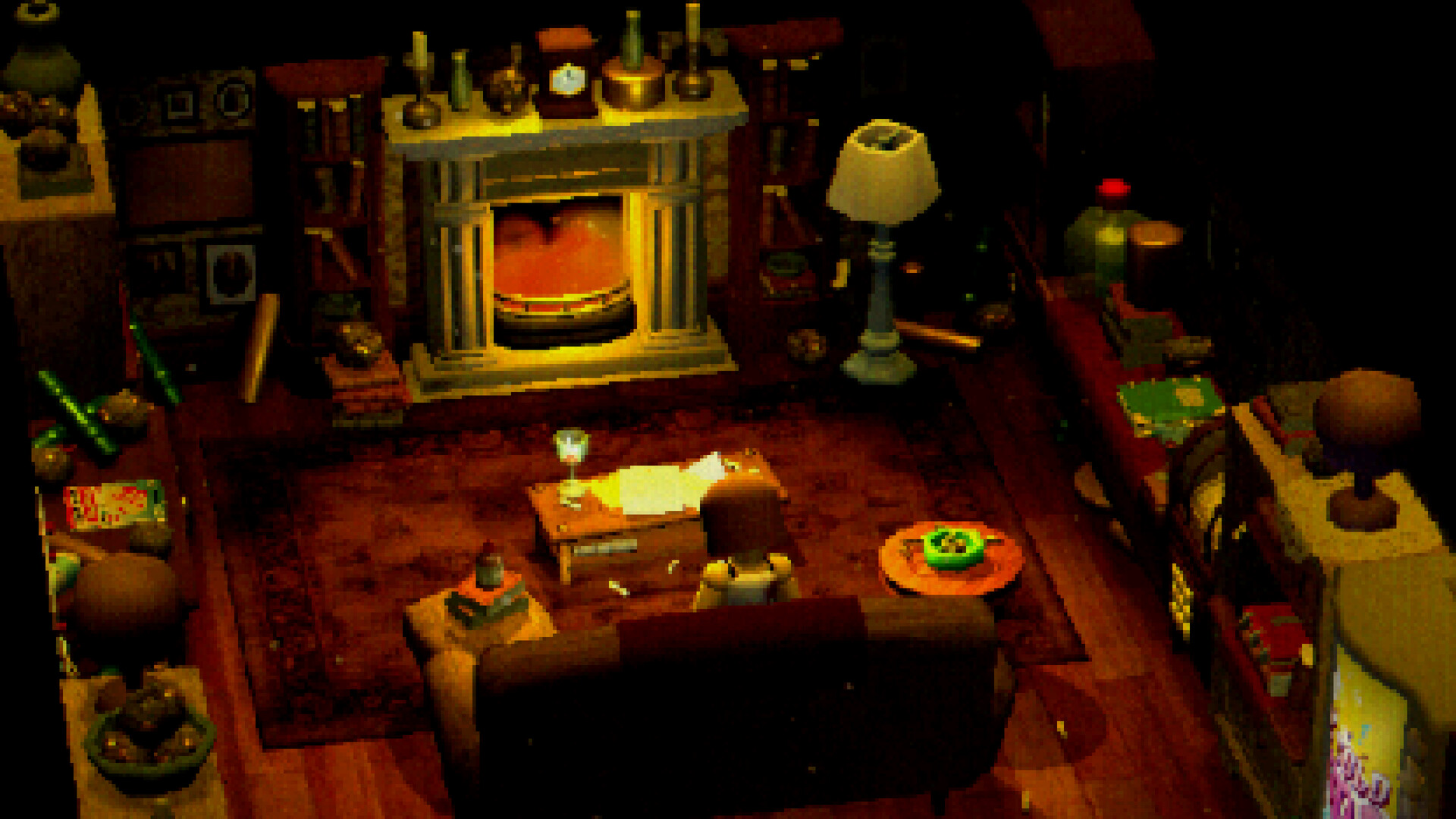
The park is arranged as a connected place to investigate, with attractions and rooms that gradually become accessible as Mara finds clues and solves obstacles. Progress often means identifying a locked route, searching nearby areas for information or an item, and returning once the obstruction can be handled. This back-and-forth gives familiar paths a practical role: a sign, object, or puzzle encountered earlier may matter after the player has learned more elsewhere. The park’s presentation encourages attention to small details, from its themed decorations to the way spaces have been left behind. Instead of moving through a sequence of unrelated combat arenas, the player builds a mental map of the grounds and follows connections between its attractions, keeping track of what is open, what remains unresolved, and where a discovery might fit.
Puzzles and riddles are a major part of the investigation. They ask the player to read the surroundings, notice relationships among objects, and work out how to open the next route. Some solutions are tied to clues found elsewhere in the park, so remembering a detail can matter as much as searching a new room. Solving one obstruction may reveal another stretch of the grounds, allowing the investigation to circle back and broaden. The game’s puzzle focus also supports the fiction: the player is not simply looking for Edward Crow in a straight line but piecing together why the park closed and what its unusual spaces have to do with his disappearance. The exact answer is left for the story to develop, while the immediate actions stay grounded in examining locations and testing the clues they provide.
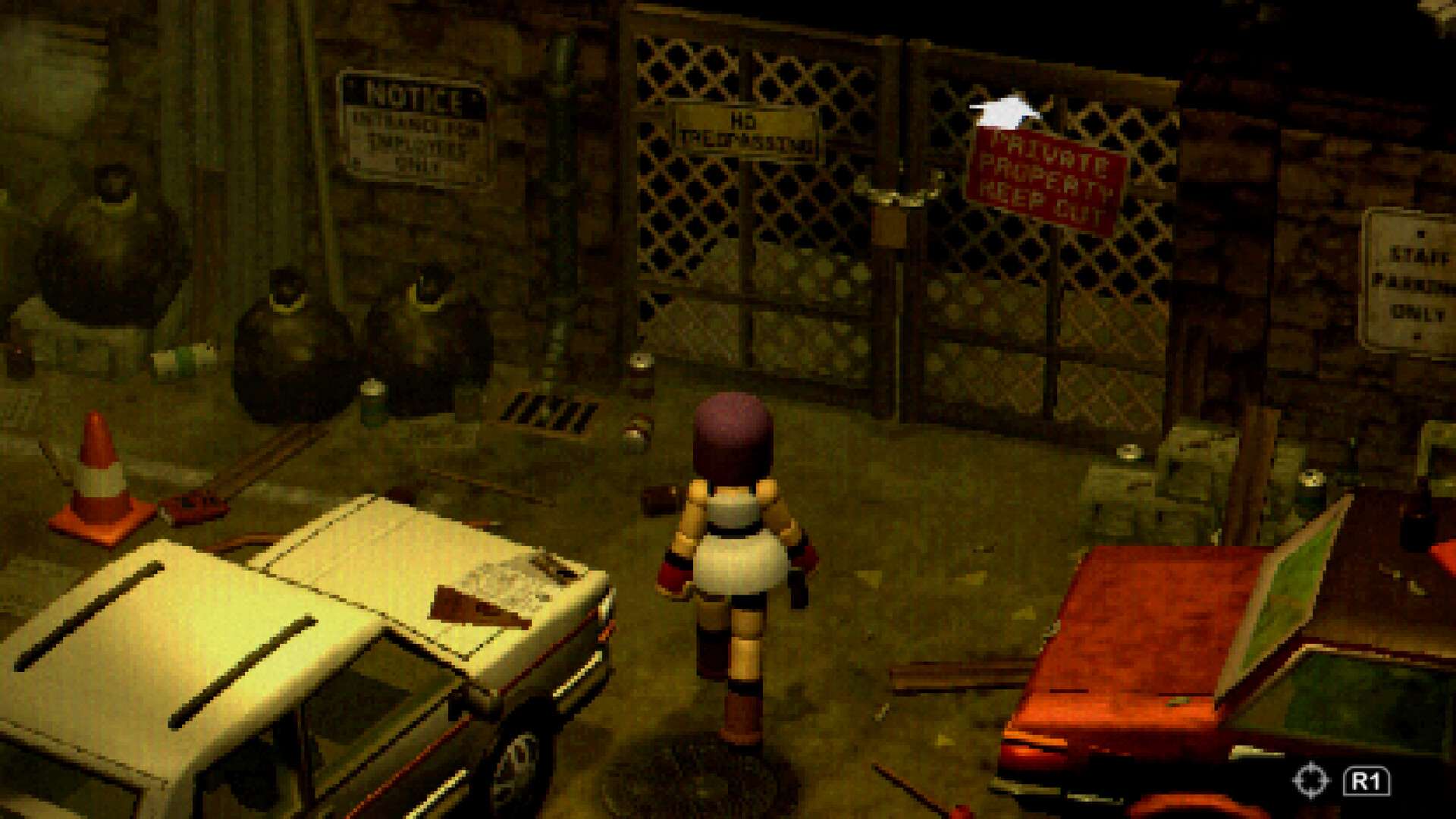
In its survival-horror mode, the park is also occupied by mysterious monsters that can attack Mara. Combat turns exploration into a question of readiness: a route may be physically open but dangerous to cross, and the player must decide how to handle threats while continuing to investigate. This danger gives the otherwise whimsical setting a sharp change in tone, as familiar attractions become places where the player must watch for movement and respond under pressure. The game’s perspective and stylised, low-resolution presentation evoke older survival horror, while the controls offer a choice between modern movement and traditional tank controls. That option lets the player choose how Mara responds to the changing views and tight spaces without changing the underlying work of investigating the park.
For players who want to focus on atmosphere, puzzles, and the story, Exploration Mode allows a trip through the park without fear of enemy attacks. The mode removes combat pressure while leaving the player free to explore and follow how the narrative unfolds. It gives the same location a different emphasis: rather than planning around monsters, the player can spend more attention on attractions, clues, and the links between areas. The park remains an investigation, and its riddles still ask for observation and thought. The mode is part of the game’s design for different approaches to its setting, while survival horror play retains the threat of the creatures roaming the grounds. Both approaches keep Mara’s search at the centre and use the park itself as the place where the mystery is uncovered.
The player’s basic loop is to move through a newly reachable part of the park, inspect its features, solve a puzzle or uncover a clue, and use that progress to reach somewhere previously closed off. Along the way, the story raises questions about Crow’s ambition and the history hidden beneath the attraction’s surface, but early exploration focuses on finding the next useful lead. The space balances colourful showmanship with signs of danger, so even an apparently playful room can contribute to the unsettling mood. Crow Country is a single-player survival horror adventure about investigating an abandoned theme park, with combat, exploration, and puzzle solving tied to the same connected environment. Its optional Exploration Mode lets players experience that investigation without attacks, while the main mystery follows Mara deeper into the place that has swallowed its owner and its visitors’ stories. The park’s attractions provide both visual identity and navigational landmarks, helping the player understand how the separate areas connect as the investigation opens new paths.
- Developer
- SFB Games
- Genre
- Single-player survival horror adventure