
About Company of Heroes 2
Company of Heroes 2 is a real-time strategy game set on the Eastern Front of World War II. Its campaign follows Soviet forces, while skirmish and multiplayer battles pair squad tactics with territorial control. Players capture resource routes, deploy infantry and vehicles, use cover and line of sight, and manage the changing dangers of the battlefield.
Company of Heroes 2 follows the Red Army through the Eastern Front of World War II, from the German invasion of the Soviet Union into the conflict’s later campaigns. The single-player campaign presents this history as a chain of missions, each placing Soviet troops in a particular battle and assigning the player immediate battlefield objectives. Rather than building a large empire from individual workers, the player directs small squads and support units across a map, deciding where to move, when to engage, and which territory to secure. The setting also affects how battles unfold: some maps bring freezing temperatures, blizzards, snow, and ice into the tactical picture. Missions and skirmishes share the same close-control approach to units, but the campaign uses authored situations while other modes let players configure battles against computer or human opponents.
The base game’s Eastern Front multiplayer armies are the Soviet Red Army and the German Wehrmacht Ostheer. Their forces are organized around squads, weapons teams, vehicles, and production buildings. Combat engineers and pioneers can construct structures and field defenses, while infantry squads take positions, capture territory, or attack enemy units. The battlefield is visible only where friendly troops can see it: TrueSight restricts vision to soldiers’ lines of sight, and obstacles such as buildings can hide what lies beyond them. Areas explored earlier remain on the map, but enemy movement there is hidden when no friendly unit can observe it. Scouting therefore helps reveal threats and routes, and a force sent forward without support can run into enemies waiting outside its current view.
Capturing territory connects local fights to the army’s wider ability to stay in the field. Infantry must enter a point’s capture radius and clear nearby enemies before its capture timer can finish. Standard, munitions, and fuel points provide different resource benefits; points only generate resources while connected to headquarters through a continuous line of controlled territory. Manpower pays for infantry, vehicles, and production buildings, munitions fuel many abilities and upgrades, and fuel is needed for vehicles and some structures. Engineers or pioneers can add a resource cache to a standard point, increasing its output and making it harder to take because the cache must first be destroyed. A fight over a small junction can therefore interrupt a supply route or open the resources needed for the next vehicle.
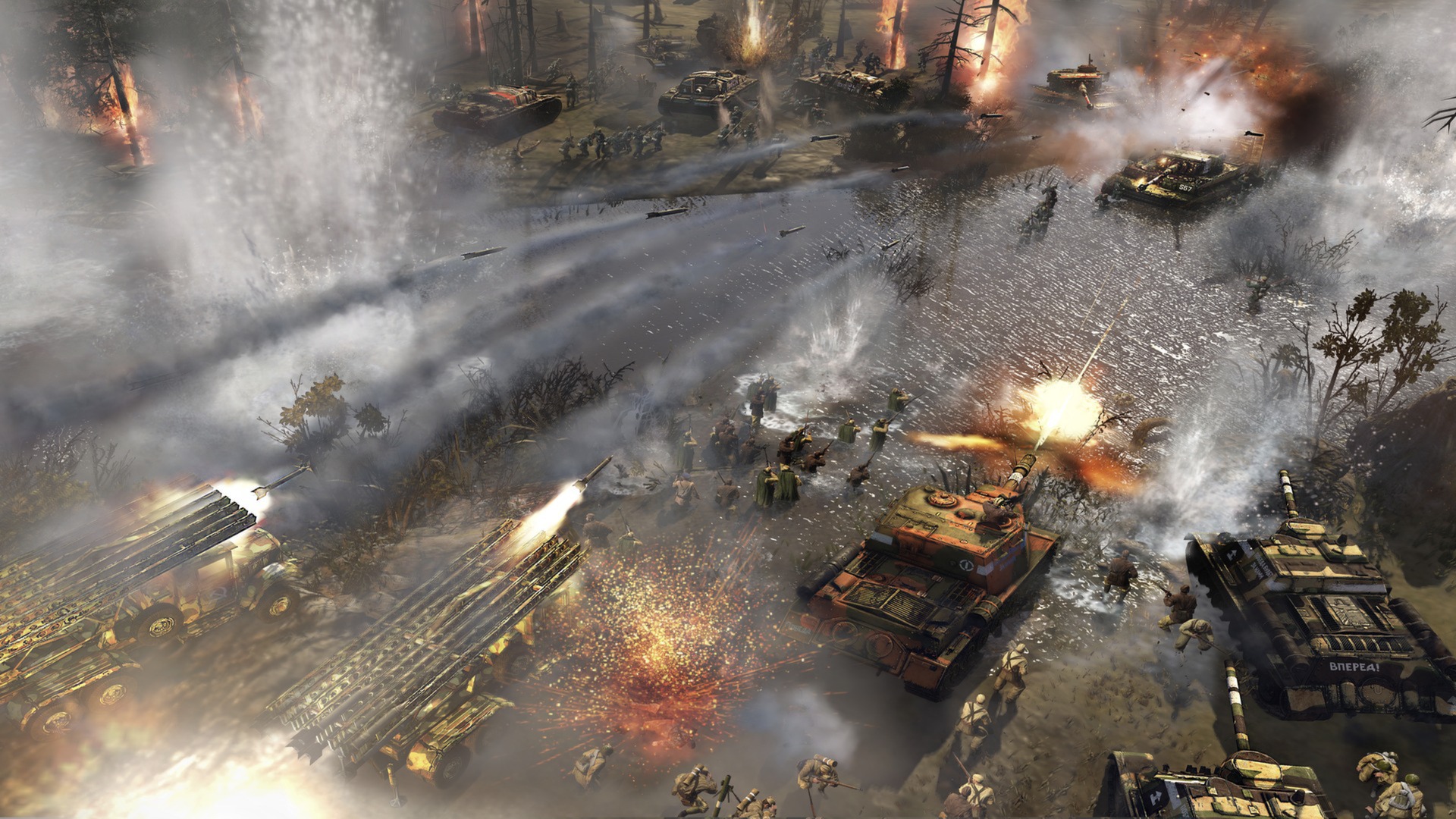
Infantry combat depends on where squads stand and which direction the fight comes from. Walls and other solid obstacles can give a squad cover, while open ground leaves it more exposed; the interface marks heavy cover, light cover, neutral ground, and negative cover with different shield colours. Heavy machine-gun fire and some abilities can suppress a squad, slowing movement and reducing accuracy; sustained suppression can pin it in place until the squad retreats or the source of fire is broken. A flanking route, smoke, or a move between cover can change that exchange. Buildings can be occupied as firing positions, and obstacles may be destroyed to remove cover or open a route. These systems make movement orders part of the firefight: a squad crossing a road or approaching a machine gun from the front faces a different problem from troops advancing behind shelter.
Production and reinforcement give battles a longer rhythm than the first contact between squads. Engineers and pioneers construct production buildings, and each new structure opens additional kinds of units; some army structures also depend on earlier construction or command-post battle-phase upgrades. Players spend manpower to field units and buildings, fuel to unlock and deploy heavier vehicles, and munitions for upgrades and special actions. A damaged squad can retreat toward headquarters, where it can be reinforced while retaining earned upgrades and veterancy, so withdrawing a battered force may preserve more value than abandoning it. Unit veterancy can unlock additional abilities, while upgrades can change what a squad carries or how it contributes. The army grows through repeated choices about the next useful role: another infantry squad to contest ground, a support weapon to hold a lane, or armor to challenge enemy vehicles.
Weather adds a distinct survival and movement layer on maps where winter conditions are active. Exposed infantry accumulate cold, and a temperature meter warns when a squad is at risk; heavy cover stops that meter from draining, while buildings, vehicles, and fires provide shelter or warmth. Engineers, pioneers, and conscripts can build fire pits, giving nearby troops a place to recover. Deep snow slows infantry and vehicles and can conceal infantry during a blizzard, but footprints can reveal where a force has passed. Frozen waterways provide routes across terrain until explosions or vehicle traffic break the ice, which can strand units in freezing water. Outside the campaign, Theater of War offers single-player and cooperative scenarios, challenges, and skirmishes; online and skirmish modes support battles against the computer or other players. Victory may come from holding map victory points until the opposing counter runs out or from destroying the enemy base, so battlefield pressure can be aimed at territory, supply, or the production network itself.
- Developer
- Relic Entertainment (Steam listing; Feral Interactive listed for Mac and Linux ports)
- Genre
- Real-time strategy