
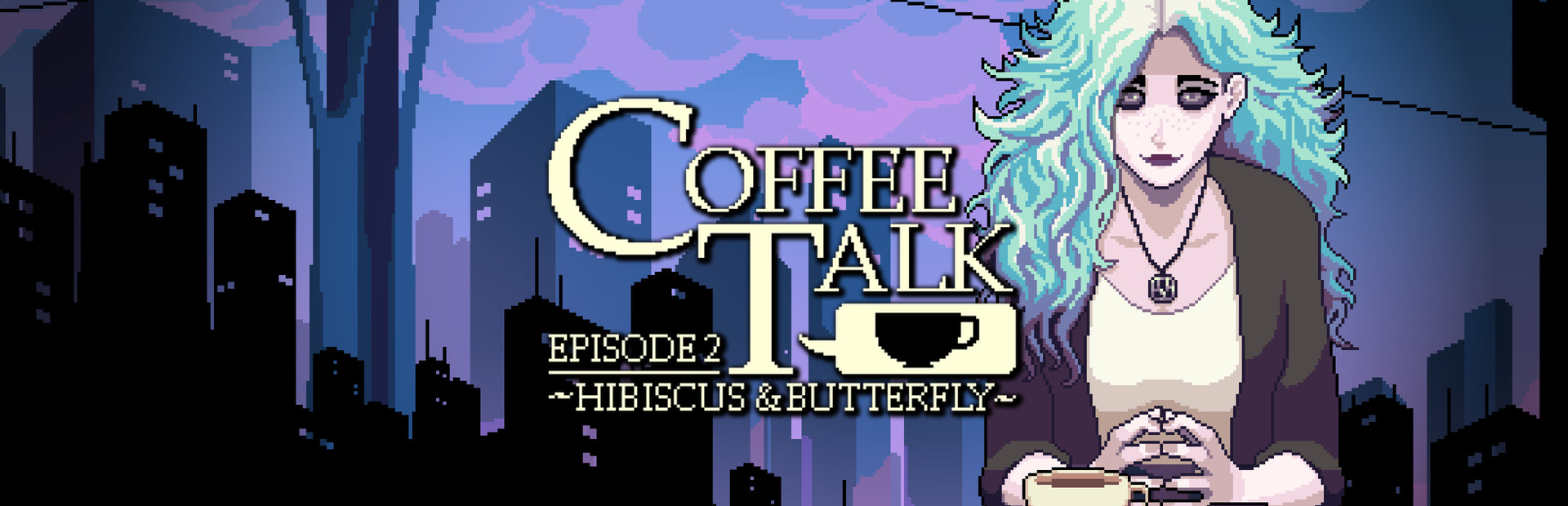
About Coffee Talk Episode 2: Hibiscus & Butterfly
In an alternate present-day Seattle, the late-night Coffee Talk café welcomes humans and fantasy residents who bring their concerns to the counter. As the barista, you listen, prepare drinks and sometimes pass along found objects, while returning customers and newcomers such as Riona and Lucas navigate changing relationships and ambitions.
Coffee Talk Episode 2: Hibiscus & Butterfly returns to a late-night café in an alternate present-day Seattle where humans live alongside fantasy species. The player takes the role of the barista, a listening presence at the counter while regulars bring personal concerns, news and unresolved relationships into the shop. Riona, a banshee who wants to become an opera singer, and Lucas, a satyr who works as an influencer, join returning customers from the first game. Their stories unfold across café evenings, with the familiar rhythm of orders and conversations providing the structure. Fantasy identities frame recognisable pressures around work, public attention, relationships and creative ambitions. Customers do not arrive as quest markers on a city map; the café is the meeting place, and much of the wider world is learned through what patrons say and share on their phones. Returning story arcs make the cast’s earlier relationships part of the sequel’s context, while newcomers bring different ambitions into the same intimate setting.
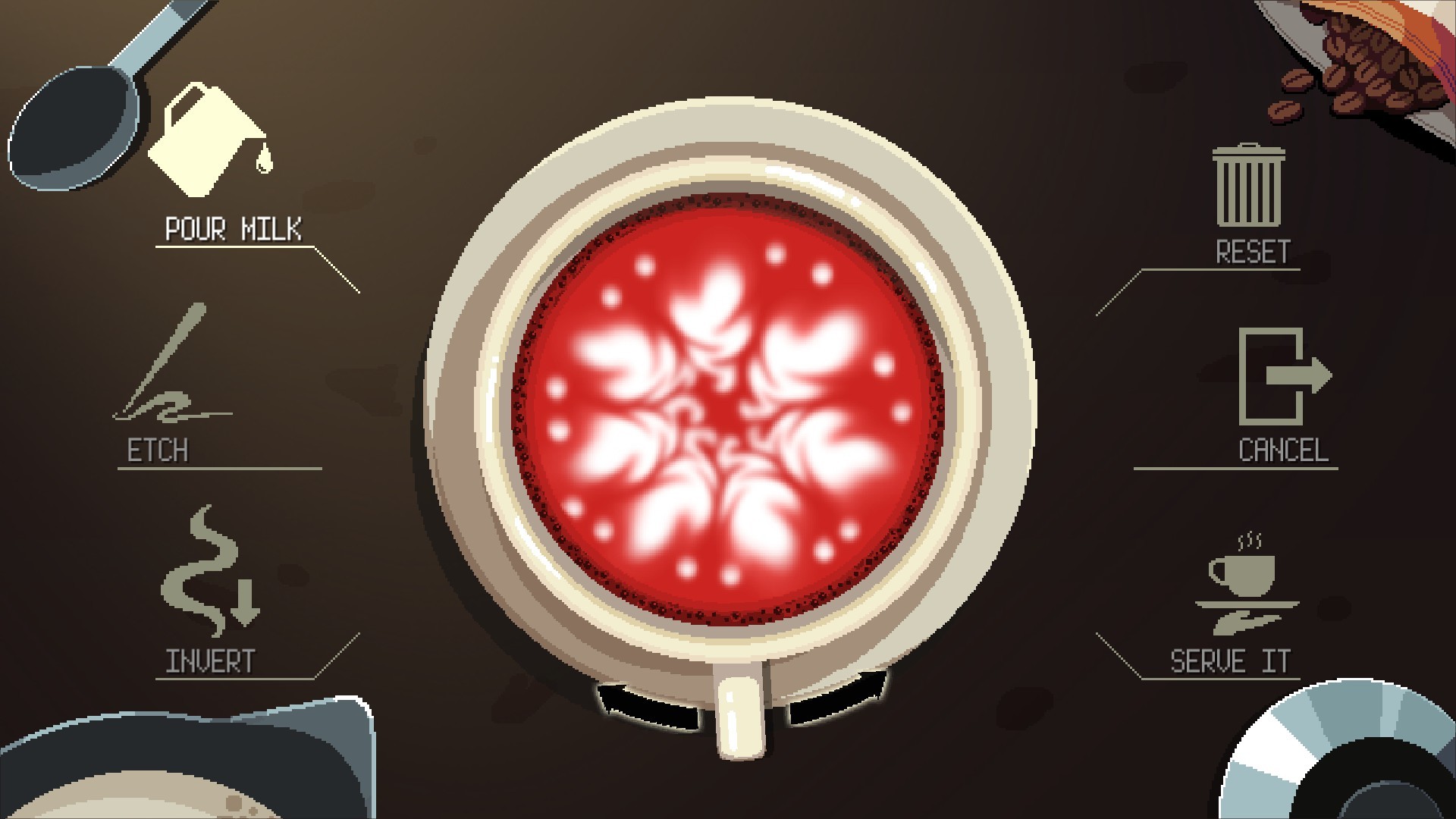
Preparing drinks is the main hands-on activity between stretches of dialogue. Customers often describe qualities they want rather than naming a recipe, so the player selects a base and two further ingredients, such as coffee, tea, ginger, mint, chocolate, hibiscus or butterfly pea. Combining three components creates a drink, and discovered recipes are recorded for later reference. Some requests are clear; others depend on interpreting hints about flavour and testing combinations. Serving the expected drink can affect how a scene develops, while an incorrect choice changes the response rather than stopping the story. Hibiscus and blue pea expand the available ingredient set and add recipes. This connects listening to action: a customer’s words provide clues, the player translates those clues into a mixture, then the next portion of dialogue shows how the order lands. When a latte is requested or the player chooses to decorate one, foam art uses an in-game fluid simulation. Drink service thus combines recipe discovery, observation and a small creative task.
Episode 2 adds an object-giving interaction that lets the barista use items collected during the story. At particular moments, an object can be offered to a patron along with a drink; the recipient and form of an item can change the response or lead a scene in a different direction. Lucas, for example, provides contact information in two formats, and choosing which version to pass to the intended character affects the outcome. This gives the barista another way to influence conversations without turning the café into a broad dialogue-choice adventure. Timing matters because objects are presented during a customer’s order, not at any arbitrary point. Drink preparation and item delivery share the counter interaction but do different work: one responds to a request, while the other lets the player connect people or pass information. These actions add decisions to a largely text-led experience, with consequences expressed through character exchanges and story variation rather than combat, inventory builds or character statistics.
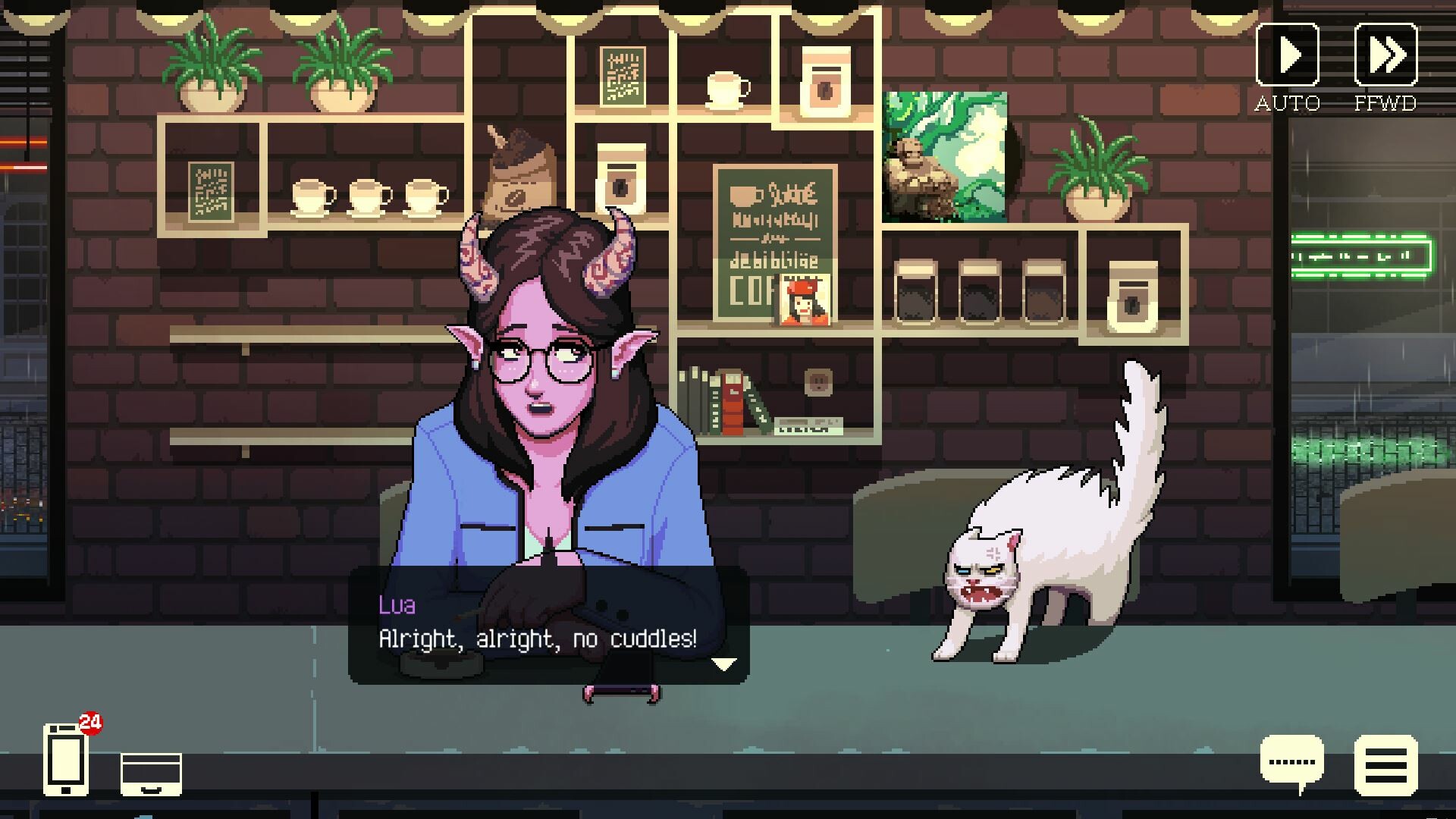
The returning cast brings ongoing concerns into the shop, while new characters add their own conflicts. Riona’s ambition to sing opera runs against hostile reactions she encounters online, and Lucas’s lively public persona leaves room for more than the first impression he makes as a social-media-savvy satyr. Their different approaches to attention and performance give the café two new kinds of conversation. Other patrons revisit earlier relationships and work problems: Hyde, a vampire model, and Gala, a werewolf working in a hospital, have concerns shaped by life beyond the café; Aqua and Myrtle continue a game project and confront a difficult business offer. The barista does not solve these situations through advice menus. Listening, drink requests and occasional object handoffs shape how conversations unfold. The stories can branch, and character threads can reach different outcomes depending on what has happened during the player’s days. Species contribute to the setting’s texture, while characters’ current choices and relationships provide the immediate narrative movement.
The phone interface extends the café’s conversations between visits. Its apps include a recipe record for drinks already discovered and a social feed where the player can read posts from customers and follow their activity. The feed supplies context about patrons beyond the counter, including people who are not currently present, and adds a continuing thread to their personal stories. The phone also contains short fiction and a music player, supporting both reading and shaping the café’s atmosphere. Tracks from the soundtrack can be selected while the player is in the shop. These features fit the day-by-day structure: customers return, circumstances develop, and the player can check what they have shared before meeting them again. The feed offers character detail, while the recipe book is a practical reference for drink preparation. Alongside conversation, the phone connects the café to a wider social world without adding free-roaming traversal or an exploration map.
Progress unfolds over multiple in-game days, with individual customer stories intersecting as familiar faces return. A prepared drink can deepen or alter a conversation, and the object-giving system adds another situational choice; together, these actions influence a patron’s story. The game tracks discovered recipes on the phone and lets players revisit completed days after finishing the story, supporting other story variations. Some drinks and outcomes require experimentation, but the narrative continues after a mistaken order, so a miss is not a hard fail state. An endless serving mode is also available for preparing drinks beyond the story’s daily sequence. That mode focuses on mixing rather than advancing the central cast’s narrative. Progression is based on the passage of café days, the development of conversations and the player’s growing catalogue of recipes, not on combat levels, equipment upgrades or movement abilities. Each system returns attention to patrons and the small decisions made while serving them.
The café’s presentation combines pixel-art characters and a warm interior with Seattle’s rain and neon outside. Dialogue is staged at the counter, where sprite expressions and posture distinguish residents and newcomers, while drinks and steam add motion to the foreground. Lo-fi music and shop sounds establish a measured pace; the phone’s music player allows track selection during service. The alternate city includes humans, orcs, elves, vampires, banshees, satyrs and other beings, while its stories focus on work, friendship, identity and relationships. The café counter keeps the cast in a shared physical space, while the phone lets the player see fragments of their lives between visits. That contrast matters when a customer returns after posting something online or after talking with another patron: the same order can arrive with new context. The central play loop stays within the café: listen to the people who arrive, prepare what they request, pass an item when the moment fits, and continue their stories as the nights pass. The sequel’s setting and systems all serve that cycle of visits, conversations and service. The visual and audio details reinforce the small scale of the encounters: a customer’s changing expression, a drink being prepared and a selected track all remain close to the barista’s point of view. The wider city appears through the patrons’ accounts and phone posts, not through a route to explore between shifts. That setup keeps the focus on listening and service while allowing the recurring cast to bring outside events into the café. It also gives the quieter routine room for interruptions when a new character or changing relationship alters the evening’s conversation. These exchanges accumulate across visits and give repeated orders new context.
- Developer
- Toge Productions
- Genre
- Narrative adventure / café drink-making simulation