
About COCOON
COCOON is a single-player puzzle adventure in which a small insect-like traveller carries entire alien worlds inside portable orbs. By entering, leaving and nesting these worlds, the traveller uses each orb's ability to alter routes and machinery elsewhere. Environmental puzzles and guardian encounters gradually reveal how the layered realms connect, framing a largely wordless journey around a cosmic mystery.
COCOON begins with a compact premise that changes the meaning of a level: each glowing orb contains a complete world, and the traveller can carry that world into another. At marked points, the creature dives into the orb and arrives in the realm inside it; leaving returns it to the place where that orb was carried. The player can also bring one world into another, so the orbs form a physical stack of spaces rather than a menu of destinations. A puzzle can therefore depend on where an orb is placed, which realm is currently active, and what remains reachable in the surrounding world. The story offers little direct exposition, presenting the journey through environments, devices and the relationships implied by these nested worlds.
Movement is deliberately direct. The insect-like protagonist runs through connected paths, crosses bridges, rides lifts and uses environmental launchers, while a single interaction carries, places or activates the important objects. The player does not have a standard jump, so routes depend on the world's built structures and on the effects of the carried orbs. Alien mechanisms provide readable cues: switches, doors, elevators, barriers and strange organic devices respond to the right object or action. The game introduces world-leaping before it asks for demanding combinations, allowing players to learn where entering and exiting an orb will return them. Its progression is linear, but the relevant puzzle context can span several linked worlds, making spatial memory part of the basic movement loop.
The first orb ability makes invisible bridges visible and usable, extending paths across gaps. This gives the player a concrete way to affect the world with an orb while learning that each realm's tool can matter outside its own boundaries. Later abilities add different kinds of interaction: one changes the state of vertical towers so they rise or descend, turning them into moving routes; another duplicates an orb through hatchable eggs, making that world available at multiple points rather than requiring a return trip to retrieve it. These tools do not simply unlock a fixed door. They change how the player can move through space, and their value depends on reading a device or obstacle in the surrounding realm and choosing where to use the relevant world.
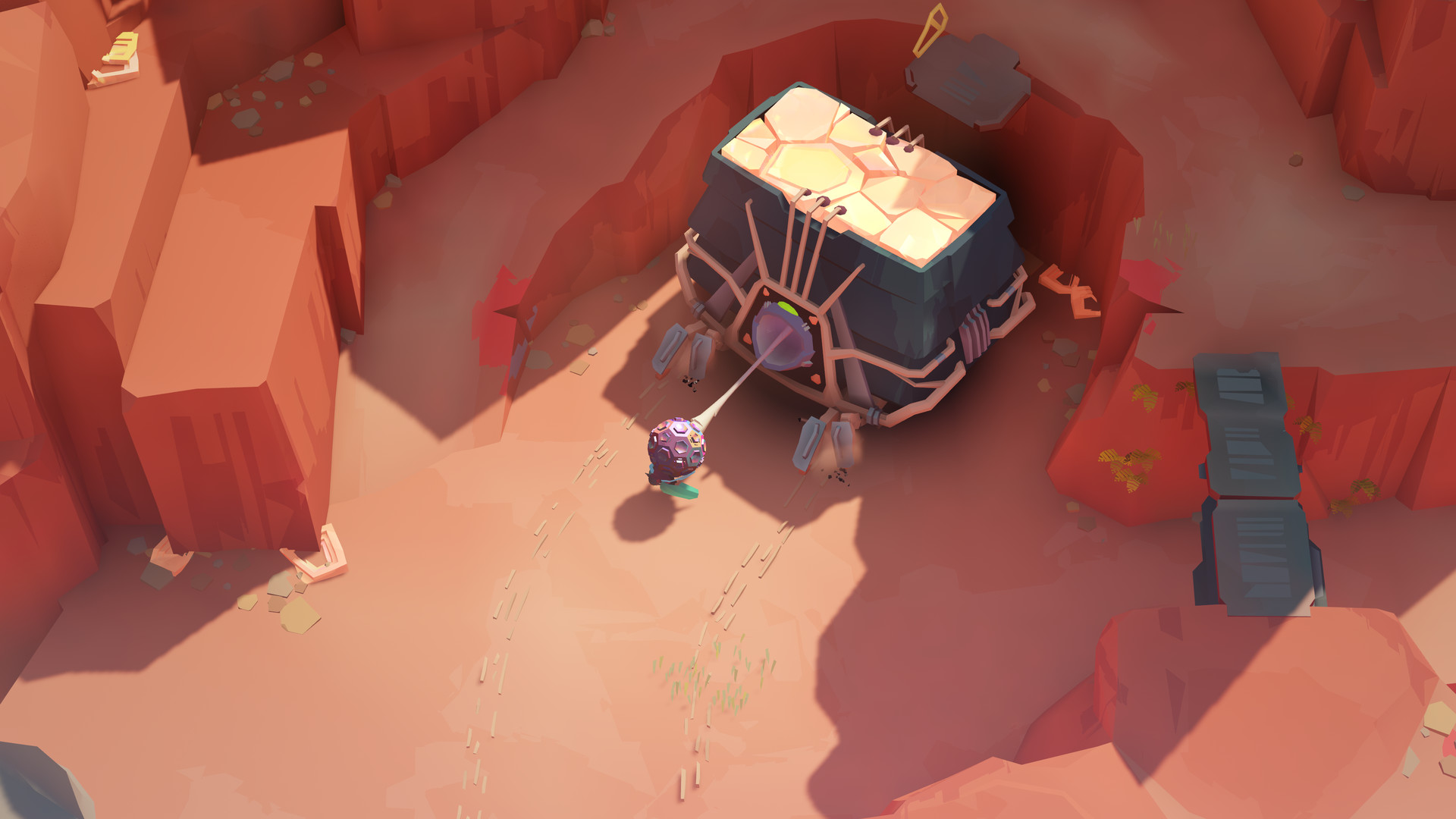
As the adventure develops, puzzles ask the player to reason across more than one layer at a time. An orb may need to be carried into a second world so its ability can activate a route there, while entering that orb changes which space the player occupies and what they can reach next. The final ability lets the traveller fire a projectile that can hit a target in the current environment or pass into other orb worlds to strike a target within them. This makes cause and effect cross the boundary between realms: positioning, line of travel and the order of actions all matter. The game builds these combinations gradually, adding a little complexity at a time and leaving discoveries to the player instead of interrupting the puzzles with tutorial text.
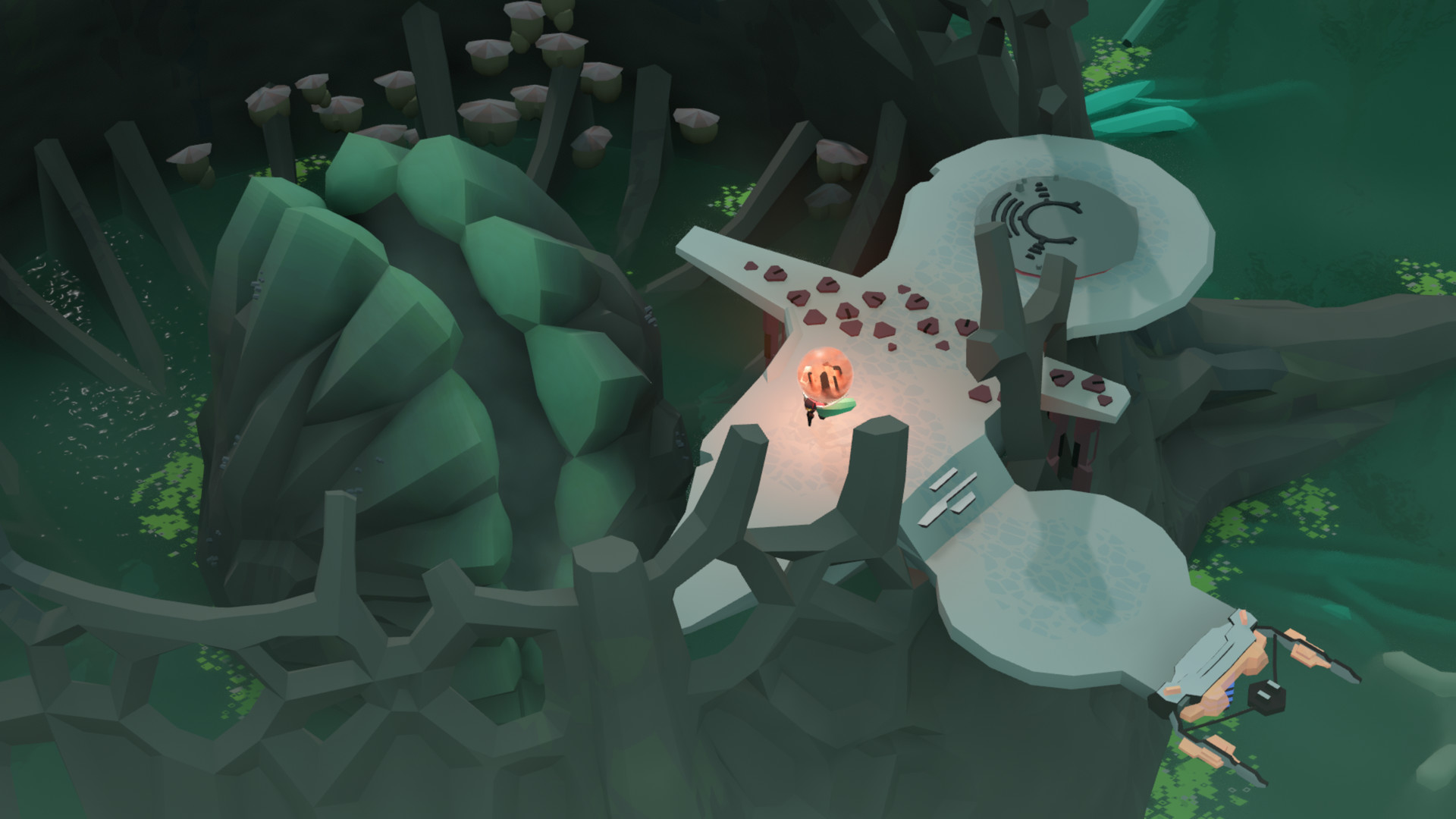
The worlds are distinguished by their environments as well as their orb colors. The orange realm uses tall spires, canyons and broken routes suited to bridge-building; the green realm is flatter and more lush, drawing on wetlands and mangrove-like spaces. A grey industrial environment acts as a visual counterpoint, its machinery helping connect the brighter worlds. Across these places, biomechanical structures suggest remnants of an older civilization, and repeated forms make the realms feel related even when their terrain and puzzle functions differ. Players read the landscape for both navigation and logic: a change in elevation, a sealed route or a device positioned near an orb can signal what kind of interaction the area is designed to support.
Guardian encounters punctuate the quieter exploration and give each major realm a dangerous obstacle. These fights use the same small set of movement and interaction verbs but arrange them as distinct tests: one early encounter involves avoiding attacks and catching a bomb to send damage back, while later guardians introduce devices that alter movement, including water propulsion, mirror-based teleportation and a dash. Failure can eject the traveller from the world, making the orb boundary part of the encounter rather than a separate puzzle rule. The guardians protect progression through the realms, and their mechanics echo the game's broader interest in learning what a device does by using it under changing conditions.
COCOON's sound also helps distinguish its strange spaces without relying on spoken explanation. Its music is generated in real time, so long pauses spent considering a puzzle do not have to sit beneath an obvious repeating track. Wind, rain, thunder, footsteps, mechanisms and alien voices were made with synthesizers rather than field recordings. A lift or orb device can therefore sound as unfamiliar as it looks, while the weather and movement still give each environment a physical presence. This approach suits an environmental mystery told without named-character conversations: the player learns what a machine does from its movement, sound and effect on the surrounding route. The same visual forms and alien technology recur across different biomes, providing clues that these places belong to one connected universe even before the journey explains its larger cosmic purpose.
- Developer
- Geometric Interactive
- Genre
- Single-player puzzle adventure