
About Cloudpunk
On her first night working for the semi-legal courier Cloudpunk, Rania crosses the vertical city of Nivalis in a hover car, collecting and delivering packages while meeting residents whose lives reveal the city’s corporate tensions and hidden history. Driving, short on-foot excursions, optional discoveries and consequential delivery decisions connect the jobs to a larger story.
Cloudpunk follows Rania through the first night she works for the semi-legal courier company of the same name. New to Nivalis, she takes assignments from Control, the dispatcher who guides her across the city by radio. The metropolis rises from the ocean through crowded lower districts and into towers above the cloud line, and a single shift gives Rania reason to travel through its sharply divided neighborhoods. Her route becomes tangled with a mystery about the city and the forces that shape it, but the story remains close to an ordinary worker’s perspective. Rania is not a corporate executive or a master hacker: she is a courier carrying packages and trying to get through the night. Her past also informs this new life. She used to be a musician, and debt helped bring her to Nivalis. This background sits alongside the immediate demands of the job, giving the player a reason to care about the person making the deliveries as well as the city they cross. She brought Camus’s digital personality with her after selling the robot dog’s body to cover debts, so the HOVA companion also connects her current work to the life she left behind.
Nivalis is populated by people whose occupations and circumstances take Rania through different social worlds. Control is the dispatcher on the radio; Camus, her digital companion, has the personality of a dog. Huxley is a detective who talks in hard-boiled metaphors. Other residents include BlockFourOh, a robot group pursued over its urban-renewal projects; Dolly, a pop star displaced by an android double; and Gorgothoa, a malfunctioning elevator with an alarming belief about its own identity. The cast includes both central relationships and smaller stories found during exploration. A delivery may bring Rania into contact with residents far removed from the company’s office or from one another, so the city’s scale is also social. The upper Spire and the crowded Marrow do not hold the same kinds of lives. These people provide the narrative material around Rania’s shift: some conversations deepen the main mystery, while optional encounters reveal the day-to-day concerns of Nivalis. The game’s story is built through those meetings rather than through a separate combat campaign. As Control grows to trust Rania, he offers more lucrative assignments, including a job in the Spire, where wealthy corporate residents live above the city’s lower levels.
Jobs are organized around waypoints, pickups and delivery destinations. Rania flies to the assigned district, parks her HOVA in a designated area, and walks to the client or parcel before continuing to the next stop. Control’s radio calls connect these legs, while passengers and clients add their own stories to the route. Selected assignments give the player a decision about how to respond when a delivery instruction conflicts with what is happening at its destination. The available choice can affect people in Nivalis, but most conversations follow the authored story rather than offering dialogue options at every turn. This keeps the choice system focused on particular situations. The courier structure can therefore shift from routine package handling to a decision with wider consequences, while optional missions and hidden discoveries offer additional stories away from the main assignments. One of the mysteries that threads through these jobs concerns CORA, a powerful machine intelligence linked to the city’s future. Some assignments also send Rania beyond routine parcels: she may be asked to help a detective searching for a missing girl, or assist residents caught inside a quarantine zone. CorpSec, Nivalis’ security police, and powerful companies also appear in the stories tied to her route.
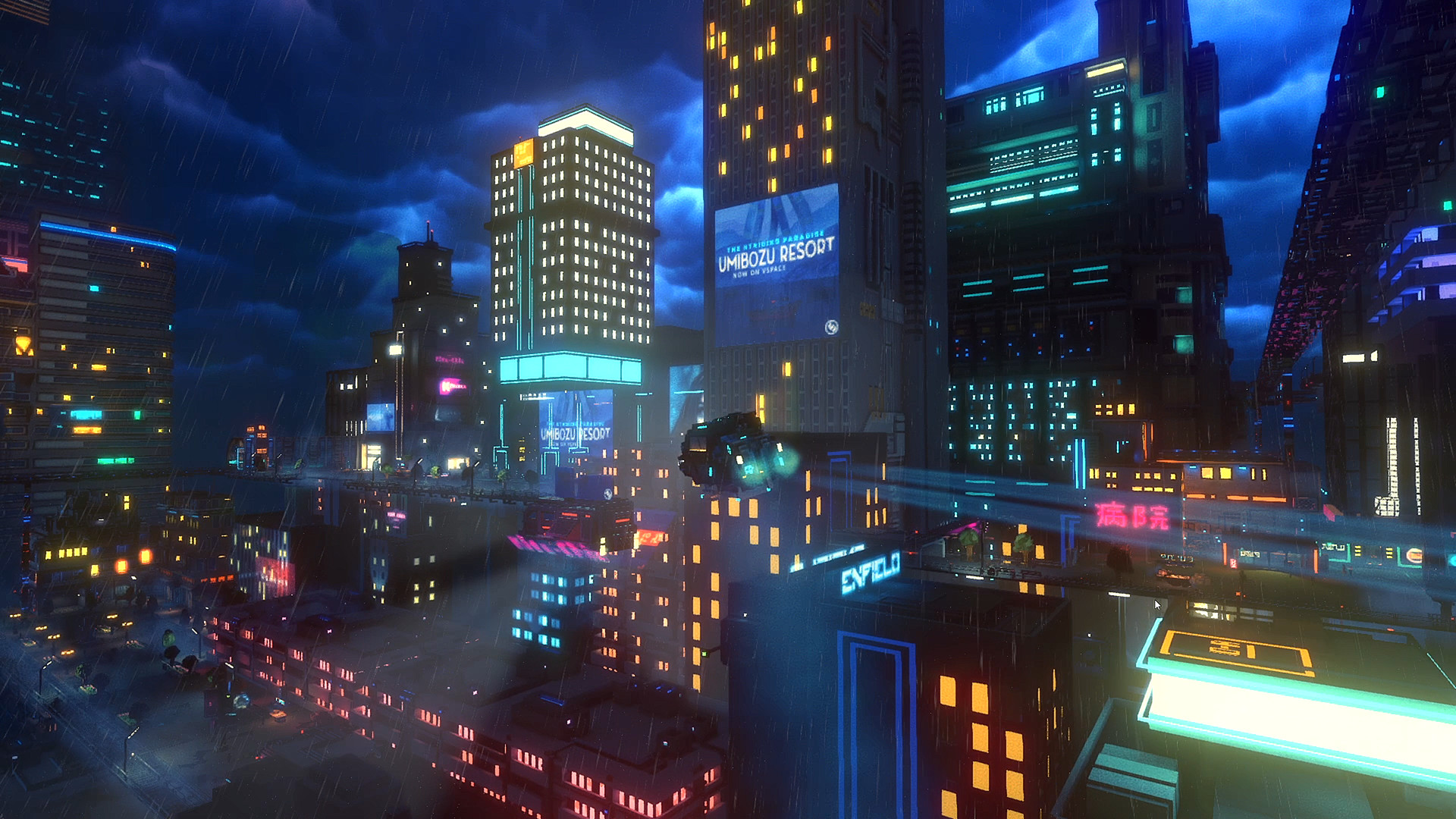
Rania’s HOVA is a hover car that can move forward and backward while also rising and descending through Nivalis. Reaching a waypoint means navigating height as well as direction: air lanes thread between buildings, traffic occupies the same routes, and highways provide a more direct way to cross some districts. The player can use a short repulsor boost to gain altitude and spend on upgrades that improve speed. These controls make the stacked city part of navigation rather than a background panorama. The Spire sits high above the lower Marrow, and the route between them changes the view as Rania climbs or drops through the urban layers. Parking zones mark the point where flight gives way to walking. A delivery therefore uses the vehicle to reach a neighborhood, but the destination may still require a final pedestrian approach inside the structures that surround the landing area. The HOVA can leave the organized air lanes and cut through open space, while traffic-heavy highways offer a more direct marked route. The two options let the player trade a structured path through traffic for a freer line between buildings.
On foot, Rania moves through spaces that the HOVA cannot enter. Walkways, stairs, elevators and building interiors connect parking points to people and parcels tucked into dense blocks. These routes are smaller than the open air lanes, but they reveal details of street life and create short navigation challenges on the way to an objective. Hidden locations and objects can unlock additional stories, and optional missions provide more encounters beyond the assigned package. The pedestrian sections also change the camera’s relationship to the city: corridors and alleys can be framed tightly, while platforms and open walkways expose the height of nearby structures. Rania can approach residents directly and explore some of the places that would otherwise remain distant from the vehicle. This part of the game makes finding a person or item a physical route through the city, not merely selecting a location on a map. The drive and the walk serve different purposes in the same assignment.
The vehicle has a small set of upkeep and customization systems. Collisions can damage the HOVA, and fuel must be replenished at garages; repairs also cost money. Earnings from deliveries can pay for those costs or for improvements, including a temporary booster. Rania can also trade the starting vehicle for a faster model. Walking around Nivalis adds other ways to spend or find items, and the apartment can be decorated between shifts. These purchases sit beside the story rather than forming a deep management layer: players make practical stops for fuel or repairs and can choose whether to spend extra earnings on a vehicle improvement or cosmetic changes. The garage, apartment and street vendors give the city small routines outside the immediate pickup-and-drop-off. This keeps the HOVA’s condition and Rania’s home present across the night without changing the game’s focus on traveling to people and places. Vehicle customization can include changing the neon lighting, and apartment objects can be selected to make Rania’s home more personal. These cosmetic options sit beside speed improvements and repairs as separate uses for earnings.
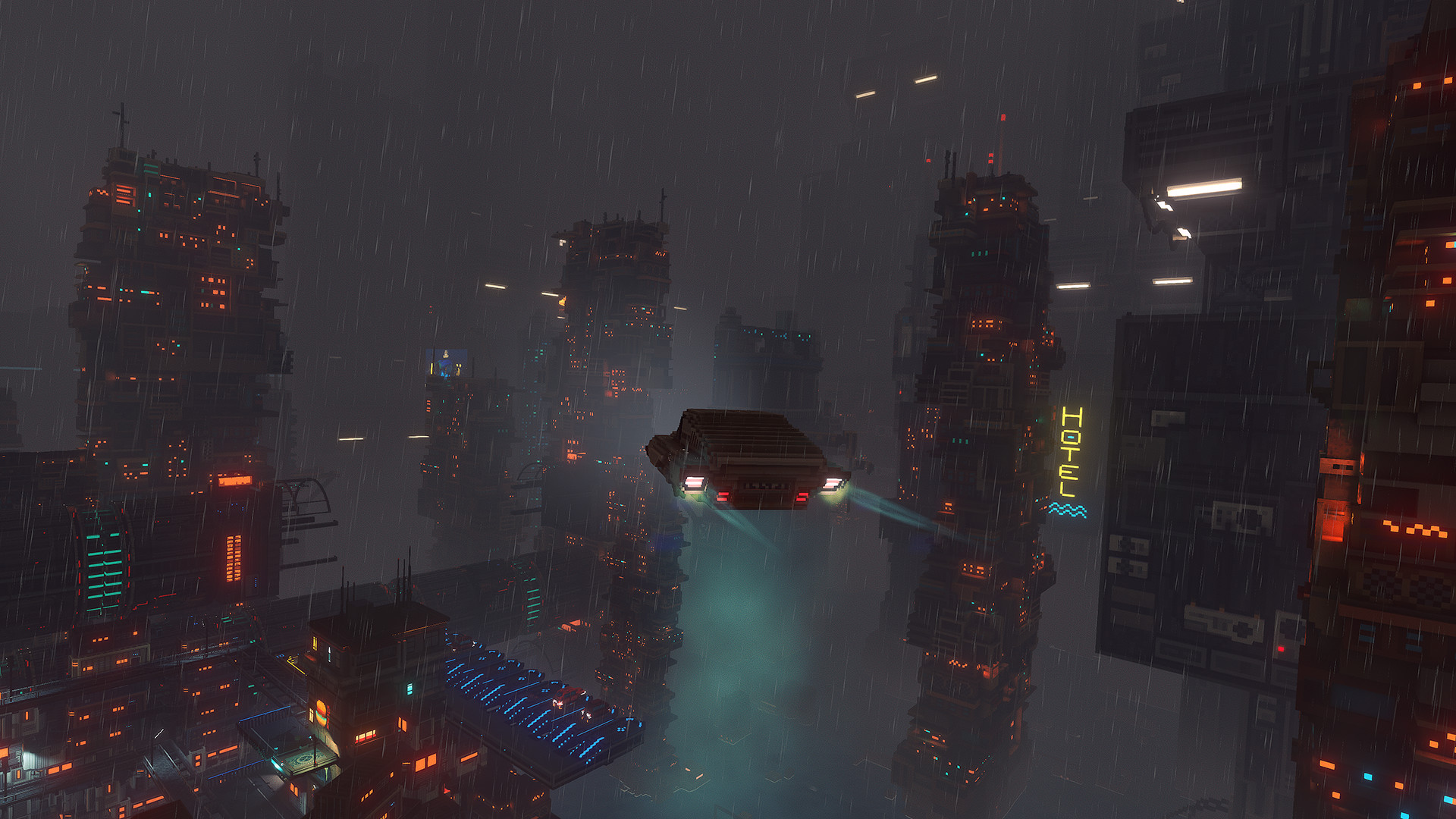
Nivalis uses voxel-built architecture to stack high-rises, roads, signs and apartments into a city that extends above the clouds and down toward the ocean. At street height, pedestrians, food stalls and nightclubs fill the lower districts; in the air, advertising blimps, suspended trains and illuminated windows make the city feel wider than the current route. Neon signs stand out against rain and dark building surfaces, while the skyline makes the distance between crowded blocks and corporate towers visible. Sound gives the night another layer: traffic buzzes, rain rattles across the streets, billboard voices carry above the roads and the music combines synth textures with jazz. The camera frames walking passages more tightly in alleys and opens toward distant buildings from elevated platforms or the HOVA. These visual and audio details distinguish Nivalis’ neighborhoods while keeping the presentation consistent across driving, conversations and on-foot exploration.
- Developer
- ION LANDS
- Genre
- Story-driven cyberpunk exploration adventure