
About Close to the Sun
In 1897, journalist Rose Archer boards the Helios, Nikola Tesla’s enormous research vessel, to find her sister Ada. The ship is deserted, its halls bear signs of disaster, and a quarantine warning frames the mystery. Explore the vessel, solve environmental puzzles, avoid danger and uncover what happened to its inhabitants.
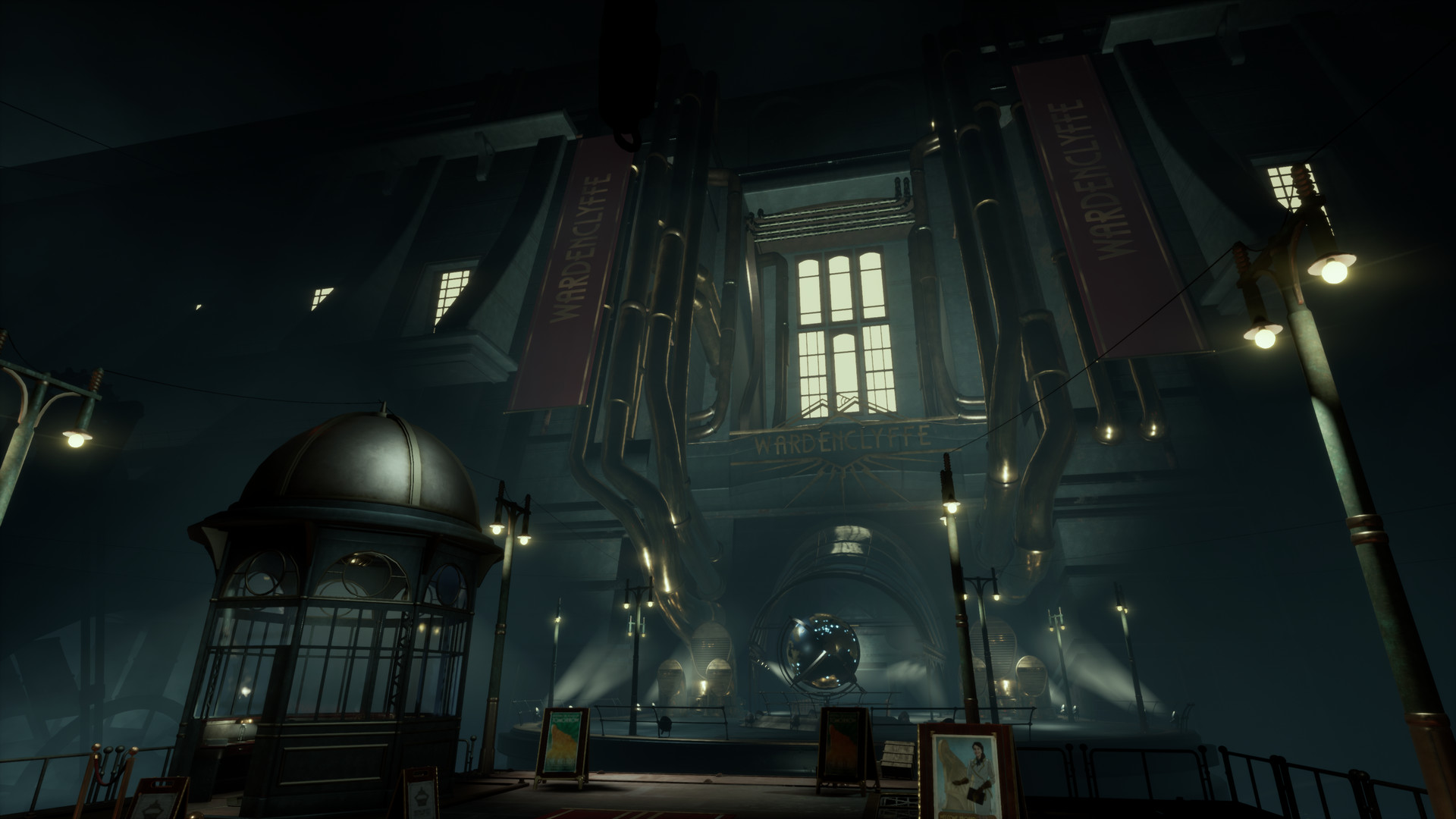
Close To The Sun places its story in an alternate 1897 shaped by Nikola Tesla’s scientific ambitions. Far from land, the Helios is presented as a vast ship and a self-contained sanctuary for researchers: an independent place where scientific work can proceed beyond government influence and corporate espionage. Journalist Rose Archer boards it searching for her sister Ada. Instead of finding a functioning community, she encounters empty halls, traces of violence and a quarantine warning. The central question is immediate and concrete: what happened aboard the vessel, and where is Ada? The ship’s isolation gives that search its pressure. There is no ordinary town nearby to retreat to, and the Helios’s scale makes every answer seem to open onto another corridor, laboratory or hidden part of its history.
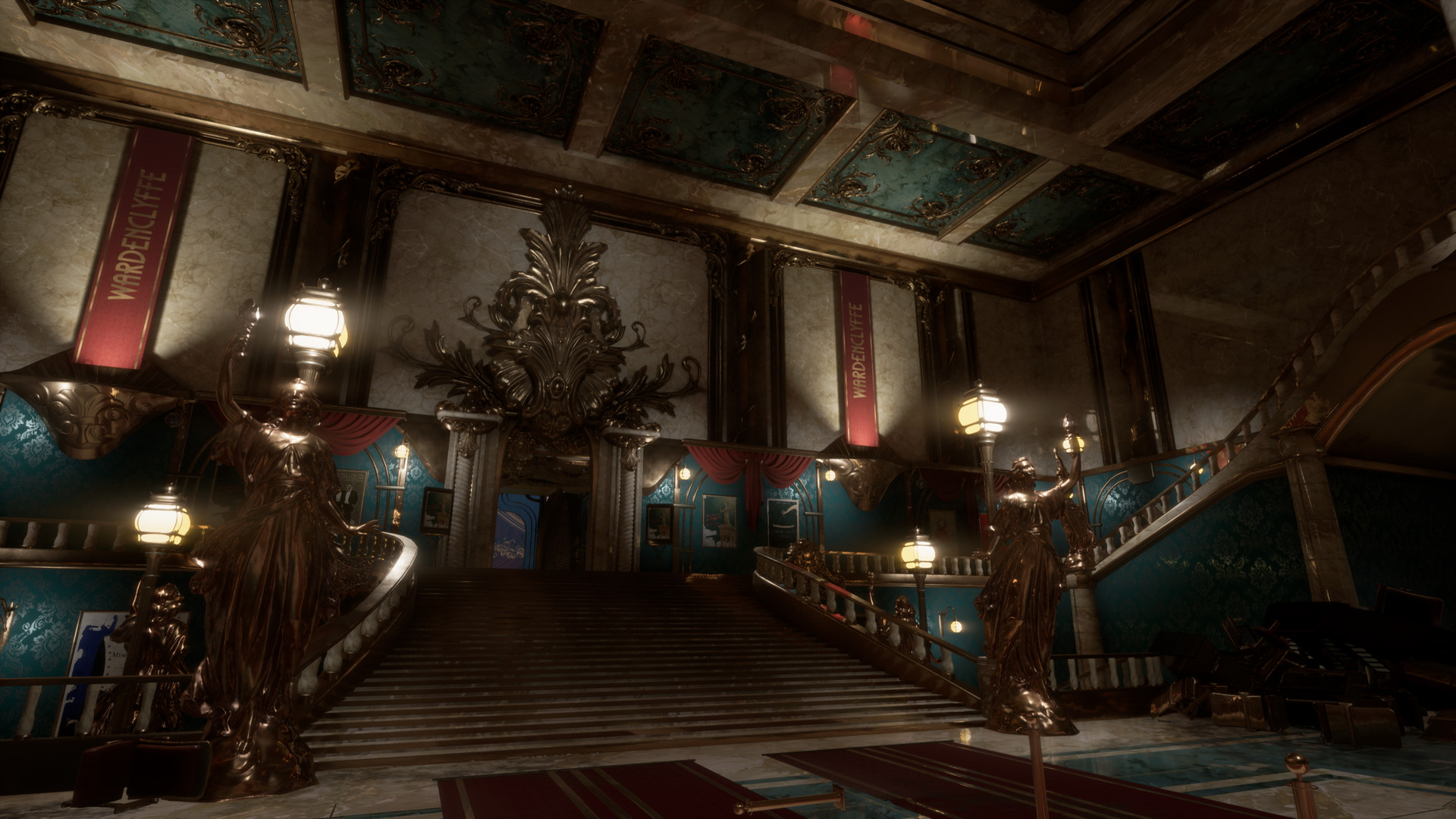
The game is a first-person adventure built around exploring the Helios and making progress through environmental puzzles. Rose is not framed as a soldier clearing rooms; she must use observation and practical problem-solving to continue her search. Puzzles can require finding an access item, identifying a code or understanding how a mechanism works. The ship itself supplies much of the context: its grand public interiors, research spaces and restricted sections reveal how the institution was meant to function and how thoroughly it has been disrupted. Progress also opens secret areas, so looking beyond the obvious route can uncover objects and information about Wardenclyffe and the people who worked there. Exploration is therefore tied to both navigation and the story’s gradual account of the Helios.
Tesla’s presence matters as more than a name attached to the setting. The game imagines a nineteenth century in which his ideas and inventions have influenced the wider world, and the Helios embodies that confidence in scientific progress. It is a place designed to let research advance without the usual limits, surrounded by architecture and machines that give the project a monumental character. That ambition forms a striking contrast with the ship Rose actually enters: the halls are quiet, the expected inhabitants are absent, and physical evidence suggests that the promise of a safe haven has failed. The tension comes from moving through spaces built to celebrate discovery while trying to understand the cost of that discovery. The alternative-history premise gives the mystery a specific technological and social backdrop rather than treating the vessel as a generic haunted building.
Rose’s search also takes her through dangerous parts of the Helios. She must read rooms for clues, decide how to pass obstacles and stay alert to threats before she can reach the next area. The single-player perspective keeps the experience close to her limited understanding. The player discovers the ship as she does, piecing together the circumstances from places, objects and changing conditions. There is no second playable character to divide the work or provide a competing view of events. Rose’s reason for boarding remains the human anchor: whatever the scale of the Helios and its science, she came to find Ada. Observation and caution are essential because the route forward combines practical barriers with danger, and every new room can add evidence without immediately explaining what happened to the people who once occupied it.
The Helios is colossal, and its scale shapes how its spaces function in the adventure. Long halls and richly decorated public areas establish the vessel as a prestigious project, while less public rooms point toward the work and people that sustained it. Searching corners for collectibles adds another layer to moving through the ship: these discoveries can expand what is known about the vessel’s workers and the connected history of Wardenclyffe. This material gives the setting texture without replacing Rose’s main objective. The player is still following a path toward Ada and toward an explanation for the quarantine, but optional finds reward a more attentive visit. The environments are not only backdrops for puzzles; they carry clues about what the Helios was intended to be and how the lives aboard it related to Tesla’s larger scientific enterprise.
Close To The Sun combines its alternate-history premise with a contained survival mystery. Its core loop moves between exploration, puzzle-solving and dealing with danger, while each new area adds evidence about the ship and its inhabitants. The tone grows from the contrast between the Helios’s idealistic mission and the abandoned, threatening place Rose encounters. Because the story is centered on a missing sister, the technological setting does not displace the personal stakes: Rose needs to make sense of the catastrophe in order to find Ada. The experience is focused on one protagonist and one vessel, with the ship’s secrets gradually emerging through traversal and discovery. It offers a horror adventure in which the central act is investigation under pressure, framed by a speculative version of Tesla’s era and the consequences of pursuing knowledge without limits. Rose has to keep moving through the ship even when its history offers more questions than immediate answers, balancing curiosity with caution.
- Developer
- Storm in a Teacup
- Genre
- First-person adventure with exploration, puzzles and horror elements