
About Sid Meier's Civilization VI
Sid Meier’s Civilization VI is a turn-based strategy game in which players guide a civilization from its first settlement into the modern age. They explore a hex-based world, found and develop cities, research technologies and civics, negotiate with rivals, and pursue military, cultural, scientific, religious, or score-based victory.
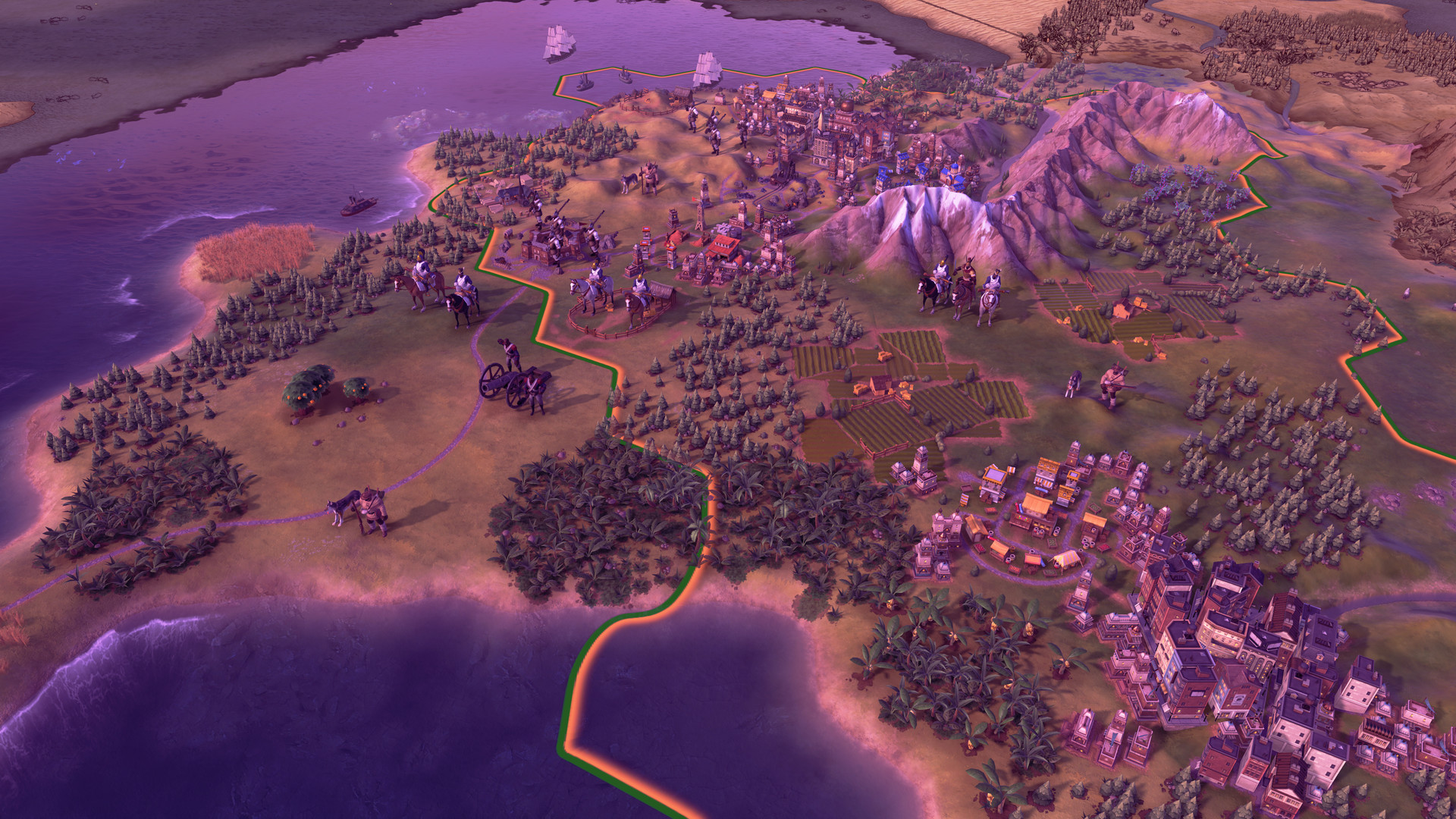
Civilization VI begins with a small group of settlers and asks the player to build an enduring civilization across a procedurally varied world. Turns provide time to choose research, issue orders to units, and set projects for each city; after the player acts, rival civilizations and independent City-States take their turns. A Settler founds a city, while Warriors and other units explore the surrounding hexes, protect new settlements, and reveal terrain and resources. Rivers, coasts, mountains, forests, and nearby resources influence where cities can grow and which districts will be productive. Expansion creates more places to produce units and improvements, but also lengthens the frontier that must be defended. Barbarians can threaten early settlements, while meeting other leaders introduces trade, diplomacy, competition, and the possibility of war. The evolving map is both a source of opportunity and a set of constraints on long-term plans.
Cities spread across several map tiles rather than containing every structure in one central space. Their districts specialize in different yields and functions: a Campus supports Science, a Holy Site supports Faith, a Commercial Hub supports Gold, and a Theater Square supports Culture. District placement matters because terrain and neighboring features can grant adjacency bonuses. For example, a Campus can gain from nearby mountains, while a Commercial Hub benefits from a river. Such terrain-linked bonuses make choosing a legal site consequential. The player selects a district from a city’s production menu, then chooses a legal tile, weighing its immediate yield against other possible uses for that land. Buildings are constructed inside their districts, and Wonders occupy their own tiles as well. This spatial system makes city planning a lasting decision: a location chosen for a district or Wonder can no longer serve as an ordinary improvement, while a thoughtful layout can help several specialized cities contribute to the wider empire.
Science and Culture advance two connected but distinct progress tracks. The Technology tree unlocks units, buildings, improvements, and other tools through the eras; the Civics tree opens governments and policy cards that shape how the empire is organized. Progress comes from each turn’s Science and Culture yields, and specific actions can trigger Eurekas or Inspirations that accelerate a related item. For example, settling on a coast boosts progress toward Sailing, and defeating an enemy with a Slinger boosts Archery. This links research to activity on the map: exploration, settlement, construction, and combat can advance a plan as well as provide immediate benefits. Players choose what to study next and can adjust the order as circumstances change. Unlocks arrive at different stages, so selecting a direction means deciding which capabilities to prioritize while rival civilizations pursue their own development.
Workers are represented by Builders, who improve suitable tiles with farms, mines, and other improvements once the relevant technology is known. A Builder completes an available action immediately but has a limited number of charges before retiring. That makes each improvement a compact but consequential investment: farms can support population growth and mines can increase production, while removing a terrain feature sacrifices its other uses. Cities also convert production into units, buildings, districts, Wonders, or projects, so a city’s queue reflects the needs of the whole empire. Traders establish routes between cities, helping connect settlements and create roads; later military engineers can also build roads. Each turn asks the player to distribute limited city production and Builder actions among expansion, development, defense, and longer-term goals.
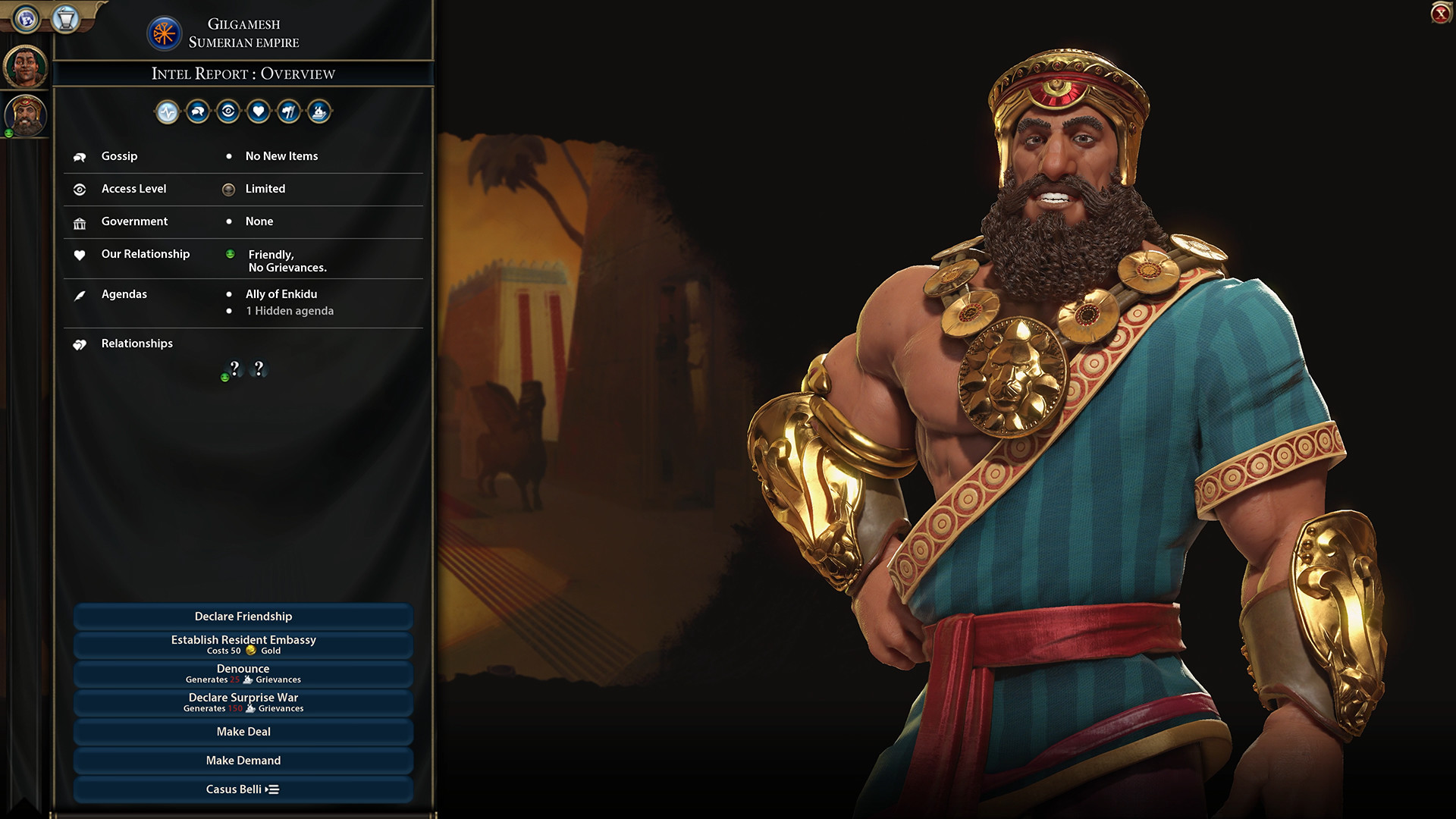
Diplomacy gives the expanding empire a changing set of relationships. Rival leaders have historical traits and agendas that influence how they respond to the player’s actions, and contact can lead to negotiations, trade, alliances, or conflict. City-States are independent settlements that can provide bonuses when players send Envoys; gaining the greatest influence can make a civilization their Suzerain and confer additional benefits. Military units defend borders, clear Barbarian camps, escort settlers, and fight for territory or objectives. The base game’s five victory paths give these systems different purposes: Domination depends on capturing rival capitals, Science culminates in space exploration, Religion seeks to spread one faith across civilizations, Culture attracts visiting tourists, and Score can decide the outcome if no other victory is reached before the game ends. The player can specialize, compete for several routes at once, or change direction as alliances and rival plans shift.
The game’s historical scope is expressed through leaders and civilizations, each with distinguishing abilities and, depending on the civilization, unique units, buildings, districts, or tile improvements. These differences change the value of particular terrain and can reward specific approaches to expansion, warfare, trade, or cultural development. A civilization that benefits from building Wonders may prioritize production and secure sites, while another may gain more from establishing a wide network of cities or trade routes. The base game’s roster and systems form the focus here; expansions and DLC add further leaders, civilizations, mechanics, and modes, and their features should not be assumed in every standalone game. The result is a sequence of interlocking turn-based choices rather than a fixed campaign narrative: each map, neighboring power, and available resource shapes the civilization’s route from its first city toward a chosen victory.
- Developer
- Firaxis Games
- Genre
- Turn-based strategy