
About Citizen Sleeper
Citizen Sleeper is a tabletop-inspired narrative RPG about an escaped corporate-owned Sleeper trying to survive on Erlin’s Eye, a decaying station at the edge of interstellar society. Each cycle, dice become the actions available for work, exploration, hacking and relationships, while the Sleeper’s deteriorating body makes food, income and stabilizer part of daily planning.
Citizen Sleeper begins with a person who has escaped corporate ownership but remains trapped in a body designed to fail. A Sleeper is a digitised human consciousness housed in an artificial body; the corporation Essen-Arp regards this particular Sleeper as property and wants it returned. The game sets this precarious life on Erlin’s Eye, a damaged station far from the centres of interstellar power. The Eye is not an empty outpost: thousands of people live among its improvised workplaces, markets, habitats and neglected infrastructure. The player arrives without security or a settled place in that community and must decide how to earn a living, whom to trust and what sort of future to pursue while the threat of corporate recovery hangs over the station.
Time is divided into cycles. At the start of each one, the game rolls a pool of action dice, and the player assigns those dice to activities around the station. A die is spent to take an action such as working a shift, searching an area, speaking with someone or advancing a piece of ongoing work. Higher values generally improve the chance of a favourable result on ordinary skill checks, so a player has to choose where a strong roll matters and where a weaker one can still be useful. Ending the cycle refreshes the routine and advances activity elsewhere on the Eye. As a result, deciding how to use a limited pool is also deciding which needs, people and opportunities receive attention before the next day begins.
The dice pool is tied to the Sleeper’s physical Condition. The artificial body degrades over time, and a lower Condition means fewer dice to spend in a cycle. Stabilizer restores Condition, but obtaining it takes money and planning, so the player balances immediate survival against the actions that might improve the next cycle. Energy is a separate concern: food and some activities affect it, and letting it run low can make the daily routine harder to sustain. Work can provide cryo, the station’s money, but a shift uses a die that could have gone toward another need or story. Managing these connected pressures is a continuing part of play. It gives everyday actions a practical cost without making the story only about a countdown to bodily collapse.
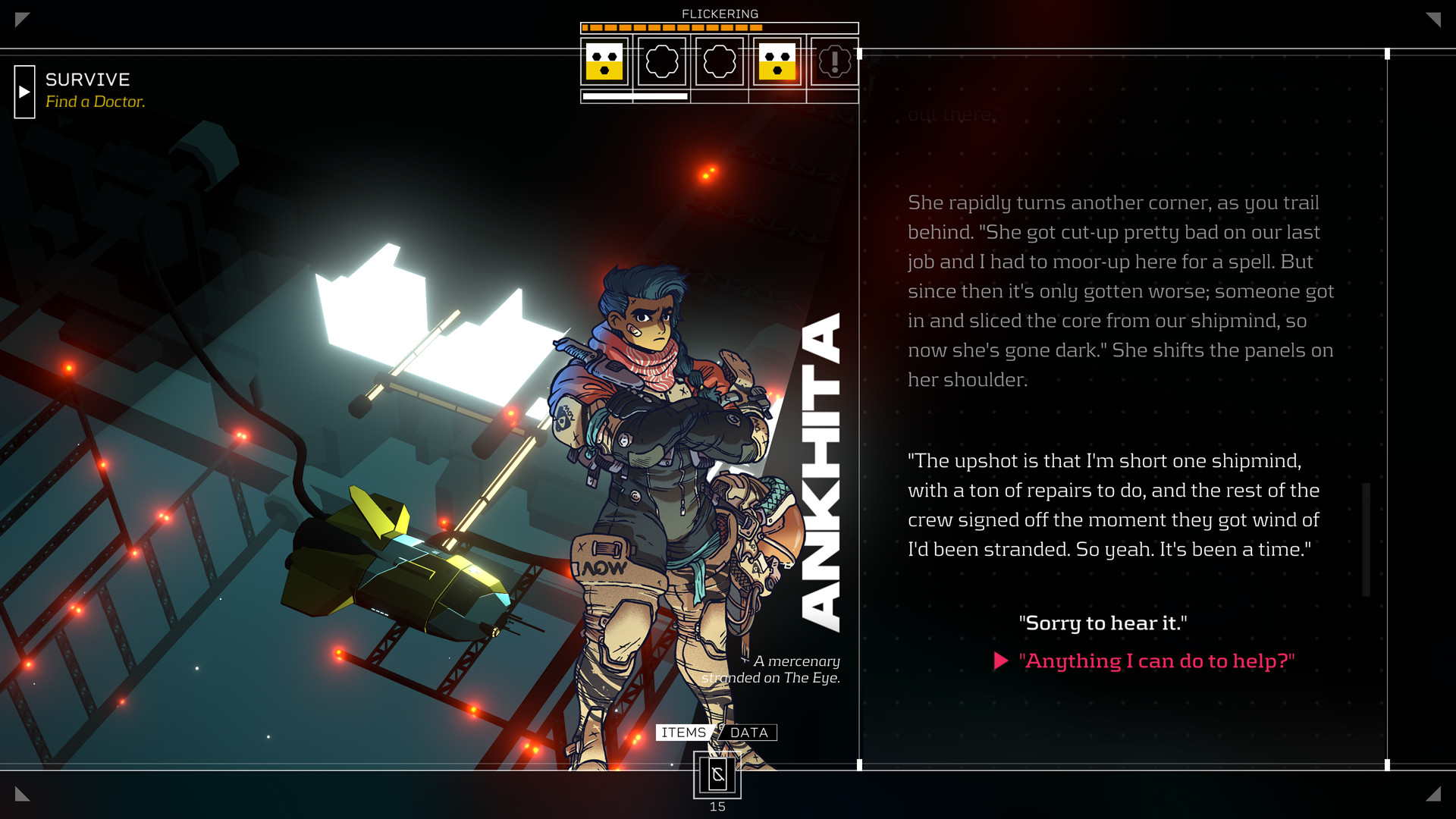
The station’s longer stories are organised as Drives. A Drive follows a character, job or problem over several steps, with actions moving its progress forward and new conversations or choices becoming available as the situation changes. Clocks make some of that progress visible: they can track the Sleeper’s efforts as well as events unfolding elsewhere, including pressure that grows while the player pursues another lead. The player can keep several Drives open and decide which ones fit the time and resources available. There is no single quest list that dictates one route through the station. Helping a resident may create access to work or useful resources, while investing in another thread can reveal different parts of the Eye and the people who depend on them.
Relationships are woven into this system of practical choices. The Eye’s residents include workers, salvagers, hackers, traders and people trying to build a life under difficult conditions. Some need help with a personal project; others connect the Sleeper with work, shelter, information or a new part of the station. The player chooses which people to approach and which of their Drives to advance, and conversations let the characters explain what they are trying to protect or change. Groups such as the Yatagan gang and the corporation’s agents also shape the local balance of power. Building trust can open paths and make daily survival more manageable, but the player still has to spend time and dice to maintain those ties. The story therefore develops through both what the Sleeper does for themself and what they choose to do for others.
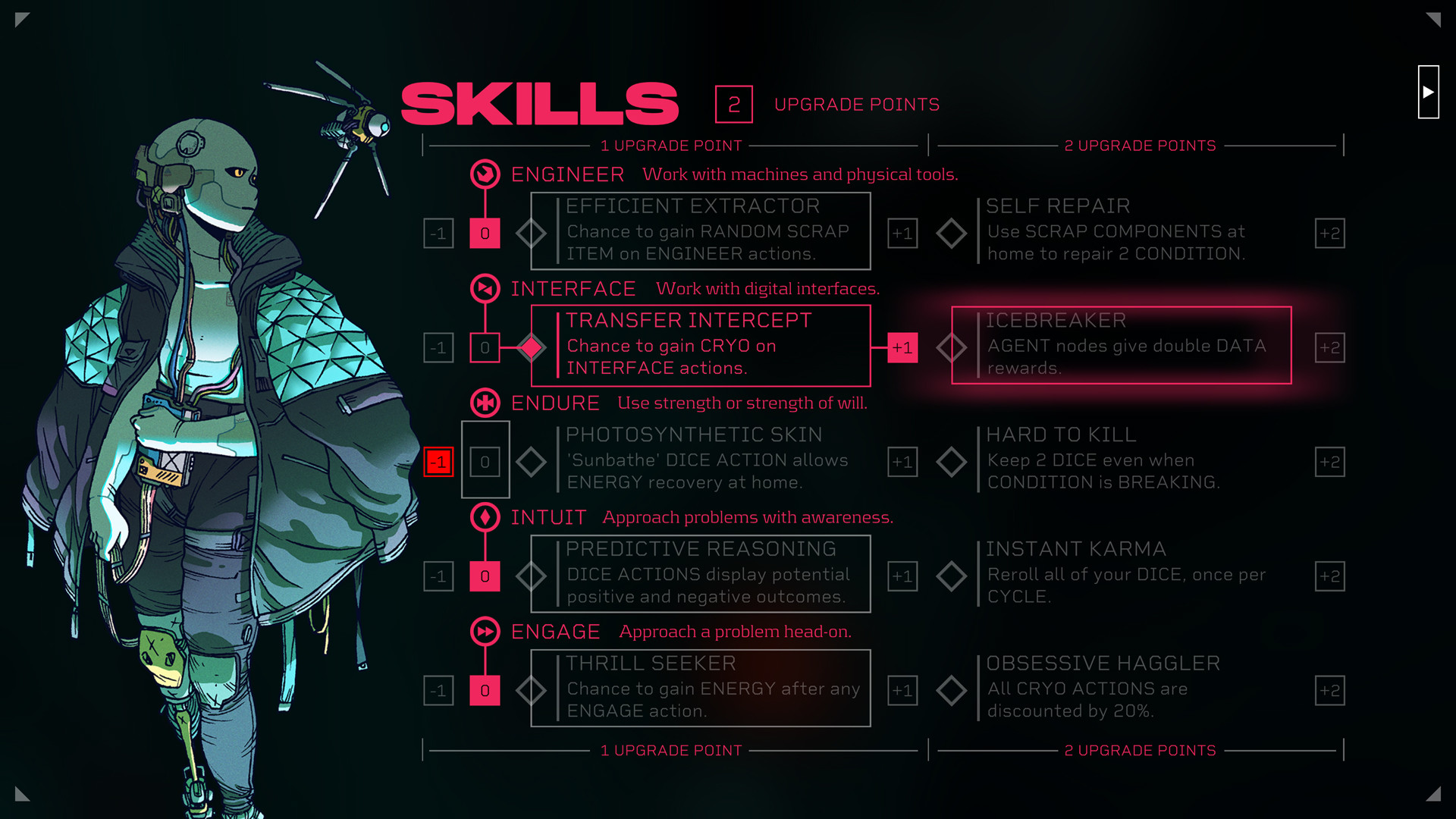
Five skills influence the Sleeper’s actions: Engineer, Interface, Endure, Intuit and Engage. Actions are associated with relevant abilities, and skill bonuses adjust the odds attached to a die rather than replacing the roll. The starting class establishes an initial pattern of strengths, while progression through Drives awards upgrade points that can be spent on the skill board. Unlocking perks changes the options or advantages available as the character develops. Actions also communicate the risk of failure: a routine attempt may simply waste its die, while a riskier or dangerous task can carry a cost to Energy or Condition. Looking at the die, its matching skill and the action’s possible consequences helps the player decide whether a task is worth attempting now or should wait for a better roll.
Interface actions take the Sleeper beyond the station’s physical spaces and into its digital cloud. Hacking uses dice to match values shown by a system, so a low roll can be useful when it fits the number required. The cloud offers data and access connected to the Eye’s networks, providing another way to explore information and open routes through ongoing storylines. Its dangers connect the Sleeper’s personal history with station-wide questions about ownership, artificial minds and who controls the infrastructure people rely on. Visually, Citizen Sleeper presents the station as a series of locations and pairs character portraits with text-led scenes and choices. Its tabletop-inspired dice, Clocks and Drives turn the player’s daily allocation of time into the main form of interaction.
- Developer
- Jump Over The Age
- Genre
- Tabletop-inspired narrative role-playing game