
About Citizen Sleeper 2: Starward Vector
An escaped Sleeper with a damaged body and missing memories crosses the Starward Belt aboard a stolen ship. Class-based skills, risky dice rolls and a recruited crew shape the contracts and relationships encountered between habitats, while the player manages stress, glitches and limited resources to decide what future to pursue.
Citizen Sleeper 2: Starward Vector follows a Sleeper, an emulation of a human mind housed in an artificial body. After trying to escape servitude by rewriting the code that governs that body, the Sleeper is left malfunctioning, pursued and unable to remember the past. The flight begins under pressure from two directions: the corporation that made the Sleeper and a local gang whose leader, Laine, sought to control them. With fellow escapee Serafin as pilot, the Sleeper takes a stolen, battered Rig into the Starward Belt. The story starts with practical needs—shelter, work and a way to keep moving—while leaving the protagonist’s lost history as an open question.
The Belt is a scattered network of habitats in an asteroid belt, with hubs where people gather, work and try to make ends meet. The ship turns travel into a central part of life: its initial condition limits what the crew can reach, and upgrades extend its range so new locations become accessible. The Rig also changes from an improvised refuge into a more settled home as it develops. Rather than remain on one station, the player charts a route between hubs, deciding which jobs, people and stories deserve time and supplies. This structure ties exploration to survival. A destination is not simply a new backdrop; travelling there and staying prepared compete with the resources needed to keep the Sleeper and crew going.
Daily actions and uncertain outcomes are shaped by a tabletop-inspired dice system. The Sleeper chooses a class and configures skills, while each cycle presents a limited set of opportunities to act. Dice are assigned to checks and tasks, making the available rolls part of planning: a strong result can secure progress, while a weak one can make an already difficult situation worse. Class-based skills let the character approach scenes in different ways, and additional skill checks give those choices room to express who the Sleeper is becoming. The system asks the player to weigh what can be attempted now against what may be needed later, rather than treating every action as equally safe or every challenge as a simple pass-or-fail hurdle.
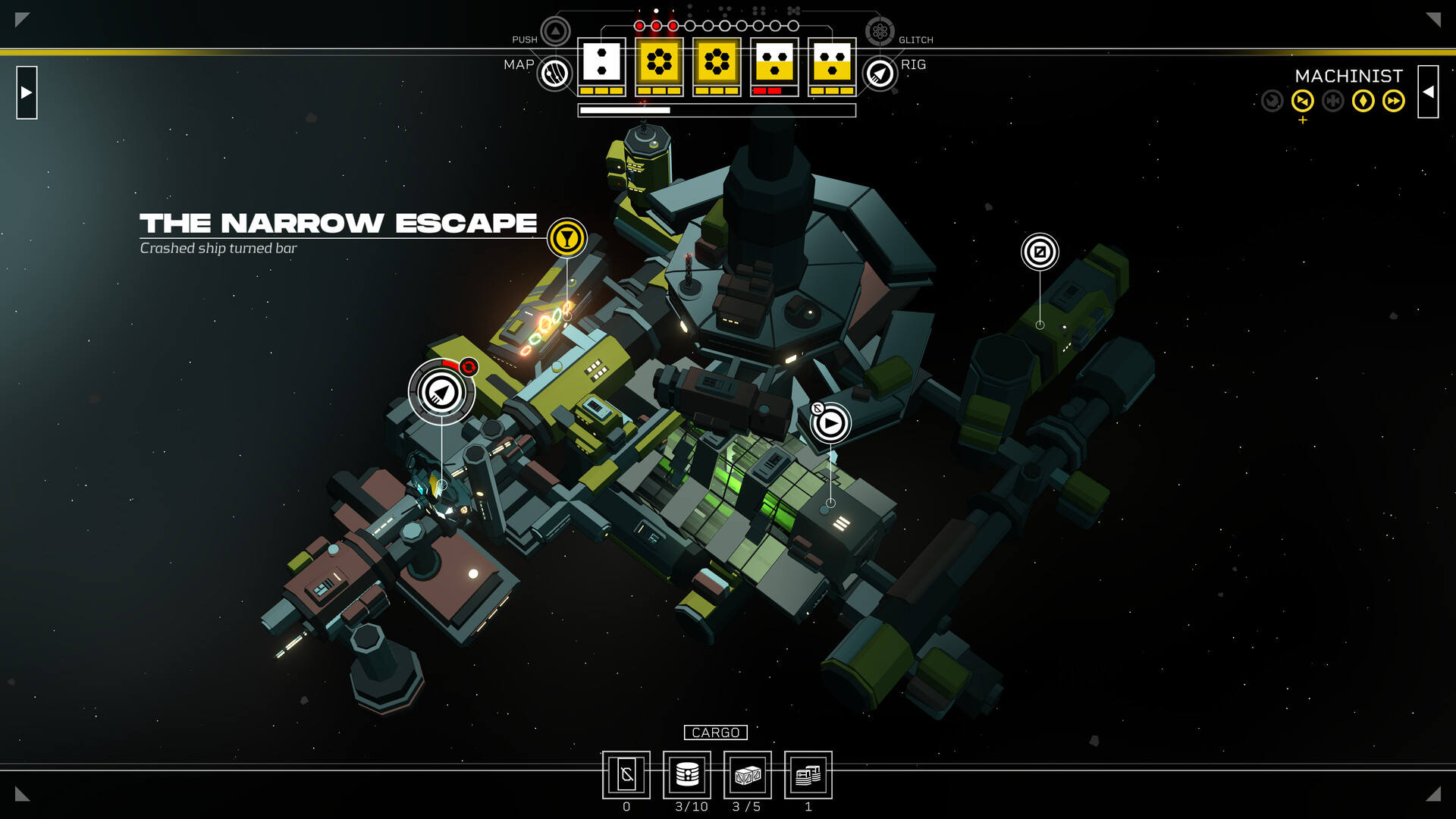
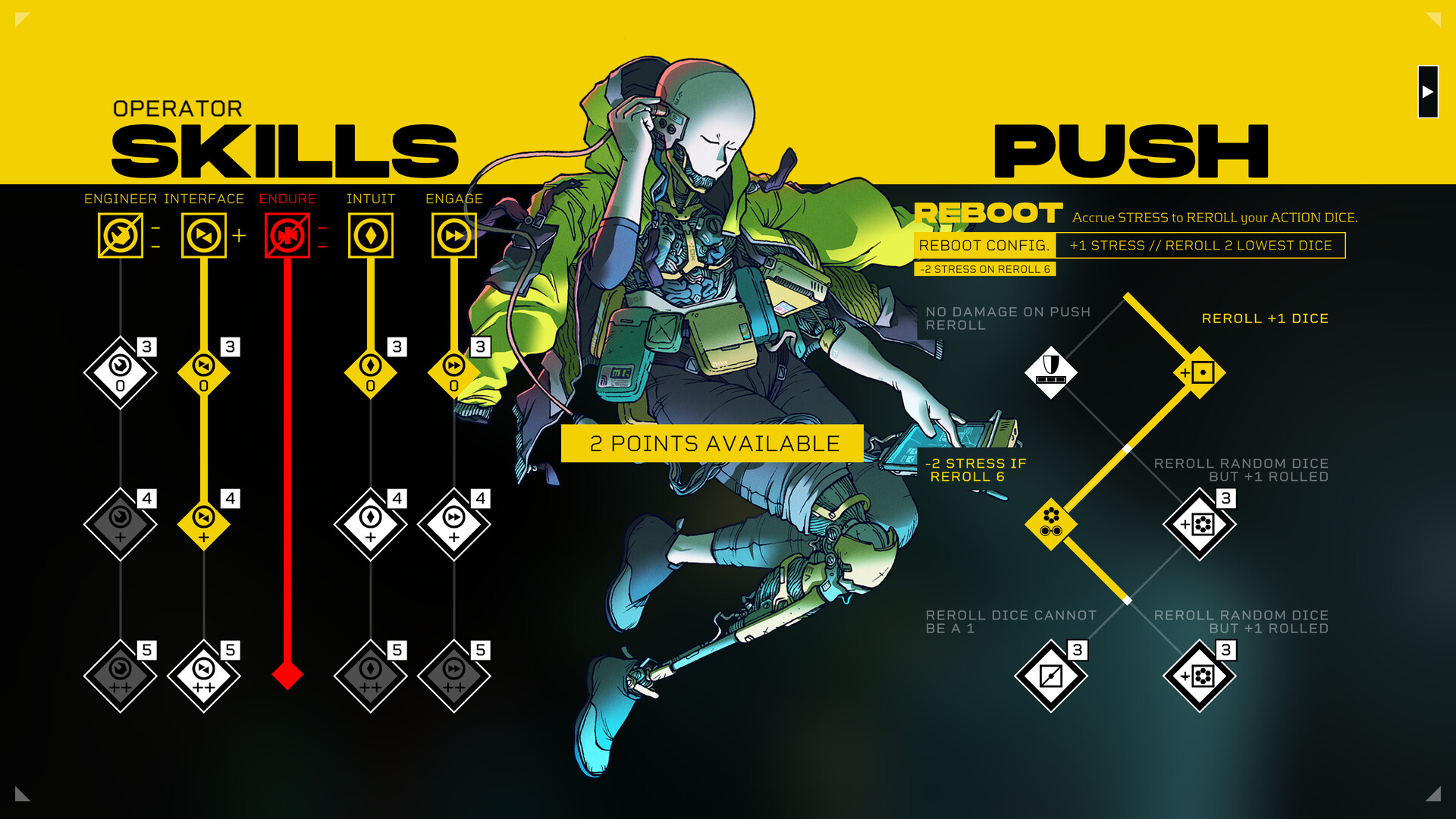
The body itself is another resource to manage. Stress can build as the Sleeper pushes through demanding cycles, and damage can affect the dice available for future actions. Glitches accumulate in the artificial system, making bodily instability a continuing concern rather than a single opening problem. Each class also has a unique Push ability that can be improved and customised. A Push can change a difficult job’s prospects, but its use may send the character into a more dangerous spiral; the player can reroll dice or focus one die when betting on a larger success. These tools make recovery, risk and timing part of the same decision. Taking a chance may get the crew through an immediate obstacle, yet leave less room to absorb the next setback.
The Rig’s crew expands the Sleeper’s options beyond personal skills. Serafin provides a steady pilot at the outset, while further work calls for specialists such as scrappers and engineers. Crew members have their own abilities, stories and troubles, so recruitment brings both useful expertise and new relationships to maintain. Some people may be temporary contractors; others can become residents aboard the ship. Choosing whom to bring into a job matters because the right combination of skills and resources can make a high-risk contract more manageable. The crew is also a social network in a precarious setting: allies and contacts can connect the Sleeper to work, knowledge or new directions, while the player must decide where to invest limited attention and trust.
Contracts provide focused, multi-cycle jobs away from the Belt’s ordinary hubs. Their tasks range from exploring dangerous derelicts and carrying out risky heists to surveying asteroids and repairing ships. Each contract presents its own demands, so preparation involves selecting an approach and assembling suitable skills, crew and supplies. The plan still has to respond to uncertain dice and complications that arise during the work. A contract can reward completion with payment that helps keep the ship flying, but the risk extends across several cycles and can strain both the Sleeper and their crew. This creates a distinct rhythm alongside hub life: take time to build connections and prepare, then commit to a more concentrated operation whose changing problems may require adjustment.
Outside contracts, the player moves through branching storylines and scenes where choices can carry lasting consequences. New skill checks allow class and character to shape how the Sleeper handles conversations and obstacles, while deciding which locations to visit determines which stories receive attention. The world is described through its communities and the work required to survive, from busy hubs to isolated sites such as derelicts and asteroid survey areas. Across these spaces, repairing the body, upgrading the Rig, maintaining a crew and pursuing contracts all compete for the same finite cycles and resources. The game’s progression therefore joins personal survival to the gradual creation of a life: the Sleeper begins as a hunted escapee and, through choices about work and companionship, can chart a different future in the Belt.
- Developer
- Jump Over The Age
- Genre
- Dice-driven narrative role-playing game