
About Chicory: A Colorful Tale
Chicory: A Colorful Tale follows a dog who takes up the magical paintbrush after Chicory, the land’s superstar artist, goes missing and color vanishes from Picnic Province. Paint the world, solve environmental puzzles, meet animal residents and explore new places as you take on the work of restoring color.
Chicory: A Colorful Tale begins when Chicory, the superstar artist who wields the magical Brush, goes missing and the color drains from Picnic Province. You play as a dog and Chicory’s number one fan, who picks up the Brush and steps into the job left behind. The premise turns an ordinary fan into the person responsible for a whole province, with a world that needs both practical help and a new source of color. The story follows your journey through that land as you meet its animal residents, help friends and learn what it means to carry the Brush. It keeps the focus on the player’s role and creative choices rather than asking you to watch color return from a distance.
The Brush is both a way to paint and a tool for exploring. The world is presented like a coloring book, and you can draw on its surfaces as you travel. Your marks can be as simple or elaborate as you like: fill an area, add patterns, or leave a room mostly untouched. Painting is available throughout the adventure, so creativity is part of moving through the world rather than an activity held for a separate editor. Color also connects to the setting’s puzzles. Painting can manipulate parts of the environment, while new paint abilities open routes that were previously out of reach. The brush therefore gives the player a personal way to decorate the province and a practical way to interact with it.
Picnic Province is arranged as a place to explore, with new areas to discover and familiar ones worth revisiting. As your abilities grow, paths that were inaccessible can become reachable, giving exploration a steady rhythm of discovery and return. The map’s spaces also give you opportunities to meet animal characters and help them. More than 100 animal characters populate the game, making conversations and friendships a substantial part of the journey. The setting’s colorless state makes each place a canvas, but decorating does not replace the adventure: you still move through the province, solve environmental puzzles and look for ways forward. The result is a world where navigation and self-expression share the same brush.
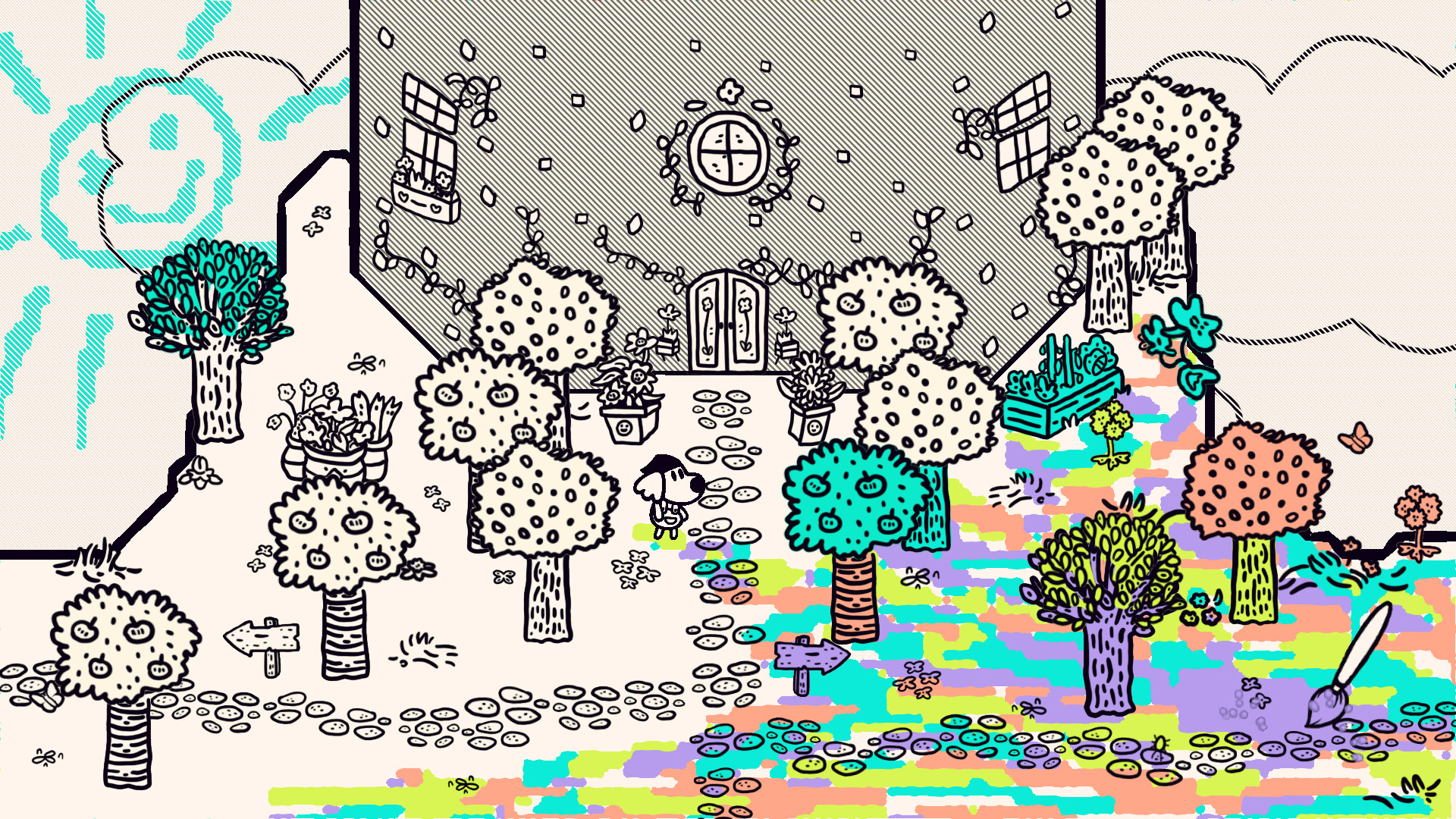
Many of the puzzles ask you to treat paint as part of the environment. You can use it to manipulate objects or solve problems, and new abilities add further ways to reach places. The exact action depends on the room, so the useful question is often what the Brush can affect here and what changed when you painted it. Puzzles sit alongside movement and exploration instead of forming a separate sequence of abstract challenges. The game also lets you take your time with the art. You can stop to color a familiar path, experiment with a pattern, or continue toward the next task; painting and puzzle-solving both offer ways to engage with the world.
Optional activities give the journey quieter diversions and ways to interact with the province. Side quests include delivering mail, attending art classes and taking photos. Mail delivery introduces you to characters as you carry letters, while the art classes ask you to recreate existing works. These tasks add specific goals without replacing the broader trip to restore color. Collectible clothes, plants and furniture provide further ways to customize your character and surroundings. Decor and plants can be placed around the world, and those choices persist, so places can reflect how you have painted and arranged them. Local co-op lets a friend join in and paint alongside you.
The game includes options intended to let different players shape how they approach it. The controls can be flipped so left-handed players can draw with their dominant hand. Options let players slow down or skip action sequences, and optional content warnings flag some scarier sequences. Although painting is central, puzzle-solving does not depend on distinguishing colors, so colorblind players can still explore. The game also has an in-world phone booth where you can call your parents for a reminder about your current task or directions toward a goal. On PS5, PlayStation’s Game Help system supplies additional guidance; that feature is specific to the platform.
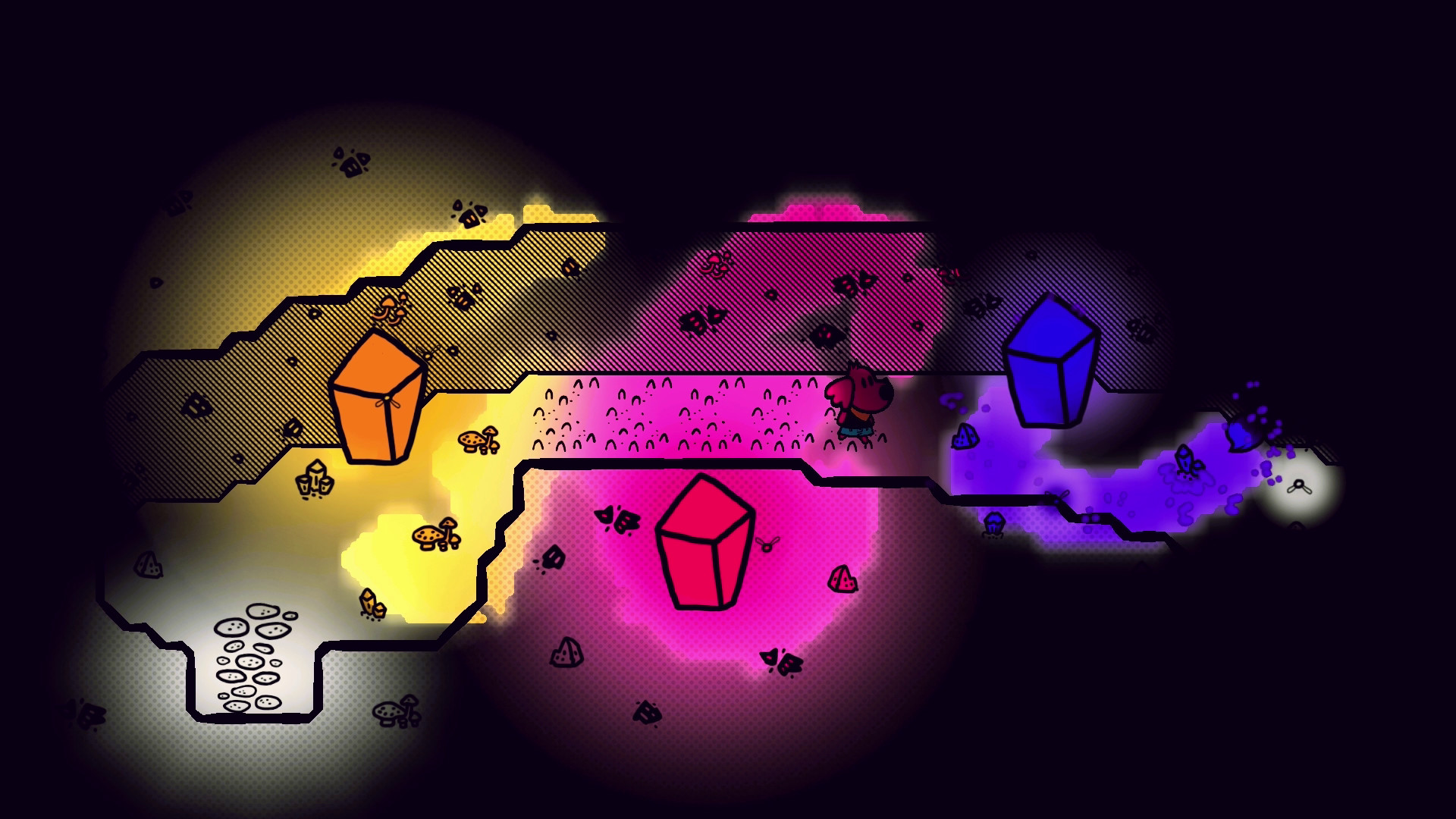
Together, these systems make the Brush the thread connecting story, puzzles and personal expression. Chicory’s disappearance gives the player a reason to take up the work, while the missing color turns the province into a space that can be changed through play. New paint abilities add ways to explore, residents and side quests offer reasons to linger, and customization lets each player leave a mark on the places they visit. The adventure supports both a goal-focused route through puzzles and a slower pace spent painting and meeting characters. You can follow the next lead, revisit an area with a new ability, deliver mail or simply add color to the path. Picnic Province is both the setting for the story and the canvas the player helps restore.
- Developer
- Wishes, Uld.
- Genre
- Top-down painting adventure