
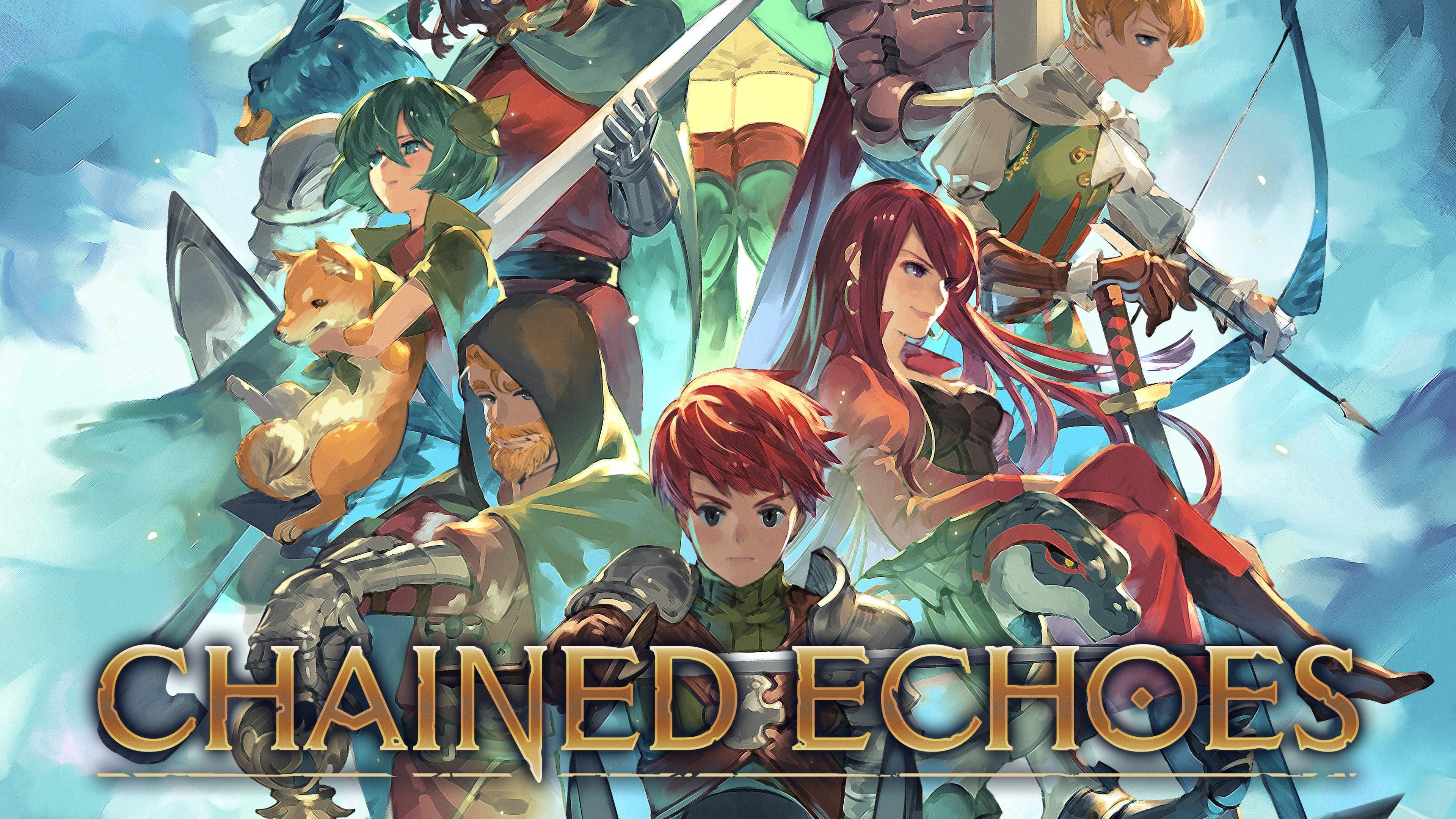
About Chained Echoes
On the war-torn continent of Valandis, a band of heroes travels among three rival kingdoms as dragons and piloted mechs share the same fantasy world. The party explores on foot, in Sky Armors and by airship, while turn-based encounters use visible enemies, environmental positioning and customizable skills and equipment.
Valandis is a continent shaped by generations of conflict among its three kingdoms. Chained Echoes follows a party drawn into this war, where people pursue their own aims amid a world that combines swords and magic with dragons and piloted mechanical suits. The ensemble grows to include up to eight core characters, alongside additional side characters the player can recruit. Their stories meet within a larger narrative about a land at war, but the cast is not presented as a set of interchangeable combat roles: the journey brings different personalities and histories into the same group. Some decisions made during quests can change what happens within those quests, while the story has a single ending rather than branching into multiple conclusions. That keeps the central conflict focused on a specific outcome while letting local situations respond to what the party does. Valandis is populated by more than humans, with birdlike and lizardlike people treated as ordinary members of its societies. Its blend of fantasy and steampunk is visible in both daily life and the military conflict: the same world contains castles, monsters, airships and large Sky Armors. This contrast sets the scale of the party’s journey, from personal encounters in settlements to battles that draw the kingdoms’ forces into direct conflict.
Travel through Valandis links settlements, open regions and dungeons rather than using random encounters to interrupt movement. Enemies can be seen in the field before the party engages them, and a battle unfolds in the same location where contact begins. This makes the local environment part of how exploration and combat connect: the player can observe a foe in its surroundings, choose whether to approach, and then fight without moving to a separate arena. The continent’s landscapes range from wind-swept plateaus and archipelagos to sunken cities and forgotten dungeons. Towns provide places to meet characters and pursue sidequests, while dungeons create more confined spaces for exploration and danger. Sidequests add local problems alongside the campaign’s war story, and rewards gathered while exploring feed back into party preparation. These activities give the player reasons to look beyond the route to the next main event, with discoveries and optional tasks tied to the places the party visits. A town can serve as a hub for conversations and sidequest leads, while a dungeon concentrates the journey around its passages, hazards and creatures. Moving between those spaces gives the continent a varied rhythm: open routes invite the player to scan for visible opponents, and enclosed locations focus attention on what lies deeper inside.
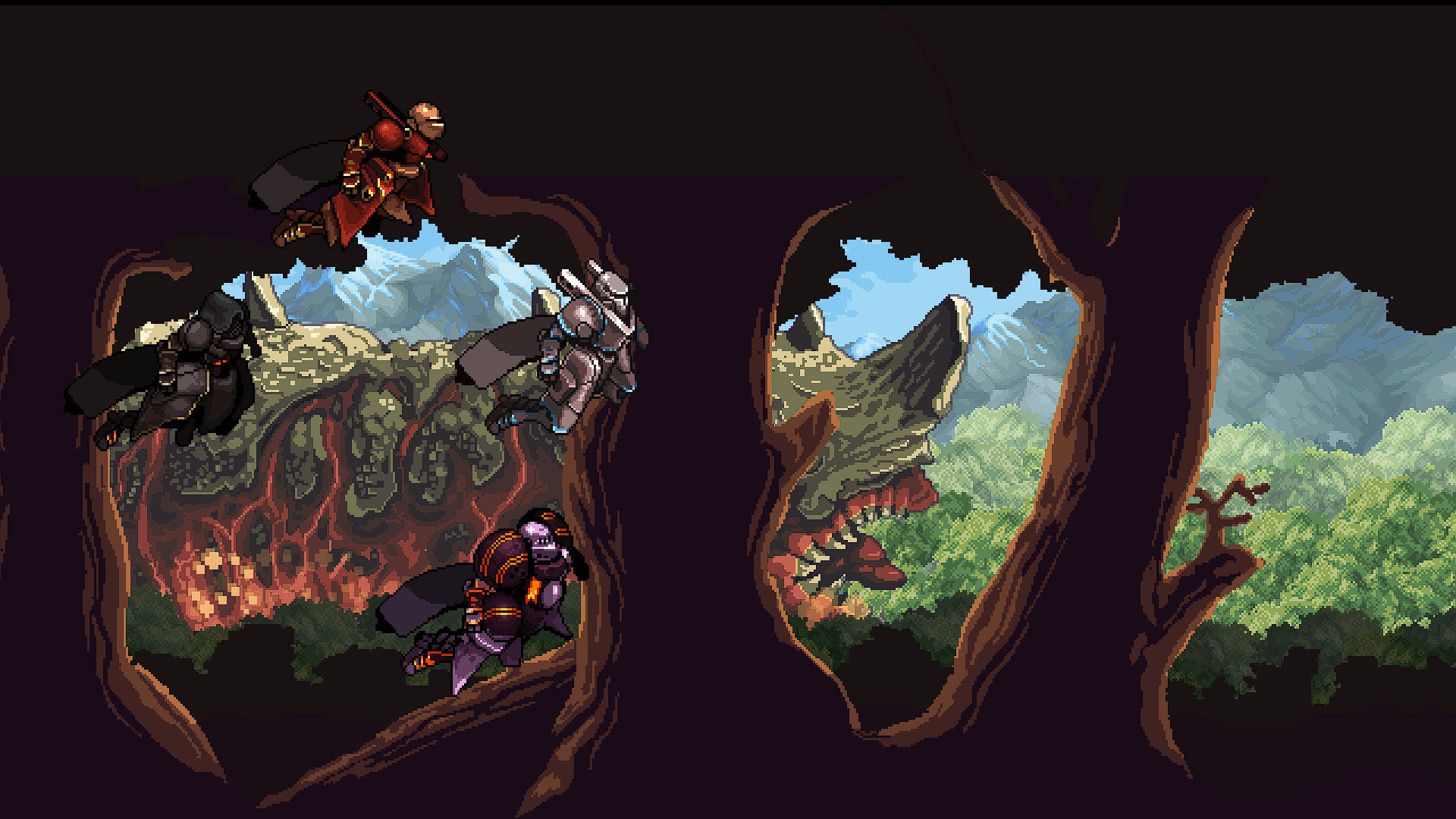
Movement changes as the group acquires access to Sky Armors, the game’s piloted mechs. On foot, the party explores ordinary areas and dungeons; the machines are not available everywhere, because some ground cannot support them and dungeons restrict their use. In suitable locations, however, a Sky Armor can travel quickly and reach areas that the party cannot access on foot. Certain fights also require the machines, making them a meaningful part of the campaign’s route and combat design rather than a decorative vehicle. The airship serves a different role: it connects distant regions across the world map and can be customized, but it is not used as a third type of battle. This distinction keeps each mode legible. Foot travel handles local exploration, Sky Armors open some routes and combat situations, and the airship links larger distances. The player must account for those boundaries when moving through the world, since a route that can be crossed by mech may not be available in a dungeon, and a battlefield may call for the party to enter its machines. The changing travel options gradually broaden the continent without turning every mode into the same kind of movement.
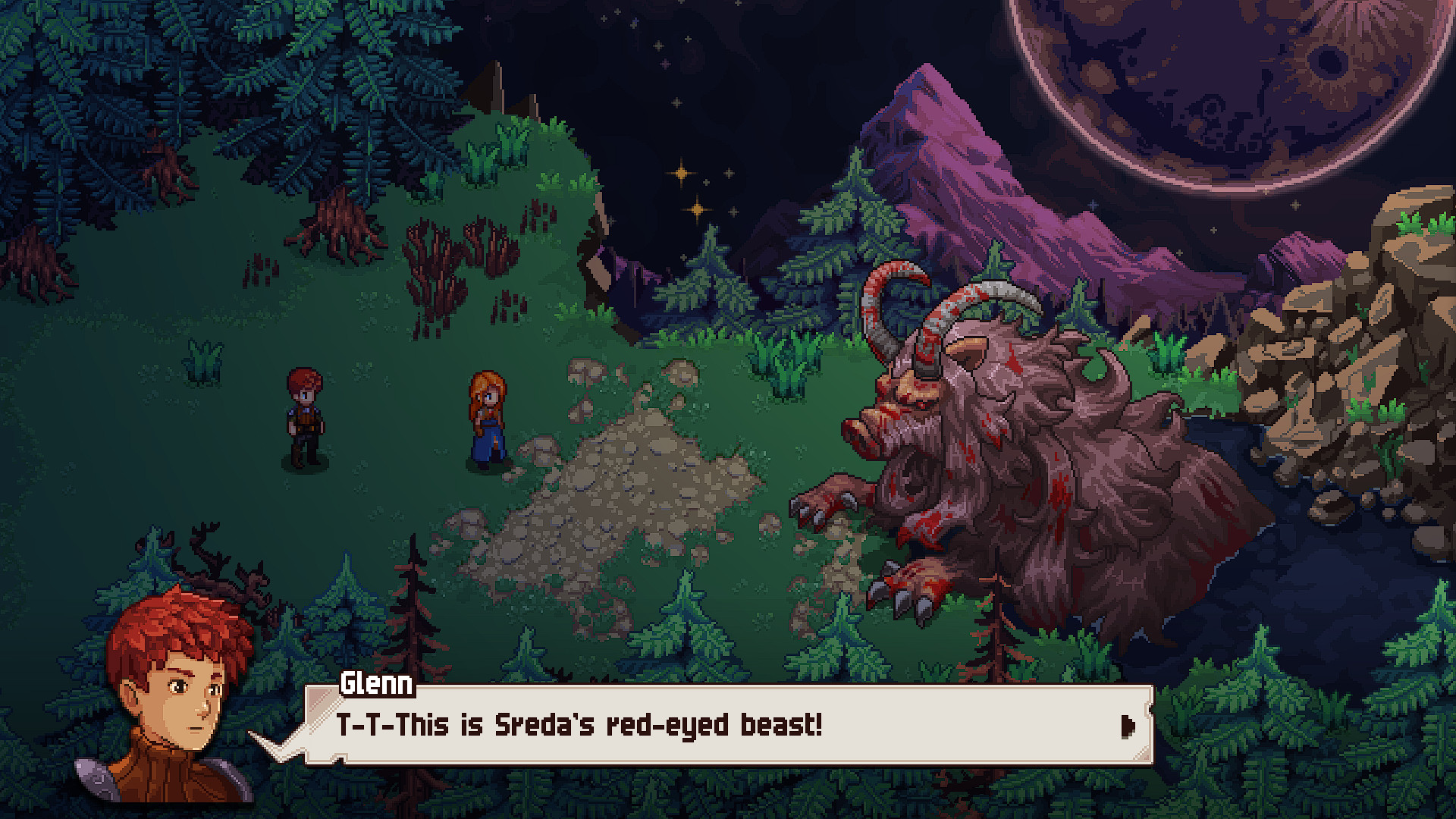
Battles use turn-based commands with a visible turn order, and the Overdrive gauge makes the choice of action matter beyond its immediate damage. Actions by both the party and enemies move the gauge; some raise it and others lower it. In the Overdrive zone, the party deals more damage and takes less, creating a favorable state to maintain. If the gauge passes into Overheat, the advantage reverses: the party deals less and receives more damage. The player therefore has to balance the immediate value of a strong attack against how it changes the gauge, and the enemy’s actions also affect the same system. Battles remain quick to execute, but the gauge encourages varied commands and anticipation over repeatedly choosing the highest-damage move. The player can watch the turn order, consider what the next action will do to Overdrive, and decide whether to maintain a safe position or risk moving toward Overheat. Mech battles apply a different variant of the familiar combat system, with machine-specific abilities and equipment changing how the player approaches an encounter. Since both sides shift the gauge, the visible turn order helps the player anticipate whether an enemy action will push the battle toward a favorable zone or into Overheat.
Character growth centers on skills, shards and party composition. Characters learn active and passive skills as they level up, but learning a skill does not automatically place it in use: the player must equip skills in a limited set of slots. This creates a loadout decision before battle, since the character can learn many options but carry only a selection into the next encounter. More than 400 skills are available across the game, making choices about which abilities to equip part of progression. Levels themselves advance through shards found on the journey rather than a conventional experience-point total. The party can include up to eight core characters, with additional side characters available to recruit, so the player has a wider bench of abilities and combinations to draw from. Equipment adds another layer: loot can be found, stolen or crafted, and gear can be customized for characters and their mechs. Those systems link exploration rewards with preparation, while the skill-slot limit asks the player to decide how each character will contribute rather than equipping every learned ability at once. Mech customization is handled alongside standard character equipment, keeping the machine mode’s preparation distinct from the party’s on-foot skill choices. The player can change the equipped selection between encounters, tailoring a character’s limited loadout to the next challenge.
The game’s presentation combines 16-bit-inspired pixel art with a fantasy world where technology and magic coexist. Its soundtrack draws on PlayStation-era RPGs, complementing the pixel-art world with a separate musical identity. The visual language sets towns, landscapes and characters in compact illustrated scenes, then contrasts them with the size and shape of the Sky Armors and the creatures the party encounters. A small number of minigames are woven into situations where they can reward attention or provide a change of pace. Turtle racing is a distinct diversion, while digging can expose hidden loot; those finds can contribute to the items and equipment gathered during the journey. This gives optional activities a practical connection to preparation as well as a playful one. The pixel-art presentation keeps characters and environments readable, while animated effects and the soundtrack give locations their own atmosphere. The contrast between quiet exploration and large machine silhouettes reinforces the setting’s mixture of fantasy and technology. Optional diversions complement the central journey by offering distinct activities that are rooted in places the party visits.
- Developer
- Umami Tiger (Matthias Linda); developer's press kit identifies Ark Heiral
- Genre
- Story-driven turn-based role-playing game