
About Castlevania: Symphony of the Night
Castlevania: Symphony of the Night is an exploration-focused action RPG set inside Dracula’s vast castle. After Richter Belmont disappears, Alucard awakens from a long slumber and enters the fortress to investigate. He fights monsters, finds equipment and relics, learns new movement abilities, and opens routes through an interconnected world that rewards returning to earlier areas.
The story begins several years after Richter Belmont defeated Dracula. Richter has vanished, and Dracula’s castle has appeared again, drawing Maria Renard into a search for the missing vampire hunter. Alucard, Dracula’s son, also wakes from the sleep he chose to escape his own vampiric nature. He enters the castle to discover what has happened and confront the evil gathering there. This gives the adventure two connected perspectives: Maria searches for Richter while Alucard explores the fortress and faces the legacy of his family. The story is told through brief encounters, character dialogue, and discoveries made as the castle opens up. Its gothic setting is expressed through contrasting regions, from grand halls and chapels to underground passages and machinery-filled towers, each populated by creatures tied to the castle’s supernatural rule.
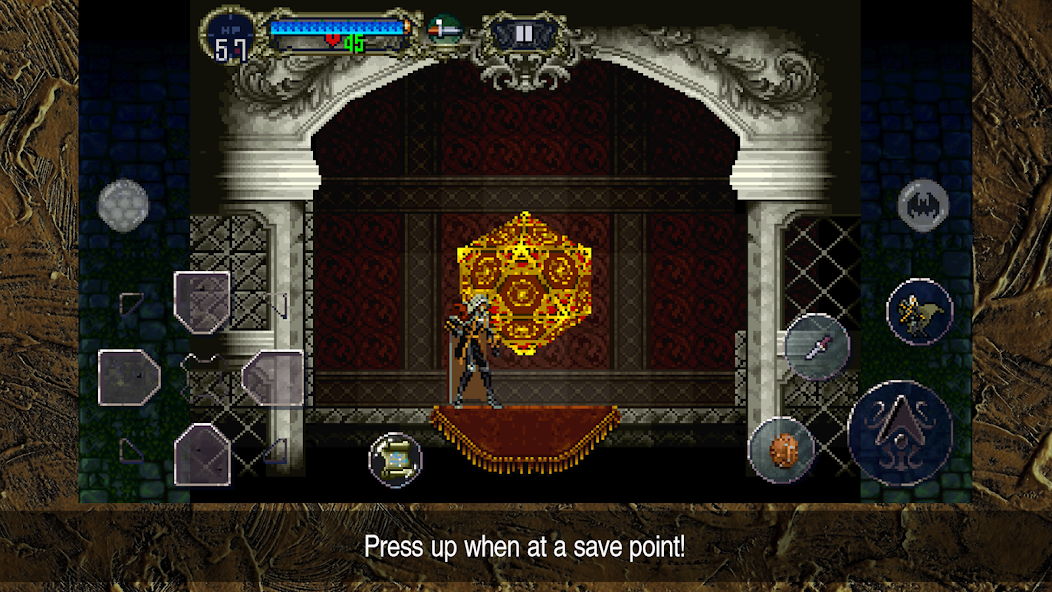
Alucard’s route through the castle is not a fixed sequence of stages. The map connects rooms and regions, with locked passages, hidden objects, hazards, and vertical paths encouraging careful observation. Early on, many routes end at barriers that require an ability Alucard does not yet possess. Relics provide these changes in movement and interaction: the Soul of Bat permits flight, the Soul of Wolf changes his movement across the ground, and the Form of Mist lets him pass through certain obstacles. As these abilities accumulate, familiar corridors become useful crossroads and previously inaccessible spaces become reachable. Save rooms let Alucard restore his strength, while warp rooms shorten travel between distant parts of the castle. The map records visited areas, so exploration and return trips form the structure of progression rather than a simple march from one boss to the next.
Combat gives Alucard a broad equipment set and flexible ways to respond to enemies. He can carry different weapons, shields, armor, cloaks, and accessories, with equipment changing attack reach, defense, and other properties. Swords and other close-range weapons reward timing and position, while some weapons can strike at a distance or affect several foes. Alucard can also use magical spells by entering directional commands, spending magic points to attack or produce other supernatural effects. His transformations come from relics and function as separate movement and ability options. Hearts serve as a separate resource for certain sub-weapons, so magical attacks and item use draw on different supplies. Enemies occupy varied positions and use distinct attacks, making it useful to consider whether a weapon’s speed, range, or effect suits the encounter. Defeating enemies grants experience and can also yield equipment or consumables, connecting routine combat to both character growth and the search for a preferred setup.
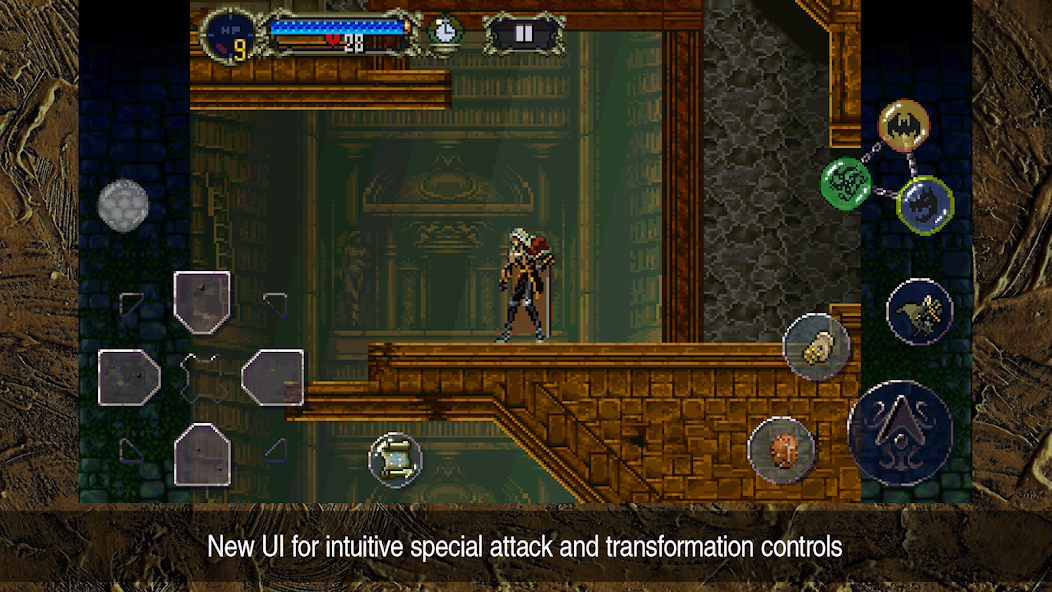
Relics and familiars add systems beyond weapons and armor. Some relics unlock traversal, while others reveal information, alter Alucard’s senses, or support an active ability. The game gives each relic a distinct role, so finding one can change the route through the castle as well as the way the player reads its rooms. Familiars are summoned companions that follow Alucard and assist during exploration or combat. Their growth is tied to continued use, and they can develop into more capable allies over time. Spell commands offer another hidden layer: particular combinations of directional inputs activate effects, and these abilities can be learned by experimenting or by finding information in the castle. Together, these elements let players build around straightforward weapon attacks, magical offense, defensive equipment, or support from a familiar without requiring one single configuration for every situation.
The castle’s rooms often combine navigation with small environmental questions. A corridor may contain a breakable wall, an item tucked above the main path, a hazard that calls for a movement relic, or an enemy positioned to punish a careless approach. Chests and hidden objects reward checking side paths, while boss encounters test movement and attack choices in more focused arenas. Discovering a new relic can prompt a return to an earlier room to test a suspicious ledge or blocked passage. This backtracking is supported by the connected map and its travel points, and it also creates opportunities to find equipment or optional encounters missed on the first visit. Progress is therefore partly about strength and partly about recognizing how a new capability changes the meaning of places already explored.
The game’s main adventure centers on Alucard, but other character options appear in particular versions and modes. Richter’s story is connected to the events that lead into the castle’s return, and Maria is an important figure in the search for him. Later releases package Symphony of the Night with other Castlevania titles or adapt the original game for newer systems, with features such as updated presentation, alternate voice options, or controller support depending on the release. These editions retain the same core identity of exploring Dracula’s castle as Alucard, though their surrounding extras and version-specific details can differ. The central loop remains discovery-led: find an opening, overcome the enemies and obstacles beyond it, collect a relic or useful equipment, then use that discovery to extend the map and continue the search through the castle.
- Developer
- Konami Computer Entertainment Tokyo / Konami
- Genre
- Exploration-action role-playing game