
About Castlevania Dominus Collection
Castlevania Dominus Collection brings together three Nintendo DS adventures—Dawn of Sorrow, Portrait of Ruin, and Order of Ecclesia—alongside the arcade game Haunted Castle and its redesigned Revisited version. The package adds modern display layouts, quick saves, and rewind, while preserving the distinct characters, exploration, and combat systems of its five included games.
Dominus Collection is a compilation of five Castlevania games, rather than one continuous campaign. Its three larger adventures originally appeared on Nintendo DS: Dawn of Sorrow, Portrait of Ruin, and Order of Ecclesia. The collection also includes the original Haunted Castle arcade game and Haunted Castle Revisited, a redesigned adaptation of that arcade title. Each adventure has its own cast, setting, progression structure, and combat rules, so the package can be approached as several separate campaigns. The shared setting is gothic fantasy, with heroes confronting Dracula’s influence, vampire-led threats, or the supernatural forces surrounding each game. Revisited changes the arcade game’s presentation and design, while the original preserves its distinct arcade form. Collection features include adjustable layouts for the DS games’ dual screens, quick saves, rewind, and a gallery of artwork and archival material. These additions support playing the older releases on current platforms without turning their separate mechanics into one shared system.
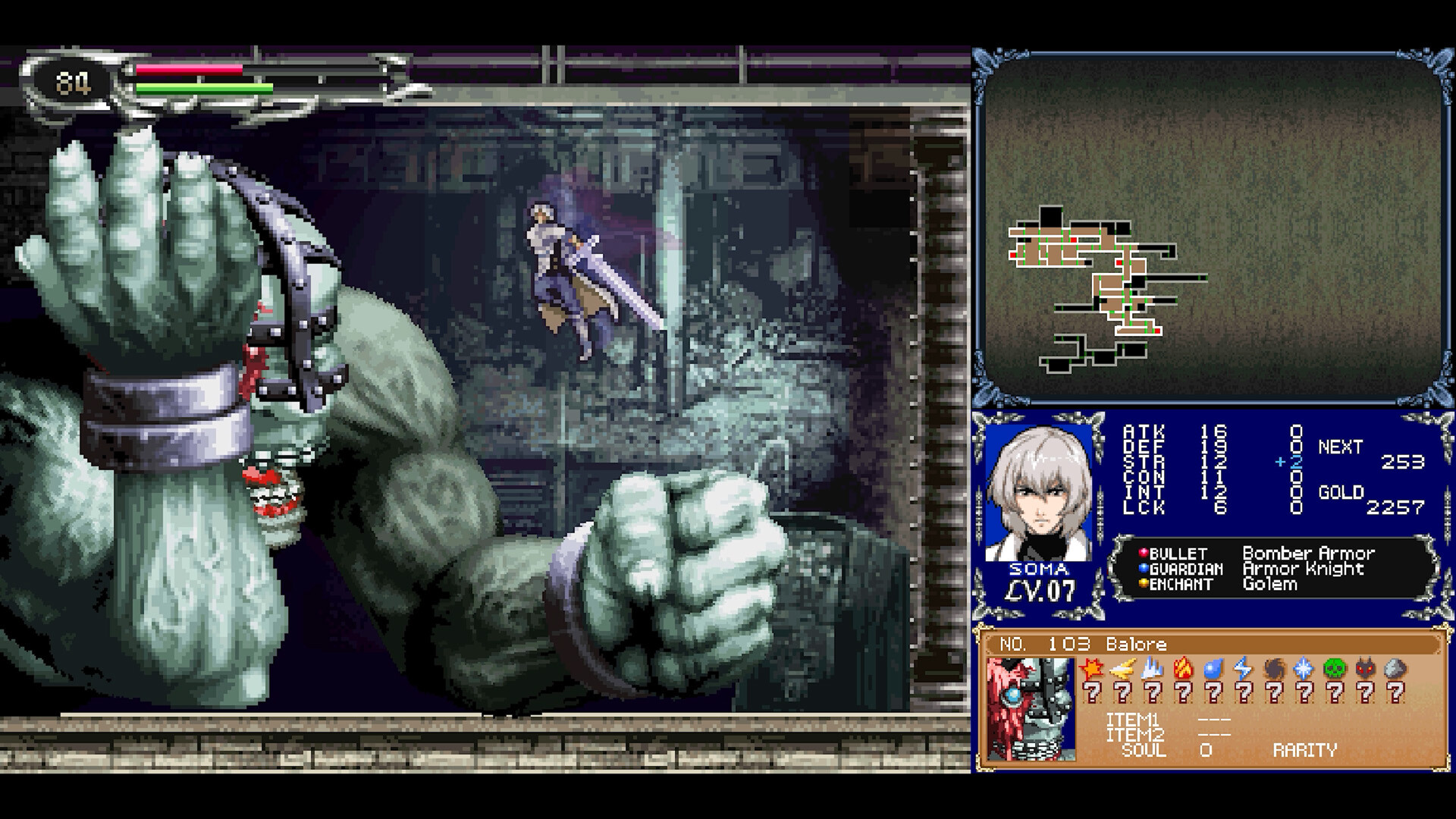
Dawn of Sorrow continues Soma Cruz’s story after Aria of Sorrow and centers progression on the Tactical Soul system. Enemies can yield souls that Soma equips for different purposes: Bullet souls provide activated attacks, Guardian souls supply sustained or summoned effects, Enchant souls modify attributes or grant passive benefits, and Ability souls enable actions needed to move through the castle. Collecting duplicate souls can strengthen some powers, giving repeated encounters a possible progression reward in addition to experience and items. Weapons and armor remain important, and certain materials or souls can be used in weapon synthesis, linking the abilities gathered from monsters to equipment advancement. The castle itself is explored through connected rooms, with new movement abilities opening paths and shortcuts. Boss confrontations provide major tests, while exploration uncovers equipment, hidden areas, and the tools needed to continue. The Nintendo DS original used touch input for some finishing and interaction features; the collection adapts those functions for its contemporary controls.
Portrait of Ruin builds its campaign around the partnership between Jonathan Morris and Charlotte Aulin. Jonathan uses physical weapons and traditional sub-weapons, while Charlotte specializes in magic. The player can switch between them and call the inactive partner to follow, allowing their different attack styles to answer different enemy positions. Some obstacles and situations use both characters together, and their combined attacks, called Dual Crushes, spend magic points for a stronger joint effect. The adventure’s castle is connected to a set of paintings that lead into separate themed areas, so exploring a painting extends the route beyond the central fortress. Character levels, equipment, quests, and enemy drops provide familiar RPG growth, but the partner system gives moment-to-moment combat its own rhythm: a spell can reach a flying enemy, while Jonathan can use a weapon or sub-weapon at closer range. The game’s map and warp rooms help connect the castle and its painting destinations as the pair discovers further routes.
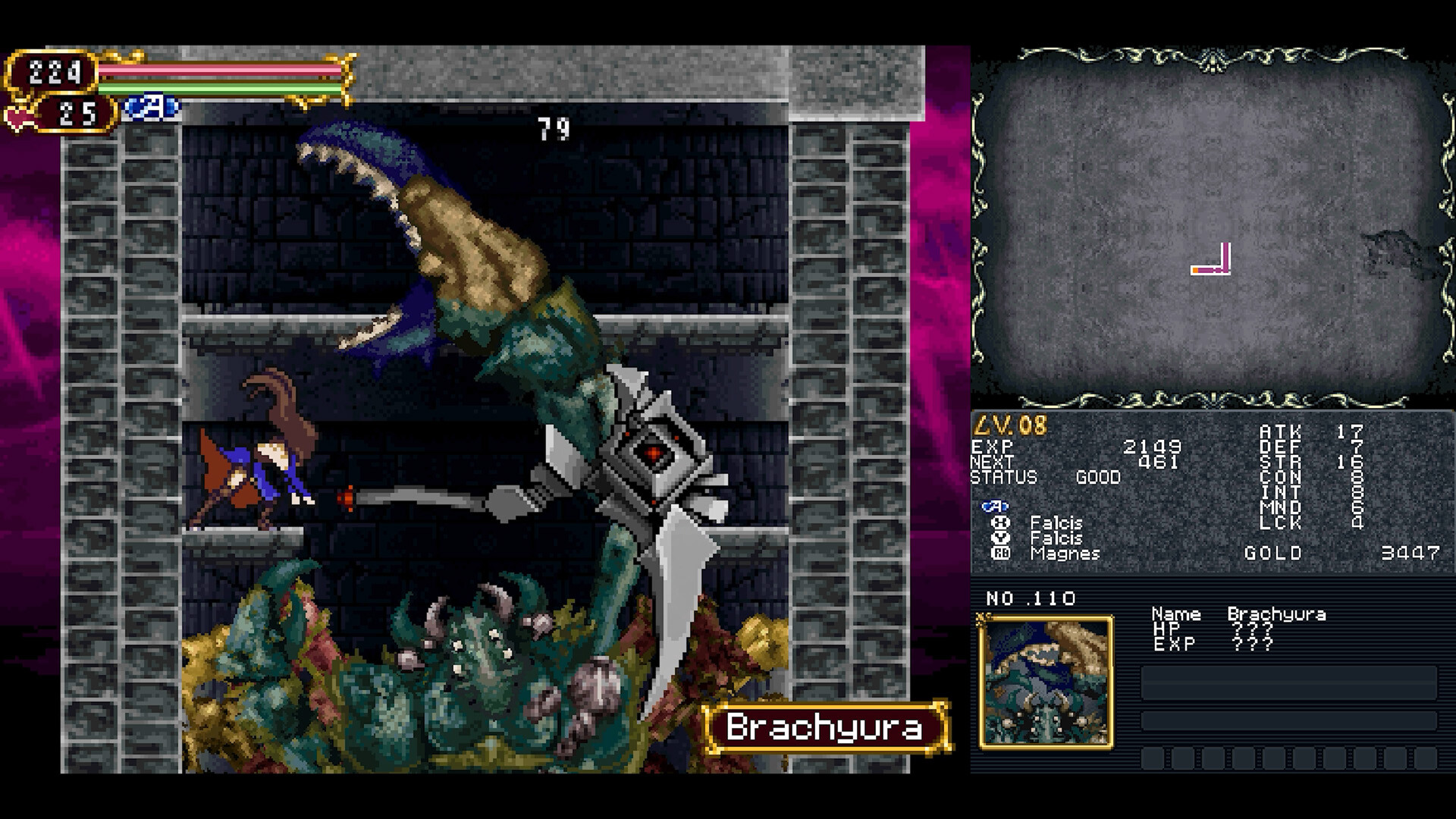
Order of Ecclesia stars Shanoa, whose combat and progression revolve around glyphs. These symbols can be absorbed from certain enemies or found in the environment, then equipped as weapons, spells, defensive tools, or other abilities. Different glyphs have different reach and elemental properties, so selecting a combination can matter against enemies with particular vulnerabilities. Shanoa can equip a main glyph and a sub glyph, while glyph unions combine compatible symbols into a powerful attack that consumes hearts. Absorbing a glyph also restores hearts, making repeated discoveries useful even after Shanoa already knows that symbol. The game’s world alternates between distinct stages connected through a map and areas such as Ecclesia and Wygol Village, where characters, equipment, and services support further expeditions. Instead of relying on a single sprawling castle for its entire structure, the campaign moves between environments with their own enemy encounters and routes, then builds toward Dracula’s castle. This makes the glyph loadout central to both exploration and combat preparation.
The two Haunted Castle entries offer a more direct arcade-style contrast to the longer explorations. The original Haunted Castle follows the format of an arcade action platform game, with stage-based movement, enemies, hazards, and boss encounters. Haunted Castle Revisited reworks that game rather than presenting it as another DS-style castle adventure. Its redesigned version changes how the classic is staged and presented, while the collection also lets players select the original arcade form. These shorter campaigns make the compilation’s historical range visible: the arcade games focus on progressing through set stages, while the DS titles emphasize exploration, character growth, and distinct ability systems. The collection’s menus make it possible to move among these games without carrying progress or equipment from one title into another. Each has a separate start, rules, and completion path, and the player can return to any of them from the package menu.
The modern collection layer is designed around access to the games and their original screen-based information. Adjustable display layouts let players arrange the two-screen presentation used by the DS games, and the rewind and quick-save functions provide ways to revisit difficult moments or preserve progress. A gallery collects artwork, development sketches, instruction booklets, and packaging, while an encyclopedia organizes information about enemies, equipment, and items across the included titles. These are supplementary tools; they do not replace the original campaign structures or erase the differences between their heroes. Soma’s enemy-derived souls, Jonathan and Charlotte’s coordinated abilities, Shanoa’s glyph combinations, and the stage-based Haunted Castle action remain the defining systems of their respective games. The collection therefore works both as a menu of separate adventures and as a shared reference point for exploring several distinct interpretations of the Castlevania formula.
- Developer
- Konami
- Genre
- Action-adventure and exploration action games collection