
About Castlevania: Belmont's Curse
In a burning Paris of 1499, Rose Belmont takes up the Vampire Killer beside her father Trevor and confronts the creatures pouring from Dracula’s castle. This two-dimensional Castlevania adventure joins whip-driven movement and combat to interconnected exploration, equipment choices, hidden upgrades and boss powers sealed into Arcana cards.
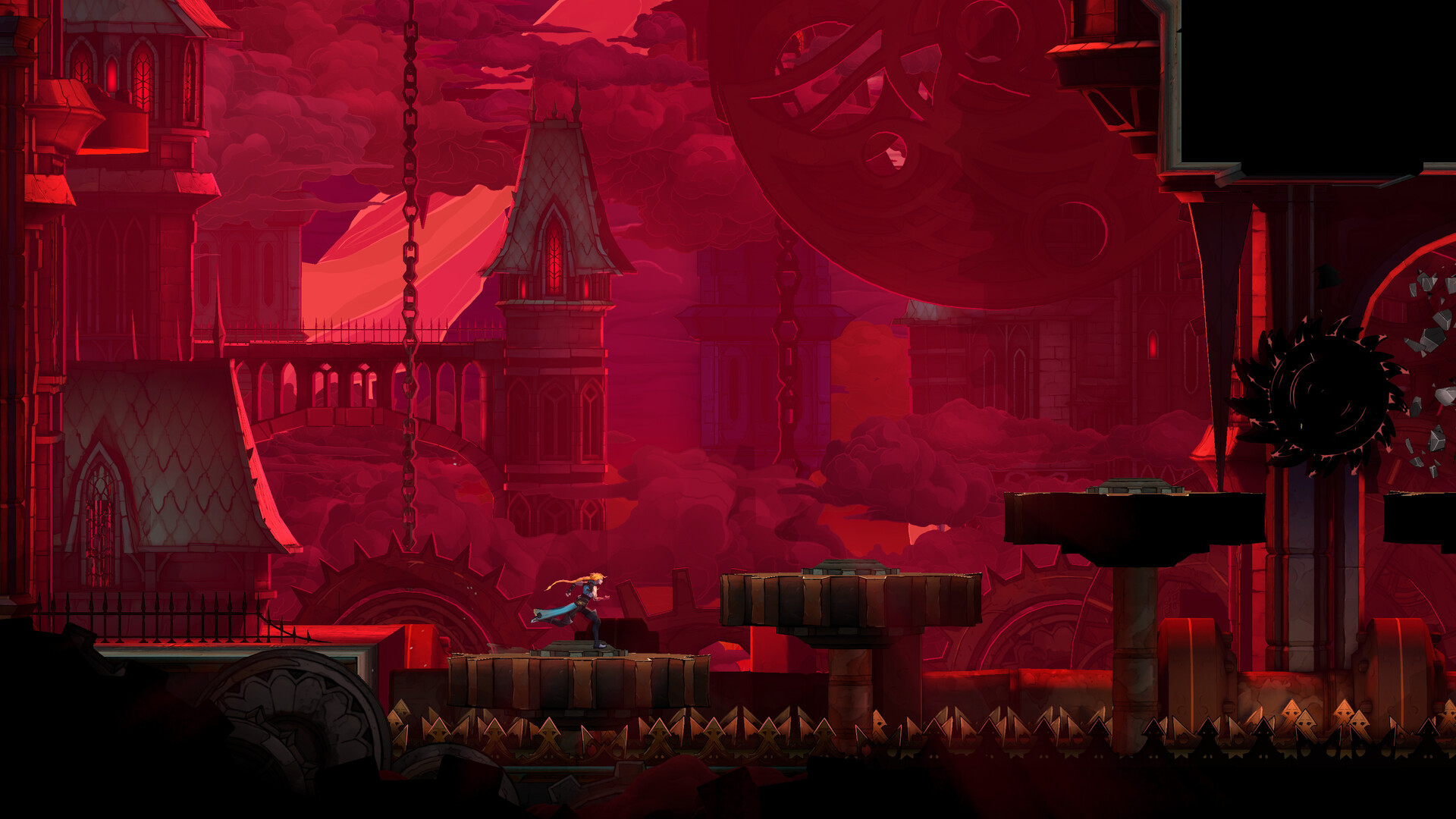
Castlevania: Belmont’s Curse places a new Belmont at the centre of a disaster unfolding in Paris in 1499. Monstrous creatures have appeared in the city, and the castle looming over its streets draws Trevor Belmont and his daughter Rose into the crisis. The story is set twenty-three years after Castlevania III: Dracula’s Curse, so the family connection matters without making Rose a retread of her father. She carries the Vampire Killer, the holy whip associated with the Belmont clan, but the journey is framed around her own growth and the threat facing Paris. The burning streets and the castle are more than scenery: moving between hostile spaces and pressing into unfamiliar routes is the structure of this exploration-based action game.
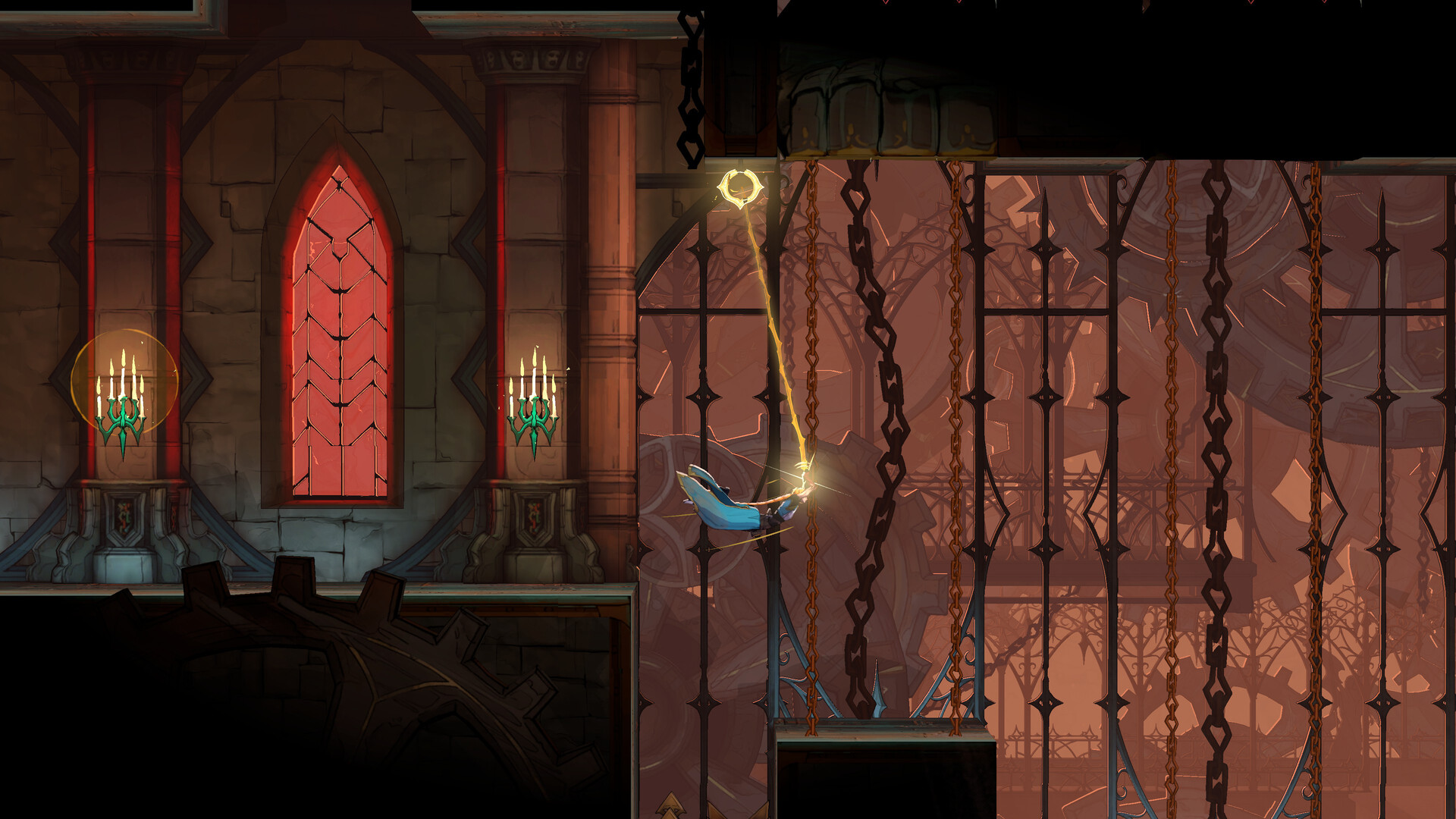
Rose’s whip is both a weapon and a way to move. It can strike enemies in quick exchanges, but it can also catch points in the environment and carry her across gaps. The official demonstration likens that aerial movement to a trapeze artist. That means a player must read a room for traversable surfaces and threats at the same time, rather than treating platforming as a break between fights. A route that initially looks difficult may become navigable once the whip’s reach and the timing of a swing are understood. In combat, the same movement gives Rose a way to close distance or change position before attacking. The game ties its most recognisable Castlevania tool to the pace of both exploration and battle.
This is a two-dimensional action-exploration game, so the map invites more than a straight march toward a final confrontation. Parisian spaces and the castle contain hidden paths, secrets and upgrades that reward looking beyond the obvious route. The series’ gothic architecture appears alongside more vivid stages, giving each area a distinct visual identity while retaining the sense that dangerous places are connected. Backtracking can serve a purpose when a newly learned action or a better grasp of the environment suggests another way through. The player’s immediate question may be how to survive a room, but the larger question is what lies beyond it and whether a later visit will reveal something previously inaccessible.
Rose’s fighting style is not limited to a single attack pattern. The game offers weapons across seven categories, as well as Relics that can affect offense and defense. Equipment found while exploring can be combined into different setups, so choosing what to carry shapes how a difficult encounter is approached. A Relic that suits one method of fighting may be less useful for another, and a weapon changes the rhythm and distance at which Rose engages. The important distinction is that discovery feeds preparation: searching an area can improve the options available for the next obstacle. The overview does not assume that every weapon or Relic is available at the start or that one combination is universally strongest.
Boss encounters form another part of that progression. Castlevania figures such as Death, Medusa and Carmilla appear alongside Joan of Arc as formidable opponents. Defeated bosses are sealed in Rose’s tarot cards and become Arcana, which provide spells and special actions. This makes a major fight consequential beyond clearing the path ahead: its reward can expand what Rose is able to do in later encounters or elsewhere in the world. Arcana sit beside weapons and Relics as a separate source of ability, giving the player another reason to pay attention to the tools already earned. The specific sequence of those fights and the locations of their secrets belong in a deeper wiki, not in a general introduction.
The setting also gives the game its own place in Castlevania’s history. Trevor is already known as a Dracula-slaying hero, yet the player follows Rose as she enters a Paris threatened by creatures and a dark conspiracy beneath the immediate attack. Her relationship to the clan’s past provides context for the Vampire Killer without resolving her story in advance. The city’s fires, gothic interiors and strange adversaries continue the series’ visual language, while the emphasis on faster, more fluid movement gives this entry its particular feel. Daniel Asadi composed the soundtrack. Its place in the presentation is to accompany a route that can shift from traversal and discovery to a sudden battle in the same connected space.
Belmont’s Curse arrived in 2026 on 15 October for PlayStation 5, Nintendo Switch, Xbox Series X|S, Xbox on PC and Steam. The Standard Edition contains the main game. Konami also lists a Midnight Edition with costumes for Rose, a digital sound and art gallery and a Relic item; those extras should not be mistaken for requirements to follow the central adventure. A separate demo has been announced, but this page describes the full game and does not represent the demo as a recording by V4mp. For a newcomer, the useful starting point is the relationship between movement, combat and exploration: learn what the whip can reach, examine the map for unexplored routes, and treat each acquired weapon, Relic or Arcana as a new option rather than a verdict on how the game must be played.
- Developer
- Evil Empire with Konami and Motion Twin involvement
- Genre
- 2D action-exploration