
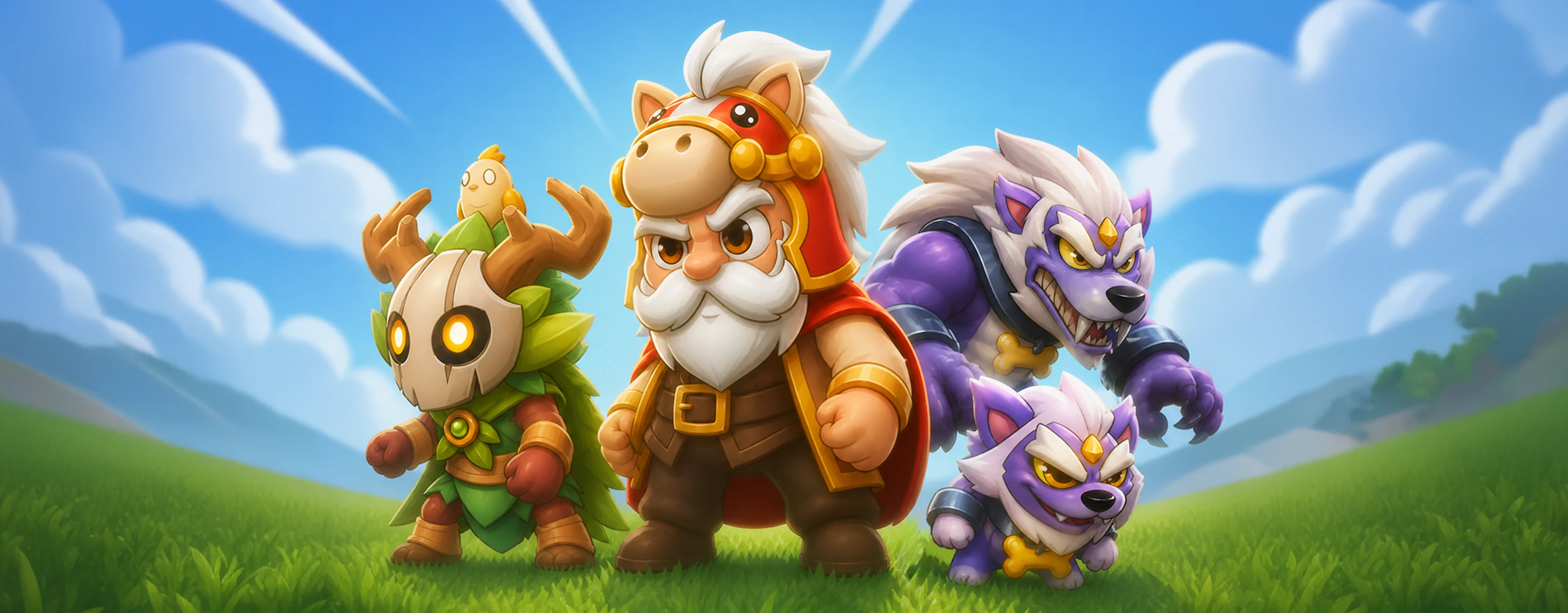
About Castle Busters
Castle Busters is a real-time one-on-one castle battle built around destructible terrain. Draft a squad of units, drive and reinforce a mobile fortress, then aim attacks to expose enemy positions or collapse their structure. Ranked arenas and Forge upgrades extend the competitive progression.
Castle Busters is a competitive mobile artillery game in which two players fight from fortified, mobile castles. The castle serves as both a protected base and the platform from which units attack. A match can end when one side eliminates the opposing squad or reduces its castle to rubble, so players can pursue different victory plans. Units fire into a shared arena where walls, floors and supports can break, changing the angles available during combat. This makes the battlefield part of the contest: a shot can damage a target, create an opening or remove the ground supporting a structure. Rather than defending against scripted waves, each player reacts to another person’s choices in real time, balancing offense, positioning and castle survival.
Terrain destruction shapes both aiming and movement. Players steer their castle to search for firing angles, then fire selected units at sections of the opponent’s structure. A damaged wall can create a new line of sight; destroying supports can bring down a tower or expose units standing above it. Floors can collapse beneath enemy positions, and newly opened paths change which side of a castle is vulnerable. Because both players can alter the arena, a defensive layout is never permanent. The player has to watch the other castle’s approach and decide whether to reinforce vulnerable structures, move away from an incoming attack or use a unit to break through. Arena hazards can also alter sightlines and positioning, so a successful shot depends on reading the current geometry rather than repeating one fixed firing pattern.
Each loadout contains up to eight units chosen from a larger roster, and the selection determines how a player threatens the enemy castle. The available units have distinct attack styles. Bishop launches a bomb with delayed detonation, Wrecker sends a large area-damage bomb, Pulsar fires a directed laser, and Saxton throws returning boomerangs. These examples show why a squad is more than a set of damage values: timing, blast area and projectile paths affect how a unit can pressure a wall or an exposed opponent. Knights can break a frontline, archers punish exposed units, bombers open structures and siege engines attack larger sections. Choosing the team is a pre-match decision, but it continues to matter after battle begins because each unit creates different opportunities in the changing arena. Fairy adds another trajectory, sending destructive orbs down onto enemies. That differs from a directly aimed laser or a bomb whose detonation is delayed: the visible attack pattern tells the opponent what kind of exposure to avoid, even when the attacker is targeting the same section of wall.
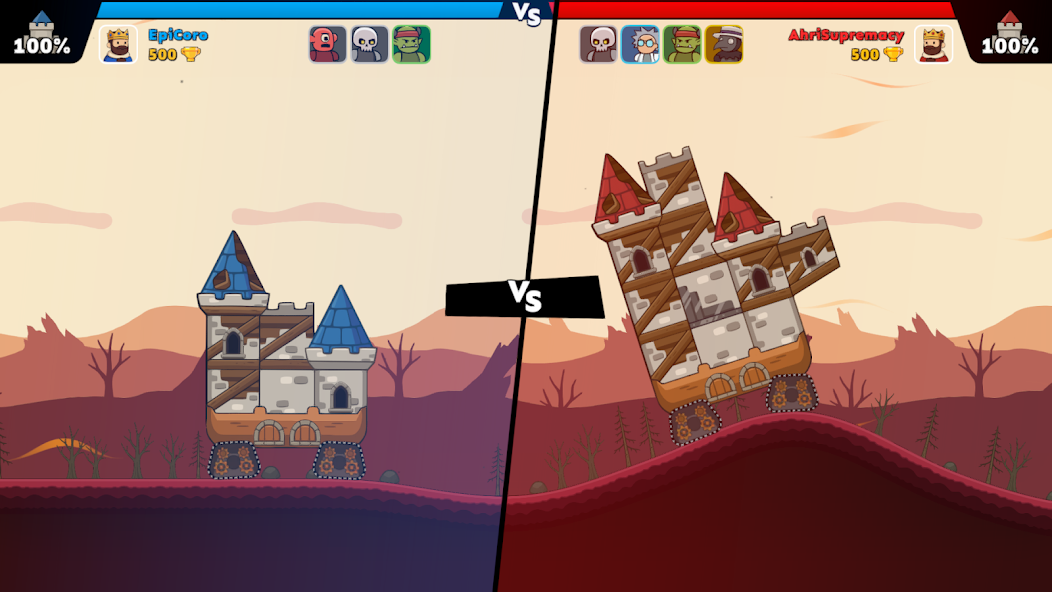
The castle itself can be reinforced and arranged to fit a plan. Key structures, walls and towers can be strengthened, while placements can create protected firing positions or traps. Wheels provide movement and have different characteristics such as speed and fuel, giving players a choice about how the castle travels through the arena. Helper items offer another tactical layer: offensive gadgets can pressure the opposing fortress, while defensive boosts help a player endure a push or recover at a critical moment. These tools are earned through the Forge system. The match therefore involves several kinds of preparation—drafting a unit lineup, shaping a defensive layout and selecting movement or support options—before the player tests those choices against an opponent who is making similar decisions in real time.
Progression is based on improving both the squad and the fortress. Units can be upgraded to unlock perks and stronger options, and the castle advances through material tiers that improve durability and defensive possibilities. Resources must be invested in parts that match the intended strategy: stronger walls can buy time for a careful attack, while upgraded units may create more reliable ways to breach a rival’s defenses. Forge rewards provide upgrades, helper items and wheel sets, linking match participation to loadout growth. This progression does not remove the need to aim or plan; stronger equipment gives new tactical choices, but the player still has to target supports, time an attack and protect vulnerable parts of the castle. A developed squad is most useful when its units complement the player’s chosen way to win. The material progression starts with wood and stone and extends to diamond and magma, making the physical fortress another upgrade target beside the units it holds. A stronger exterior and a different weapon lineup solve different problems: reinforcement concerns how much punishment a structure can take, while projectile choice determines where an attack can reach.
Ranked arenas offer a longer competitive track beyond individual matches. Players climb through ranks from Bronze toward Legend, encounter new arenas and compete on seasonal leaderboards. Advancing can introduce additional obstacles and hazards, so a familiar loadout may need adjustments when the battlefield changes. Tournaments and leaderboards add rewards and goals tied to repeated play, while unlocking arenas and units broadens the available strategic choices. The live match remains a one-on-one duel, but the larger ladder gives each result a place in a progression system. Players can refine a castle build, upgrade units and test a different lineup against real opponents, then use the outcome to decide which part of the setup needs work. The game’s competition is therefore both tactical within a match and developmental between matches.
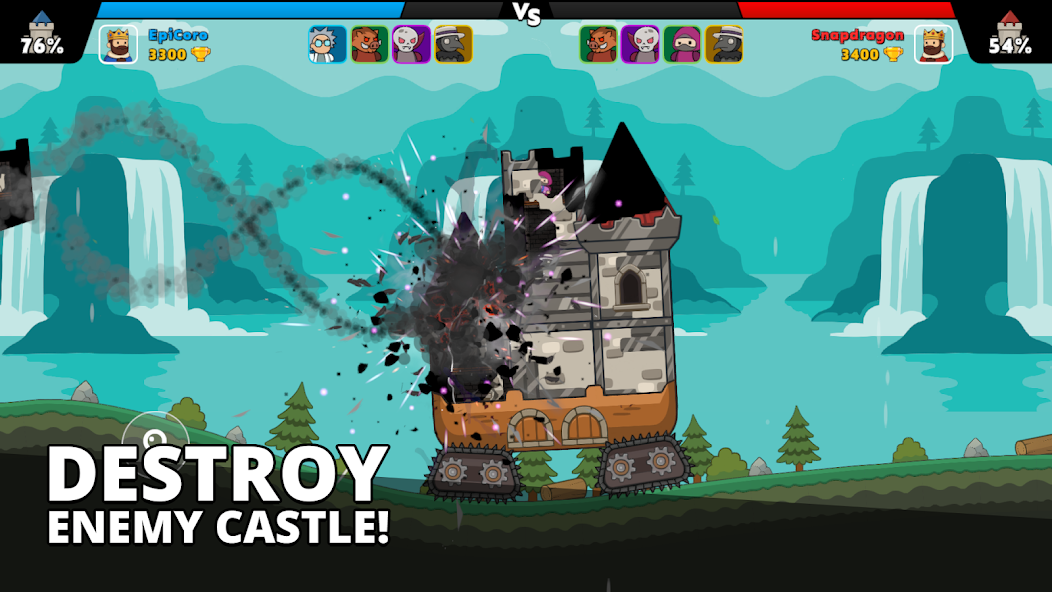
It is a real-time 1v1 match, not a wave-defence game. You pick up to eight units from a roster of more than thirty, drive the castle around the arena, and win by wiping the enemy squad or breaking their walls.
A duel, not a defence
The official site calls it a fast PvP castle-vs-castle battler where every brick breaks and every shot counts, and it is honest about the format: real-time 1v1, quick matches, and two ways to win. You win by eliminating every enemy unit or by destroying the enemy castle, so a match can end while your own walls are still standing — the other squad simply ran out of units first.
Because there is one opponent and no team to coordinate with, everything the game asks of you lands on you alone. That is the appeal and the ceiling at the same time: nobody else is holding the square you left open, and nobody else is taking the shot.
Your loadout is up to eight units out of more than thirty
You build a loadout of up to eight units from a roster of thirty-plus, and each one plays differently rather than being a stat variation on the last. The examples the developer shows fit that description: the Wrecker fires one big bomb for heavy area damage, the Pulsar fires an accurate laser in a chosen direction, and Saxton throws three boomerangs that come back to the castle. Two of the units shown, Bishop and Fairy, are labelled premium, and their abilities are the kind you notice: Bishop's bomb detonates on a delay, and Fairy drops a set of destructive orbs on the enemy.
Choosing eight from thirty-plus is the build decision the game is built around, and it is where the roster's size stops being a marketing number and starts being a problem. With eight slots you can answer a handful of situations well, and you are always leaving something out.
Some heroes now care where you put them
The 1.16 update added three heroes built around position, and the studio's own patch notes are careful about the scope: some heroes now gain new behaviours based on where they sit in your castle, boosting the allies around them or reacting to what happens in their row or column. That is a layer on top of aiming, moving and firing, not a replacement for them. Sir Rally raises the damage of every allied hero placed directly around him, so his value depends on the squares next to him rather than his own shot. Leif turns a kill into a comeback: when he takes down an enemy unit, every fallen ally on his row returns. Wolfie works the other way, transforming and hitting far harder when an ally next to him is defeated.
The three arrive differently. The patch notes list Sir Rally at Arena 7 and Leif at Arena 25 and mark both as free, so the arena ladder itself is the unlock, while Wolfie is listed as a battle-pass exclusive. The same update finished a full visual overhaul of the game's environments and hero designs for every player, so the art in front of you is not the art earlier players learned on.
The castle is a vehicle, and the walls are a build
Your castle is not scenery. You build structures to create safe positions and a defence that is awkward to break, and you upgrade the castle over time so its durability rises and stronger defensive options open up. Those upgrades walk through material tiers, starting at wood and stone and working up to diamond and magma.
Then you drive it. Wheels let you move the castle around the arena to find better angles, and wheel sets are earned through the Forge with different speed and fuel characteristics, so the thing carrying your squad is a second loadout with its own tradeoffs. Helper items come from the same Forge and split between offence and defence, which is the cleanest example of the game's real decision: spend on the push or spend on surviving one, because a match can swing on a single well-timed item.
Every unit has its own upgrade track
The roster is not a fixed set of eight you unlock and then use as-is. Units themselves can be upgraded, and doing so unlocks new perks and what the site calls power spikes, which means a unit you dismissed early can become a different proposition once its track is filled. That turns the eight-slot choice into a longer project: you are not just deciding which units answer your opponent, you are deciding which ones are worth feeding resources to.
The same update made two small changes to the edges of the game. The aim line in the shooting tutorial now has more room to turn green, and returning to the main menu after a match is quicker, with the reward sequence moving at your own pace rather than holding you in place.
Should you play it
Yes, if you want short competitive matches where most of the thinking happens on the squad screen before the fight starts. The studio's own description of the format is that you aim and fire from inside your castle using your selected units, so building the loadout and placing the heroes is only half the job — the other half is still the shot you take once the match is live.
Two honest caveats. Free to download is not the same as free of layers: the studio's own site labels some units premium and the patch notes put Wolfie behind the battle pass, so the unit you want may need arena progress or a purchase. And it is competitive by design, with worldwide play and leaderboards to climb.
Go deeper with V4mp
- Developer
- Epicoro
- Genre
- Strategy
Explore Castle Busters further
Explore the wiki for detailed reference pages on the game's world, systems, items and locations.