
About Carto
Separated from her Granny in a storm, young cartographer Carto searches across unfamiliar lands for a way back to her family. She can rearrange pieces of a special map to change the world itself, uncover new routes and meet the people who inhabit its distinct, fictional cultures.
Carto’s journey begins aboard Granny’s airship, where a special map can do more than show the land below. When Carto accidentally uses it and a storm sweeps through, the pair are separated and map pieces scatter across the world. Carto lands far from Granny and must travel through unfamiliar places to find her again. The setup makes the central puzzle part of the story from the outset: the map is a family heirloom, the storm has broken it into pieces, and restoring those pieces helps Carto move through the world. Her ability comes from a long line of cartographers who see the world differently. Rather than following a conventional journey from one fixed level to another, she explores a changing landscape while trying to make her way back to someone important to her.
The map is also the game’s main tool for solving problems. Carto can rearrange the pieces she has found, and the represented landscape changes with them. A layout can open a route, reveal a hidden place or make a new puzzle and story moment accessible. That means the map is not simply a reference for locating a destination: it is the thing the player changes to alter what can be reached. The map grows as Carto explores, so each new piece adds another part to consider when shaping the land. The puzzle asks the player to notice what the current arrangement makes possible, then consider what a different connection could reveal. Once the world changes, Carto still has to explore the resulting place; planning the map and walking through the world are parts of the same adventure. A clue found in conversation may suggest a new arrangement, while reaching that arrangement may bring Carto to another person with a story or request of their own.
The landscapes give those map changes a concrete sense of place. Carto travels through plains, forests, deserts, volcanic ground and glaciers. Bringing desert and lake terrain together can create an oasis and open new land. The point is not only to join fragments into a larger chart; changing which places meet can produce a different landscape to explore. New arrangements can bring an unfamiliar region within reach or uncover a secret, and later discoveries add more pieces to work with. Carto’s map therefore behaves like a puzzle about the shape of the world, with the result visible in the places she can visit. She can rotate fragments as well as reconnect them, so their orientation matters to the land that appears. Each change asks her to look again at what a place might become. In this example, the pieces do more than connect two known places: their combination brings a new terrain into being.
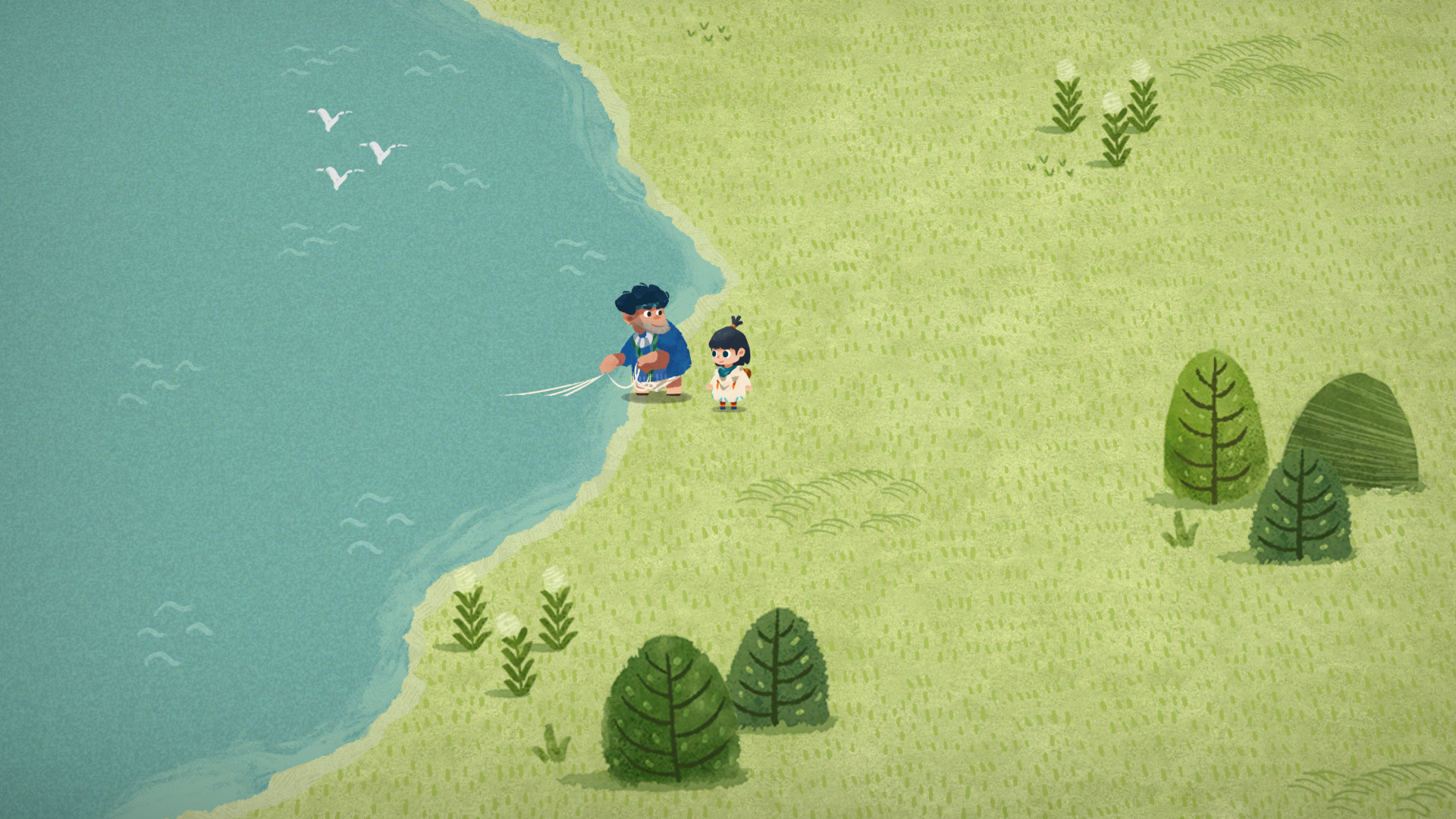
Travel also brings Carto into contact with communities whose customs differ from place to place. These lands and people are fictional, and learning about their cultures is part of the adventure’s identity. Carto meets a colorful cast, makes friends and encounters people who need help from their local cartographer. Those requests give her a reason to pay attention to the residents as well as to the map. The encounters are not presented as a catalogue of real-world cultures; they belong to the game’s invented communities and settings. The map supports that outward-looking structure by helping Carto discover more of the world, while the people she meets make each new place more than another stretch of terrain. Her search for Granny remains the throughline, but friendship and helping others give the journey its own moments along the way.
The family story explains why Carto can reshape the world and what she is trying to do with that ability. Carto comes from a long line of cartographers, and Granny owns the map that lets them rearrange the land. In the opening, Carto’s mistake with the map brings a storm to the airship; part of the land breaks away, Carto is swept from the craft, and Granny is left holding the other end of the map. That opening supplies the scattered pieces and separation that drive the journey, without requiring a detailed account of later revelations. The game’s story framework grew around themes of family and friendship, so its fantastical cartography has a personal stake: finding more of the map is tied to finding a way back to Granny.
Carto uses hand-drawn visuals across a variety of biomes, giving its fictional places distinct visual identities. The soundtrack contains more than thirty original tracks, composed by Eddie Yu as his debut work for Sunhead's in-house music role. The score accompanies Carto through distinct landscapes and the communities who call them home. Its changing tracks give the different places an audible character alongside their hand-drawn look. Carto is a journey shaped through image, sound and rearranged geography, with the search for Granny running through all three.
- Developer
- Sunhead Games
- Genre
- Puzzle adventure